
INDIA: At the seventh edition of the Habitat International Film Festival 2026, held from March 13 to March 22 at the India Habitat Centre, a special centenary retrospective paid tribute to the legendary Polish filmmaker Andrzej Wajda. Widely regarded as one of the most influential cinematic voices of the twentieth century, Wajda’s work continues to resonate for its moral depth, political awareness, and unwavering commitment to artistic freedom.
Born in 1926 in Suwałki, Wajda’s early life was shaped by the upheavals of World War II. These experiences became the emotional and philosophical foundation of his cinema. His journey from the Academy of Fine Arts in Kraków to the Łódź Film School marked a decisive shift toward filmmaking as a medium of resistance. Alongside contemporaries such as Andrzej Munk and Jerzy Kawalerowicz, he became a central figure in the Polish Film School movement, crafting what critics have long described as a “cinema of conscience.”
Also Read: Psychologist Shrishti Jain Warns of Rising Emotional Risks for Children in Digital Age
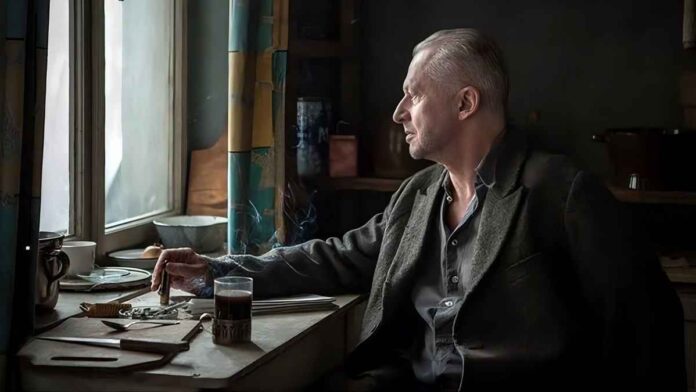
The retrospective’s centerpiece was Wajda’s final film, Afterimage, a deeply introspective work that reflects on the enduring conflict between artistic freedom and authoritarian control. The film chronicles the life of avant-garde painter Władysław Strzemiński, a pioneer of Unism who resisted the ideological constraints of the Communist regime.
Opening with a serene yet symbolic moment, the film introduces Strzemiński explaining the concept of “afterimage” to his students. The idea that vision persists even after the object disappears becomes a central metaphor, unfolding into a powerful meditation on memory, perception, and resistance. As the narrative progresses, Strzemiński’s life descends into hardship marked by institutional persecution, poverty, and isolation. Yet, his refusal to conform underscores the moral courage at the heart of Wajda’s storytelling.
One of the film’s most striking sequences captures the suffocating reach of state power. A massive red banner of Stalin casts an artificial glow into the artist’s studio, symbolizing the intrusion of ideology into perception itself. In a moment of quiet defiance, Strzemiński tears down the banner, reclaiming both physical and intellectual space. This visual metaphor encapsulates Wajda’s enduring concern with the manipulation of truth and the resilience of individual vision.
Equally poignant is the film’s closing sequence, where Strzemiński’s daughter witnesses his final moments. The emotional weight of loss transforms the concept of “afterimage” into lived experience, suggesting that while the individual may fade, their vision endures. The recurring imagery of red light and blue-tinted flowers forms a symbolic dialectic, reflecting the tension between oppression and transcendence.
Performed by Bogusław Linda and written by Andrzej Mularczyk, Afterimage stands as a distilled expression of Wajda’s artistic philosophy. While earlier works such as Ashes and Diamonds and The Promised Land explored historical and societal transformations on a grand scale, this final film turns inward, examining the ethical dilemmas faced by the artist under constraint.
The retrospective not only celebrated Wajda’s cinematic achievements but also underscored his relevance in contemporary times. His films remind audiences that art is not merely a reflection of reality but a means of challenging it. In an age where narratives are increasingly contested, Wajda’s legacy serves as a powerful reminder of cinema’s role in defending truth and human dignity.
His famous declaration at the Academy Awards, “I think in Polish, therefore I speak Polish,” resonates as more than a statement of identity. It stands as a testament to cultural integrity and the enduring power of artistic expression. As the festival concluded, Wajda’s work left audiences with a lasting impression, an afterimage of courage, conscience, and creative defiance that continues to inspire generations.
This article is written by Arvind Ojha, a multidisciplinary artist, filmmaker, poet, and cultural thinker based in New Delhi with over two decades of experience across art, literature, design, cinema, and education. Educated at the University of Delhi and NIFT Delhi, his creative work is deeply rooted in Indian philosophy, Neo-Tantric thought, and contemporary critical discourse.
Also Read: Poland Named Focus Country for Habitat International Film Festival 2027