Home Blog Page 37

The Vitruvian Man: Leonardo da Vinci’s Masterpiece of Human Proportions and Symbolic Harmony

0

ITALY: One of the most iconic and enduring works of art in human history, the “Vitruvian Man” is a remarkable representation of the ideal human form and an awe-inspiring symbol of balance and harmony. 

Created by the genius artist, scientist, and polymath Leonardo da Vinci, this timeless masterpiece has transcended centuries, captivating the world with its mathematical precision and artistic brilliance.

Leonardo da Vinci, born in Italy in 1452, was a true Renaissance man, exploring a vast array of disciplines, from anatomy and engineering to painting and sculpture. 

Inspired by the writings of the ancient Roman architect Vitruvius, Leonardo sought to depict the perfect human form in a visually striking and mathematically accurate manner.

The “Vitruvian Man” draws its name from the Roman architect Vitruvius, who authored “De Architectura,” a treatise that emphasized the importance of proportion and symmetry in architecture. 

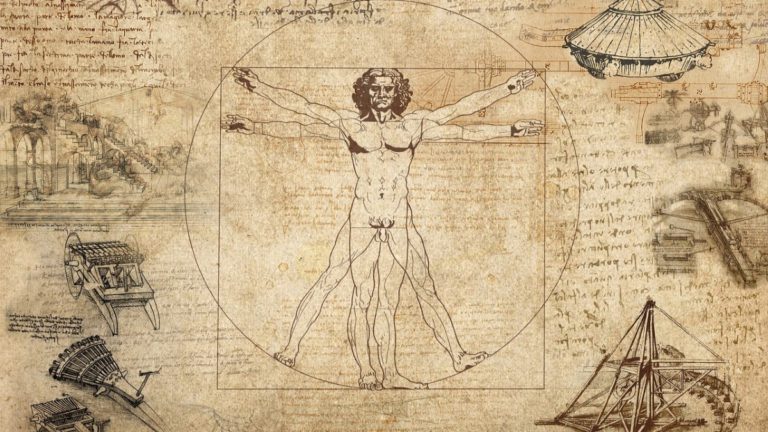
The illustration itself is a study of the ideal human proportions, showing a nude male figure in two superimposed positions. With arms and legs outstretched, the man stands within both a square and a circle.

The image is a testament to Leonardo’s deep interest in human anatomy and his fascination with the mathematical precision underlying nature’s design. 

The drawing exemplifies the artist’s belief in the inherent connection between the human body and the geometric principles governing the cosmos.

At the heart of the “Vitruvian Man” is the concept of the “divine proportion” or the “golden ratio,” a mathematical ratio that appears in countless natural phenomena and is believed to evoke a sense of beauty and aesthetic harmony. 

Leonardo’s depiction skillfully demonstrates how the proportions of the human body adhere to this divine ratio, making it a harmonious and visually pleasing composition. In the illustration, the man’s outstretched arms and legs align with the edges of the square, while his navel is precisely at the center point. 

This alignment showcases the seamless relationship between the human form and geometric principles, emphasizing the idea that the human body is a microcosm of the universe. The “Vitruvian Man” represents more than just an anatomical study; it embodies a profound philosophical concept. 

Leonardo saw the human body as a metaphor for the universe, and by extension, he believed that understanding the human form could lead to a deeper comprehension of the cosmos.

Beyond its mathematical significance, the “Vitruvian Man” also holds symbolic and cultural value. It has become an emblem of the Renaissance period, a time of great intellectual and artistic flourishing. 

The drawing epitomizes the era’s quest for knowledge, innovation, and the pursuit of excellence in various fields. Despite its age, the “Vitruvian Man” remains a source of inspiration and fascination for people across the globe. 

The drawing’s enduring popularity speaks to its universal appeal and enduring relevance. Countless replicas and reproductions adorn museums, galleries, textbooks, and even modern merchandise, perpetuating their legacy and keeping Leonardo da Vinci’s brilliance alive.

Today, the “Vitruvian Man” stands as a testament to the profound synergy between art and science, demonstrating how an artist’s creative vision can intersect with mathematical principles to produce a work of timeless significance. 

Leonardo da Vinci’s exploration of the ideal human proportions continues to inspire artists, scientists, and thinkers to this day, serving as a powerful reminder of the boundless potential of human ingenuity and creativity.

Also Read: Project K Title Unveiled: ‘Kalki 2898 AD’ Teaser Promises Sci-fi Film with Dystopian Future Setting


Squanch Games Surprises PlayStation Fans; Releases ‘High On Life’ with Horror-Themed DLC

UNITED STATES: In a delightful surprise for PlayStation gamers, Squanch Games’ once Xbox-exclusive title, ‘High On Life,’ has made its long-awaited debut on the PlayStation platform. 

Despite some early hints and updates appearing on the PlayStation backend, the official announcement thrilled fans during San Diego Comic-Con over the weekend.

The absurd and action-packed sci-fi shooter may have received mixed reviews upon its release last December, but its inclusion in the Xbox Game Pass library enabled it to amass an impressive player base of over 7.5 million users.

For PlayStation enthusiasts eager to experience the thrilling intergalactic adventure, ‘High On Life’ is now available on the PlayStation Store for $90.95. 

The decision to bring the game to PlayStation was largely driven by the overwhelming demand from fans who had long awaited the opportunity to immerse themselves in the quirky world of the game.

Speaking at San Diego Comic-Con, Squanch’s studio director, Mike Fridley, expressed the team’s excitement about the game’s expanding reach. 

He acknowledged the massive response from players since its initial launch and promised PlayStation gamers an experience that would live up to the hype. Fridley also extended his gratitude to the patient fans who had been eagerly anticipating the PlayStation release.

However, it’s not just the base game that’s garnering attention. Excitement is building around the upcoming DLC expansion titled ‘High On Knife.’ The expansion promises a spine-chilling horror experience for players as they embark on a new adventure. 

In addition to fresh gameplay, ‘High On Knife’ will introduce two new weapons, menacing foes, and more surprises that will keep players on the edge of their seats.

While the DLC is generating anticipation, there have been some notable absences. Following actor Justin Roland’s involvement in domestic violence and abuse charges, the star alien weapon “Kenny” will not be featured in the upcoming expansion. 

However, fans should be aware that the base game for PlayStation retains the actor’s voice work, which may raise discussions about the separation of an artist’s work from their actions.

With ‘High On Life’ now available on both Xbox and PlayStation, Squanch Games is celebrating the resounding success of the sci-fi shooter that has captured the hearts of millions. 

The game’s unique blend of humor, action, and intriguing gameplay has resonated with players, making it a noteworthy addition to the PlayStation library.

As fans eagerly embark on the absurd interstellar journey that ‘High On Life’ offers, the anticipation for ‘High On Knife’ continues to build. The expansion promises to take players on an even wilder ride, exploring uncharted territories in the vast universe of the game. 

For those who have been eagerly awaiting the game’s arrival on PlayStation, the time has finally come to dive headfirst into the cosmic chaos. 

From quirky characters to heart-pounding action, ‘High On Life’ is poised to deliver a gaming experience unlike any other as players gear up to conquer the challenges of an unknown and bizarre universe.

Also Read: Acer Nitro 16: Ultimate Gaming Laptop with 16-Inch Display and Cutting-Edge Features

China Plans Groundbreaking Extraterrestrial Experiment Aboard Tiangong Space Station

CHINA: China’s ambition to explore the mysteries of space knows no bounds, as the nation sets its sights on sending an unlikely group of pioneers to its Tiangong space station in the future: zebrafish.

The fascinating endeavor aims to study the intriguing relationship between these small aquatic creatures and microorganisms within a closed ecosystem, all while shedding light on the concerning issue of bone loss in astronauts during extended space missions.

According to reports from Shanghai-based media, the ingenious experiment was revealed by Zhang Wei, assistant to the commander-in-chief of China’s manned space engineering space application system. The revelation took place during a Space Station Science and Application Project Solicitation Seminar in Beijing on July 10. 

Although specifics about the timeline and the aquatic apparatus remain under wraps, the concept has already sparked curiosity and excitement in the scientific community. While this may be a novel initiative for China’s space program, it is not the first time that fish have ventured into the final frontier. 

NASA’s Aquatic Habitat (AQH), designed to examine the impact of microgravity on marine life, carried a small school of medaka, a freshwater fish native to Japan, to the International Space Station back in 2012. The results of the AQH experiment provided valuable insights into how marine organisms adapt to the space environment.

The idea of studying fish in space is not entirely new either. As early as 1976, Zebrafish (Danio Rerio) made their extraterrestrial debut aboard the Soviet Union’s Salyut 5 space station, launched as part of the Soyuz 21 mission. 

During the mission, Soviet cosmonauts observed intriguing behavioral modifications in the Zebrafish, indicating potential adaptations to microgravity conditions. The use of animals in space exploration traces its roots back to 1947, predating even the famous flight of the Soviet space dog, Laika, on Sputnik 2 in 1957. 

Laika’s tragic fate, as she succumbed to overheating merely hours into her flight, left a profound impact on the world, but it also paved the way for advancements in space research to prioritize the well-being of living organisms during missions.

China’s plan to send zebrafish to the Tiangong space station marks yet another milestone in the nation’s growing influence in space exploration.

As the nation continues to make remarkable strides in its pursuit of scientific discoveries, this unconventional experiment is bound to capture the attention of space enthusiasts and scientists alike.

The significance of this endeavor extends beyond the scientific realm, as it holds promise for advancing our understanding of life’s adaptability in extreme conditions. 

Furthermore, insights gained from this experiment may have implications for future long-duration space missions, helping to mitigate the health risks associated with prolonged stays in microgravity environments.

As we await further details and the launch of this extraordinary space mission, the world eagerly anticipates the groundbreaking discoveries that will undoubtedly emerge from this ambitious fusion of fish and space exploration.

Also Read: China’s Lunar Radio Telescope Project Aims to Unlock the Universe’s Secrets

Verstappen Dominates Hungarian Grand Prix to Secure Red Bull’s 12th Consecutive F1 Victory

0

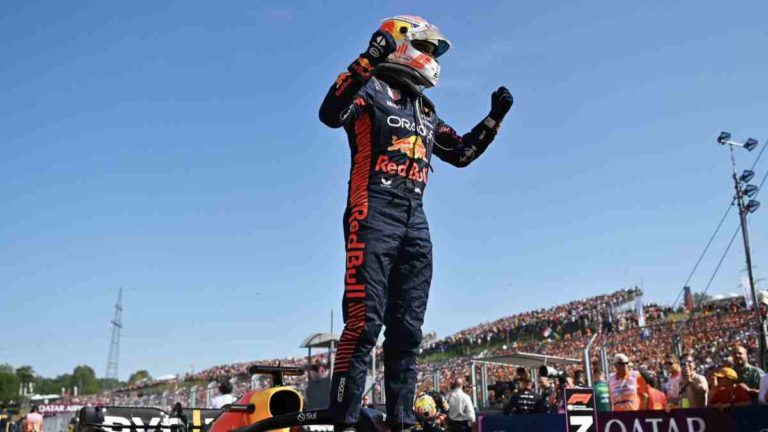
HUNGARY: Max Verstappen showcased the Red Bull RB19’s prowess on the track as he cruised to victory at the Hungarian Grand Prix.

The Red Bull driver’s spectacular performance not only earned him his seventh consecutive win but also propelled his team to a historic 12th successive triumph, setting a new record in Formula 1 history.

The highly anticipated race started with Verstappen starting second on the grid, trailing behind Hamilton, who had secured pole position. 

Any speculation that the Dutchman would struggle to overtake Hamilton in the first corner was quickly put to rest as Verstappen seized the opportunity to attack off the line and swiftly claimed the lead after Turn 1.

Once in front, Verstappen never looked back, steadily building a considerable lead over the chasing pack. His consistency and flawless driving resulted in his ninth victory of the season, further solidifying his position as a formidable force on the F1 circuit.

While Verstappen dominated the race, the battle for the remaining podium spots was fierce. Lando Norris of McLaren put on an impressive display and managed to secure second place, a remarkable achievement for the young driver. 

Verstappen’s teammate, Sergio Perez, also showcased his skills, ultimately finishing in third place and contributing to Red Bull’s record-breaking streak.

The Hungarian Grand Prix also saw some intense moments and unfortunate incidents, including a collision between Zhou Guanyu and Daniel Ricciardo, which sent Ricciardo to the back of the field. Additionally, Esteban Ocon and Pierre Gasly were involved in a collision that ended their races prematurely.

As the race unfolded, strategic pit stops added further drama to the mix. Verstappen executed flawless stops, maintaining his lead after each visit to the pits. 

Norris capitalized on the undercut strategy, which allowed him to snatch second place from his teammate, Piastri. Hamilton, on the other hand, faced challenges with his pace and struggled to make significant progress throughout the race.

In the end, Verstappen’s commanding performance, coupled with the collective efforts of the Red Bull team, led to their 12th consecutive triumph, surpassing McLaren’s previous record set back in 1988. 

The victory showcased the team’s dominance in the current F1 season and solidified their position as the team to beat.

The Hungarian Grand Prix not only provided excitement and entertainment for motorsport enthusiasts but also underscored Max Verstappen’s extraordinary talent and the unstoppable momentum of Red Bull Racing. 

As the drivers and teams prepare for the next race, all eyes will be on Max Verstappen and Red Bull, as they continue their quest for F1 glory.

Also Read: Lewis Hamilton Edges Out Verstappen in Thrilling Hungarian Grand Prix Qualifying

Nature’s Recipe for Success: Delving Deeper Into Liebig’s Law of the Minimum

INDIA: In the intricate tapestry of nature, there exists a fundamental principle that governs the growth and development of organisms: Liebig’s Law of the Minimum.

This timeless ecological concept, first proposed by German chemist Justus von Liebig in the 19th century, elucidates the key factor that limits the success of any biological process.

Liebig’s Law of the Minimum posits that the growth, abundance, and productivity of a plant or organism are determined by the scarcest essential resource available to it. 

In essence, no matter how plentiful other resources may be, if a critical factor is deficient or lacking, it becomes the “limiting factor” that hinders optimal growth and development.

Imagine a garden with various plants requiring water, sunlight, and nutrients to thrive. If each of these elements is provided abundantly except for water, the growth of the plants will be limited by the scarcity of water. Even if sunlight and nutrients are in surplus, the lack of sufficient water will restrain the plants from reaching their full potential.

This concept can be applied to various ecological systems, from agricultural practices to natural ecosystems. In farming, the growth of crops depends on the most limiting nutrient available in the soil. For example, if the soil lacks an essential nutrient like nitrogen, even with ample water and sunlight, the crop’s growth will be stunted.

Liebig’s Law of the Minimum also explains the delicate balance in ecological communities. In a forest ecosystem, the presence of diverse plant and animal species relies on the availability of critical resources like space, food, and shelter. 

If one of these resources becomes scarce, it may lead to competition among species or, in extreme cases, the disappearance of some species altogether.

Ecologists often use this principle to manage and restore ecosystems effectively. By identifying and addressing the limiting factors, they can promote the growth and recovery of certain species and maintain the ecological balance.

The concept of Liebig’s Law of the Minimum extends beyond the realm of biology. It finds applications in various fields, including economics, business, and education. 

In the context of education, for instance, the principle suggests that a student’s performance is determined by the most deficient aspect of their learning experience. By focusing on improving the weakest areas, educators can enhance overall academic achievement.

Moreover, businesses can use this principle to identify and address their shortcomings to achieve maximum efficiency and productivity. By recognizing the limiting factors that hinder growth, they can allocate resources more effectively to optimize their operations.

Liebig’s Law of the Minimum also plays a crucial role in sustainable development and environmental conservation. Understanding the vital resources required for the survival of species and ecosystems allows policymakers to make informed decisions and create effective strategies to protect the environment.

As human activities continue to impact the planet, Liebig’s Law of the Minimum serves as a poignant reminder of the fragility and interconnectedness of Earth’s ecosystems. By acknowledging and respecting the limits imposed by essential resources, we can work towards a harmonious coexistence with nature.

Also Read: Quantum Gravity Paradox: Unraveling the Mysteries of the Fundamental Forces of the Universe

Lewis Hamilton Edges Out Verstappen in Thrilling Hungarian Grand Prix Qualifying

0

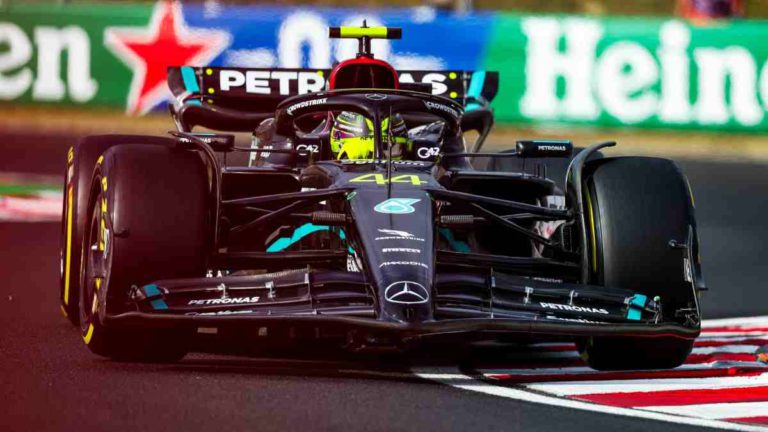
HUNGARY: In a nail-biting qualifying session at the Hungarian Grand Prix, Lewis Hamilton snatched pole position away from Max Verstappen, ending the Red Bull driver’s pole position streak.

The session took an unexpected turn as Formula 1 trialed a new format, shaking up the grid and delivering surprises right from the start.

The qualifying session, held at the Hungaroring, featured a novel system where drivers had to use different tire compounds for each segment. In Q1, all drivers ran on hard tires, followed by mediums in Q2, and finally soft tires for Q3, setting the stage for an exhilarating battle for the top spot.

Sergio Perez set the early pace in Q1, hoping to secure his first Q3 berth in several races. However, as the session unfolded, it became apparent that traffic and track limits would pose significant challenges for some drivers. 

One of the biggest shocks of Q1 was George Russell, who struggled to find a clear path and ended up with a surprising 18th on the timesheet.

Moving into Q2, Perez, and Verstappen continued to show their prowess, but it was McLaren who impressed by taking the top two spots, with Lando Norris leading the way. 

Charles Leclerc, a teammate of Carlos Sainz, thwarted his efforts by keeping the Spaniard out of Q3. Meanwhile, Daniel Ricciardo’s return to Formula 1 with AlphaTauri saw him secure a P13 grid position.

The showdown in Q3 promised intense competition for the pole position. Perez, eager to capitalize on his resurgence, set an early benchmark with a blistering lap time of 1:17.1. Verstappen, on a pole position streak, bettered his teammate’s time, putting him in a strong position.

With the pressure mounting, Hamilton stepped up to the challenge, making his presence felt with a superb lap time, slotting himself just 0.126 seconds behind Verstappen after the initial runs. 

The scene was set for a thrilling finale as the drivers returned to the pits for fresh tires.

As the final minutes ticked down, Verstappen failed to improve on his time, leaving the door open for Norris and Hamilton. 

Norris fell just short of pole position, securing a solid third place on the grid. All eyes were on Hamilton as he unleashed a masterful lap, crossing the line just 0.003 seconds ahead of Verstappen, snatching pole position, and celebrating his first of the season.

Hamilton’s impressive performance brought an end to Verstappen’s streak, setting the stage for an intense battle in the Hungarian Grand Prix. The 2021 championship rivals will line up in the front row, ready to fight for the win.

As Formula 1 experimented with the new qualifying format, it provided fans with plenty of excitement, shocks, and unpredictability. The grid positions for the Hungarian Grand Prix promise a gripping race where every second will count. 

With Hamilton and Verstappen separated by a mere 0.003 seconds in qualifying, the race is sure to be a high-octane showdown between the two titans of the sport. Fans around the world eagerly await the lights-out moment to see which driver will come out on top in this thrilling duel.

Also Read: Lewis Hamilton Provides Update on Contract Negotiations as Summer Break Approaches

Instagram’s Threads Suffers 70% Plummet in Daily Users, Struggling to Compete with Twitter

UNITED STATES: Instagram’s venture into the realm of Twitter competition, Threads, appears to be facing significant challenges as it experiences a staggering 70% decline in daily active users since its peak in early July.

Despite Meta Founder and CEO Mark Zuckerberg’s assertion that “10s of millions of people come back daily” on Threads, recent reports from The Wall Street Journal suggest otherwise, indicating a concerning drop in user engagement on the platform.

According to data from Sensor Tower, Threads’ daily active users have dwindled to just 13 million, a significant decrease from its highest point on July 7. In contrast, Twitter boasts approximately 200 million daily active users, highlighting the stark difference in popularity between the two platforms.

Executives at Meta Platforms, Threads’ parent company, have claimed that the decline in user engagement is not a cause for alarm. They remain optimistic about the platform’s future and are actively exploring options, such as implementing a chronological feed, to improve the user experience.

Launched by Meta on July 5 for iOS and Android users in 100 countries, Threads initially garnered attention and achieved 150 million user sign-ups within a short span. 

However, user engagement has seen a sharp decline, with users now spending only 10 minutes on the app, down 50% from the initial 20-minute average.

While Threads may still be considered a newcomer in the social media space, it faces stiff competition from established platforms like Twitter. To bolster its chances of success, the platform requires several Twitter-like features to attract and retain users in the highly competitive social media landscape.

Despite the decline in user engagement, Threads has maintained its position as one of the top free apps on the App Store, a testament to its initial popularity. However, the road ahead remains challenging as the platform seeks to win back users and compete effectively against established rivals.

Data from Data.ai revealed that Threads has found the most substantial user presence in specific markets, with India leading the way, accounting for approximately 32% of its downloads. Following closely behind are Brazil, contributing around 22% of installations, and the United States, representing nearly 16% of the total.

Threads’ journey to becoming a formidable competitor in the social media landscape is far from over. As Meta executives work on implementing additional features and refining the user experience, the platform’s future remains uncertain. 

The success of Threads hinges on its ability to address user concerns, regain engagement, and carve out a distinct identity in a market dominated by established players.

Only time will tell whether Threads can rise to the challenge and solidify its position as a worthy contender in the dynamic world of social media. 

As the platform continues to evolve and adapt, its fate will be shaped by its ability to capture the attention and loyalty of users in an ever-evolving digital landscape.

Also Read: Instagram Introduces Reels Download Feature, With a Few Limitations

India’s Chandrayaan-3 Nears Moon Landing with Precision Orbital Maneuvers

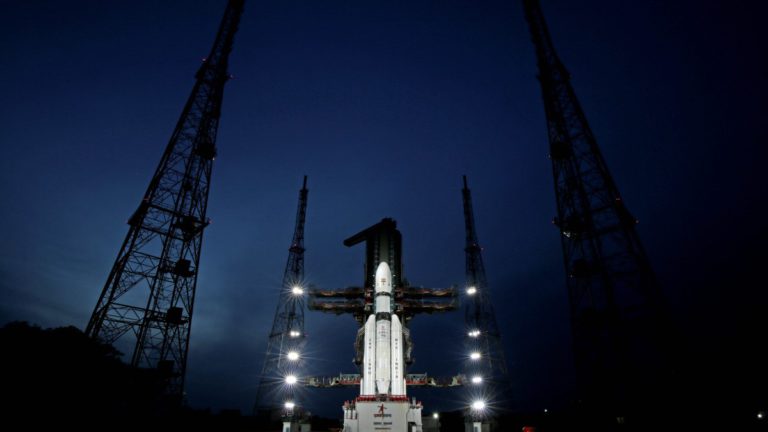
INDIA: India’s Chandrayaan-3 spacecraft is making steady progress on its mission to reach the moon, executing a series of strategic burns to elevate its orbit and prepare for a historic lunar landing.

The spacecraft, launched on July 14, has been meticulously boosting its orbit around Earth as it gears up for its final journey toward the lunar surface.

The Indian Space Research Organisation (ISRO) recently confirmed that the lunar spacecraft’s propulsion module completed its fourth orbit-raising maneuver on Thursday, July 20. 

The precise firing of engines occurred at the closest approach to Earth, effectively increasing the spacecraft’s apogee—the farthest point from Earth in its orbit. Looking ahead, the next critical firing is scheduled to take place between 2 and 3 p.m. India Standard Time on July 25. 

During this upcoming maneuver, known as the translunar injection (TLI) burn, Chandrayaan-3 will be propelled toward the moon, setting the stage for its highly anticipated landing attempt.

The low-energy approach adopted by Chandrayaan-3 is designed to optimize its trajectory to the moon and maximize its chances of a successful landing. 

The date set for this historic touchdown is expected to be either August 23 or August 24, as Chandrayaan-3 seeks to become India’s second mission to make contact with the lunar surface.

Chandrayaan-3’s ambitious mission follows in the footsteps of its predecessor, Chandrayaan-2, which encountered challenges during its attempted moon landing in 2019. 

With valuable lessons learned from the earlier venture, the Chandrayaan-3 team has worked diligently to improve and enhance the spacecraft’s capabilities, increasing the prospects for a triumphant lunar landing this time around.

If all goes according to plan, the mission’s lander and rover will commence their scientific exploration of the lunar surface for up to 14 Earth days—a single lunar day. 

During this brief yet crucial period, the Chandrayaan-3 mission aims to gather valuable scientific data and insights from the moon’s terrain and composition.

However, it is important to note that the harsh lunar environment poses significant challenges to the spacecraft’s survival. As the lunar night plunges temperatures to extreme lows, the spacecraft is not expected to endure the harsh conditions, making the surface operation of the lander and rover a race against time.

The Chandrayaan-3 mission represents a significant milestone for India’s space exploration program, demonstrating the nation’s commitment to advancing its capabilities in space research and technology. 

With each mission, India has showcased its determination to unlock the mysteries of the moon and the cosmos, contributing to the global scientific community’s knowledge and understanding of our celestial neighbor.

As the countdown continues toward the scheduled landing date, excitement and anticipation build among scientists, engineers, and space enthusiasts worldwide. 

Chandrayaan-3’s success would not only mark a momentous achievement for India but also add a new chapter to the ongoing exploration of the moon—a celestial body that continues to captivate the imagination of humanity.

Also Read: ISRO’s Chandrayaan-3 Begins Journey to the Moon, Political Parties Clash Over Credit

Acer Nitro 16: Ultimate Gaming Laptop with 16-Inch Display and Cutting-Edge Features

INDIA: Taiwanese electronics giant Acer has once again raised the bar in the gaming laptop market with the launch of its latest offering, the Nitro 16.

The Nitro 16 seeks to reinvent the gaming experience for enthusiastic Indian gamers, boasting a stylish appearance and a big 16-inch display.

The much-awaited gaming laptop is now available for purchase on Acer’s official website, as well as through online and offline stores, with prices starting at Rs 1,14,990.

The Nitro 16 is powered by the latest AMD Ryzen 7 7840HS octa-core processor, ensuring lightning-fast performance and responsiveness. It comes in two versions, providing gamers with options to suit their preferences. 

One version is equipped with the Nvidia GeForce RTXTM 4060, delivering 8 GB of dedicated RAM, while the other features the 4050 with 6 GB of RAM. 

This combination of powerful processors and graphics cards promises an immersive gaming experience, making the Nitro 16 a worthy companion for gamers seeking top-notch performance.

The standout feature of the Nitro 16 is its large 16:10 aspect ratio display, providing an immersive visual experience that draws players into their gaming worlds like never before. 

Complementing the impressive display is a fast 165 Hz refresh rate, ensuring smooth and clear motion on the screen without any lag or blurriness. 

Whether it’s fast-paced action or detailed visuals, the Nitro 16 delivers a seamless visual experience. Furthermore, Acer has paid attention to every detail to create a truly customized gaming experience. 

The laptop has a 4-Zone RGB backlight that can be customised using Nitro Sense, giving players the ability to enhance their gameplay conditions.The Nitro 16 also features a strong cooling mechanism to avoid overheating during prolonged gaming sessions.

The laptop will stay cool even during lengthy gaming sessions thanks to the cooling system’s dual fans, dual intake, quad exhaust, and Liquid Metal grease for effective heat dissipation. With gamers in mind, Acer has carefully crafted the Nitro 16 to handle long hours of gaming without compromising on performance or comfort.

Connectivity is a crucial aspect of any gaming laptop, and the Nitro 16 doesn’t disappoint in this regard. It comes with a range of connectivity options, including HDMI 2.1, a MicroSD card reader, USB 4, Killer Ethernet E2600, and Wi-Fi 6E. 

These features ensure seamless online gaming experiences and easy connection to external displays and peripherals.

Acer has also made it convenient for gamers to enhance their system’s performance by utilizing the Gen 4 memory slots on the laptop. Additionally, the DDR5 storage slots enable faster data access and transfer speeds, further optimizing the gaming experience.

Sudhir Goel, Chief Business Officer at Acer India, expressed excitement about the launch of the Nitro 16, stating, “With its cutting-edge features and a gorgeous 16-inch display, the Nitro 16 aims to revolutionize the gaming experience for passionate gamers in India.”

As gaming continues to grow in popularity, Acer’s commitment to pushing boundaries and delivering top-tier gaming laptops is evident in the Nitro 16. 

This latest addition to Acer’s gaming laptop lineup is set to become a sought-after choice among the gaming community, promising an unparalleled gaming experience with its powerful performance, immersive display, and thoughtful features.

Also Read: ASUS Vivobook S15 OLED: A Budget-Friendly Laptop with Stunning Display

ESA to Steer Dead Satellite Back to Earth in Guided Re-Entry

0

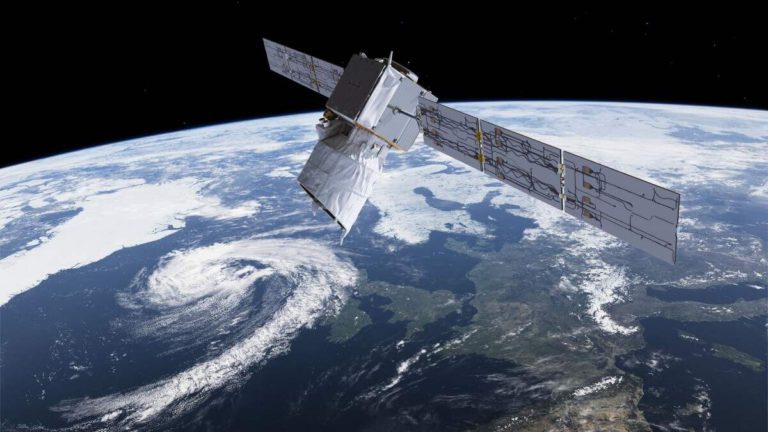
ENGLAND: In a landmark endeavor, scientists at the European Space Agency (ESA) are preparing for a “first-of-its-kind” operation to guide a dead satellite safely back to Earth through a controlled re-entry.

The satellite in question is the renowned Aeolus spacecraft, a wind-monitoring marvel that has revolutionized meteorology. At a press conference held on Wednesday (July 19), ESA scientists unveiled their ambitious plan to guide Aeolus’ return to Earth, with the operation scheduled to take place on Friday, July 28.

ESA’s ambitious plan

Described as the “impossible mission” due to its unique challenges and cutting-edge technological requirements, the Aeolus satellite achieved a historic feat in 2018 as the first spacecraft to measure Earth’s winds from space. 

For five remarkable years, it contributed invaluable data to Europe’s leading meteorology centers, significantly improving global weather forecasts. However, its operational life came to an end in April this year, and the satellite was finally powered off in early July.

Since then, Aeolus has been descending toward Earth at an accelerating pace, falling from an altitude of 200 miles (320 kilometers) at a rate of approximately 0.62 miles (1 kilometer) per day. This freefall presented a unique opportunity for scientists to attempt a guided re-entry, an unprecedented feat in the history of spaceflight.

Aeolus’ original design did not include provisions for a guided re-entry, and under normal circumstances, the satellite would have naturally returned to Earth. 

However, utilizing the remaining fuel onboard, ESA scientists at the Space Operations Centre in Germany will execute a series of maneuvers to steer Aeolus to the optimal point for re-entry.

The guided return operation commences on Monday, July 24, as the satellite reaches an altitude of 174 miles (280 kilometers) above Earth. Initial maneuvers will lower Aeolus to 155 miles (250 km), placing it in an elliptical orbit around the planet. 

Three days later, further maneuvers will be performed to reduce its altitude even more, to approximately 93 miles (150 km). The final critical maneuver is scheduled for Friday, July 28, when Aeolus’ altitude will be further decreased to about 62 miles (100 km) above Earth’s surface. 

Within five hours of this final maneuver, the guided re-entry of Aeolus will occur, ensuring precise control over its descent. During its descent, Aeolus will be continuously tracked by ground-based radar systems, enabling ESA experts to monitor and guide its trajectory. 

The satellite is expected to re-enter over the Atlantic Ocean. However, despite the meticulous planning, not all parts of Aeolus will survive the re-entry process.

Holger Krage, head of ESA’s Space Debris Office, revealed that only around 20% of the satellite is expected to survive re-entry, with the remaining 80% burning up in Earth’s atmosphere. 

As Aeolus disintegrates around 50 miles (80 kilometers) above Earth, any surviving debris will be scattered across a vast area of the ocean. You might wonder about the purpose of this guided re-entry operation if there are no plans to recover the surviving components of Aeolus. 

The significance lies in its role in developing controlled re-entry maneuvers for satellites, especially in an era with an increasing number of spacecraft in space.

With such a significant amount of human-made space debris, about 100 tons of it returning to Earth each year, controlled re-entry becomes essential to ensure the safety of space operations and activities.

Although the likelihood of damage or injury from falling debris is currently low, future spacecraft must be designed with controlled re-entry in mind, adhering to new rules for space.

The groundbreaking guided return to Earth of Aeolus serves as a pioneering initiative to establish protocols for controlled re-entry of spacecraft, contributing to a safer and more sustainable approach to space exploration.

Also Read: OpenAI’s ChatGPT Introduces ‘Customized Instructions’ Feature for Enhanced User Experience