
Home Blog Page 39

World Emoji Day: Celebrating the Universal Language of Emoticons

0

INDIA: On July 17th, the world comes together to celebrate World Emoji Day, an annual event that recognizes the global phenomenon of emojis and their impact on communication. Emojis have become integral to digital communication, transcending language barriers and adding colour and emotion to our online interactions.

Emojis, the small digital icons representing various emotions, objects, and concepts, have revolutionized how we express ourselves in the digital age. 

Created in Japan in the late 1990s, emojis quickly gained popularity worldwide and have since become a universal language. These tiny images convey emotions and messages more effectively than words, from a simple smiley face to a thumbs-up gesture or a crying, laughing emoji.

The significance of emojis lies in their ability to convey tone and emotion that might get lost in text-based conversations. They add nuance, humour, and personality to our messages, making them more engaging and relatable. 

Emojis have also found their way into advertising, branding, and marketing strategies, with companies leveraging their visual appeal to connect with audiences on a deeper level.

World Emoji Day, established by the founder of Emojipedia, Jeremy Burge, in 2014, aims to celebrate the impact of emojis on global communication. Today, people worldwide participate in various activities, events, and social media campaigns to express their love for emojis and explore their creative potential.

Emojipedia, the go-to resource for all things emoji, often releases new emoji updates on World Emoji Day. These updates include additions to the ever-expanding collection of emojis, ensuring that our digital conversations remain relevant and inclusive. 

Emojis now encompass a wide range of skin tones, gender representations, and cultural symbols, allowing individuals to express their identities and values. The influence of emojis goes beyond individual conversations. They have also become a means of cultural expression and social commentary. 

Emojis have been used to raise awareness about social issues, promote inclusivity, and advocate for causes. The power of a single emoji to convey a message or spark a conversation is a testament to its impact on our digital society. 

The popularity of emojis has even led to the creation of the World Emoji Awards, where the best and most creative uses of emojis are recognized and celebrated. Categories range from “Best New Emoji” to “Most Anticipated Emoji” and “Emoji Art of the Year.” This annual event showcases the versatility and artistic potential of emojis.

As we celebrate World Emoji Day, we must recognize the cultural significance and influence these tiny icons have on our daily lives. Emojis have transformed communication, making conversations more expressive, engaging, and inclusive. 

They have become a visual language that transcends borders and connects people from different cultures and backgrounds.

So, whether you’re sending a heart emoji to express love, a laughing face to share joy, or a thumbs-up to show approval, take a moment on this World Emoji Day to appreciate the impact of these colourful icons in our digital world.

Also Read: Unlocking the Mysteries of Leibniz’s Worlds: A Fascinating Theory Explored
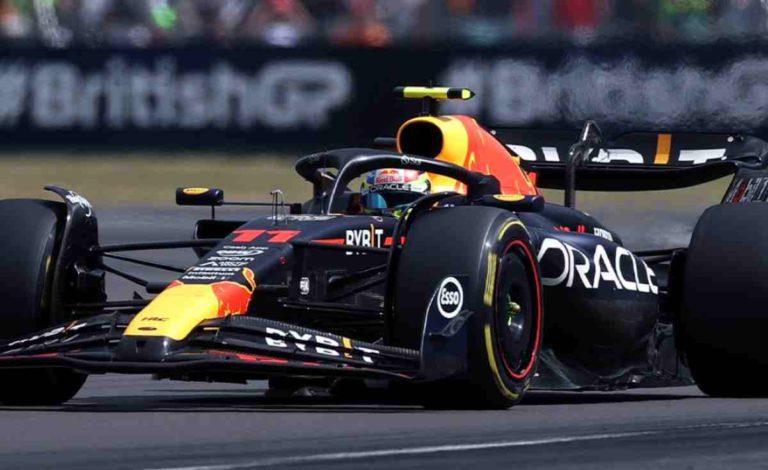
Red Bull Gears Up for Hungarian Grand Prix with Upgrades, Eyeing Further Dominance

0

HUNGARY: Red Bull Racing, the dominant force of the 2023 Formula 1 season, is set to extend its lead at the upcoming Hungarian Grand Prix with new upgrades to its RB19 car.

The team’s relentless form has already secured their victories in all ten races this year, making them the overwhelming favorites for the championship titles.

The RB19, the latest creation by renowned designer Adrian Newey, has been a formidable package on the track, showcasing its superiority with four 1-2 finishes and nine pole positions in qualifying sessions. 

However, Red Bull shows no signs of complacency and is ready to introduce further enhancements at the Hungaroring.

Reports indicate that Red Bull’s upgrades will focus on the sidepods, with significant visible changes expected. The team is said to have drawn inspiration from Aston Martin’s deep groove in their sidepod design, aiming to extract even more performance from their car. 

The improvements can yield a substantial gain of approximately two-tenths of a second per lap, similar to those achieved with their previous upgrades in Baku.

Max Verstappen, the current championship leader, expressed his anticipation for the forthcoming enhancements. He stated that the team is working on various areas, such as drag reduction, performance in different speed ranges, DRS effectiveness, and tire wear. 

With Hungary offering a different track layout and characteristics, the upgrades are crucial for maintaining Red Bull’s dominance.

The fact that Formula 1 regulations will remain unchanged between this and the following season amplifies the importance of these upgrades. Any progress made now will carry over to the RB20 car, giving Red Bull a head start for the upcoming campaign. 

However, the team needs assistance dividing resources between this year’s RB19 and next year’s car due to the limited wind tunnel testing required by aerodynamic regulations.

Christian Horner, the team principal, highlighted the strategic decisions Red Bull must make, considering the restricted testing opportunities. 

Despite the constraints, the team arrived with a competitive package at the beginning of the season, allowing them to capitalize on their early momentum.

Horner emphasized carefully selecting testing and development priorities, as resources have already shifted towards the RB20.

The inconsistency of their rivals has also bolstered Red Bull’s advantage. With different teams taking turns as the nearest challenger in each race, competitors have yet to challenge Red Bull’s dominance consistently. 

As a result, Red Bull currently leads the Constructors’ Championship by a staggering 208 points ahead of Mercedes. At the same time, Verstappen and his teammate Sergio Perez occupy the top two positions in the Drivers’ standings.

As the Hungarian Grand Prix approaches, all eyes will be on Red Bull and their upgraded RB19. Can they extend their winning streak to eleven races and solidify their position as the team to beat? Formula 1 fans eagerly await the next chapter of this thrilling season.

Also Read: Jeremy Clarkson’s Jinx Strikes again: Alpine’s Bad-Luck Charm Offers Services to Red Bull

Unlocking the Mysteries of Leibniz’s Worlds: A Fascinating Theory Explored
0

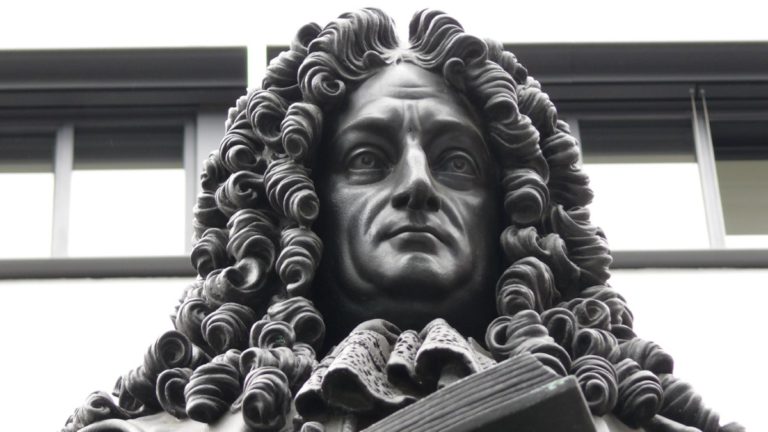
GERMANY: In philosophical thought, German polymath Gottfried Wilhelm Leibniz introduced a concept that has captivated thinkers for centuries: Leibniz’s Worlds. This intriguing theory offers a unique perspective on the nature of reality and the existence of an infinite number of distinct and harmonious worlds.

Leibniz, a prominent figure in 17th-century philosophy and mathematics, proposed that our world is just one among countless others that coexist independently. 

These individual worlds, or monads, are self-contained entities that possess their own unique set of properties and experiences. 

According to Leibniz, each monad is interconnected with the others, forming a vast network that mirrors a grand cosmic symphony.

At the heart of Leibniz’s philosophy is the principle of sufficient reason, which states that everything in the universe has an explanation or a reason for its existence. 

Each self-contained monad represents a distinct version of reality with its own set of reasons and explanations for its existence. Leibniz’s Worlds, therefore, explain the existence of a multitude of harmonious realities, each with its own self-sustaining order.

Leibniz’s theory of monads is often likened to a metaphysical ecosystem, where every monad contributes to the overall harmony and coherence of the entire system. 

Just as the various components of an ecosystem rely on one another for balance, the monads in Leibniz’s Worlds are intricately connected, each playing its unique role in maintaining the cosmic symphony.

While Leibniz’s Worlds remain a philosophical construct, they have inspired debates and discussions across disciplines, including philosophy, mathematics, and physics. 

Some scholars have drawn parallels between Leibniz’s theory and the concept of the multiverse, a cosmology hypothesis suggesting the existence of multiple universes with varying physical laws and properties.

Exploring Leibniz’s Worlds has also found resonance in contemporary scientific discourse. Quantum mechanics, for instance, offers intriguing insights that resonate with Leibniz’s ideas. 

The theory of wave-particle duality, which suggests that elementary particles exhibit particle-like and wave-like behaviours, raises questions about the existence of multiple potential realities coexisting simultaneously.

Furthermore, the concept of superposition in quantum mechanics, where particles can exist in multiple states until measured or observed, hints at a multiplicity of possibilities akin to Leibniz’s Worlds. 

Some physicists propose that each possible outcome corresponds to a different reality, suggesting a connection to Leibniz’s notion of distinct yet interconnected worlds. While Leibniz’s Worlds may remain a subject of philosophical speculation, it influences various fields of study. 

From stimulating discussions on the nature of reality to inspiring scientific inquiries into the fabric of the universe, Leibniz’s theory continues to captivate the imaginations of scholars and thinkers.

The exploration of Leibniz’s Worlds invites us to ponder the nature of existence, the interconnectedness of all things, and the possibility of vast realms of harmonious realities. 

Although we may never fully grasp the extent of Leibniz’s vision, pursuing understanding and contemplating the mysteries pushes the boundaries of human knowledge and expands our intellectual horizons.

Also Read: Understanding the Unruh Paradox: The Inexplicable Conundrum of Acceleration and Quantum Physics

Max Verstappen’s Fiery Retaliation Shocks Sim Racing World at Golden Toast Grand Prix

0

BELGIUM: In a dramatic turn of events during the iRacing-hosted Golden Toast Grand Prix at Spa-Francorchamps, two-time Formula 1 World Champion Max Verstappen unleashed his fury on an online sim racing rival, resulting in a shocking incident that left spectators stunned.

Verstappen, known for his love of sim racing, took pole position for the three-hour event featuring GT3 cars. However, his race took a tumultuous turn near the halfway mark when he found himself at the center of a collision that ignited his anger.

With just over an hour and 50 minutes remaining, Verstappen’s car was among the vehicles approaching the La Source hairpin. Suddenly, German racer Sven-Ole Haase crashed into Verstappen from behind, causing the Dutch driver to lose control and collide with his Team Redline teammate, Diogo Pinto.

Despite the setback, Verstappen swiftly regained his composure and rejoined the race behind the same group of cars. As they navigated through Eau Rouge, Raidillon, and the Kemmel Straight, it became apparent that Verstappen had something in mind.

Approaching Les Combes, Verstappen daringly cut through the escape area, bypassing the corners. The official livestream commentator recognized Verstappen’s statement and warned of impending chaos.

And chaos ensued. Verstappen targeted Haase in the braking zone for Bruxelles, opting not to hit the brakes himself. Instead, he rammed into the back of Haase’s car, sending both drivers hurtling into the gravel and crashing into the barriers.

The commentator summarized the situation: “Sven Haase is not the best friend of Max Verstappen after all that.” Replays revealed that Haase had initially forced Verstappen off track through the first half of the Bus Stop chicane. Verstappen retaliated by pushing Haase off the track, leading to a more significant collision.

As the replay unfolded, the commentator expressed dismay, stating, “I’m afraid Verstappen has overreacted horrendously to that.” Moments later, Verstappen was disqualified from the race due to his actions.

The incident sent shockwaves through the sim racing community, with fans and experts divided in their opinions. Some criticized Verstappen’s aggressive response, deeming it an overreaction, while others viewed it as a display of his fierce competitive spirit.

Verstappen’s actions have sparked debates about sportsmanship and the line between virtual and real-world racing. As sim racing continues to gain popularity, incidents like these highlight the intensity and emotions that can arise even in virtual competitions.

Also Read: Max Verstappen Extends Winning Streak with Thrilling Victory at British Grand Prix

Hubble Telescope Captures Dazzling Photo of Galaxy Hosting Recent Supernova Explosion

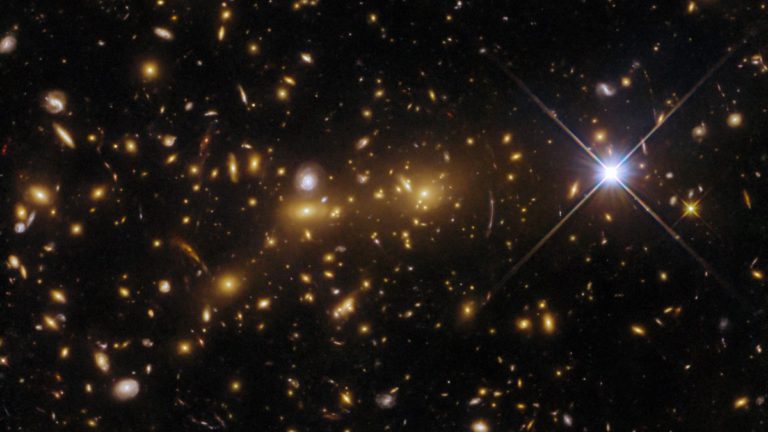
UNITED STATES: A breathtaking new image captured by the Hubble Space Telescope has unveiled a distant galaxy, UGC 11860, which recently witnessed the intense spectacle of a supernova explosion.

Located approximately 184 million light-years away in the constellation Pegasus, UGC 11860 shares similarities with our Milky Way, featuring its distinctive spiral structure with arms extending from a bright central region.

Although the serene appearance of UGC 11860 may deceive the eye, NASA has revealed that the galaxy was the site of an unimaginably energetic stellar explosion. The space agency shared the captivating Hubble photo on July 7, showcasing the galaxy’s glory.

When a massive star reaches the end of its life cycle, it undergoes a cataclysmic event known as a supernova. These extraordinary explosions release an immense amount of energy, propelling vast quantities of matter into space and leaving behind shells of gas and dust, forming what is known as a supernova remnant.

The observations of UGC 11860 were captured in 2014 using the Hubble Space Telescope’s Wide Field Camera 3. By analyzing the collected data, astronomers have been able to study the aftermath of the stellar explosion and investigate the lingering remnants within the galaxy.

The study of supernova remnants, such as the one found in UGC 11860, provides valuable insights into the star systems that fuel these cosmic explosions. 

Through these observations, Astronomers can better understand the progenitor stars and their masses, compositions, and behaviors.

The Hubble Space Telescope continues to unlock the mysteries of the universe, capturing stunning images and aiding astronomers in their quest for knowledge. The captivating photo of UGC 11860 reminds us of the immense power and beauty within our cosmic surroundings.

As scientists delve further into the study of supernovas and their remnants, they bring us closer to unraveling the origins of the elements that make up our world. 

Each new observation adds to our understanding of the universe, providing a glimpse into the intricate processes that shape galaxies and contribute to the grand tapestry of the cosmos.

Also Read: Hubble Telescope Captures Stunning Image of Two Distant Galaxies

Microsoft and PlayStation Reach Agreement to Keep Call of Duty on PlayStation Platforms

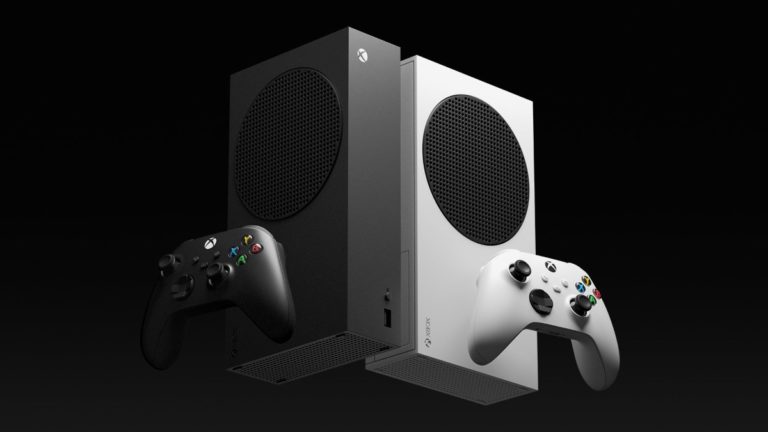
UNITED STATES: In a significant development for gaming enthusiasts, Microsoft has announced a binding agreement with Sony’s PlayStation division, ensuring that the top-rated gaming franchise, Call of Duty, will continue to be available on PlayStation platforms. a

The announcement comes in the wake of Microsoft’s acquisition of Activision Blizzard, which raised concerns about the future of the multi-platform game. Phil Spencer, the Head of Microsoft Gaming and Xbox, took to Twitter to share the news, expressing his satisfaction. 

This agreement comes as a response to concerns raised by regulators regarding the potential impact of Microsoft’s acquisition on competition. Microsoft’s Vice Chair and President, Brad Smith, emphasized the company’s commitment to addressing these concerns. 

According to the media, this commitment has resulted in a 10-year deal between the two companies. The agreement to keep Call of Duty on PlayStation consoles aims to alleviate fears that Microsoft’s increased market dominance would lead to exclusivity or reduced game availability on rival platforms. 

The Federal Trade Commission (FTC) had previously expressed concerns that the acquisition might hinder competition and limit consumer choice.

The FTC argued that Microsoft would be vested in excluding rivals like Sony from accessing the popular game, which could ultimately harm both console players and those with gaming subscriptions. 

To address these concerns, Microsoft had already committed to licensing “Call of Duty” to other industry players. Notably, they had reached a 10-year contract agreement with Nintendo, contingent on the completion of the merger. For gamers, this agreement between Microsoft and PlayStation brings relief and excitement. 

Players can now look forward to enjoying the highly anticipated Call of Duty titles on their preferred platforms, regardless of whether they play on Xbox or PlayStation consoles. 

The agreement with PlayStation is just one of the steps Microsoft is taking to convince regulators in the US and Europe about the benefits of the Microsoft-Activision acquisition.

As the deal progresses and obtains regulatory approvals, Microsoft is actively working to ensure that gaming remains a diverse and accessible player experience across platforms. 

The continuation of Call of Duty on PlayStation platforms is a testament to this commitment, providing gamers the freedom to choose and enjoy their favorite games without limitations.

Also Read: Microsoft’s Activision Blizzard Acquisition Clears FTC Hurdle; Paves Way for $69 Billion Deal

New Radio Observations Shed Light on Pulsar’s Mysterious Subpulse Drifting and Nulling Behaviour

INDIA: Using the upgraded Giant Meterwave Radio Telescope (uGMRT), a team of astronomers from India and Australia has conducted groundbreaking observations of the pulsar PSR J0026–1955, unveiling intriguing insights into its subpulse drifting and nulling behavior.

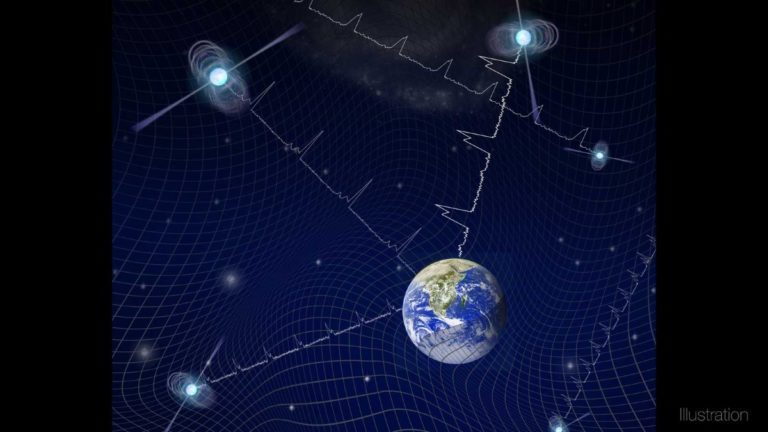
The results of this study, published on the preprint server arXiv, provide a deeper understanding of the complex phenomena exhibited by this fascinating celestial object. Pulsars, highly magnetized rotating neutron stars, emit beams of electromagnetic radiation.

While they are typically detected through short bursts of radio emission, they can also be observed across various other wavelengths, including optical, X-ray, and gamma-ray. The radio emission from pulsars displays a range of phenomena, including subpulse drifting, nulling, and mode changing.

Subpulse drifting refers to the radio emission’s apparent spin phase drift within the pulsar’s main pulse profile. Nulling, conversely, involves the abrupt cessation of emission for a few to hundreds of pulse periods before it resumes.

PSR J0026-1955, a Galactic pulsar discovered in 2018, possesses a spin period of around 1.306 seconds and a dispersion measure of 20.81 pc/cm3.

With a spin-down luminosity of 23 nonillion erg/s and a surface magnetic field strength of 770 billion Gauss, it boasts an estimated characteristic age of 47 million years.

Building upon previous observations using the Murchison Widefield Array (MWA), the team, led by Parul Janagal from the Indian Institute of Technology Indore, decided to delve deeper into the subpulse drifting and nulling exhibited by PSR J0026–1955.

The team’s detailed investigation, conducted using the upgraded Giant Metrewave Radio Telescope (uGMRT) at frequencies ranging from 300 to 500 MHz, uncovered fascinating insights into the pulsar’s behaviour.

The observations revealed that PSR J0026-1955 experiences both evolutionary and non-evolutionary drift rates, with two distinct subpulse drifting modes, designated A and B. Mode A was further divided into A0, A1, and A2 based on the evolutionary behaviour of the drift rate.

Additionally, the study found that PSR J0026-1955 exhibits short- and long-duration nulls, with a nulling fraction estimated to be around 58%. This fraction is significantly lower than that reported in previous MWA observations.

The researchers speculate that this discrepancy may arise due to differences in observation durations, a shallow spectral index component, or a frequency dependence of nulling. The observations also provided evidence of subpulse memory across nulls in PSR J0026-1955.

The researchers discovered instances of drift rate and subpulse phase continuity during nulls, suggesting the presence of stable discharge in the polar gap, which is not detectable due to the absence of a dominant coherence mechanism or a partially screened gap hindering the generation of observable radio emission.

Also Read: ISRO’s Chandrayaan-3 Begins Journey to the Moon, Political Parties Clash Over Credit

Alex Carey Addresses Backlash Following Infamous Bairstow Stumping in Ashes Test

0

ENGLAND: Australian wicketkeeper Alex Carey has broken his silence regarding the backlash he faced after his contentious stumping of Jonny Bairstow during the second Ashes Test at Lord’s. Carey acknowledged the negative comments directed at him in recent days but highlighted the unity and support within the Australian team.

Alex Carey revealed that fans had subjected him to unpleasant remarks in his first public statement since Bairstow’s dismissal. However, he emphasized his unwavering support from his team and fans. 

He reveals that some people kept saying some nasty stuff, but he added that since it is the Ashes, there was ugly stuff said before that as well.

The Australian players faced booing in the Lord’s Long Room, leading to the implementation of some restrictions and the suspension of three MCC members. 

Responding to the debate surrounding the “spirit of cricket,” Alex Carey respected differing opinions. He underlined that the team remained united and focused on what mattered most. “We’re all in it together… I don’t think the group would do anything differently,” Carey affirmed. 

He explained that Bairstow’s lack of attempted shots prompted him to go for the stumping. Reflecting on his own experiences, Carey mentioned that he had been dismissed similarly before and had accepted it without questioning the spirit of the game.

Regarding the injury to Nathan Lyon, Alex Carey expressed confidence in the team’s depth and adaptability. He praised the fast bowlers for their excellent performances and mentioned the need to adjust to the different conditions encountered in England.

Australia, currently leading the Ashes series 2-1, is preparing for the fourth Test at Old Trafford Cricket Ground, set to begin on July 19. 

The team aims to secure victory and claim the series. Alex Carey’s statement sheds light on the team’s mindset, emphasizing their determination and unity as they head into a crucial match.

As the Ashes series progresses, fans will be eagerly watching the performances of both teams and closely following the players’ reactions. 

Alex Carey’s response to the criticism demonstrates the resilience and solidarity of the Australian squad, highlighting their unwavering focus on the ultimate goal of reclaiming the Ashes.

Also Read: Australia Vs South Africa Day 3: Alex Carey’s Century Puts South Africa on Backfoot

Jeremy Clarkson’s Jinx Strikes again: Alpine’s Bad-Luck Charm Offers Services to Red Bull

0

UNITED KINGDOM: Popular television presenter and celebrity Formula 1 fan Jeremy Clarkson has jokingly offered his services to the Red Bull team after his recent visit to the British Grand Prix brought no luck to the Alpine team. 

Clarkson, who has recently developed a relationship with Alpine, honoured his promise of buying the team a pint when they secured a podium finish at the Monaco GP in May. 

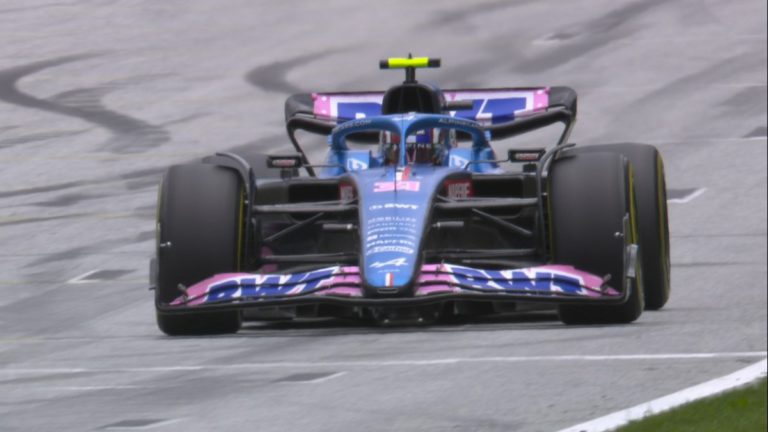
However, both Alpine cars faced unfortunate retirements during his attendance at Silverstone. The misfortune started when Esteban Ocon, who had previously secured third place at Monaco, retired after just nine laps due to an oil leak. 

His teammate, Pierre Gasly, collided with Lance Stroll’s Aston Martin, forcing him to retire six laps before the finish line. These incidents disappointed the team and caused them to fall behind McLaren in the Constructors’ standings.

With Red Bull and Max Verstappen continuing their dominant form at Silverstone, Clarkson humorously mentioned that he might take his jinx-link presence to the reigning World Champions to bring much-needed excitement to the 2023 season. 

In a column for a newspaper, he stated, “Maybe I should offer my mascot services to Red Bull.” The incident is not the first time Clarkson’s presence at a Formula 1 event has attracted attention. He attended the Bahrain Grand Prix earlier in the season as a guest of the crown prince. 

Following that race, the former Top Gear host expressed frustration with Formula 1 as a live event, suggesting that it is better suited for television viewership than in-person viewing.

Clarkson’s jovial offer to Red Bull adds an element of humour to the sport, reminding fans that sometimes superstitions and coincidences can capture the imagination. 

Although it remains to be seen if Red Bull will accept his offer, Clarkson’s presence in the paddock has undoubtedly added an extra layer of excitement for fans.

As the 2023 Formula 1 season unfolds, fans will be eagerly watching to see if Jeremy Clarkson’s jinx continues or if he brings good fortune to his preferred team.

Also Read: Daniel Ricciardo Makes Sensational F1 Comeback with Red Bull’s AlphaTauri

The Law of Strength: Understanding Wolff’s Law and Its Impact on Bone Health

INDIA: Wolff’s Law is a fundamental principle in biomechanics that helps us understand the relationship between mechanical stress and bone adaptation. Named after the German anatomist and surgeon Julius Wolff, this law states that bones in a healthy individual will adapt and remodel in response to the loads placed upon them.

In simpler terms, the more stress and strain a bone experiences, the stronger and denser it becomes. This concept was first introduced by Wolff in the 19th century, based on his observations of bone deformities and fractures. He noted that bones subjected to increased mechanical stress, such as weight-bearing activities, tend to become stronger and thicker over time. 

On the other hand, bones not subjected to sufficient stress, like those in astronauts experiencing microgravity, tend to weaken and lose density.

We can summarise the law in Wolff’s famous statement: “Every change in the function of a bone, or its function alone, is followed by certain definite changes in its internal architecture and its external conformation.”

The adaptation of bone occurs through remodelling, where the body constantly resorbs and forms new bone tissue. Osteoblasts, cells responsible for bone formation, are activated in response to mechanical stress, while osteoclasts, cells responsible for bone resorption, are stimulated by stress reduction. 

This dynamic remodelling process ensures that the bone structure aligns with the mechanical demands. The practical implications of Wolff’s Law are significant, particularly in orthopaedics and sports medicine. 

Athletes and individuals engaging in weight-bearing exercises, such as running, weightlifting, or jumping, experience increased bone stress. 

Over time, this stress leads to bone remodelling, strengthening the skeletal structure, and reducing the risk of fractures.

Conversely, sedentary lifestyles or prolonged periods of inactivity can harm bone health. Without sufficient mechanical stress, bones may become weaker and more susceptible to fractures and osteoporosis. 

This observation highlights the importance of regular physical activity for maintaining strong and healthy bones throughout life.

Wolff’s Law also plays a crucial role in bone healing. When a bone fractures, the body initiates a healing process involving remodelling the affected area. 

Orthopaedic surgeons utilize this principle when setting broken bones or performing corrective procedures. By strategically manipulating the mechanical stress placed on the bone during the healing process, they can guide the bone’s adaptation and achieve optimal alignment and strength.

Also Read: Toto Wolff Responds to Claims of “Politics” in Mick Schumacher’s Red Bull Snub