
Home Blog Page 40

Celestial Encounter: Moon Meets the Seven Sisters as Jupiter Plays Chaperone

0

UNITED STATES: Skywatchers were in for a treat as the moon had a captivating rendezvous with the Pleiades star cluster, also known as the Seven Sisters, in the early morning of Friday, July 14.

This celestial encounter was witnessed by observers on Earth, with Jupiter and the brilliant star Aldebaran in Taurus adding their presence to the spectacle.

In New York City, Jupiter and the Pleiades rose around 1:30 a.m. ET on July 14, followed by the moon’s rise just after 2:30 a.m. EDT. 

The moon, currently in its waning crescent phase, approached the Pleiades as it darkened, leading up to the new moon on July 17. The moon was approximately one hand’s width below and to the left of the Seven Sisters, with Jupiter shining above and to the right. 

While not visible to the naked eye, Uranus was located between the Pleiades and Jupiter using optical instruments.

Although the wide arrangement may not fit within the field of view of binoculars, a magnificent celestial scene treats the unaided eye. 

The Pleiades, named after the daughters of the Titan god Atlas and the ocean nymph Pleione in Greek mythology, form an open star cluster. 

All the stars in this cluster originated from the same gas and dust cloud, creating a true family of stars that continues to journey together through space. Close to the moon’s meeting with the Pleiades lies the renowned star Aldebaran, also known as the “Eye of the Bull.” 

Located in the Taurus constellation, this red giant star is around 65 light-years from Earth and is approximately 44 times wider than the sun. Its Arabic name, “Aldebaran,” meaning “the follower,” reflects its position in relation to the Pleiades as it follows them over the horizon in the Northern Hemisphere.

This celestial spectacle was a captivating sight for stargazers, offering a unique opportunity to witness the moon’s embrace of the Seven Sisters alongside the watchful presence of Jupiter and Aldebaran.

Also Read: ISRO Scientists Seek Blessings at Tirupati Temple as Chandrayaan-3 Moon Mission Countdown Begins

Ferrari, Red Bull Oppose 2026 Engine Regulations as Renault Supports Mercedes’ Push

0

UNITED KINGDOM: In a brewing debate over the 2026 engine regulations in Formula 1, Ferrari has aligned with Red Bull, while Mercedes has found an ally in Renault.

The regulations, approved in August last year, aim to increase the electrical power generated by the MGU-K, achieving a 50/50 split between battery and engine power.

However, concerns have emerged regarding this split, with Red Bull’s Christian Horner warning of a “technical Frankenstein” and advocating for changes to preserve wheel-to-wheel racing.

Mercedes’ Toto Wolff dismissed Horner’s claims and suggested Red Bull’s engine program struggles drove them.

On the other hand, Renault has voiced its support for the current regulations, standing alongside Mercedes. Otmar Szafnauer, team boss of Alpine, stated that he is content with the existing power unit regulations. 

While he admitted not being deeply involved in the negotiations, he mentioned conversations with the powertrain experts and their preference for maintaining the status quo. 

Szafnauer highlighted the need to avoid premature concerns, citing the uncertainties surrounding the 2022 technical regulations and cautioning against scaremongering.

The debate has divided the paddock, with Ferrari standing firmly behind Red Bull’s position while Alpine, representing Renault, aligns with Mercedes. 

Szafnauer emphasized that it is premature to speculate on the 2026 chassis regulations and whether they would result in a “Frankenstein package.”

He recalled previous concerns about current regulations that ultimately did not materialize, highlighting the difficulty of predicting the future. He hoped the sport would reach a favorable resolution regarding the regulations.

Meanwhile, rumours surrounding Red Bull’s development progress have emerged. Horner suggested that Red Bull Powertrains was ahead in its 2026 engine development compared to its rivals. Still, Szafnauer expressed skepticism, stating that he did not possess sufficient information to compare their progress. 

Contrary to Horner’s claims, a German publication reported that Red Bull was slightly behind schedule. The publication mentioned “teething problems” and indicated that the combustion engine from Red Bull’s Milton Keynes facility was reportedly around ten horsepower below the target. 

In contrast, according to the rumours circulating among engineers, Mercedes was described as the front-runner in development, with Red Bull still ahead of Ferrari.

As the debate intensifies and factions emerge within the Formula 1 community, the sport’s governing bodies will face the challenge of reconciling the conflicting perspectives and reaching a decision that satisfies all stakeholders. 

The future of the 2026 engine regulations hangs in the balance, with the potential to shape the landscape of Formula 1 racing.

Also Read: Daniel Ricciardo Makes Sensational F1 Comeback with Red Bull’s AlphaTauri

Dell Unveils Alienware m16 with AMD Processors; Launch During Amazon Prime Day Sale

INDIA: The highly anticipated Amazon Prime Day sale is just around the corner, and tech enthusiasts eagerly await the unveiling of new gadgets and exciting deals.

Among the impressive lineup, Dell Technologies and Alienware have announced the launch of two AMD variants of the Alienware m16 gaming laptop, exclusively available during the sale.

The Alienware m16 AMD edition laptops, priced at Rs 1,92,990 for the base variant and Rs 2,99,990 for the higher-end model, will be part of the Amazon Prime Day sale starting on July 15 and concluding on July 16.

The Alienware m16 AMD edition has a powerful AMD Ryzen 7000H series processor, ensuring exceptional performance. 

The laptops also feature up to an NVIDIA GeForce RTX 4080 GPU for remarkable graphics capabilities, promising an immersive and captivating gaming experience.

Furthermore, the Alienware m16 boasts a 16:10 aspect ratio display with a maximum refresh rate of 480Hz. Users will have the option to choose a 165Hz refresh rate as well. 

The laptop’s Legend 3.0 design and Alienware Cryo-Tech thermal architecture effectively prevent overheating during intense gaming sessions, ensuring optimal performance and longevity.

Players will have complete control over their gameplay settings with the Alienware Command Centre 6.0, allowing customization to suit individual preferences. 

Various options allow gamers to tailor their settings to enhance their gaming experience. Additionally, the laptops are equipped with Dolby Atmos and Dolby Vision, delivering exceptional audio and visual quality for a truly immersive gaming environment.

As the Amazon Prime Day sale approaches, tech enthusiasts and gamers can look forward to the launch of Dell’s Alienware m16 AMD edition. 

With its powerful hardware, stunning display, and customizable features, the Alienware m16 will be a sought-after gaming laptop during the sale.

Also Read: Ferrari, Red Bull Oppose 2026 Engine Regulations as Renault Supports Mercedes’ Push

Bigger is Better: Understanding Cope’s Rule and Evolutionary Size Increase

INDIA: Cope’s Rule, a principle in evolutionary biology named after American palaeontologist Edward Drinker Cope, suggests that animal lineages tend to evolve towards larger body sizes over time.

This intriguing phenomenon has sparked considerable debate and exploration within the scientific community as researchers seek to understand its underlying mechanisms and implications.

First proposed in the late 19th century, Cope’s Rule challenges the conventional belief that species remain relatively stable in size throughout their evolutionary history. Instead, it proposes that, on average, species tend to increase in size over successive generations. 

While exceptions exist to this rule, the general trend towards larger body sizes has been observed across various organisms, from ancient dinosaurs to modern mammals.

The driving factors behind Cope’s Rule are multifaceted and can vary depending on the species and ecological context. One possible explanation is the concept of competitive advantage. 

Larger organisms often possess increased strength, improved defense mechanisms, and enhanced access to resources, giving them an edge in survival and reproduction. 

This advantage leads to the preferential selection of larger individuals within a population, gradually shifting the average body size over time.

Additionally, larger sizes can offer physiological benefits. For instance, larger animals tend to have lower metabolic rates relative to their body size, allowing them to conserve energy more efficiently. 

This advantage can be especially significant in resource-limited environments or during environmental stress. Factors like environmental changes and ecological interactions also influence Cope’s Rule. 

For instance, during periods of environmental stability and abundant resources, species may experience relaxed selection pressure, enabling them to grow larger.

On the other hand, in times of environmental upheaval or increased competition, smaller individuals are favored due to their higher reproductive rates or agility.

However, it is essential to note that Cope’s Rule is not an absolute law of evolution, and there are exceptions and counterexamples. Some lineages may undergo a size decrease or remain relatively unchanged in size over extended periods. 

These deviations from Cope’s Rule highlight the complexity of evolutionary processes and the influence of various ecological and genetic factors.

Advances in paleontological research and the analysis of fossil records have provided valuable insights into the patterns and mechanisms of size evolution. 

By studying the fossilized remains of ancient organisms, scientists can trace the changes in body size within specific lineages over millions of years. 

These investigations have revealed intriguing patterns, such as the size increase observed in several dinosaur groups during the Mesozoic era.

Understanding Cope’s Rule and its implications can shed light on the long-term evolutionary dynamics of species and ecosystems. It provides valuable information about the adaptive strategies employed by organisms and the factors that shape biodiversity over geological time scales. 

Additionally, studying size evolution can have practical applications, such as predicting species’ responses to environmental changes and understanding the consequences of human-induced alterations to ecosystems.

Also Read: Understanding the Unruh Paradox: The Inexplicable Conundrum of Acceleration and Quantum Physics

Microsoft’s Activision Blizzard Acquisition Clears FTC Hurdle; Paves Way for $69 Billion Deal

0

UNITED STATES: In a significant development for the gaming industry, a federal judge has granted Microsoft approval to acquire video game developer Activision Blizzard.

The ruling by U.S. District Judge Jacqueline Scott Corley denies the Federal Trade Commission’s (FTC) request for a temporary injunction, allowing Microsoft to move forward with the deal. However, the company still faces an antitrust lawsuit filed by the FTC.

During the five-day hearing, the FTC argued that the merger would give Microsoft the power to make popular Activision games, including “Candy Crush,” “World of Warcraft,” and “Call of Duty,” exclusive to its Xbox platform. 

The regulator claimed this exclusivity would limit competition by blocking out competitors such as Sony and Nintendo. 

However, Judge Corley disagreed with the FTC’s assertions, stating that the merger would provide consumers greater access to Activision content, including the trendy “Call of Duty” franchise.

While Microsoft has received the green light from the U.S. court, it still faces challenges securing merger approval in the United Kingdom. 

The Competition and Markets Authority (CMA) previously blocked the deal in April due to concerns that Microsoft’s dominance in the cloud gaming market would create a monopoly. 

Following the FTC decision, Microsoft and the CMA have agreed to pause the legal battle and explore modifications to the deal that address the regulator’s concerns. This pause is pending approval but indicates a willingness on all parties’ part to find a resolution.

The clock is ticking for Microsoft, as the company must finalize the $69 billion deal by July 18 to avoid potential fees or the need to renegotiate terms with Activision. 

If successful, this acquisition will have significant implications for the gaming industry and mark a triumph for Microsoft’s efforts to navigate the increasingly stringent review processes imposed by regulatory agencies. 

The deal has the potential to boost the industry and pave the way for new developments in gaming technology. As Microsoft continues to navigate regulatory challenges, industry watchers eagerly await the outcome, which will shape the future landscape of the gaming market. 

The potential acquisition of Activision Blizzard by Microsoft represents a significant consolidation within the industry and could have far-reaching effects on competition and consumer access to popular gaming titles.

Also Read: EU Launches Antitrust Probe Against Microsoft Following Slack’s Complaint

Canoo Delivers Futuristic Electric “Astrovans” for NASA’s Artemis Missions

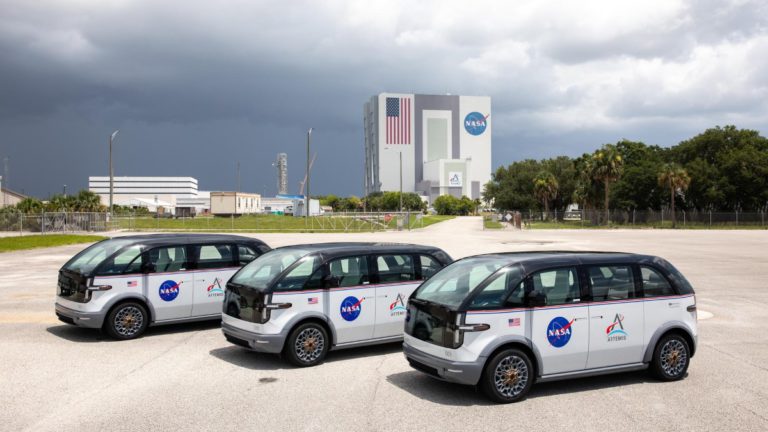
UNITED STATES: Canoo Technologies, an advanced mobility company, has delivered three state-of-the-art fully electric crew vehicles (CTV) to NASA’s Kennedy Space Center in Florida.

These innovative vehicles, dubbed “Astro vans,” will serve as the primary mode of transportation for astronauts participating in NASA’s Artemis missions, including the highly anticipated Artemis 2 mission that aims to orbit the moon with a crew for the first time in over 50 years.

Canoo’s LV (Lifestyle Vehicle) platform forms the basis for the new CTVs, which optimizes cabin space, utility, and productivity within a compact footprint. 

Designed to accommodate four astronauts in their Orion crew survival system pressure suits, as well as support personnel and specialized equipment, the vehicles will transport the crew from Kennedy’s Neil A. Armstrong Operations and Checkout Building to Complex 39B, where the Space Launch System (SLS) rocket and Orion spacecraft await liftoff.

With their sleek and modern design, the Artemis vehicles combine elements from the iconic Apollo astronaut transfer van and the Airstream of the shuttle era. The vehicles provide a striking visual aesthetic, featuring street-view windows and panoramic glass roofs. 

The design details, including the interior and exterior markings and color schemes, were carefully selected by a collaborative team of NASA’s Astronaut Office and Canoo representatives.

Charlie Blackwell-Thompson, NASA’s Artemis launch director, expressed pride in the new vehicles and their role in the upcoming Artemis missions. 

The collaboration between Canoo and NASA focused on ensuring the safety and comfort of the crew during transportation to the launch pad.

Canoo chairman and CEO Tony Aquila emphasized the company’s commitment to sustainable transportation and hailed the partnership with NASA as a testament to their innovative technologies. 

Aquila expressed gratitude for being part of “one of the world’s greatest endeavours” and praised NASA’s pioneering spirit.

The Canoo CTVs join a new generation of Astro vans, including SpaceX’s fleet of Tesla Model X electric cars for Dragon crew transport and a customized Airstream for Boeing’s Starliner astronauts. 

The classic Apollo and space shuttle-era vans are now on display at the Kennedy Space Center Visitor Complex. Before their use in the Artemis 2 mission, the CTV fleet will undergo rigorous astronaut training exercises at Kennedy Space Center. 

Subsequently, NASA will deploy the vehicles for future lunar missions, including exploring the moon’s south pole and visiting the Gateway in lunar orbit. 

The upcoming Artemis 3 mission, in line with the White House’s directive, aims to land the first woman and the first person of color on the moon.

The arrival of these cutting-edge electric “Astro vans” marks a significant milestone in NASA’s Artemis program and showcases the agency’s commitment to advancing sustainable and innovative transportation technology for space exploration.

Also Read: PM Modi Embarks on 2-Day Visit to France, Focuses on Defense Deals and Space Operations

The Sagan Standard: A Measure of Scientific Exploration and Wonder

INDIA: The Sagan Standard is an influential concept that has permeated science, astronomy, and the general public’s perception of the universe. Named after the renowned astrophysicist Carl Sagan, the Sagan Standard represents a benchmark for understanding and appreciating scientific exploration and the awe-inspiring wonders of the cosmos.

Carl Sagan captivated millions through his books, television series, and lectures with his immense knowledge, enthusiasm, and ability to communicate complex scientific ideas relatably. 

He sought to bring the wonders of the universe to the forefront of public consciousness, inspiring a generation to look up at the night sky with curiosity and reverence.

The Sagan Standard emphasizes the importance of critical thinking, evidence-based reasoning, and the scientific method. Sagan advocated for a sceptical and questioning mindset, encouraging individuals to examine claims, scrutinize evidence, and embrace uncertainty. 

He famously stated, “Extraordinary claims require extraordinary evidence,” emphasizing the need for rigorous scientific investigation and a demand for solid proof before accepting extraordinary or extraordinary-sounding claims.

The Sagan Standard also encompasses the notion of cosmic perspective. Sagan believed a broader understanding of our place in the universe could foster a sense of unity, humility, and environmental consciousness. 

He famously referred to Earth as the “pale blue dot,” emphasizing its smallness and fragility in the vastness of space. This perspective encourages us to appreciate and protect our planet and explore and understand the larger cosmos.

The Sagan Standard has profoundly impacted the popularization of science and the way we approach scientific communication. It has influenced generations of scientists, educators, and science communicators, inspiring them to engage with the public and ignite a passion for discovery and exploration.

Furthermore, the Sagan Standard has become a yardstick against which popular science programming, documentaries, and publications are measured. It encourages accuracy, clarity, and the avoidance of sensationalism. 

Scientific claims must be supported by evidence and subject to scrutiny, ensuring that scientific knowledge is disseminated responsibly and reliably.

The Sagan Standard remains relevant in the digital age as misinformation and pseudoscience proliferate online. It serves as a reminder to critically evaluate information, fact-check sources, and approach extraordinary claims skeptically. 

Sagan’s legacy guides those navigating the vast sea of information, providing a beacon of scientific integrity and intellectual rigour.

Today, countless scientists, educators, and science enthusiasts worldwide embody the principles of the Sagan Standard. They work tirelessly to communicate complex ideas, inspire wonder, and instill a sense of awe in the natural world. 

Through their efforts, they continue Carl Sagan’s mission of promoting scientific literacy and a deep appreciation for the mysteries and beauty of the universe.

As we contemplate the stars above and ponder the mysteries of the cosmos, let us remember the Sagan Standard. This standard encourages us to explore, question, and embrace the wonders of science. 

In doing so, we honor the legacy of Carl Sagan and continue to inspire future generations to reach for the stars in their pursuit of knowledge and understanding.

Also Read: Faraday’s Paradox: Unravelling the Mysteries of Electromagnetic Induction

Ather Energy Launches Affordable Ather 450S Electric Scooter; Takes Indian Market by Storm

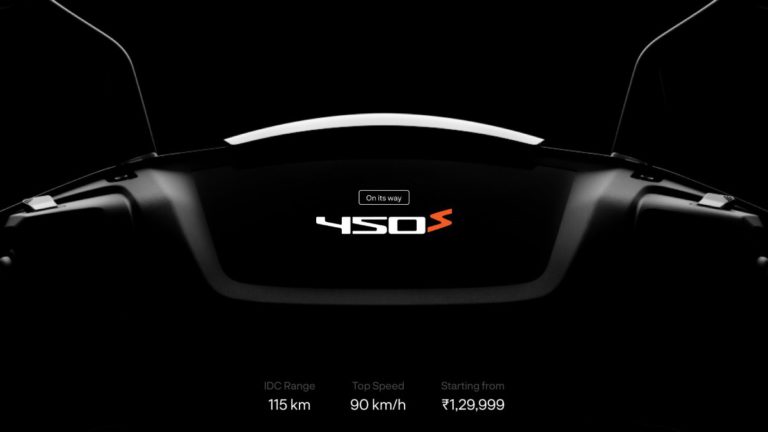
INDIA: Ather Energy, the renowned electric vehicle manufacturer, is gearing up to introduce India’s most affordable electric scooter. The highly anticipated scooter, named the Ather 450S, will debut in the first week of August.

Positioned below the current 450X model, the Ather 450S promises to deliver an exceptional riding experience at an accessible price point.

While Ather has already disclosed some details and pricing, official bookings and sales will commence next month, creating excitement among electric vehicle enthusiasts.

Priced at Rs. 1.29 lakh, the Ather 450S offers an impressive 90 km/h top speed and an ideal driving conditions (IDC) range of 115 km. 

Ather Energy has provided a glimpse of the scooter through social media teasers, hinting at the possible inclusion of an LCD screen to enhance the riding experience. 

This innovative feature is one of the ways Ather has managed to maintain affordability. However, the 450S will still come equipped with standard smartphone connectivity, further enhancing its appeal.

In terms of design, the Ather 450S will likely retain the same sleek, compact, and youthful aesthetic as its predecessor. Features such as the front forks, rear mono-shock, and front and rear disc brakes with a belt drive may remain unchanged. 

The slightly reduced range of the 450S compared to the 450X is an attribute of its smaller 3 kWh battery pack. This reduction allows for lighter weight and ensures nimble and agile handling on city streets.

Once launched, the Ather 450S will enter a highly competitive market segment, pitting itself against established rivals such as the Ola S1, TVS iQube S, and Bajaj Chetak. 

With its affordable pricing and impressive specifications, the Ather 450S is attractive to many buyers seeking an eco-friendly and cost-effective mode of transportation. 

However, there may still be room for Ather Energy to explore the development of a slightly larger scooter to cater to the diverse preferences of consumers.

As Ather Energy continues to revolutionize the Indian electric vehicle market, introducing the Ather 450S is expected to further solidify its position as a leading player in the industry. 

With its emphasis on affordability, performance, and advanced features, the Ather 450S will capture the attention of urban commuters and environmentally conscious riders alike.

Also Read: Faraday’s Paradox: Unravelling the Mysteries of Electromagnetic Induction

Daniel Ricciardo Makes Sensational F1 Comeback with Red Bull’s AlphaTauri

0

UNITED KINGDOM: In a stunning turn of events, Australian racing sensation Daniel Ricciardo has once again found himself behind the wheel of an F1 car, thanks to a surprising swap orchestrated by Red Bull.

The struggling Nyck de Vries has been dropped from his seat at AlphaTauri, making way for Ricciardo’s triumphant return.

Ricciardo, a familiar face in the Formula 1 world, previously raced for Red Bull from 2014 to 2018, earning seven out of his eight Grand Prix victories with the team. 

After stints with Renault and McLaren, he was unexpectedly bought out of his contract due to underperformance at Woking. 

However, Red Bull saw potential in the Australian driver and signed him as a third/reserve driver for the 2023 season.

Initially, Red Bull claimed there were no immediate plans for Ricciardo to return to a race seat. However, the situation has taken a surprising twist as Red Bull has loaned Ricciardo to AlphaTauri for the second half of the year.

The move will take effect immediately, with Ricciardo set to return at the upcoming Hungarian Grand Prix.

Scuderia AlphaTauri Team Principal Franz Tost expressed his delight in welcoming Ricciardo back, citing his undeniable driving skills and previous familiarity with the team. 

Tost also highlighted the valuable experience that Ricciardo brings, with eight Formula 1 Grand Prix wins under his belt. Tost thanked Nyck de Vries for his contributions to the team and wished him success in his future endeavours.

Christian Horner, Red Bull’s team principal, credited Ricciardo’s exceptional performance during a recent Pirelli tyre test at Silverstone as a deciding factor in offering him as a loaner to the sister team. 

Horner commended Ricciardo’s competitive times and expressed excitement about his prospects at Scuderia AlphaTauri.

The smiling Australian driver, who had hinted at his readiness for an F1 comeback after a few months away from racing, expressed his excitement about reuniting with the Red Bull family. 

Ricciardo’s return to the sport has generated considerable buzz among fans and experts alike, as they eagerly await his impact on the season’s remaining races.

With his proven talent and experience, Daniel Ricciardo’s return to Formula 1 promises to add a new level of excitement and competitiveness to the sport. 

As the Australian racer straps himself into the cockpit of AlphaTauri, fans can’t help but wonder if this unexpected move will reignite the spark that once made him a formidable force in the world of motorsport.

Also Read: Lewis Hamilton Blamed by Red Bull’s Helmut Marko for Alex Albon’s Career Struggles

Blue Origin’s BE-4 Rocket Engine Suffers Dramatic Failure During Testing

UNITED STATES: In a surprising turn of events, one of Blue Origin’s powerful BE-4 rocket engines experienced a dramatic failure during testing last month.

The engine, set to power Blue Origin’s New Glenn rocket and United Launch Alliance’s (ULA) Vulcan Centaur, exploded just 10 seconds into the test conducted at Blue Origin’s West Texas facility on June 30.

The incident was confirmed by Blue Origin, which stated that no personnel were injured and that investigations are underway to determine the root cause of the anomaly.

According to reports, witnesses who saw the video footage described a dramatic explosion that destroyed the engine and caused significant damage to the test stand infrastructure. 

Blue Origin was preparing the BE-4 engine for its flight on the second launch of the Vulcan Centaur. Blue Origin has promptly informed ULA about the incident, and ULA, a joint venture of Boeing and Lockheed Martin, does not consider it a significant setback at this stage.

Blue Origin clarified that the BE-4 engine had already qualified for flight, indicating its overall design is sound. The failed engine was undergoing an “acceptance test” (APT) to identify any potential issues with individual units before the flight. 

ULA President and CEO Tory Bruno emphasized that ATP failures are not uncommon and are a routine part of the testing process. He further mentioned that many other BE-4 engines had passed ATP tests and completed fire tests on the launch pad.

While Blue Origin and ULA work on investigating the anomaly’s cause and implementing necessary remedial actions, ULA has been facing challenges with the Vulcan Centaur rocket. 

Originally scheduled to debut in early May, Blue Origin delayed the launch after a Centaur upper stage exploded during testing at NASA’s Marshall Space Flight Centre in March. 

The revised launch date for Vulcan Centaur remains to be determined, as the company will send the upper stage back to the factory for modifications.

The New Glenn rocket, powered by the BE-4 engine, awaits its inaugural flight. Initially slated for a 2020 launch, Blue Origin repeatedly pushed back the timeline due to delays in the BE-4’s development. 

Blue Origin has refrained from providing a new target date for New Glenn’s debut, and industry experts are watching its progress closely.

As Blue Origin and ULA continue to investigate and address the recent engine failure, the incident highlights the challenges and risks of testing and developing advanced rocket technologies. Despite setbacks, both companies remain committed to advancing space exploration and commercial spaceflight. 

The upcoming statements from ULA’s CEO, scheduled for later this week, may provide further insights into the plans for the Vulcan Centaur and the status of the BE-4 engine.

Also Read: Daniel Ricciardo Makes Sensational F1 Comeback with Red Bull’s AlphaTauri