Home Blog Page 43

Supernova Threat to Infant Solar System Deflected by Cosmic Shield

0

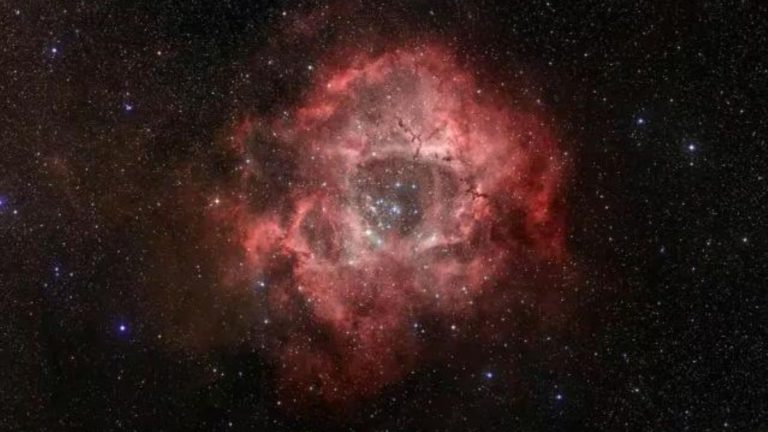
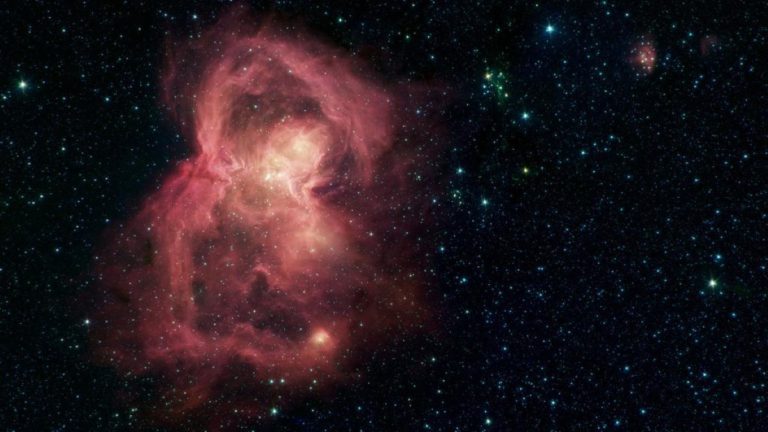
JAPAN: Scientists have discovered evidence suggesting that our solar system survived a potentially cataclysmic event caused by a nearby supernova explosion during its early formation.

Based on isotopic analysis of meteorites, the findings indicate that a shield of molecular gas surrounding the nascent solar system protected it from the destructive forces of the blast.

Meteorites, remnants of asteroids formed from the same material as our solar system, provided clues about the presence of a radioactive isotope of aluminium.

The researchers observed varying concentrations of this isotope, indicating an additional influx of radioactive material approximately 4.6 billion years ago. The most plausible explanation for this occurrence is the occurrence of a nearby supernova blast.

Supernovae occur when massive stars exhaust their nuclear fuel, leading to gravitational collapse and an explosive release of heavy elements into space. 

While these elements serve as building blocks for new stars, the shockwave accompanying a supernova can potentially dismantle neighbouring, developing planetary systems.

The team, led by astrophysicist Doris Arzoumanian from the National Astronomical Observatory of Japan, proposed that the cocoon of molecular gas enveloping our young solar system acted as a protective barrier against the supernova shockwave. 

This dense filament shielded the forming planets, including Earth, from the harmful radiation emitted by massive stars known as OB stars.

The researchers estimated that the dense filament would have taken approximately 300,000 years to be disrupted by the supernova shockwave. 

During this crucial period, larger bodies such as asteroids, which had formed within the protective filament, released meteorites containing radioactive isotopes. 

The shield not only shielded the solar system from radiation but also potentially facilitated the transport of radioactive isotopes into the vicinity of the young sun.

This discovery has significant implications for understanding the formation and evolution of stars and planetary systems. 

The protective role of the filament in shielding the developing solar system from far-ultraviolet radiation may have influenced the size and composition of the protostellar disk, consequently impacting planet formation.

The research, published in the Astrophysical Journal Letters in April, highlights the importance of cosmic shields in safeguarding nascent planetary systems from the destructive forces of nearby supernova explosions. 

By unravelling the mechanisms that enable the survival and development of solar systems, scientists gain valuable insights into the fundamental processes that shape our universe.

Also Read: The Threat of Supernova-Generated X-rays to Planets, including Earth
Max Verstappen’s Austria Sprint Shootout “Revenge Foul” on Lewis Hamilton Sparks Controversy 

0

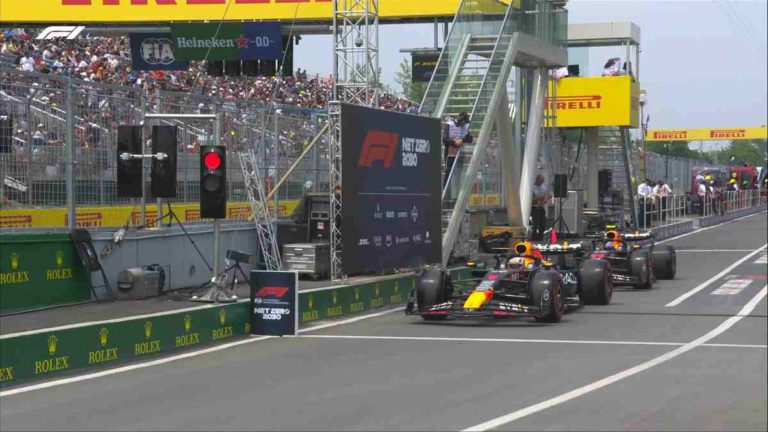
AUSTRIA: In a dramatic turn of events at the Austrian Grand Prix, Mercedes boss Toto Wolff accused Max Verstappen of committing a “revenge foul” on his driver Lewis Hamilton during the sprint shootout.

F1 pundit Naomi Schiff echoed Wolff’s sentiments, stating that Verstappen’s actions were intentional.

The incident unfolded when Verstappen, on his flying lap, encountered Hamilton through the penultimate corner and claimed that the Mercedes driver impeded him. 

In retaliation, Verstappen overtook Hamilton into Turn 1, sabotaging Hamilton’s subsequent attempt. This move ultimately led to Hamilton’s elimination in the opening phase of qualifying for the sprint race.

Wolff’s accusation of a “revenge foul” was supported by Schiff, who highlighted the risk Verstappen took with his actions, considering the potential consequences from Race Control in the 2023 F1 season. 

Schiff acknowledged Verstappen’s frustration but criticized his decision to impede Hamilton, especially knowing how strictly the FIA has policed impeding incidents this season.

Verstappen’s actions didn’t stop with impeding Hamilton. During the sprint race, tensions escalated further between Verstappen and his Red Bull teammate Sergio Perez. 

As Perez initially took the lead, Verstappen attempted to respond but was squeezed onto the grass by his teammate. 

Verstappen later aggressively reclaimed the lead at Turn 3, pushing Perez wide, causing him to lose second place to Nico Hulkenberg from Haas.

Damon Hill, the 1996 World Champion, expressed scepticism about Perez’s defence, claiming that he must have been aware of Verstappen’s presence and intentionally gave him little room. 

Hill’s analysis of the incident suggested that Verstappen’s aggressive response nearly allowed other drivers to overtake him, causing anxiety among the Red Bull team.

Despite the controversies and intense battles on the track, Verstappen emerged victorious in both the sprint and the Austrian Grand Prix. 

With this latest triumph, Red Bull has maintained an unprecedented streak of nine consecutive wins in the 2023 F1 season, establishing dominance in the sport.

As the Austrian Grand Prix concluded, fans and experts were left debating the consequences of Verstappen’s “revenge foul” on Hamilton and the ongoing dynamics within the Red Bull team. 

The heated rivalry between Verstappen and Hamilton continues to captivate the F1 world, ensuring a thrilling remainder of the season for racing enthusiasts worldwide.

Also Read: Max Verstappen Dominates Austrian Grand Prix, amid Controversial Track Limits Penalties

Understanding the Unruh Paradox: The Inexplicable Conundrum of Acceleration and Quantum Physics

INDIA: In the realm of physics, where the laws governing the universe are scrutinized and theories are continuously challenged, there exists a mind-bending puzzle known as the Unruh Paradox.

Named after its discoverer, physicist William Unruh, this paradox delves into the intricate relationship between acceleration, quantum mechanics, and the nature of empty space.

The Unruh Paradox stems from the profound connection between the behaviour of particles in quantum physics and the effects of acceleration on those particles. 

According to the theory of quantum mechanics, empty space is not truly empty but rather a seething sea of virtual particles that spontaneously pop in and out of existence. 

These virtual particles are pairs of particles and antiparticles that materialize and annihilate in a fleeting dance governed by the uncertainty principle.

In a stationary frame of reference, an observer perceives these virtual particles as a transient phenomenon, appearing and disappearing in the blink of an eye.

However, the situation becomes perplexing when an observer accelerates through space. As per the principle of equivalence in general relativity, acceleration is indistinguishable from gravity. Therefore, an accelerated observer experiences an effect similar to that of gravity.

The Unruh Paradox arises when we consider the perspective of an observer accelerating through empty space. From their vantage point, the virtual particle pairs that appear and vanish in the vacuum are no longer transient. 

Instead, the accelerated observer would witness a constant flux of real particles emanating from the vacuum. This means that what was once perceived as empty space by an inertial observer is transformed into a sea of actual particles by the accelerated observer.

This paradoxical observation raises profound questions about the nature of reality and the influence of acceleration on our understanding of quantum mechanics.

It challenges the fundamental assumption that empty space should appear the same to all observers, regardless of their state of motion.

The Unruh Paradox has been a topic of intense theoretical investigation, prompting physicists to explore its implications and seek possible resolutions. Several proposed explanations and mathematical models have emerged to shed light on this puzzling phenomenon.

One such explanation involves the concept of “entanglement.” According to quantum entanglement, particles can become interconnected in such a way that their properties become inseparable, even when separated by vast distances. 

Scientists have suggested that the Unruh effect, which describes the creation of real particles due to acceleration, could be a consequence of the entanglement between the accelerated observer and the virtual particle pairs in the vacuum.

Another approach involves considering the Unruh effect as a consequence of the Hawking radiation phenomenon. 

Hawking radiation, proposed by physicist Stephen Hawking, describes the radiation emitted by black holes due to quantum effects near the event horizon. 

The Unruh effect can be seen as a manifestation of Hawking radiation experienced by an accelerating observer in flat spacetime rather than near a black hole. Despite these intriguing explanations, the Unruh Paradox remains an open question in theoretical physics. 

Resolving the Unruh Paradox may require a deeper understanding of the interplay between quantum mechanics and gravity, which has been a long-standing challenge in the pursuit of a unified theory of physics.

Also Read: Lenard’s Paradox: A Puzzling Phenomenon at the Intersection of Light and Metal

Lenard’s Paradox: A Puzzling Phenomenon at the Intersection of Light and Metal

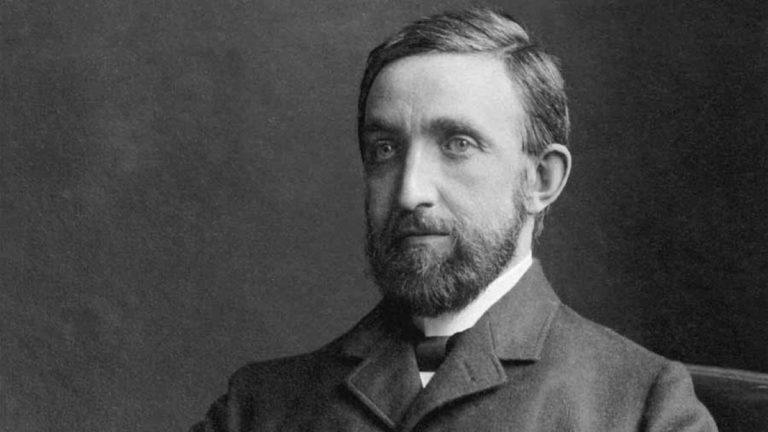
INDIA: Lenard’s Paradox, a fascinating scientific enigma, has puzzled researchers for over a century at the intriguing intersection of light and metal. Named after the renowned physicist Philipp Lenard, this paradox challenges conventional theories and sheds light on the nature of the interaction between light and matter.

At its core, Lenard’s Paradox revolves around the phenomenon of the photoelectric effect, which refers to the emission of electrons from a material when it is exposed to light. 

According to classical wave theory, the intensity of light should determine the energy of emitted electrons. In other words, increasing the intensity of light should lead to an increase in the kinetic energy of emitted electrons.

However, in the late 19th century, Lenard conducted groundbreaking experiments that defied this expectation. He discovered that while the intensity of light did affect the number of emitted electrons, it did not influence their kinetic energy. 

https://twitter.com/PrriyaRaj/status/1666376570154651650

Regardless of the light intensity, the energy of the emitted electrons remained constant, determined solely by the frequency of the incident light.

This puzzling observation challenged the prevailing wave theory and contributed to the development of quantum mechanics. 

Albert Einstein, building upon Lenard’s work, proposed the revolutionary idea that light consists of discrete packets of energy called photons. 

According to Einstein’s explanation, the energy of photons is directly proportional to their frequency, explaining Lenard’s findings. To understand the paradox more deeply, consider a simplified analogy: Imagine shining a flashlight on a metal surface. 

Classical wave theory would suggest that increasing the brightness of the flashlight should propel the emitted electrons with greater force, analogous to increasing their kinetic energy. 

However, Lenard’s experiments revealed that regardless of how bright the flashlight is, the speed of the emitted electrons remains unchanged. The only factor that alters their speed is the colour, or frequency, of the light.

The resolution to Lenard’s Paradox lies in the quantum nature of light and the concept of energy quantization. When light interacts with a metal surface, photons transfer their energy to electrons within the material. 

The electrons can only absorb discrete amounts of energy corresponding to the frequency of the incident light. If the energy of a single photon is insufficient to liberate an electron, no emission occurs, regardless of the light intensity.

However, once the energy threshold is surpassed, the electron is freed with a fixed kinetic energy, determined solely by the frequency of the light.

Lenard’s Paradox not only challenged established scientific theories but also paved the way for significant advancements in the field of quantum mechanics. Lenard’s Paradox contributed to our understanding of the dual nature of light, which exhibits both wave-like and particle-like properties. 

Additionally, it laid the foundation for the development of the photoelectric effect, a phenomenon crucial to the development of technologies such as solar cells and photodetectors.

Over a century after its discovery, Lenard’s Paradox continues to captivate researchers and students alike, serving as a reminder of the intricate and counterintuitive nature of the quantum world. 

It stands as a testament to the transformative power of scientific inquiry, pushing the boundaries of human knowledge and reshaping our understanding of the fundamental workings of the universe.

Also Read: Unlocking the Galilean Paradox: Understanding the Astonishing Physics Behind It

Reliance Jio Launches Jio Bharat V2; India’s Most Affordable 4G Phone

INDIA: New Delhi-based telecommunication giant Reliance Jio has unveiled the ‘Jio Bharat V2,’ India’s most affordable 4G smartphone, priced at an astonishingly low Rs 999.

This groundbreaking offering sets a new benchmark for the entry-level smartphone market in the country, providing internet connectivity at an unprecedented price point.

The Jio Bharat smartphone aims to bridge the digital divide by bringing internet access to the estimated 250 million feature phone (2G) users in India. 

Leveraging the capabilities of both the device and network, the Jio Bharat platform enables users to access internet-enabled services on entry-level phones. Beginning July 7, the beta trial for the first one million ‘Jio Bharat’ phones will be initiated across the country. 

Reliance Jio’s Chairman, Akash Ambani, highlighted the significance of this launch, saying that there are still 250 million mobile phone users who cannot tap into the basic features of the internet at a time when the world stands at the cusp of a 5G revolution.

In addition to its affordability, the ‘Jio Bharat V2’ smartphone offers users a 30% cheaper monthly plan and 7 times more data compared to feature phone offerings from other operators. 

For just Rs 123 per month, users can enjoy unlimited voice calls and 14 GB of data, surpassing the offerings of other operators, who charge Rs 179 for voice calls and 2GB of data.

Even basic voice services for a 30-day period, which previously cost Rs 99, are now available for Rs 199, providing customers with increased value and affordability. Furthermore, Reliance Jio has partnered with various phone brands, with Karbonn being the first to adopt the Jio Bharat platform. 

This collaboration aims to expand the availability of affordable internet-enabled smartphones across the country, empowering more users to access digital services and join the digital revolution.

The launch of the Jio Bharat V2 smartphone marks a significant milestone in Reliance Jio’s mission to bridge the digital divide in India. 

By offering an affordable 4G phone and cost-effective monthly plans, Reliance Jio is paving the way for millions of Indians to access the internet and unlock the numerous opportunities it brings. 

With its commitment to democratizing technology, Reliance Jio continues to revolutionize the Indian telecommunications industry and empower individuals across the nation.

Also Read: Jio Cinema Secures Digital Rights for India’s Tour of West Indies 2023

Astronomers Discover Amino Acid Tryptophan in Star-Birthing Region, Hints at Potential for Life

SPAIN: In a groundbreaking discovery, astronomers have detected significant amounts of the amino acid tryptophan in interstellar material within a nearby star-forming region of space.

Tryptophan is one of the essential amino acids responsible for the formation of crucial proteins necessary for life on Earth.

The distinctive spectral lines of tryptophan were identified in data collected by the Spitzer Space Telescope in infrared light from the star-forming IC348 star system. 

This finding suggests that protein-building amino acids, commonly found in meteorites, could also be present in the gas and dust that coalesce to give birth to planetary systems around young stars.

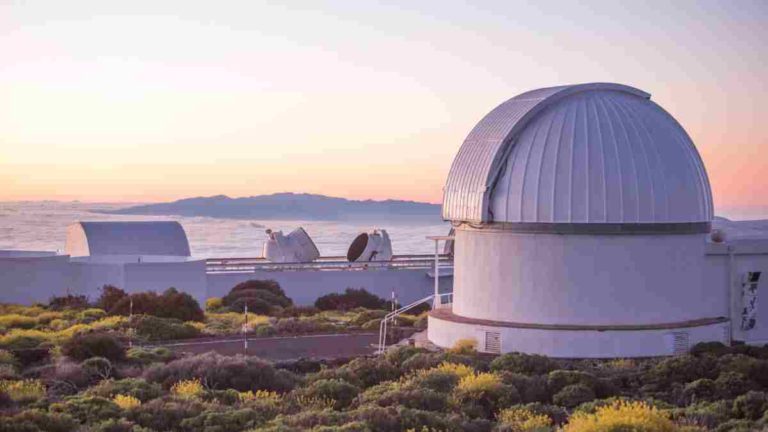
Researchers from the Instituto de Astrofísica de Canarias (IAC) who made the discovery expressed their enthusiasm about the implications. 

The IC348 star system is located within the Perseus Molecular Complex, a vast cloud of gas and dust with a mass equivalent to 10,000 suns. 

Estimated to be just 2–3 million years old, IC348 is relatively young in cosmic terms compared to our 4.5 billion-year-old solar system.

Situated approximately 1,000 light-years away from Earth, IC348 is one of the closest star-forming regions to our planet. Although usually invisible to the naked eye, the region shines brightly in infrared light.

This spectroscopic analysis provides insights into the chemical composition of molecular clouds, interstellar gas, stars, and planetary atmospheres. 

Space telescopes can identify the distinctive “fingerprints” that various elements and compounds leave in the light that passes through them by absorbing and emitting light at different wavelengths.

The tryptophan molecules observed had a temperature of approximately 44 degrees Fahrenheit (7 degrees Celsius). 

This finding adds to previous discoveries by Iglesias-Groth, who detected other vital biological precursors to life, such as complex carbon molecules, in the IC348 star system.

The presence of prebiotic molecules in gas and dust clouds like IC348 suggests that young planets, as they form, could accrete these molecules onto their surfaces, potentially supporting the development of life. 

Alternatively, these molecules could be enclosed within asteroids, which are formed from leftover material during planetary birth, and subsequently delivered to other planet surfaces through impacts during the early chaotic stages of planetary systems.

To further investigate these findings, Susana Iglesias-Groth, an IAC researcher, plans to continue their research using the upcoming James Webb Space Telescope (JWST). 

The JWST’s spectroscopic capabilities could provide details about the spatial distribution of these molecules, as well as explore more complex ones. 

This higher sensitivity and resolution are crucial for confirming the probable presence of amino acids in the gas within star-forming regions like IC348 and others.

The discovery of tryptophan in the interstellar material of a star-birthing region marks a significant milestone in our understanding of the potential for life beyond Earth. 

Further studies and observations will unlock more secrets about these fascinating regions, bringing us closer to unravelling the mysteries of the universe and the origins of life itself.

Also Read: Russian Astronomers Discover 14 New Active Galactic Nuclei in Eastern Sky

McLaren Revives Iconic Chrome Livery for British Grand Prix in Partnership with Google

0

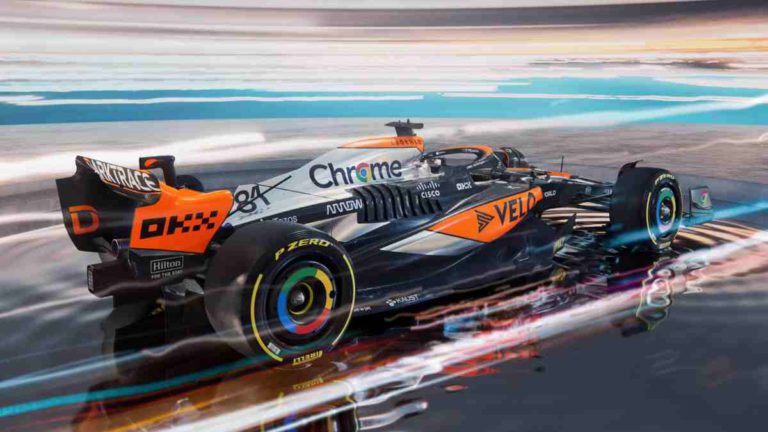
UNITED KINGDOM: McLaren is set to make a striking comeback at the British Grand Prix as they revive one of their most beloved liveries from Lewis Hamilton’s era.

The iconic chrome design, which was last seen in 2014, will grace the cars of Lando Norris and Oscar Piastri for the race weekend, paying homage to McLaren’s rich history.

While the vibrant papaya livery has become synonymous with the team, fans and drivers alike have longed for a return to the iconic chrome style. 

Lando Norris, in particular, had pleaded with CEO Zak Brown for the change, and his wish has been granted, if only for one race. In addition to the livery, both drivers will don special race suits, and Norris will showcase a unique helmet design and boots.

Zak Brown expressed his excitement about the decision, saying that racing fans love McLaren’s classic chrome livery. 

Google Chrome, one of McLaren’s sponsors, wanted to bring back elements of the iconic design to celebrate the team’s history at the British Grand Prix.

The chrome design holds significant sentimental value for McLaren, as it was with this livery that Lewis Hamilton secured his first Formula 1 championship in 2008. 

McLaren later moved away from the chrome style in 2015, adopting a black design before transitioning to the distinctive papaya in 2017.

This revival of the iconic livery is part of McLaren’s ongoing 60th-anniversary celebrations, which have seen the Formula 1 and IndyCar teams revisit various heritage liveries, including a tribute to the legendary Triple Crown achievement.

The chrome livery comeback is made possible through a collaboration with one of McLaren’s main sponsors, Google. 

As anticipation builds for the British Grand Prix, fans can’t wait to see the return of the stunning chrome livery on the McLaren cars. 

This unique partnership between McLaren and Google is a testament to the team’s commitment to honouring its rich heritage while embracing new collaborations that excite fans worldwide.

Also Read: Lewis Hamilton Wins The British Grand Prix

Canada’s Artemis 2 Astronaut Sets Sights on Lunar Realms, Future Mars Missions

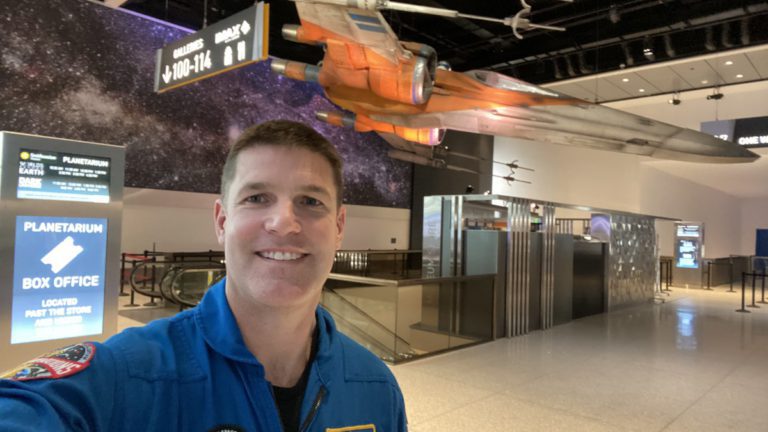
CANADA: Jeremy Hansen, Canada’s representative on the upcoming Artemis 2 mission, is determined to propel his country further into the realm of lunar exploration.

Since his appointment on April 3, Hansen has been actively engaging with various communities touched by space, including appearances on Stephen Colbert’s show, walking the red carpet at the premiere of Guardians of the Galaxy Vol. 3, participating in an Indigenous vision quest, and meeting with policymakers in Canada and the U.S. He even had the honour of carrying the flag at the coronation of Charles III.

The Artemis 2 crew, consisting of Hansen and three NASA astronauts, officially commenced their training on May 15. 

While the training timeline becomes somewhat uncertain due to the mission’s unique nature as the first moon crew in 50 years, Hansen remains confident about certain aspects. 

Geology training to study moon craters, possibly with Canadian crater expert Gordon Osinski, is part of their preparation. Additionally, ongoing discussions with Canadian and American policymakers are aimed at charting the path beyond Artemis 2.

Hansen envisions a future where Canadians make significant contributions to lunar and deep space exploration. 

He believes that Canada will have seats on the upcoming Artemis 4 and 6 missions, scheduled for the end of the decade, according to early discussions with the Canadian Space Agency (CSA). 

Although Hansen has not yet been assigned a seat due to Canada’s 2.3 percent contribution to the International Space Station (ISS), he is recognized for his leadership in managing high-profile projects and intricate spacewalks.

Canada’s involvement in space missions is driven by strategic investments in areas such as robotics, space medicine, space food, and artificial intelligence. 

The country’s recent allocation of funds for Canadarm3, a next-generation robotic arm, demonstrates its commitment to NASA’s Gateway space station on the moon. 

Canada has a track record of collaborating with NASA, as seen in the contributions of Canadian engineers to the Avro Arrow project during the 1960s Apollo lunar missions.

Hansen emphasizes the importance of this collaboration not only for space exploration but also for its potential applications in remote environments on Earth. 

The Canadian Space Agency aims to leverage its small space budget to make strategic bets that yield significant returns. As Hansen prepares for the Artemis 2 mission, he expresses pride in being the face of a vast team that has made this opportunity possible.

With Canada’s active involvement in Artemis missions, including plans for future moon landings and a vision for Canadian moonwalkers, Hansen envisions a day when a Canadian astronaut will set foot on the moon. 

Furthermore, he believes that the nation’s capabilities will eventually extend to Mars, bringing substantial benefits to Canadians and showcasing Canada’s achievements on the global stage.

Also Read: Lawsuit Accuses Boeing of Intellectual Property Theft and Safety Compromises in Artemis Program

Max Verstappen Dominates Austrian Grand Prix, amid Controversial Track Limits Penalties

0

AUSTRIA: Max Verstappen continued his impressive winning streak at the Austrian Grand Prix, securing his fifth consecutive victory of the 2023 season. The race was filled with thrilling overtaking action and marred by controversial track limit penalties that affected the final results. 

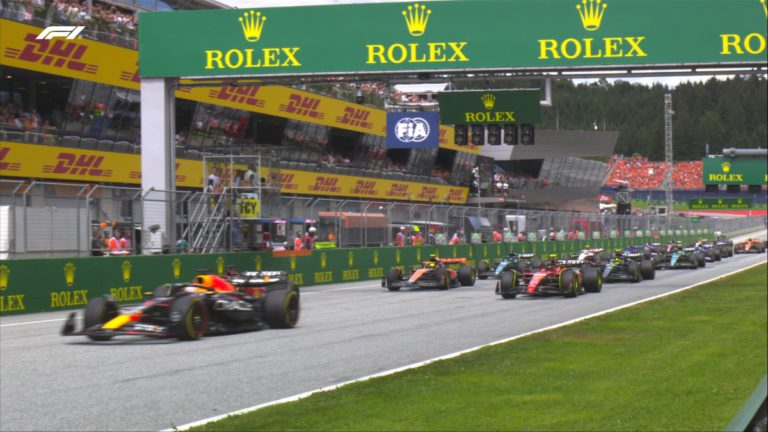
Verstappen held onto his lead from Charles Leclerc and Carlos Sainz at the start of a tightly contested race. 

However, Lewis Hamilton made a strong start to jump ahead of Lando Norris into fourth place. The early stages saw Ferrari display solid pace, with Leclerc pressuring Verstappen for the lead.

As the race progressed, Sergio Perez delivered an outstanding recovery drive from 15th on the grid to claim the final podium position. Meanwhile, McLaren’s Lando Norris capitalized on their upgraded package to secure the team’s first top-five finish of the season.

However, the race results took a dramatic turn hours later when eight drivers, including Sainz, received post-race time penalties for multiple track limit breaches that were not initially investigated during the race.

The race started with a moment of silence in memory of Dilano van ‘t Hoff, a teenage racer who tragically lost his life in an accident during a FRECA race at Spa the day before. Verstappen made an excellent start, successfully defending his lead against Leclerc’s early challenges.

Fernando Alonso, starting on hard tires, made a move on his teammate Lance Stroll to secure sixth place. Yuki Tsunoda suffered damage after colliding with Esteban Ocon, leading to a Safety Car period.

Verstappen capitalized on the restart, extending his lead over Leclerc. Sainz expressed frustration as he believed he had the pace to overtake his teammate but was instructed to hold his position. 

Meanwhile, Perez embarked on a remarkable recovery, passing George Russell and Alex Albon to enter the points positions. Hamilton received a black and white flag for exceeding track limits, citing handling issues with his car. 

Nico Hulkenberg’s race ended prematurely due to a power unit problem, triggering a Virtual Safety Car period that caught Ferrari off-guard during their pit stops.

The penalty saga continued as several drivers, including Hamilton and Tsunoda, received time penalties for track limit violations. 

Sainz, after a disappointing strategy and team order, charged through the field on fresh medium tires, overtaking Hamilton and Perez to reclaim a podium position.

Verstappen, who had remained on track during the VSC period, eventually pitted and found himself behind both Ferrari drivers. He swiftly passed Sainz to regain second place. Norris capitalized on Hamilton’s brake issues and overtook him for fourth.

Amidst the battle for positions, penalties for track limits continued to be issued, affecting Sainz, Alpine drivers, Lance Stroll, and Alex Albon. Verstappen made an impressive move on Leclerc to reclaim the lead at the halfway mark.

In the closing stages, Perez and Sainz engaged in a thrilling duel for the final podium spot. Perez eventually overtook Sainz after intense wheel-to-wheel racing. Verstappen, with a comfortable lead, opted for a late pit stop to secure the fastest lap bonus point.

In the end, Verstappen crossed the finish line, clinching victory at the Austrian Grand Prix. However, the race was not without controversy, with over 1,200 instances of track limit breaches being investigated by the FIA after the race, resulting in time penalties for eight drivers.

Also Read: Verstappen Triumphs in Austrian Grand Prix Sprint Despite Tense Moments with Perez

Breakthrough Photonic Radar System Enables Non-Invasive Vital Sign Monitoring

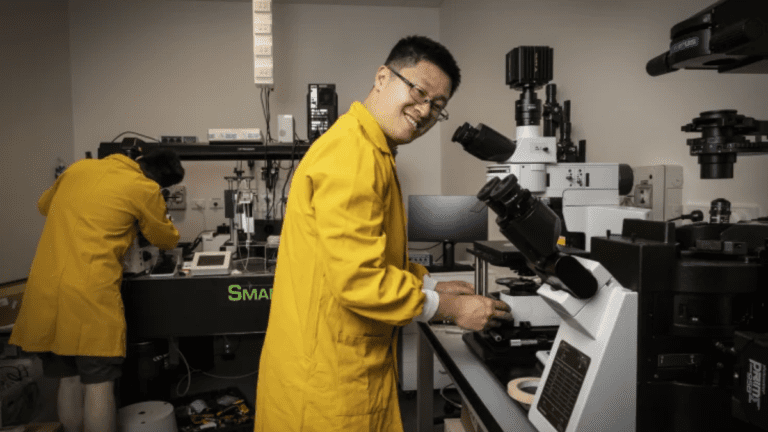
AUSTRALIA: Scientists at the University of Sydney Nano Institute and the NSW Smart Sensing Network have made a significant breakthrough in non-invasive vital sign monitoring by developing a photonic radar system.

Published in Nature Photonics, the researchers successfully used the system to monitor breathing patterns in cane toads, demonstrating its potential for human application.

Traditional methods of vital sign monitoring often involve wired or invasive contact systems, which can be inconvenient or unsuitable for certain patients. The newly developed photonic radar system offers a precise and non-invasive alternative. 

By remotely detecting pauses in breathing patterns, the radar system proves its effectiveness in monitoring vital signs from a distance.

The advantage of this approach is that it eliminates the need for physical contact with patients, enhancing comfort and reducing the risk of cross-contamination. 

This advantage makes it particularly valuable in environments where infection control is crucial, such as hospitals and aged-care facilities. The photonic radar system utilizes light-based photonics technology to generate, collect, and process radar signals. 

Researchers combined this approach with LiDAR (light detection and ranging), achieving a vital sign detection system with impressive resolution and accuracy. 

The system can detect vital signs with a resolution down to six millimetres, making it suitable for clinical environments.

Unlike camera-based systems, which are sensitive to variations in lighting conditions and raise concerns about patient privacy, the photonic radar system offers built-in privacy protection. 

The system remotely monitors vital signs using radio frequency (RF) detection technology, eliminating the need for visual recording and cloud storage of sensitive information.

The research team also highlighted the complementarity of their approach, as the system combines radar and LiDAR detection. If one system encounters a fault, the other continues functioning, ensuring reliability and redundancy.

The integration of photonic and radio frequency technologies maximizes the utility of both approaches. Conventional RF radar systems have limited range and resolution, while LiDAR offers improved range and resolution but struggles to penetrate objects. 

The proposed system overcomes these limitations and provides a comprehensive solution for vital sign monitoring. Looking ahead, the researchers aim to miniaturize the system and integrate it into photonic chips, potentially enabling its use in handheld devices. 

The team hopes this breakthrough will pave the way for a cost-effective, high-resolution, and rapid-response vital sign monitoring system that they can widely apply in healthcare settings and corrective services.

The development of the photonic radar system represents a significant advancement in non-invasive vital sign monitoring. Its potential to revolutionize patient care by providing accurate and convenient monitoring while ensuring privacy and infection control makes it a promising technology for the future.

Also Read: Apple Vision Pro Introduces Groundbreaking Spatial Technology for Immersive User Experience