Home Blog Page 42

SpaceX Successfully Launches 48 Starlink Satellites, amidst Concerns of Space Sustainability

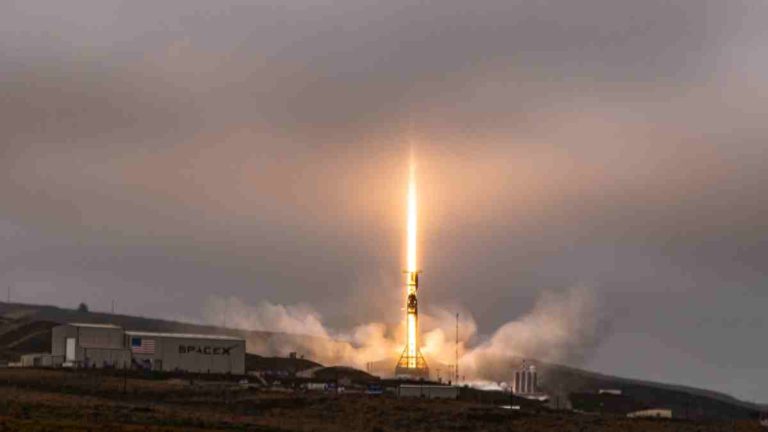
UNITED STATES: SpaceX achieved another significant milestone by successfully launching 48 Starlink internet satellites into orbit on July 7.

The Falcon 9 rocket took off from California’s Vandenberg Space Force Base, piercing through a thick layer of fog to reach space.

In an impressive display of engineering, the rocket’s first stage made a vertical landing on the SpaceX drone ship, Of Course, I Still Love You, stationed in the Pacific Ocean. This marked the 12th successful launch and landing for this particular booster.

The Falcon 9’s upper stage continued its journey, deploying the Starlink satellites to their destination in low Earth orbit (LEO). SpaceX anticipated that all 48 satellites would be deployed approximately 19 minutes after liftoff.

This launch brings the total number of Starlink satellites placed into space by SpaceX to over 4,700, with the majority already operational, according to astrophysicist and satellite tracker Jonathan McDowell.

However, SpaceX has plans for even more satellite deployments in the near future. The company has approval to launch approximately 12,000 additional satellites for its Starlink mega constellation in LEO and has even applied for permission to deploy an additional 30,000 satellites on top of that.

While the Starlink project aims to provide global internet coverage, it has faced criticism from astronomers who argue that the dense constellation obstructs their night sky observations.

The proliferation of satellites in the sky can interfere with astronomical observations, impacting the accuracy and quality of scientific research.

Astronomers have also raised concerns about the long-term sustainability of space operations due to the increasing number of satellites. The presence of Starlink and other satellite constellations raises the risk of collisions in space, leading to the creation of significant space debris that poses threats to operational satellites and crewed spacecraft.

Starlink satellites have already conducted 25,000 collision-avoidance maneuvers in the past six months alone, and this number will inevitably rise as more satellites are launched.

As SpaceX continues to expand its Starlink network, the company faces the challenge of balancing the benefits of global internet connectivity with the potential negative impacts on scientific research and space sustainability.

The concerns raised by astronomers and experts highlight the importance of ongoing dialogue and collaboration between space agencies, private companies, and the scientific community to ensure the responsible and sustainable use of space resources.

The successful launch and landing of the Starlink satellites demonstrate SpaceX’s technical expertise and progress in space exploration.

Moving forward with its ambitious plans, addressing the challenges associated with space debris and preserving our skies for scientific discovery and future space missions remains essential.

Also Read: SpaceX Celebrates 200th Booster Landing; Falcon 9 Rocket Deploys 72 Satellites to Orbit


The Mind-Bending Gibbs Paradox: Exploring the Strange Behaviour of Mixing Identical Gases

INDIA: In the world of thermodynamics, where the study of energy and its transformations takes centre stage, the Gibbs Paradox stands out as a mind-boggling enigma. Named after the American physicist Josiah Willard Gibbs, this paradox challenges our intuition about identical gases’ behaviour when mixed. 

Let’s delve into the mysterious world of the Gibbs Paradox and attempt to unravel its perplexing nature. The Gibbs Paradox revolves around entropy, a measure of the disorder or randomness in a system. 

According to classical thermodynamics, when two containers of an identical gas are separated and brought together, the entropy of the combined system should be the same as the sum of the individual entropies. However, Gibbs discovered that this assumption led to a contradiction.

To understand the paradox, let’s imagine two identical containers, each holding the same gas. If we remove the barrier separating the containers, allowing the gases to mix, classical thermodynamics suggests that the entropy of the combined system should increase. 

However, Gibbs realized that there was another possible scenario: we could remove all knowledge of which gas molecules originally belonged to which container. 

In this case, classical thermodynamics predicts that the entropy should remain the same. The contradiction arises when the two scenarios result in different entropies for the same physical system. 

This apparent paradox puzzled physicists for many years until researchers found a resolution through the development of statistical mechanics, a branch of physics that connects the microscopic behaviour of particles to macroscopic thermodynamic properties.

Statistical mechanics considers the behaviour of individual gas molecules, considering their indistinguishability. It treats gases as collections of identical particles, with no way to distinguish one particle from another. 

Applying this perspective to the Gibbs Paradox reveals that the assumption of classical thermodynamics breaks down when considering the mixing of identical gases.

When we remove the barrier between the containers, the gases mix in terms of their positions and their labels, or identities. The mixing process leads to a loss of information about the original configuration of the gases. 

Consequently, the number of microstates, or possible arrangements of particles, increases dramatically, resulting in a higher entropy for the combined system than classical thermodynamics would predict.

This resolution to the Gibbs Paradox demonstrates the power of statistical mechanics in explaining the behaviour of complex systems at the microscopic level. It highlights the importance of considering particles’ indistinguishability and their role in determining thermodynamic properties.

The implications of the Gibbs Paradox extend beyond the realm of gases. It has profound connections to quantum mechanics, information theory, and the foundations of statistical physics. 

The paradox challenges our intuitions about the nature of physical systems and pushes the boundaries of our understanding of entropy and complexity.

Also Read: Understanding How Maxwell’s Displacement Current Paradox Challenges Fundamental Laws of Physics

The Nun 2 Trailer Drops, Promising Chilling Sequel to the Supernatural Horror Franchise

UNITED STATES: Fans of the spine-chilling supernatural horror franchise The Conjuring have a reason to rejoice as the highly anticipated sequel “The Nun 2” is on its way. The makers of the film unveiled the official trailer on Thursday, leaving fans buzzing with excitement. 

Headlined by Taissa Farmiga, “The Nun 2” is set to hit theatres on September 8, delivering another terrifying installment to the franchise. According to Variety, the sequel takes place in 1956, following the brutal murder of a priest in France. 

The official logline reveals that “The Nun 2” follows Sister Irene, portrayed by Taissa Farmiga, as she confronts the demonic Valak again. Farmiga joins returning cast members Bonnie Aarons as Valak and Jonas Bloquet as Maurice “Frenchie.” 

The film also introduces new additions to the “Conjuring” universe, including Katelyn Rose Downey as Sophie, Anna Popplewell as Marcella, and Storm Reid in an undisclosed role.

“The Nun 2” is the latest installment in the USD 2 billion franchise that began in 2013 with the original “The Conjuring” film, featuring Patrick Wilson and Vera Farmiga, Taissa Farmiga’s older sister. 

The film series draws inspiration from the real-life cases of paranormal investigators Ed and Lorraine Warren, particularly their nonfiction book “The Amityville Horror.”

Since the original “The Conjuring,” the franchise has spawned successful spinoffs, including “Annabelle” in 2014, “The Conjuring 2” in 2016, and “Annabelle: Creation” in 2017. The first spinoff, “The Nun,” hit theatres in 2018, introducing audiences to the terrifying character of Valak.

The “Conjuring” universe has continued to expand with releases such as “The Curse of La Llorona,” “Annabelle Comes Home,” and “The Conjuring: The Devil Made Me Do It.”

“The Nun 2” is helmed by director Michael Chaves, known for his work on “The Conjuring: The Devil Made Me Do It.” 

Akela Cooper wrote the screenplay, acclaimed for her work on “M3GAN,” along with Ian Goldberg and Richard Naing, both known for their contributions to the hit series “Fear the Walking Dead.”

With the release of the gripping trailer, fans of “The Conjuring” universe can prepare themselves for another bone-chilling cinematic experience. 

“The Nun 2” promises to deliver a suspenseful and terrifying journey into the depths of supernatural horror as Sister Irene confronts the malevolent forces embodied by Valak. 

As September 8 approaches, anticipation builds, and fans eagerly await the release of the latest installment in this gripping franchise.

Also Read: Evil Dead Rise Trailer: Critics Crown the Horror Movie with Positive Reviews 

Max Verstappen Whinging for More Money with Retirement Threat, Says George Russell

0

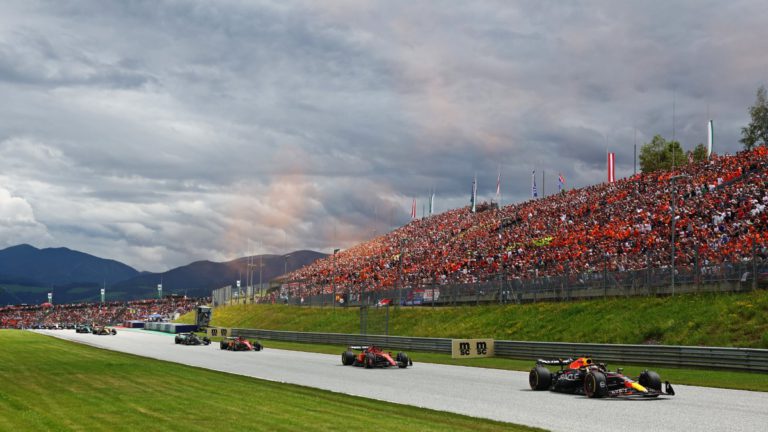
UNITED KINGDOM: Max Verstappen’s recent statements about considering retirement from Formula 1 have sparked speculations about his true intentions.

The Mercedes driver, George Russell, jokingly suggested that Verstappen’s retirement threat is more than a ploy to secure a bigger paycheck.

Verstappen, a two-time World Champion and the highest-paid driver on the grid, has expressed concerns about the ever-expanding Formula 1 calendar and the toll it takes on drivers.

Having entered the sport as its youngest-ever driver in 2015, Verstappen has contemplated a shorter career than veterans like Fernando Alonso and Lewis Hamilton.

His ambition to explore endurance racing and the increasing demands placed on drivers contribute to his potential departure from Formula 1, possibly after his current Red Bull contract expires in 2028.

During a media session at Silverstone, George Russell shared his thoughts on Verstappen’s retirement hints with a hint of amusement. Russell jokingly attributed the Dutch driver’s complaints to a desire for a larger salary.

Despite the jest, Russell expressed his hope that Verstappen would stay in the sport for the long haul, emphasizing his desire to compete against the best drivers.

The ongoing battle between Russell and Lewis Hamilton has been intense, and Russell aspires to face other formidable opponents like Verstappen and Charles Leclerc.

Regarding his stance on the expanding calendar, Russell maintained a more neutral perspective. He acknowledged that the upcoming record 24-race season in 2024 presents challenges for all involved, including the demanding travel schedule.

However, Russell believes grouping certain races can alleviate some burdens. He expressed his enthusiasm for more races but hoped for fewer commitments outside the race weekends.

While acknowledging the intensity of the Formula 1 lifestyle, Russell highlighted the privilege and fortune of being an F1 driver. He also mentioned the potential benefits of a more geographically efficient calendar in terms of costs and logistics.

However, he did not shy away from acknowledging the brutal nature of the travel demands, particularly during the initial races in Australia, Japan, and China.

As the Formula 1 community eagerly awaits Verstappen’s decision and the finalized 2024 calendar, the speculations surrounding his retirement threat continue to generate discussion.

Whether it is a strategic manoeuvre or a genuine concern, only time will reveal Max Verstappen’s true intentions regarding his future in Formula 1.

Also Read: Williams to Unveil Special Livery Honouring Frank Williams on 800th F1 Race Celebration

Solar Fireworks: Spectacular Solar Storms Set to Impact Earth with Potential Light Show

0

UNITED STATES: As the United States celebrated Independence Day on July 4th, the sun itself put on a breathtaking display of fireworks in the form of two solar storms, known as coronal mass ejections (CMEs), observed by NASA’s Solar and Heliospheric Observatory (SOHO).

These powerful eruptions of ionized gas are partly directed towards Earth and will make an impact by Friday, July 7th. CMEs are massive ejections of plasma containing charged particles and their magnetic fields. 

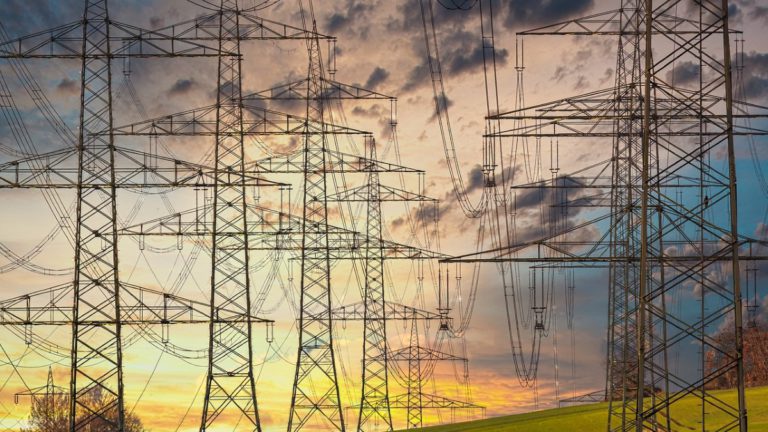
When these charged particles collide with Earth’s magnetosphere, they can trigger geomagnetic storms, potentially disrupting power grids, communication infrastructure, and satellite operations, including the global positioning system (GPS).

Space Weather physicist Tamitha Skov shared footage of the CMEs recorded by SOHO’s Large Angle and Spectrometric Coronagraph Experiment (LASCO) on her Twitter feed. She described the approaching solar storms as a “1,2-punch,” with the second storm catching up to the first.

According to NASA’s predictions, the slower initial CME will arrive before 8 a.m. (EDT) on Friday, mainly heading northeast. 

The second, faster CME will make a more direct hit on Earth, slightly veering southward. NASA expects its arrival in the early hours of July 7th.

Skov highlighted the possibility of a G-1 level geomagnetic storm, which the National Oceanic and Atmospheric Administration (NOAA) defines as a minor event that can cause fluctuations in power grids and impact spacecraft operations.

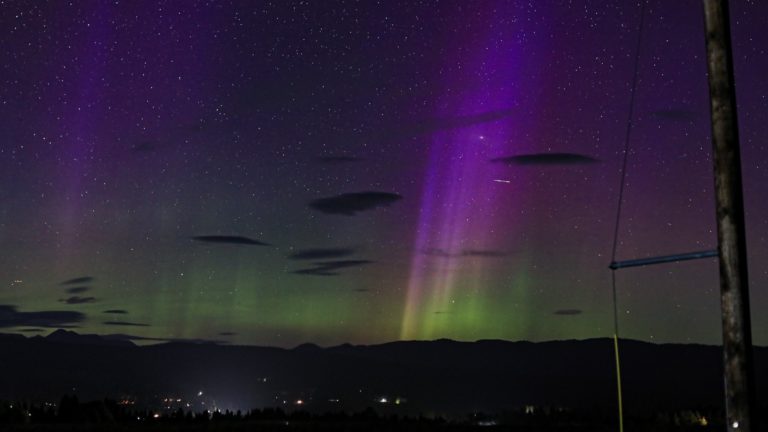
While the CMEs pose potential disruptions, they also offer the opportunity for a magnificent light show in the Earth’s atmosphere. 

When charged particles travel along Earth’s magnetic field lines within the magnetosphere, they create vibrant and colourful displays known as auroras. 

Typically visible only at high latitudes near the poles, these powerful CMEs could generate auroras that are visible at lower mid-latitudes.

The NOAA suggests that auroras connected to G-1 geomagnetic storms may be visible in the United States as far south as Michigan and Maine. 

The residents of these regions could be treated to a dazzling natural spectacle as charged particles interact with the Earth’s atmosphere. As the sun’s fireworks captured our attention, the anticipation of the CMEs’ arrival and potential impact on Earth built.

Also Read: Aphelion: Exploring Earth’s Farthest Point from the Sun and Its Astronomical Significance

Bajaj-Triumph Launches Speed 400 and Scrambler 400X Motorcycles in India

INDIA: Bajaj-Triumph has officially launched its highly anticipated Speed 400 and Scrambler 400X motorcycles in the country, marking a significant milestone in the world of two-wheeled performance.

With cutting-edge technology, powerful engines, and stunning design, these bikes will redefine the riding experience for enthusiasts nationwide.

The Bajaj-Triumph Speed 400, priced at Rs 2.23 lakh (ex-showroom) for the first 10,000 customers, will be available in showrooms by the end of this month. 

On the other hand, the price of the Bajaj-Triumph Scrambler 400X will be announced later, with the bike hitting showrooms in October.

Bajaj-Triumph Speed 400 is a true head-turner, featuring captivating dual-tone paint schemes, each showcasing a prominent Triumph tank graphic. 

Riders can choose from colour options like Carnival Red, Caspian Blue, and Phantom Black, allowing them to express their unique style. 

The motorcycle embodies the iconic Triumph silhouette, with an upswept silencer, a sculpted fuel tank, and sleek all-LED lighting, exuding an aura of sophistication. 

Additional features include trademark black powder-coated engine casings and gold anodized forks, adding a touch of elegance.

Equipped with advanced features, the Speed 400 offers a thrilling and comfortable ride. Highlights include:

1. A Ride-by-wire throttle.

2. A Torque-assist clutch.

3. A Switchable traction control system.

4. A convenient USB-C charging socket. 

The bike boasts a large analogue speedometer and an integrated LCD screen, providing essential information such as a digital tachometer, remaining fuel range, and a prominent gear indicator. 

For added comfort, heated grips are available as an optional accessory. Safety features include a steering lock and an anti-theft immobilizer, ensuring peace of mind for riders. Weighing only 170 kg and with a seat height of 790mm, the Speed 400 offers a lightweight and agile riding experience. 

It features a bolt-on rear subframe, 43mm big-piston upside-down front forks, and a mono-shock rear suspension unit, delivering smooth and stable handling. 

The bike incorporates a four-piston radial front brake with a 300mm disc unit and a dual-channel ABS for enhanced safety. On the other hand, the Bajaj-Triumph Scrambler 400X takes adventure riding to new heights with its powerful performance. 

The bike has an all-new fuel-injected and liquid-cooled 398cc single-cylinder four-valve engine, delivering an impressive maximum power of 39.4 bhp and a peak torque of 37.5 Nm. 

Notably, the engine surpasses Euro 5 emissions standards, highlighting its commitment to environmental responsibility.

Paired with a six-speed gearbox, the Scrambler 400X offers a seamless and exhilarating riding experience. It’s worth mentioning that this same engine powers the Speed 400 as well, ensuring remarkable performance across both models.

With the Speed 400 and Scrambler 400X launches, Bajaj-Triumph has set a new benchmark in performance, style, and innovation. 

These motorcycles allow riders to embrace the thrill of the open road while enjoying the latest advancements in technology and design. 

Whether the dynamic Speed 400 or the adventurous Scrambler 400X, these bikes are poised to leave a lasting impression on the Indian motorcycle market.

Also Read: India Plans to Introduce New Vehicles Running Entirely on Ethanol, Says Transport Minister

Faraday’s Paradox: Unravelling the Mysteries of Electromagnetic Induction

0

INDIA: One of the most intriguing phenomena in the world of electromagnetism is known as Faraday’s Paradox.

Discovered by the eminent scientist Michael Faraday in the 19th century, this Paradox puzzled researchers for years before finding its resolution. Let’s dive into the world of electromagnetic induction and explore the enigma behind Faraday’s Paradox.

Electromagnetic induction occurs when a changing magnetic field induces an electric current in a conductor. This fundamental principle forms the basis for many modern technologies, including electric generators, transformers, and wireless charging. 

However, when Faraday first observed this phenomenon, he encountered a puzzling situation that seemed to defy the established laws of electromagnetism.

Faraday’s Paradox arises from the observation that a magnet moving through a conducting loop does not induce a steady current as one might expect. 

According to the laws of classical physics, a continuous movement of the magnet should create a constant flow of electrons in the loop, generating a steady current. 

However, Faraday discovered that the current only flows while relative motion exists between the magnet and the loop.

This Paradox challenged the prevailing understanding of electromagnetism at the time, based on the concept of action at a distance. 

According to this theory, the magnet’s magnetic field should exert a force on the electrons in the loop, irrespective of their relative motion. 

Yet Faraday’s experiments demonstrated that motion was essential for the induction of an electric current.

The resolution to Faraday’s Paradox came with the development of the field concept by James Clerk Maxwell. 

Maxwell’s equations, formulated in the 1860s, revolutionized the understanding of electromagnetism by introducing the concept of electromagnetic fields. 

These fields, encompassing both electric and magnetic components, interacted dynamically and explained the observations made by Faraday.

Maxwell’s equations revealed that a changing magnetic field induces an electric field, which drives the flow of electrons. 

Therefore, it is not the magnet’s motion that directly induces the current but rather the changing magnetic field associated with that motion. 

This breakthrough provided a consistent explanation for Faraday’s Paradox, bridging the gap between classical physics and the emerging field theory.

The significance of Faraday’s Paradox extends beyond its initial discovery. It laid the foundation for understanding electromagnetic induction, which is crucial to the functioning of many electrical devices we rely on today. 

From power generation to wireless communication, the principles derived from Faraday’s Paradox have become essential in numerous technological advancements.

Furthermore, Faraday’s Paradox is a testament to the power of scientific inquiry and the pursuit of knowledge. 

The Paradox challenged conventional wisdom and ultimately led to a deeper understanding of electromagnetism. It highlights the importance of experimentation, observation, and the willingness to question established theories in pushing the boundaries of scientific knowledge.

Also Read: Understanding How Maxwell’s Displacement Current Paradox Challenges Fundamental Laws of Physics

Record-Breaking F1 2024 Calendar Unveiled with Saturday Night Races and Triple-Headers

0

UNITED KINGODM: It’s been another exciting day in Formula 1 (F1), with a flurry of news and announcements. The highlight of the day is unveiling the highly anticipated F1 2024 calendar, which promises a record-breaking 24 races for fans to enjoy. 

Strap in, because next season is going to be an exhilarating ride. The 2024 F1 season will kick off with a bang, featuring two Saturday night races in Bahrain and Saudi Arabia. 

These races have been scheduled for March to respect the Islamic festival of Ramadan. From there, the season will unfold across various countries, with the final race scheduled for December 8th in Abu Dhabi.

There are different opinions on the number of races in Formula 1, but the FIA is determined to provide fans with an action-packed season. 

The 2024 calendar has brought back the Chinese Grand Prix and significantly changed the Japanese race. Moreover, fans will enjoy not one but two triple-header weekends.

Meanwhile, tensions rise between Mercedes and Red Bull as Max Verstappen expresses dissatisfaction with the 2026 F1 regulations. 

After testing the early simulations, Verstappen is not impressed with the proposed changes, deeming them unsatisfactory. 

However, Mercedes team principal Toto Wolff firmly dismisses the possibility of tweaking the regulations, highlighting the extensive collaboration with auto manufacturers and the efforts to attract new participants.

In anticipation of the upcoming British Grand Prix at Silverstone, Mercedes has confirmed the introduction of a new front wing as part of its upgrade package. 

The team’s trackside engineering director, Andrew Shovlin, hints that more surprises might be in store, as other teams have recently unveiled their own upgrades.

Lastly, the buzz around Brad Pitt’s Formula 1 film continues to grow. Preparations for filming at Silverstone are underway, and images have surfaced of a garage branded with Pitt’s character, ‘Sonny Hayes.’ 

The movie, produced in collaboration with Lewis Hamilton, aims to be the most accurate racing film ever made. Pitt will race around Silverstone in a modified Formula 2 car, giving fans a thrilling glimpse of the action.

As the F1 world keeps spinning, fans eagerly anticipate the exciting races ahead, the debates over controversies, and the thrill of witnessing the sport’s biggest stars on and off the track. Get ready for an unforgettable 2024 season.

Also Read: Williams to Unveil Special Livery Honouring Frank Williams on 800th F1 Race Celebration

Understanding How Maxwell’s Displacement Current Paradox Challenges Fundamental Laws of Physics

INDIA: In the realm of electromagnetic theory, a perplexing puzzle exists: Maxwell’s Displacement Current Paradox. This intriguing enigma, first proposed by the renowned physicist James Clerk Maxwell in the 19th century, challenges our understanding of electric currents and their fundamental laws. Let’s delve into the paradox and unravel its mysteries.

Maxwell’s equations form the backbone of classical electromagnetism, describing the intricate interplay between electric and magnetic fields. 

However, a peculiar discrepancy arose when Maxwell introduced the concept of displacement current in one of his equations. According to this equation, a changing electric field induces a magnetic field, which, in turn, generates an electric field. 

This self-sustaining loop of fields seems to suggest the existence of an electric current in a region devoid of any physical charge carriers, defying conventional wisdom.

The paradox lies in the fact that, in traditional circuit theory, a current flows only through conductive media, such as wires or fluids containing charged particles. In the absence of such a medium, such as a vacuum or insulating material, the flow of electric current is deemed impossible. 

Yet Maxwell’s displacement current contradicts this notion by positing that changing electric fields can produce a current-like effect in regions without any actual charge movement.

To understand this apparent contradiction, we must delve deeper into the nature of electric fields. Maxwell’s displacement current arises from the understanding that electric fields and their changes carry energy. 

When an electric field changes in time, it disturbs the surrounding electromagnetic field, propagating energy through space. This energy transfer manifests itself as a displacement current, mimicking the behaviour of an actual electric current.

In essence, Maxwell’s displacement current is a theoretical construct that allows us to account for energy flow in electromagnetic fields. It is not a traditional electric current in the strict sense of moving charges but rather a mathematical representation of the changing electric field’s impact on the overall electromagnetic system.

Experimental verification eventually resolved the paradox. In the late 19th century, physicist Heinrich Hertz conducted experiments that demonstrated the existence of electromagnetic waves, confirming Maxwell’s predictions. 

These waves, including radio waves, microwaves, and light, propagate through space without needing a physical medium. The displacement current is an essential component in generating and propagating these waves, providing a coherent explanation for their behaviour.

Maxwell’s Displacement Current Paradox, once considered a puzzle, now stands as a testament to the remarkable interconnectedness of electric and magnetic fields. 

It highlights electromagnetism’s profound elegance and complexity, revealing the subtle nuances that govern the behaviour of these fundamental forces.

By challenging our preconceived notions and pushing the boundaries of understanding, Maxwell’s paradox serves as a reminder of the ever-evolving nature of scientific inquiry. 

It showcases the power of imagination, observation, and experimental validation in resolving perplexing puzzles and advancing our knowledge of the universe.

As we continue to explore the frontiers of electromagnetism and delve into the mysteries of the physical world, Maxwell’s Displacement Current Paradox will undoubtedly remain an integral part of the scientific narrative, inspiring future generations of physicists to uncover the hidden secrets that lie within the mysterious realm of electromagnetic theory.

Also Read: Understanding the Unruh Paradox: The Inexplicable Conundrum of Acceleration and Quantum Physics

Reviewing Apple’s MacBook Air 15: The Perfect Laptop for Most Users

INDIA: In a recent launch, Apple introduced the MacBook Air 15, a laptop offering a compelling package for professionals and general users.

While not classified as a Pro laptop by Apple’s standards, the MacBook Air 15 comes remarkably close to meeting the requirements of many professionals.

With a starting price of Rs 1,34,900 in India, the laptop may be pricey, but it delivers exceptional value for its cost.

The MacBook Air 15 retains the iconic wedge-shaped design that made its predecessors famous. 

However, the new design features rounded corners, enhancing the laptop’s appearance and making it easier to handle and carry. 

Despite its larger 15.3-inch screen, the Air 15 remains lightweight, weighing just 1.55 kg and boasting a slim profile of 11.5mm thickness. These physical attributes make the Air 15 a joy to use and transport.

Compared to the MacBook Pro 16, the Air 15 offers a simplified port selection, with only three ports on the left side. 

The ports include two USB-C plus Thunderbolt ports and one MagSafe 2 charging port, while the right side houses a 3.5mm headphone jack. 

The Air 15 also features a six-speaker setup, which differs from the Pro’s implementation, with speakers inside the laptop’s aluminium shell near the screen hinge.

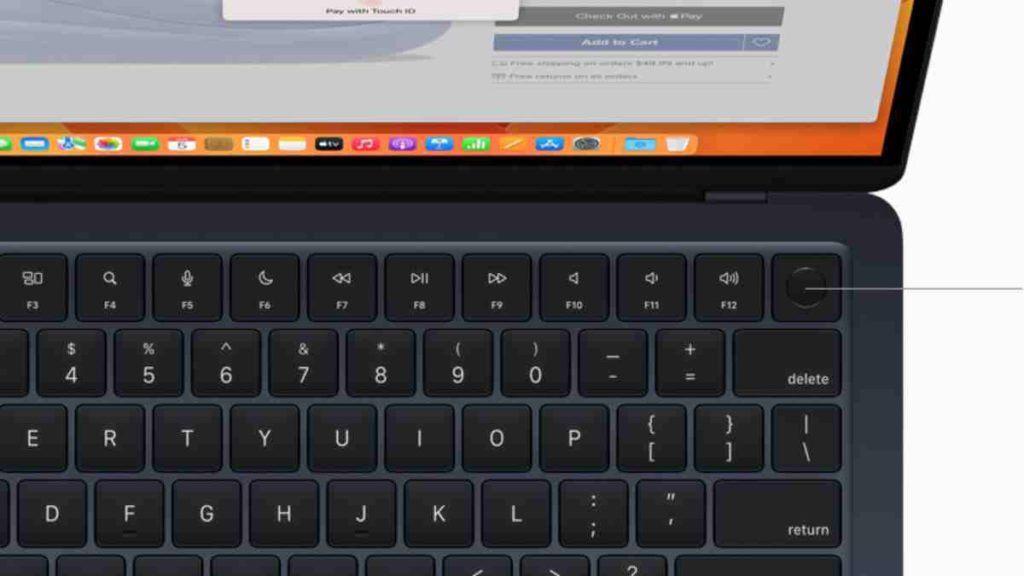
Constructed entirely of aluminium, the Air 15 exudes durability and craftsmanship. It features a minimalist design with a Full HD 1080P webcam housed in the notch above the screen, similar to other recent MacBook models. 

The laptop includes four rubber feet on the bottom, providing stability and grip. Regarding colour options, the Air 15 is available in a midnight finish, which adds a touch of class and uniqueness, although it tends to attract fingerprints.

The performance of the Air 15 is commendable, thanks to its powerful M2 chipset. With 8 GB of RAM and 256 GB of SSD storage, the base variant offers a fast and efficient experience for everyday tasks such as web browsing, photo editing, and office work. 

The large 15-inch screen and capable speakers enhance the laptop’s entertainment capabilities. 

However, the screen’s outdoor brightness and viewing angles fall slightly short compared to higher-priced MacBook Pro models and some Windows laptops in the same price range.

Battery life is a standout feature of the Air 15, surpassing Apple’s claims of 18 hours of video playback or 15 hours of web browsing. 

The Air 15’s battery can easily last for at least two working days, providing users with exceptional freedom and convenience. 

Coupled with the macOS Ventura operating system, which offers a streamlined interface and valuable features, the Air 15 provides a superior user experience compared to Windows laptops in the same segment.

Ultimately, the MacBook Air 15 excels as a general-purpose laptop, offering a fantastic design, a good screen, impressive performance, market-leading battery life, and user-friendly software. 

Its superb keyboard and trackpad outshine competitors in its price range. Only those needing a laptop with Nvidia or AMD graphics cards for gaming or heavy-duty video editing may need to explore other options. 

For all other purposes, the MacBook Air 15 is a near-perfect choice that consistently delights users and justifies its price tag.