Home Blog Page 48

BepiColombo Spacecraft Prepares for Close Encounter with Mercury

JAPAN: The BepiColombo mission, a joint effort between the European Space Agency (ESA) and the Japan Aerospace Exploration Agency (JAXA), is gearing up for its third close encounter with Mercury, the innermost planet of the solar system. Scheduled for Monday, June 19, the flyby will allow the spacecraft to capture captivating new images of the elusive planet.

During the flyby, BepiColombo will zoom past Mercury at an incredibly close distance of just 147 miles (236 kilometres) at 3:34 p.m. EDT (1934 GMT). This proximity surpasses the orbital paths of the mission’s two orbiters, marking a significant milestone in their journey.

However, the primary objective of this flyby is not to capture stunning close-up images of Mercury’s surface but to leverage the planet’s gravity to slow down the spacecraft. By utilizing Mercury’s gravitational pull, BepiColombo aims to enter the planet’s orbit in late 2025.

Despite being approximately ten times closer to Earth on average than Jupiter, it takes an equal amount of time to reach Mercury as it does the gas giant. This lengthy time is due to the constant need to brake against the powerful gravitational force exerted by the sun.

The BepiColombo mission, which commenced in 2018, incorporates carefully planned flybys of planets along its trajectory around the sun. 

Previous flybys have occurred twice near Mercury, in October 2021 and July 2022. The spacecraft has also visited Earth once and Venus twice as part of its journey.

As BepiColombo nears Mercury, it will experience the planet’s gravitational influence, resulting in a reduction in velocity magnitude and a change in direction. 

Frank Budnik, an ESA flight dynamics expert, explains that during the flyby, the spacecraft’s speed relative to Mercury will be 2.2 miles per second, slightly over half the speed of its previous approaches. 

The flyby will further decrease the spacecraft’s velocity magnitude compared to the sun by 0.5 miles per second (0.8 km/s) and modify its trajectory by 2.6 degrees.

Before Mercury ultimately captures BepiColombo, three more flybys are planned. These will occur in September 2024, December 2024, and January 2025. 

Each flyby contributes to the spacecraft’s gradual deceleration, paving the way for its successful insertion into Mercury’s orbit.

En route to Mercury, BepiColombo’s operational instruments provide scientists with a unique opportunity to measure the boiling environment surrounding the planet. 

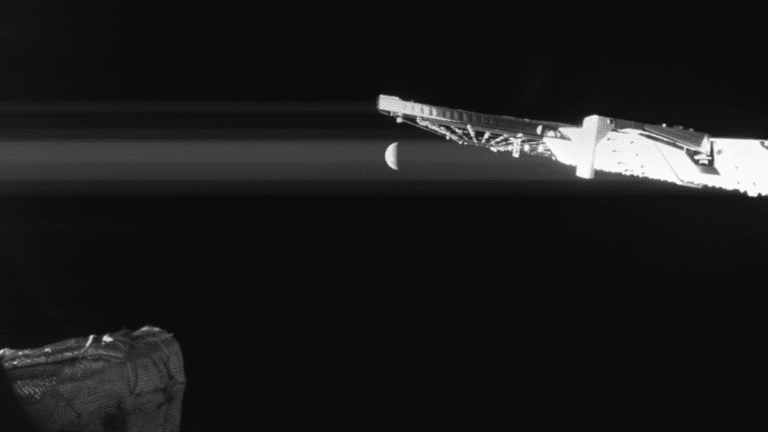
Additionally, the spacecraft carries three low-resolution monitoring cameras that will capture black-and-white images of the largely unexplored rocky world during the flyby.

The findings from the previous two flybys have already yielded interesting scientific results, including measurements of Mercury’s southern inner magnetosphere and the composition of charged particles in that region. 

Johannes Benkhoff, a BepiColombo project scientist at ESA, emphasized the significance of collecting data during flybys to ensure the instruments’ proper functionality and to compare the data with that gathered by NASA’s MESSENGER spacecraft during its mission from 2011 to 2015.

Comprised of two stacked orbiters, the BepiColombo spacecraft is currently traversing the solar system. 

While the spacecraft’s panels cover some of the instruments inside during the cruise, two instruments designed to measure the shape of Mercury’s surface and study its gravitational field will collect data for the first time during the upcoming flyby. 

Unfortunately, the orbiters’ primary high-resolution cameras will not be available until the later stages of the mission.

BepiColombo’s close encounter with Mercury presents a remarkable opportunity for scientific exploration and promises to deliver exciting new insights into the mysterious innermost planet of our solar system.
Also Read: NASA’s Juno Spacecraft Captures Astonishing Lightning on Jupiter, Unveiling Mysteries of the Gas Giant

Lewis Hamilton’s Candid Admission to Max Verstappen Reveals Mercedes’ Weakness in Low-Speed Corners

0

CANADA: In a surprising turn of events at the Canadian Grand Prix, Lewis Hamilton, the seven-time Formula 1 World Champion, made a candid admission to his former title rival, Max Verstappen.

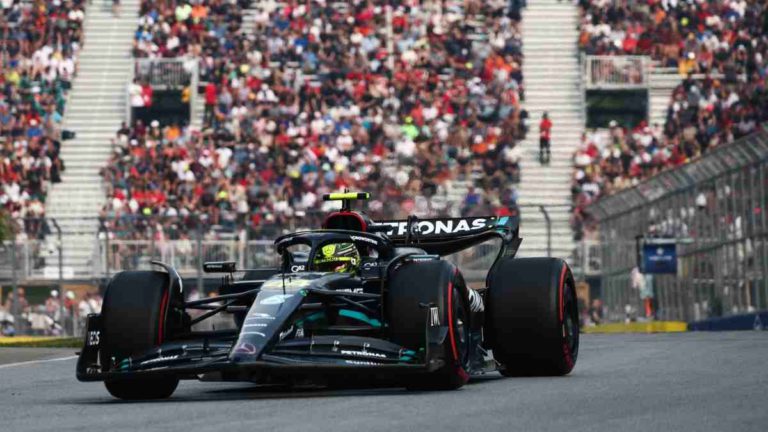
In the cool-down room after the race, Hamilton confessed that the Mercedes W14 “sucks” in low-speed corners. This revelation has sparked speculation about Hamilton’s intentions and caught the attention of his fellow drivers.

The Canadian Grand Prix was a crucial test for Lewis Hamilton and the Mercedes team, aiming to prove that their improved performance at the Spanish GP was not a one-time success. 

Although Lewis Hamilton finished in third place, dropping a step on the podium, Mercedes had significantly reduced the margin of victory over Verstappen compared to their previous encounter in Spain.

At the Canadian GP, Hamilton crossed the finish line just 14 seconds behind Verstappen, a considerable improvement from the 24-second deficit in Spain. 

This improvement was partly due to an early Safety Car period caused by George Russell’s collision with the wall in the other Mercedes W14, preventing Verstappen from building a massive lead.

After the race, as Lewis Hamilton, Verstappen, and Fernando Alonso headed to the cool-down room, Hamilton conversed with Verstappen, disclosing Mercedes’ struggle in low-speed corners. However, Verstappen did not reciprocate and share details about his Red Bull RB19 performance. 

This incident has led Daniel Ricciardo, Verstappen’s former teammate who returned to F1 as a third driver for the 2023 season, to believe that Hamilton intended to gather valuable information from a potentially vulnerable Verstappen.

While speaking alongside actor and comedian Will Arnett during an alternate telecast of the Canadian Grand Prix, Ricciardo commented on Hamilton’s approach. 

He suggested that Lewis Hamilton expected Verstappen to let his guard down and reveal crucial insights about the Red Bull car. 

However, Verstappen remained cautious and divulged little, leaving Lewis Hamilton without the information he sought. Verstappen’s victory at the Canadian GP extended his lead in the Drivers’ Championship. 

With six wins this season and 41 victories, Verstappen has reached the impressive milestone set by the late three-time World Champion Ayrton Senna. 

Meanwhile, Verstappen’s teammate, Sergio Perez, who had shown potential as a title contender earlier in the season, has faced a recent slump, falling 69 points behind Verstappen.

Also Read: Max Verstappen Clinches 41st Career Victory at Canadian GP; Equals Ayrton Senna’s Record

NASA’s Secret Weapon: Why Water Plays a Vital Role in Space Launches

0

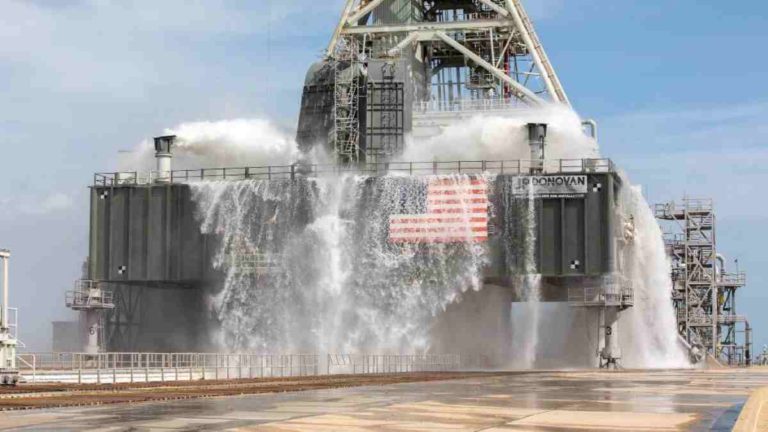
UNITED STATES: As we witness the awe-inspiring sight of a NASA rocket soaring into space, it’s hard to imagine that water plays a crucial role in the success of these monumental missions.

Behind the scenes, NASA utilizes a significant amount of water during space launches, and the reasons behind this may surprise you.

Water’s primary function during a launch is to protect the rocket and its precious cargo. The process begins with the ignition of the engines. 

As the enormous thrust generated by the rocket’s engines pushes it off the launch pad, a torrential downpour of water is released, creating a giant cloud around the rocket. 

This phenomenon, known as the water deluge system, serves multiple critical purposes.

Firstly, the water mitigates the intense acoustic energy produced during liftoff. The roaring sound waves generated by the engines can exert tremendous force on the rocket, potentially causing damage. 

The sound energy is dampened by releasing copious amounts of water, protecting the vehicle from destructive vibrations.

Secondly, the water deluge system acts as a thermal barrier. When the engines ignite, they produce enormous heat, potentially damaging the launch pad and the rocket. 

The cascading water absorbs and dissipates this heat, preventing any harm to the infrastructure and ensuring a safe liftoff.

Additionally, the water cloud serves as a shield against the launch pad’s flames and exhaust gases. 

As the rocket ascends, it leaves behind a fiery plume and a trail of exhaust gases. The water cloud acts as a barrier, preventing the reflected heat and debris from harming the rocket and its sensitive components.

This protection is vital during the critical early stages of the launch, when the rocket is closest to the ground.

Moreover, the water deluge system plays a crucial role in suppressing fires. In an emergency, such as an engine failure or a potential explosion, the water cloud can quickly extinguish flames, minimising the risk to the crew, the rocket, and the surrounding infrastructure.

Beyond the water deluge system, NASA also uses water for other essential purposes during space launches. 

The sound suppression system, for instance, utilizes a pool of water beneath the launch pad. When the engines ignite, the immense heat turns the water into steam, which helps further dampen the acoustic energy.

Furthermore, NASA uses water for cooling purposes. Rockets generate enormous heat during liftoff, and specific components, such as the launch pad structure and fuel lines, need to be cooled to prevent damage. 

Water is circulated through these systems to dissipate the heat, ensuring the integrity of the infrastructure and the rocket itself.

NASA’s water use during space launches exemplifies the meticulous planning and engineering required for successful missions. 

From protecting against acoustic vibrations and heat to suppressing fires and shielding against exhaust gases, water is vital to ensuring safe and successful liftoffs.

Next time you witness a NASA launch and the theatrical release of water, remember its critical role behind the scenes. It’s an ingenious strategy that showcases NASA’s dedication to innovation and safety as they push the boundaries of space exploration.

Also Read: NASA’s Juno Spacecraft Captures Astonishing Lightning on Jupiter, Unveiling Mysteries of the Gas Giant

Unravelling the Mysteries: The Paradox of Thermodynamics and Its Mind-bending Conundrums

INDIA: Thermodynamics, the branch of physics that deals with energy and its transformations, is a fundamental pillar of our understanding of the physical world.

However, lurking within this seemingly straightforward discipline lies a series of paradoxes that continue to perplex scientists and challenge our comprehension of the universe.

These paradoxes, known as the Paradox of Thermodynamics, shed light on the intricate nature of energy and offer a glimpse into the mysterious realm of physics.

The Paradox of Thermodynamics encompasses several counterintuitive scenarios that defy the laws of nature. One of the most well-known paradoxes is Maxwell’s Demon Paradox, first proposed by James Clerk Maxwell in 1867. 

In this thought experiment, a tiny demon is present between two chambers containing gas particles at different temperatures. 

The demon can selectively open and close a small door, allowing only fast-moving particles to pass from the cold chamber to the hot chamber and vice versa, effectively creating a temperature difference without expending any energy. 

This temperature difference contradicts the second law of thermodynamics, which states that entropy, or disorder, tends to increase over time.

Another intriguing paradox is the Gibbs Paradox, named after physicist Josiah Willard Gibbs. It revolves around the concept of indistinguishable particles and the nature of entropy. 

According to classical thermodynamics, if we mix two identical gases, entropy should not change since the molecules are indistinguishable. 

However, the mathematical expression for entropy indicates an increase in entropy when the system mixes the gases. This discrepancy challenges our understanding of entropy and the underlying principles of statistical mechanics.

Furthermore, Loschmidt’s Paradox, proposed by physicist Ludwig Boltzmann, delves into the concept of time reversal symmetry. It questions why, in a universe governed by the laws of physics, we perceive an arrow of time that flows from the past to the future. 

According to the fundamental equations of classical mechanics, microscopic interactions between particles are time-reversible, meaning they can occur in both forward and backward directions. 

However, macroscopic phenomena, such as gas diffusion in a container, only occur in one direction, leading to the irreversibility of specific processes. 

This paradox raises intriguing philosophical questions about the nature of time and the emergence of irreversible behaviour.

These paradoxes highlight the profound complexities inherent in the study of thermodynamics. They challenge our intuitions and force us to question the limits of our current scientific understanding. However, they also serve as fertile ground for scientific exploration and the advancement of knowledge.

Researchers have made significant progress in addressing these paradoxes in recent years through advancements in quantum thermodynamics and statistical mechanics. 

The introduction of quantum effects into thermodynamic systems has provided new insights into the nature of entropy and the behaviour of microscopic particles. 

Furthermore, developing more sophisticated mathematical frameworks, such as non-equilibrium thermodynamics, has allowed scientists to tackle paradoxes from a fresh perspective.

The study of the Paradox of Thermodynamics deepens our understanding of the physical world and pushes the boundaries of human knowledge. 

As scientists continue to unravel these mysteries, they uncover the intricacies of the universe and challenge our preconceived notions of reality. 

The paradoxes of thermodynamics serve as a reminder that the universe is full of surprises, awaiting our relentless curiosity and determination to unlock its secrets.

In the quest to comprehend the enigmatic nature of energy and the universe, the Paradox of Thermodynamics stands as a testament to the infinite complexity that lies within. 

It invites us to embrace mysteries, inspiring generations of scientists to explore the uncharted territories of the physical world and expand the frontiers of human understanding.

Also Read: The Mind-Boggling Poincaré Recurrence Paradox: A Journey Through Infinity and the Endless Return

Earth Formed Rapidly and “Vacuumed” Water from Space Environment, New Theory Suggests

0

UNITED STATES: The Earth may have undergone a much faster formation process than previously thought, according to a new theory proposed by a team of scientists.

The theory suggests that our planet formed from tiny, millimetre-sized pebbles that accumulated over just a few million years, rather than the previously assumed gradual collision of bodies over a hundred million years.

This rapid formation process also had significant implications for the presence of water on Earth. Contrary to the belief that water was delivered to Earth by icy comets, the new theory proposes that Earth obtained its water by actively “sucking up” water from its space environment during its formation.

As the young Earth swiftly accumulated dust and particles from the surrounding protoplanetary disc, it also captured some of the icy particles in the disc.

This mechanism ensured the presence of water during the Earth’s formation, eliminating the need for a chance event to deliver water later on.

The implications of this theory extend beyond Earth. It suggests that watery and habitable planets around other stars may be more common than previously theorised.

The finding could revolutionise the search for life outside our solar system, indicating a higher likelihood of finding planets with abundant water and potential habitability.

The team arrived at this theory by examining silicon isotopes as a gauge to measure the mechanisms and timescales of planet formation.

By analysing over 60 meteorites and planetary bodies, the researchers established a connection between Earth and other rocky planets in the solar system.

This connection led them to propose that the reliance on chance events for the presence of water diminishes, increasing the possibility of other planets having abundant water.

Martin Bizzarro, a professor at the Globe Institute and a research team member, explains that if there is a planet orbiting a star the size of the sun, then the planet should have water if it is at the proper distance. The new theory challenges long-standing beliefs about the formation of the earth and the presence of water.

By shedding light on our planet’s rapid formation and ability to obtain water through an active process, scientists gain a deeper understanding of the potential for life-sustaining conditions on other planets.

Further research and exploration in the field may uncover more clues about the prevalence of water and habitable environments in the universe.

As scientists continue to push the boundaries of knowledge, this groundbreaking theory opens up new avenues for exploration. It sparks curiosity about the origins of our planet and the possibility of life beyond Earth.

Also Read: Space Research Breakthroughs Propelling Medical Advancements

Triumph Launches Updated Street Triple R and RS Models in India

INDIA: Triumph Motorcycles has unveiled the 2023 versions of the Street Triple R and RS models in India, offering motorcycle enthusiasts an enhanced riding experience.

With a price tag of Rs 10.17 lakh for the Street Triple R and Rs 11.81 lakh for the Street Triple RS (ex-showroom), these bikes promise power, performance, and style. Pre-orders for the updated models began in December 2022, generating anticipation among Triumph enthusiasts.

The heart of the Street Triple R and RS models is a robust 765 cc, three-cylinder, liquid-cooled engine. This engine delivers a maximum torque of 80 Nm and impressive acceleration and performance.

However, the power output differs slightly between the two variants, with the RS producing 128 bhp and the R model generating 118 bhp. Riders can enjoy smooth gear shifts with the 6-speed gearbox, equipped with a slipper clutch and a quick bi-directional shifter.

Triumph has made notable improvements to the Street Triple RS model. Triumph has enhanced the bike’s renowned handling dynamics by increasing the rake angle and raising the back end.

As a result, the seat height has increased by 11mm, ensuring a comfortable and commanding riding position.

Additionally, the gasoline tank capacity for all variants has been reduced from 17.4 to 15 litres, emphasising a sleeker design.

The Street Triple RS boasts five riding modes: road, rain, sport, track, and rider configurable. On the other hand, the Street Triple R features four riding modes, excluding the track mode.

Triumph has equipped both models with advanced safety features such as cornering ABS and traction control, enhancing stability and control during various riding conditions.

Aesthetically, the Street Triple R and RS have received updates to their exterior designs. Notable changes include a revised headlight nacelle and an updated semi-digital instrument cluster featuring an LCD-TFT combination unit. These enhancements add a touch of modernity and sophistication to the bikes’ overall appearance.

In the Indian market, the Street Triple duo faces competition from formidable rivals such as the Kawasaki Z900, priced at Rs 9.11 lakh, and the Ducati Monster range, starting at Rs 12.95 lakh for the base model and reaching up to Rs 15.95 lakh for the high-performance SP variant.

Triumph’s latest offerings, the 2023 Street Triple R and RS, can captivate motorcycle enthusiasts with their impressive power, refined performance, and stylish design.

With their advanced features and competitive pricing, these Triumph models aim to carve a prominent place in the highly competitive Indian motorcycle market.

Also Read: Porsche Unveils High-End Electric Bikes with Astounding Price Tags

Max Verstappen Clinches 41st Career Victory at Canadian GP; Equals Ayrton Senna’s Record

0

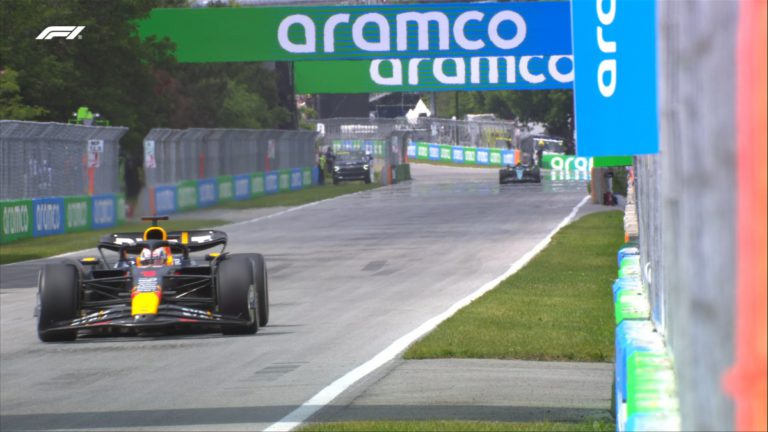
CANADA: Max Verstappen secured his 41st career victory at the Canadian Grand Prix on Sunday, joining the ranks of racing legend Ayrton Senna in the all-time standings.

The Red Bull driver’s dominant performance marked his fourth consecutive win, solidifying his position as the leader in the World Championship.

While Verstappen’s victory was unquestionable, the battle for the remaining podium places kept fans on the edge of their seats.

Fernando Alonso, making an impressive comeback, clinched second place, narrowly fending off a charging Lewis Hamilton. The margin of victory for Verstappen was tighter than usual, highlighting the competitive spirit of the race.

Ferrari drivers Charles Leclerc and Carlos Sainz showcased their resilience, recovering from starting outside the top 10 to finish in the top five.

On the other hand, Sergio Perez settled for sixth place and faced further setbacks in the drivers’ standings, with Verstappen extending his lead by 69 points.

The race commenced after a wet qualifying session and subsequent grid penalties. Nico Hulkenberg’s fast driving under red-flag conditions pushed him down from P2 to P5, allowing Alonso to start alongside Verstappen on the front row.

Hamilton swiftly manoeuvred past Aston Martin to claim second place, with Esteban Ocon surging into the top five. Kevin Magnussen had a scary moment at Turn 13, where he had to go off track and onto the grass, narrowly avoiding a collision with Sergio Perez.

Carlos Sainz executed a daring move, overtaking Perez around the outside. Alonso determined to regain his lost position, brushed against the wall while battling Hamilton.

The race saw its first retirement as Logan Sargeant encountered a power unit failure. The race director deployed the Virtual Safety Car, but the marshals swiftly removed the stricken car, allowing the resumption of the race without full intervention.

However, George Russell’s collision with the wall at Turn 9 shortly after necessitated the Safety Car’s entrance, triggering a flurry of pit stops.

As the leaders pitted, Alonso capitalized on a faster stop than Hamilton, resulting in a close call between them as they exited their respective pit boxes.

Russell miraculously made it back to the pit lane despite the damage, albeit relegating him to the back of the field. The Ferrari duo of Perez, Magnussen, and Valtteri Bottas refrained from pitting under Safety Car conditions, opting to extend their stints.

Alonso gradually fought his way back into second place, executing a well-timed manoeuvre on Hamilton with the assistance of DRS.

However, the durability of the hard tires proved shorter than anticipated, leading to the formation of DRS trains in the midfield.

Lance Stroll and Pierre Gasly resorted to a second pit stop to secure free air and potentially gain positions later in the race. Meanwhile, Magnussen’s fading performance prompted a battle with Nyck de Vries, resulting in contact and subsequent off-track excursions.

Their incident relegated them both to the back of the field, a lap down. Leclerc, Sainz, and Perez skillfully maintained their positions in the top six after mid-race pit stops, joined by Alonso and Hamilton, who also opted for a second stop.

Although Verstappen remained in the lead, Alonso relentlessly pursued him, closing the gap to a mere five seconds by lap 48. Alonso demonstrated his determination to win and asked when he could stop lifting and coasting to conserve fuel.

However, Verstappen and Red Bull exhibited ample pace, preventing Alonso from making significant headway. Hamilton mounted a comeback in the final laps, narrowing the gap to Alonso. Nevertheless, the two-time World Champion skillfully extended his lead, securing second place.

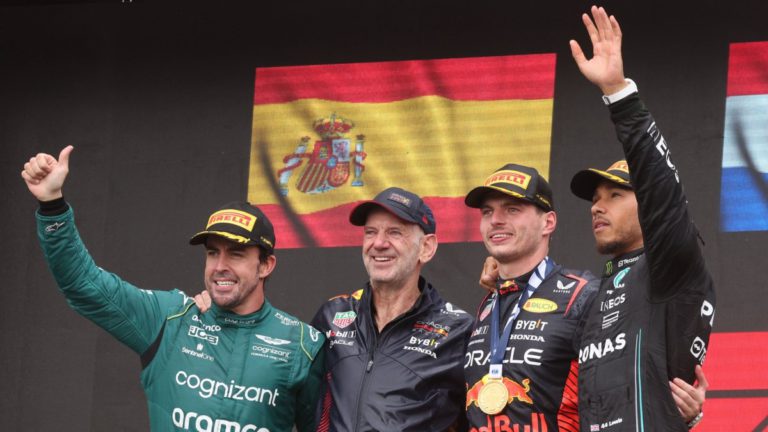
The triumphant trio of Verstappen, Alonso, and Hamilton occupied the podium, captivating spectators with their display of skill and tenacity.

Further down the field, Alexander Albon showcased impressive defensive skills, fending off a lengthy DRS train to secure seventh place, his best finish with Williams.

Lando Norris, unfortunately, incurred a five-second penalty for unsportsmanlike behaviour under Safety Car conditions, dropping him out of the points.

Max Verstappen’s victory at the Canadian Grand Prix brought him level with the legendary Ayrton Senna and solidified his standing as the dominant force in the World Championship.

Also Read: Sebastian Vettel to Make Sensational F1 Comeback at Nürburgring with Red Bull

The Tychonian Model Paradox: A Fascinating Twist in Planetary Motion

0

INDIA: The Tychonian Model, proposed by Danish astronomer Tycho Brahe in the late 16th century, presents a paradox that continues to captivate scientists and astronomers alike.

This unique model, which seeks to explain the motion of celestial bodies, offers a thought-provoking challenge to the widely accepted heliocentric model of the solar system. Let’s delve into the intriguing Tychonian Model paradox and explore its implications.

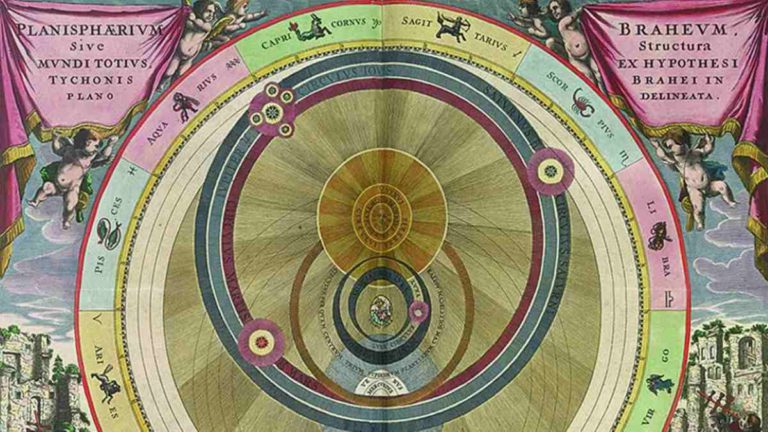
The Tychonian Model, named after Tycho Brahe, suggests that the Earth is stationary at the centre of the universe, while the Sun and the Moon revolve around it. 

In this geocentric model, the other planets, including Mars, Jupiter, and Saturn, are proposed to orbit the Sun. 

This configuration aimed to reconcile the observed movements of the celestial bodies with the prevailing belief in a stationary Earth.

However, the paradox lies in the fact that the Tychonian Model accommodates the observed retrograde motion of planets. In this phenomenon, a planet appears to reverse its normal eastward movement and temporarily move westward in the night sky. 

Retrograde motion occurs due to the varying orbital speeds and distances of Earth and the other planets. In the heliocentric model, retrograde motion is explained as a consequence of the Earth overtaking and passing the slower-moving outer planets.

On the other hand, the Tychonian Model raises the question: How can retrograde motion be accounted for if the Earth is stationary at the centre of the universe? 

This paradox challenges the fundamental principles of planetary motion and poses a dilemma for proponents of the geocentric model.

Tycho Brahe proposed an intricate system of rotating spheres within spheres, where each planet is assigned a complex combination of motions, to address this paradox. 

Scientists believed these secondary spheres carried the planets in intricate paths, including epicycles, to account for retrograde motion. While this approach offered a partial explanation, it added complexity to a complex model.

The Tychonian Model paradox presents a significant challenge to our understanding of the universe and raises questions about the nature of planetary motion. 

It underscores the need for scientific exploration and the continuous refinement of our models to align with observed phenomena.

It is important to note that Johannes Kepler’s laws of planetary motion, which provided a more elegant and accurate description of celestial mechanics, eventually superseded the Tychonian Model. 

Kepler’s laws, derived from extensive observations by Brahe, established that planets move in elliptical orbits around the Sun, with the Sun located at one of the focal points of the ellipse. 

This heliocentric model, combined with Isaac Newton’s laws of motion and universal gravitation, forms the foundation of our current understanding of planetary motion.

Also Read: Understanding Kepler’s Equation: Unlocking the Mysteries of Planetary Motion

Hamilton and Russell Dominate FP2 for Canadian Grand Prix, Mercedes Sets the Pace

0

CANADA: In a stunning display of speed and skill, Lewis Hamilton and George Russell topped the timesheets in FP2 for the Canadian Grand Prix, raising hopes of the dominance of the Mercedes team on Friday.

The British drivers outperformed their rivals, with Carlos Sainz, Fernando Alonso, and Charles Leclerc trailing closely behind in the top five. Red Bull drivers Max Verstappen and Sergio Perez secured the sixth and eighth positions, respectively.

The second practise session, FP2, was extended by 30 minutes to compensate for the limited laps completed in FP1. 

The drivers were eager to familiarise themselves with the Circuit Gilles Villeneuve, leading to a busy track throughout the session. However, a CCTV issue initially disrupted the run, causing a delay. 

Nonetheless, the session started half an hour early, allowing teams and drivers to regain momentum.

The narrow temporary circuit posed challenges for the drivers, as Esteban Ocon was forced to abandon a lap due to encountering Carlos Sainz on a flying lap. 

The track surface was also dust-covered, leading to continuous track evolution as drivers cleaned up the asphalt lap after lap.

The Ferrari duo set the pace early, while Max Verstappen expressed concerns about his gearbox. 

However, around the half-hour mark, Nico Hulkenberg’s session ended abruptly as his smoking Haas was seen slowly approaching the pit straight—smoke billowed from his car, indicating an engine issue. 

The red flag was raised, briefly halting the session. Fortunately, the remaining drivers could resume their runs after a short delay.

As the session progressed, teams equipped their cars with soft tyres, preparing for qualifying simulations and aiming to set fast lap times for Saturday. 

Sergio Perez encountered a close call as he seemingly grazed the wall on the exit of Turn 7. Upon inspection by the Red Bull team, he was sent back out, narrowly avoiding damage.
 

However, another red flag interrupted the session before most drivers could complete their flying laps. 

Esteban Ocon’s Alpine came to a halt at the exit of Turn 9 due to a suspected loss of water pressure. With rain looming and the need to gather data for qualifying simulations, teams hurriedly returned to the track.

Despite the interruptions, times improved throughout the field. Sainz and Leclerc maintained their positions at the top, followed by Verstappen. 

Alonso made an impressive climb into the top five after a slower start. George Russell put in a remarkable performance, but Lewis Hamilton, a teammate at Mercedes, outperformed him with a lap time of 1:13.718, which was just 0.027 seconds faster than Russell’s.

As the session neared its end, dark clouds loomed over the Circuit Gilles Villeneuve, accompanied by increasing wind. 

While the rain held off for the drivers to set their lap times, both Red Bull drivers ventured out on intermediate tyres when the track was declared wet. With minutes to spare, the rain finally arrived, leading to a downpour. 

The drivers returned to the pit lane, concluding the session later than anticipated but with meaningful data collected.

The impressive performances by Hamilton and Russell showcased Mercedes’ speed and potential ahead of the Canadian Grand Prix.

Also Read: Max Verstappen Secures Fifth Victory, Lewis Hamilton Claims Second Place at Spanish Grand Prix

Google Advises Employees to Exercise Caution When Using Chatbots Amid Privacy Concerns

UNITED STATES: Alphabet Inc., the parent company of Google, is urging caution among its employees regarding using chatbots, including its program called Bard, despite the global promotion of the software.

 The company has updated its long-standing policy to protect confidential information, instructing employees not to input sensitive materials into AI chatbots due to concerns about potential data leaks and unauthorized access.

Google’s cautious approach reflects a security standard increasingly adopted by tech companies. 

Many organizations, including Samsung, Amazon, and Deutsche Bank, are alerting employees about using publicly-available chat programs. Apple is also following a similar approach.

The updated policy highlights Google’s desire to prevent any adverse impact on its business caused by competition between its software and ChatGPT, a product developed by OpenAI and Microsoft Corp. 

This competition holds significant investment opportunities and potential advertising and cloud revenues from new AI programs.

A survey conducted on Fishbowl, a professional networking site, revealed that approximately 43 percent of professionals, including those from prominent US companies, were already using ChatGPT or other AI tools as of January 2023. 

However, many did not disclose this usage to their superiors, underscoring the need for caution and transparency.

Google’s concerns about chatbot usage are not new. Before Bard’s launch, Google instructed its staff testing the program to provide it with something other than internal information. 

Despite these concerns, Bard has been made available in over 180 countries, supporting 40 languages. 

Google is actively engaged in discussions with Ireland’s Data Protection Commission and is addressing regulatory inquiries following concerns about the chatbot’s impact on privacy.

AI-powered chatbots have the potential to streamline various tasks, but they also pose risks, including the accidental inclusion of misinformation, sensitive data, or copyrighted content. 

In light of these privacy concerns, Google’s updated privacy notice explicitly advises users not to include confidential or sensitive information in their conversations with Bard.

Both Google and Microsoft have developed software solutions in response to these concerns. 

They offer conversational tools to their business customers that come at a higher price but avoid incorporating data into public AI models. Users also have the option to delete their conversation history in Bard.

Also Read: Google Empowers Online Shopping with AI-Powered Virtual Try-On Tool