Home Blog Page 49

Researchers Combine Raman Probe Imaging Techniques to Revolutionise Microscopic Observation of Living Systems

0

JAPAN: A team of researchers, including scientists from the University of Tokyo, have developed a groundbreaking method of imaging and analysing biological samples.

By combining aspects of two leading imaging techniques, the researchers have introduced RESORT, which enables the observation of living systems with unprecedented detail.

The study, published in Science Advances, opens new possibilities for understanding biological processes and disease mechanisms.

Microscopic imaging has played a crucial role in exploring the microscopic world since the advent of optical devices. 

As our ability to manipulate glass has improved, so has our ability to observe and understand the world around us, both externally and internally.

Modern microscopic imaging techniques have far surpassed the capabilities of traditional microscopes. 

Two prominent technologies, super-resolution fluorescence and vibrational imaging, offer different advantages. 

While the former provides excellent spatial resolution, the latter allows for the labelling of multiple constituents in cells using a wide range of colours.

Motivated by the limitations of these individual techniques, the researchers set out to create something better. 

The result is RESORT (reversible saturable optical Raman transitions), a laser-based technique that combines the benefits of both super-resolution fluorescence and vibrational imaging without inheriting their drawbacks. 

RESORT uses Raman scattering, a particular interaction between molecules and light, to identify the components of a sample under the microscope.

https://twitter.com/DrCharlieMcM/status/1622137181690073088

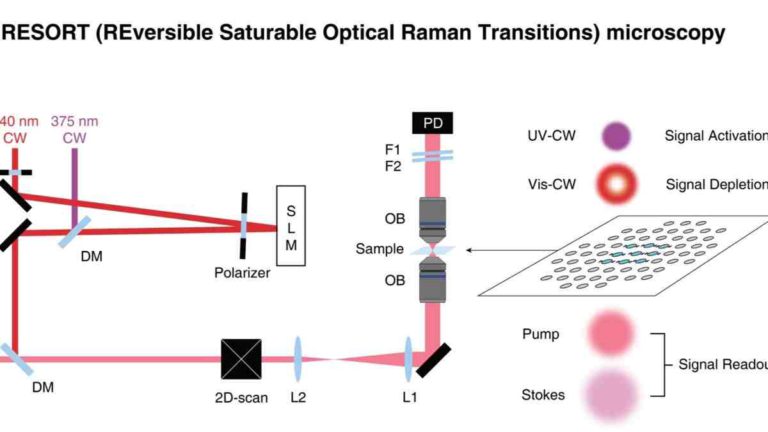
Several stages are involved in performing RESORT imaging. First, the specific components of the sample are labelled with photo-switchable Raman probes, which can control Raman scattering using different laser lights. 

Next, the sample is placed within an optical apparatus that illuminates it appropriately and constructs an image. This arrangement involves irradiating the sample with two-colour infrared laser pulses, ultraviolet light, and a special doughnut-shaped visible light beam. 

These combined illuminations constrain the area where Raman scattering can occur, enabling high spatial resolution during the final imaging stage.

The significance of RESORT imaging lies in achieving higher-resolution images of microscopic samples and in its ability to analyse complex interactions in living specimens without damaging or impeding them, as electron microscopes do. 

The researchers envision expanding the palette of Raman probes to include more colours, enabling imaging of multiple components in action within living samples. 

This breakthrough has profound implications for a deeper understanding of fundamental biological processes, disease mechanisms, and potential therapeutic interventions.

While the primary focus of the team’s research was to improve microscopic imaging in medical research, the laser design advancements made during the development of RESORT could have broader applications in areas such as materials science, where high power and precise control are essential. 

The potential impact of this novel imaging technique extends far beyond biology, promising advancements in various scientific disciplines.

Also Read: The Legacy of CV Raman: The Discovery of the Raman Effect

The Action and Reaction Paradox: Unravelling the Complex Dynamics of Cause and Effect

0

INDIA: The Paradox of Action and Reaction reveals the complex dynamics that govern cause and effect. In physics, the law of action and reaction states that there is an equal and opposite reaction for every action. This fundamental principle has far-reaching implications, not only in the realm of science but also in the intricacies of our daily lives.

The Paradox of Action and Reaction revolves around the notion that our actions have consequences, and these consequences, in turn, influence future actions. The paradox highlights the interconnectedness of events, often leading to unexpected outcomes that may defy our initial expectations.

Consider a simple example: dropping a ball from a certain height. As the ball falls, it exerts a downward force on the ground, which, according to Newton’s third law, triggers an equal and opposite force that propels the ball back up into the air. 

This interplay of forces demonstrates the concept of action and reaction in a physical context.

However, the Paradox of Action and Reaction extends beyond physics. In our personal lives, every decision we make sets off a chain of events that can have profound consequences. 

A kind gesture towards a stranger may inspire them to pay it forward, initiating a ripple effect of goodwill. Similarly, adverse action can trigger a chain of reactions that perpetuate discord and conflict.

On a societal level, the Paradox of Action and Reaction manifests itself in politics, social movements, and even economics. Policies implemented by governments can have unintended consequences that reverberate throughout society. 

In social movements, we can observe the Paradox of Action and Reaction through the dynamics of protest and resistance. 

Actions taken by marginalized groups to demand justice and equality can elicit a backlash from those resistant to change, resulting in a continuous cycle of action and reaction. 

This paradox underscores the challenges faced in achieving social progress and navigating the complexities of societal transformation.

Moreover, the Paradox of Action and Reaction highlights the delicate balance required to achieve desired outcomes. Sometimes, the actions taken to address a problem can inadvertently exacerbate it. 

This phenomenon is commonly known as the unintended consequences of action. For example, stringent regulations to combat illicit activities may create new avenues for criminal behaviour or hinder legitimate businesses.

Navigating the Paradox of Action and Reaction necessitates a deep understanding of the complex web of interactions and feedback loops. It requires foresight, adaptability, and a willingness to reevaluate strategies as new information emerges. 

Acknowledging the interdependence of actions and reactions enables us to anticipate potential outcomes, mitigate unintended consequences, and work towards more desirable results.

Also Read: Neuroscience Breakthrough: Researchers Create First Detailed Map of Insect Brain

Virgin Galactic Sets Launch Window for First Commercial Spaceflight

UNITED STATES: Virgin Galactic, the space exploration company founded by billionaire Richard Branson, is gearing up for its inaugural commercial spaceflight later this month. The company has announced a launch window of June 27 to June 30 for Galactic 01, its first operational flight.

Galactic 01 is a scientific research mission carrying three crew members from the Italian Air Force and the National Research Council of Italy. The primary objective of the flight is to conduct microgravity research, showcasing the capabilities of Virgin Galactic’s suborbital science lab.

The suborbital spaceflight system of Virgin Galactic comprises two components: VMS Eve, a carrier plane, and VSS Unity, a space plane designed to accommodate six passengers and two pilots. 

Eve lifts off from a runway with Unity attached under its wings. At approximately 50,000 feet (15,000 meters), Unity separates from Eve and ignites its rocket motor to propel itself into suborbital space.

Passengers aboard Unity will experience several minutes of weightlessness and witness our planet’s breathtaking view against the space backdrop. After the exhilarating journey, Unity glides back to Earth and makes an unpowered runway landing.

Unity has undergone five successful test missions to suborbital space, with the most recent one occurring on May 25. Following this flight, Virgin Galactic performed necessary maintenance and upgrades to ensure the vehicles were ready for the increased flight rate of commercial service.

Following the commercial debut, Virgin Galactic has plans for the second operational flight, Galactic 02, scheduled for early August. 

The company aims to offer monthly commercial flights after that. These missions will launch from Spaceport America in New Mexico, which serves as Virgin Galactic’s commercial hub.

For those interested in experiencing suborbital space travel, be prepared to dig deep into your pockets—a ticket aboard VSS Unity is around $450,000. 

However, Virgin Galactic envisions a future with more frequent opportunities for space travel. The company is developing a fleet of new “Delta-class” space planes capable of launching once per week. These advanced spaceliners will become fully operational by 2026.

Virgin Galactic faces competition in the suborbital space tourism market from Blue Origin, founded by Jeff Bezos. 

Blue Origin’s new Shepard vehicle also offers suborbital spaceflights to paying customers. However, the company has grounded New Shepard since September 2022 due to an anomaly during an uncrewed research flight.

As Virgin Galactic prepares for its groundbreaking commercial spaceflight, excitement builds among those eagerly anticipating the dawn of a new era in space tourism.

Also Read: The Vacuum Catastrophe Paradox: Unravelling the Mystery of Empty Space

George Russell Backs Time-Defying Lewis Hamilton for Years to Come in Formula 1

0

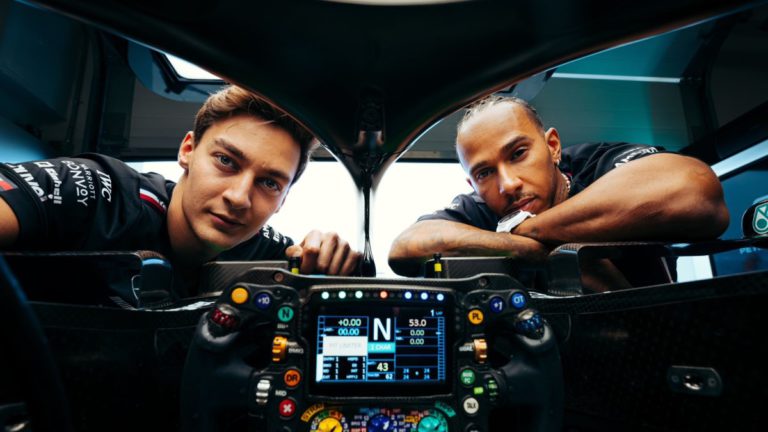
CANADA: George Russell, the current teammate of Lewis Hamilton at Mercedes, has expressed confidence that the seven-time world champion will continue his Formula 1 career “for years to come.”

As rumours swirled about Hamilton’s future and a possible move to Ferrari in 2024, Russell believes it is increasingly likely that the 38-year-old British driver will extend his contract with Mercedes.

The doubts surrounding Hamilton’s future arose due to Mercedes‘ lacklustre start to the 2023 season. Having won six of his seven championships with the team, Hamilton’s existing deal is set to expire at the end of this year. 

However, recent reports suggest that Hamilton and Mercedes are edging closer to an agreement for a contract extension. Russell, who joined Mercedes as Hamilton’s teammate at the start of the 2022 season, has complete faith in the longevity of the most successful driver in Formula 1 history. 

Speaking to the media ahead of the Canadian Grand Prix, Russell cheekily remarked on Lewis Hamilton’s age-defying looks. Russell emphasised that he and Hamilton believe in the Mercedes team and their chances of success. 

Despite Hamilton’s age, Russell highlighted that he is still performing at a remarkably high level, and their healthy competition is pushing them to new heights.

The team’s morale is high after Mercedes’ impressive showing at the Spanish Grand Prix, where they secured two podium finishes and overtook Aston Martin in the Constructors’ standings. 

However, Russell cautioned that the upcoming Canadian Grand Prix poses different challenges, as it features a street circuit with bumpy terrain and predominantly slow-speed corners compared to Barcelona’s smooth and high-speed corners.

While Russell acknowledged the uncertainty surrounding their competitiveness in Montreal, he remained optimistic and believed that a close battle with Aston Martin and Ferrari was likely. 

The varying track conditions and softer tire compounds add a layer of unpredictability to the race. Nonetheless, Russell expressed satisfaction with the team’s progress and direction heading into the Formula 1 weekend. 

He emphasised that mixed conditions could present an opportunity for Mercedes to have a strong performance and achieve a positive result. Despite the challenges and uncertainties, Lewis Hamilton’s career in Formula 1 appears far from over.

Also Read: Sebastian Vettel to Make Sensational F1 Comeback at Nürburgring with Red Bull

The Horizon Paradox: Unravelling the Mysteries of the Observable Universe

INDIA: The nature of what we can see in the cosmos poses a mind-boggling puzzle known as the “Horizon Paradox.” In recent years, scientists have delved into this perplexing enigma, striving to unravel its secrets and shed light on the fundamental workings of our universe.

The Horizon Paradox centres around a fundamental question: How can the observable universe appear uniform and isotropic when light from different regions of space could not have reached one another within the age of the universe?

In other words, if the universe is approximately 13.8 billion years old, how can regions on opposite ends of the visible cosmos exhibit similar characteristics and a remarkable degree of uniformity?

To understand this paradox, we must delve into the universe’s early moments, particularly the cosmic inflationary epoch. According to the prevailing theory, shortly after the Big Bang, the universe expanded rapidly to unimaginable sizes in a fraction of a second.

This rapid expansion is believed to have smoothed out the initial irregularities and established a high level of homogeneity in the cosmos. However, the cosmic causality concept is the key to unravelling the Horizon Paradox.

Since information and light cannot travel faster than the speed of light, the observable universe is limited to a sphere, often referred to as the cosmic horizon, with a radius equal to the distance light can travel within the age of the universe.

Within this cosmic horizon, light from distant regions has had sufficient time to reach us, allowing us to observe those regions. However, beyond the cosmic horizon, there are regions of space that lie beyond our reach due to the limitations imposed by the finite speed of light.

At first glance, it may seem that the cosmic horizon would result in an observable universe that is patchy and lacking in uniformity. But astonishingly, precise measurements and observations have consistently revealed a striking uniformity on large scales. The presence of this uniformity poses a challenge to our understanding of the Horizon Paradox.

To reconcile this paradox, scientists have proposed various explanations. One intriguing possibility lies in the early period of cosmic inflation.

During this phase, the rapid expansion may have established homogeneity across regions that were once nearby but are now outside the cosmic horizon.

Another explanation revolves around the concept of quantum entanglement. Quantum entanglement allows the connection of particles such that their properties remain intertwined, regardless of the distance between them.

Some scientists propose that quantum entanglement could extend beyond the cosmic horizon, linking distant regions and maintaining their uniformity.

Furthermore, cosmological models that involve the existence of exotic particles, such as cosmic strings or primordial magnetic fields, have been put forward to explain the uniformity observed in the cosmos.

While the Horizon Paradox continues to challenge scientists, recent advancements in observational techniques and theoretical models have offered promising avenues for further exploration.

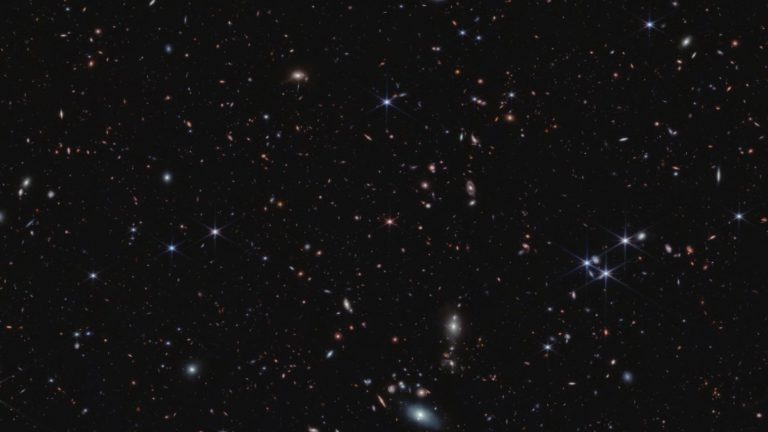
Sophisticated telescopes, such as the Hubble Space Telescope and the upcoming James Webb Space Telescope, provide unprecedented views of distant galaxies and help refine our understanding of the universe’s large-scale structure.

Additionally, high-precision measurements of the cosmic microwave background radiation, the Big Bang’s faint afterglow, offer valuable insights into the early universe and its potential role in resolving the Horizon Paradox.

Solving the Horizon Paradox will deepen our understanding of the universe’s origins and provide a glimpse into the fundamental workings of space, time, and the fabric of reality.

Also Read: The Vacuum Catastrophe Paradox: Unravelling the Mystery of Empty Space

Bethesda’s “Starfield” Sets the Stage for an Epic Sci-Fi Adventure

UNITED STATES: Get ready to embark on an interstellar journey as Bethesda Game Studios prepares to launch their highly anticipated space exploration game, “Starfield.”

With years of anticipation building up, the recent “Starfield Direct” video update from Game Director Todd Howard and his team has left gamers in awe with its stunning visuals and vast universe.

In a captivating 45-minute presentation, Howard unveiled a wealth of new features, gameplay details, and surprises that await players in “Starfield.” The game promises an unparalleled experience, allowing players to visit over 1,000 planets, moons, and asteroids. 

The game’s scale and scope are extraordinary, and the developers have worked tirelessly to ensure that every aspect of this sci-fi odyssey is full of depth and excitement.

“Starfield” is set in a new universe created by Bethesda Game Studios, marking their first original setting in over 25 years. 

Known for its acclaimed titles like “The Elder Scrolls V: Skyrim” and “Fallout 4,” the studio is venturing into uncharted territory with this next-generation role-playing game. Players can create their characters and embark on an epic journey to uncover humanity’s greatest mystery.

Set in the year 2330, “Starfield” introduces players to Constellation, a group of space explorers on a quest to discover rare artifacts scattered throughout the galaxy. 

As part of Constellation, players will navigate the vast expanse of space, pilot and customize their ships, explore planets with diverse ecosystems and resources, establish outposts, and master a refined combat system to face various threats.

In addition to the captivating gameplay footage, the “Starfield Direct” video showcased the deluxe Constellation Edition and Premium Edition packages, available for pre-order now. 

The Constellation Edition includes bonus features such as the Shattered Space Story Expansion, early access, a Chronomark Watch and Case, a SteelBook Display Case, a Constellation Skin Pack, access to a digital artbook and soundtrack, a Constellation Patch, and a Credit Stick with a laser-etched game code. 

The Premium Edition includes similar perks, excluding the Shattered Space Story Expansion. To complement the game, Bethesda Game Studios has collaborated with the Xbox hardware team to create a limited-edition “Starfield” Xbox controller and headset. 

The controller features spaceship-inspired side and back grips, a metallic bronze directional pad, and the official Constellation livery. 

The matching Limited Edition Xbox headset boasts a transparent and metallic bronze mic boom. Both accessories are available for purchase on Xbox.com. “Starfield” is set to take flight on September 6, 2023, for Xbox Series X|S and PC. 

Players can pre-order now or enjoy the game on day one with Game Pass. Pre-purchasing the Premium or Constellation Edition grants early access up to five days before the official release, allowing eager players to dive into the immersive world of “Starfield” ahead of others.

As the countdown to September begins, gamers worldwide eagerly await their chance to explore the vast reaches of space and uncover the mysteries within “Starfield.” 

Bethesda Game Studios’ ambitious creation promises to be an unforgettable sci-fi adventure that will captivate players for years.

Also Read: Black Clover Movie: Asta Gears up For Face-off with Wizard King in New Visual 

University of Toronto Research Unveils Link Between Dark Matter and the Universe’s Clumpiness

0

CANADA: Scientists at the University of Toronto have made a groundbreaking theoretical breakthrough that may shed light on the mysteries of dark matter and the large-scale structure of the universe, known as the cosmic web. The study, published in the Journal of Cosmology and Astroparticle Physics, presents a new connection between these two long-standing astronomical puzzles, offering fresh insights into the nature of our cosmos.

The research suggests that the “universe’s clumpiness,” which refers to the unexpectedly even matter distribution on a large scale throughout the universe, could be explained by the existence of hypothetical ultra-light particles called axions. 

If proven to exist, these axions could constitute dark matter, a mysterious substance that makes up 85 percent of the universe’s mass. Lead author Keir Rogers, Dunlap Fellow at the Dunlap Institute for Astronomy & Astrophysics, emphasized the significance of confirming the existence of axion dark matter, stating that it would be one of the most significant discoveries of this century. 

Additionally, the findings may explain why the universe appears less clumpy than previously thought, an observation that has left scientists uncertain about our current understanding of the universe.

Dark matter, being invisible and not interacting with light, poses a significant challenge for scientists. Astronomers use its gravitational effects on visible matter to study its distribution in the universe. 

The prevailing theory suggests that dark matter is composed of axions, described as “fuzzy” due to their wave-like behavior. 

Photo Credit: Twitter/UofTArtSci

Unlike conventional particles, axions can have wavelengths larger than entire galaxies, influencing the formation and distribution of dark matter. This unique characteristic may explain the universe’s less clumpy nature.

The lack of clumpiness in the universe has been observed in large galaxy surveys, challenging the prevailing theory that dark matter consists solely of heavy, weakly interacting sub-atomic particles called WIMPs. 

Despite extensive experiments, researchers have not found evidence supporting the existence of WIMPs, and searching for alternative explanations is all the more crucial.

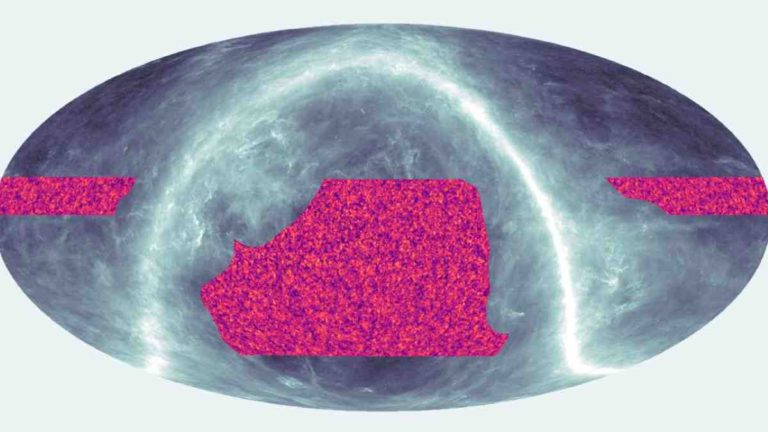
To conduct the study, the research team analyzed observations of the Cosmic Microwave Background (CMB), relic light from the Big Bang, and galaxy clustering data from the Baryon Oscillation Spectroscopic Survey (BOSS), which maps the positions of approximately a million galaxies. 

By comparing these datasets, they confirmed the reduced clumpiness of matter throughout the universe, supporting the notion that axions could address the clumpiness problem.

Future research will involve large-scale surveys to map the galaxy distribution further and provide more precise measurements of clumpiness. The researchers hope to compare their theory with direct observations of dark matter through gravitational lensing, which measures the bending of light from distant galaxies. 

This exploration aims to confirm their results and gain a deeper understanding of the nature of dark matter.

Detecting axions, if achieved, could also have broader implications for fundamental questions in physics, potentially offering insights into the elusive theory of everything that combines gravity and quantum mechanics. 

The researchers believe that solving the mysteries of dark matter may pave the way for answers to even bigger theoretical questions about the universe. The century-old mystery of dark matter may finally be on the verge of being unraveled, thanks to the tools and knowledge available to scientists today. 

The hope is that solving the puzzle of dark matter will bring us closer to understanding the origins and future of our vast cosmos.

Also Read: Astronomers Uncover Unprecedented Features in Brightest Cosmic Explosion Ever Detected

Sebastian Vettel to Make Sensational F1 Comeback at Nürburgring with Red Bull

0

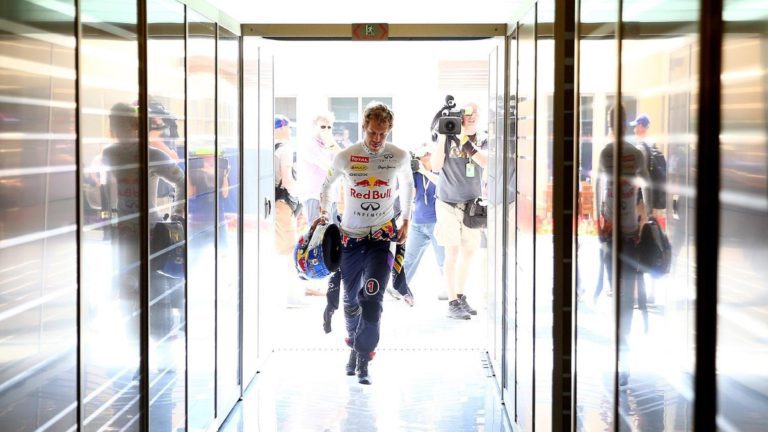
GERMANY: In an exciting turn of events, Red Bull has officially announced that Sebastian Vettel, the four-time F1 World Champion, will return to the cockpit of an F1 car later this year at the iconic Nürburgring circuit.

Vettel, who left the team at the end of the 2014 season to join Ferrari, will partner with his former teammate Daniel Ricciardo for this special event.

The Nürburgring event, set to take place at the historic Nordschleife circuit, will mark Vettel’s third appearance on a track this year.

He previously competed in January’s Race of Champions and is scheduled to participate in the upcoming Goodwood Festival of Speed, where he will drive legendary championship-winning cars.

Red Bull has revealed that Sebastian Vettel will be behind the wheel of the RB7, the car he drove during his second championship-winning season in 2011.

This return to the Red Bull car holds sentimental value for Vettel, who clinched all four of his World Championships with the team, becoming their most successful driver in history.

Motorsport enthusiasts eagerly anticipate the Nürburgring event, as it will witness the return of F1 cars to the circuit after a hiatus of over ten years.

This special occasion brings together young talents and legendary drivers, creating a unique atmosphere for fans and participants.

The confirmation of Sebastian Vettel’s comeback follows a teaser on Red Bull’s German Instagram page, featuring a picture of Vettel’s iconic helmet.

The energy drink company had hinted at “big news,” which turned out to be Vettel’s return to the F1 scene. Vettel’s retirement last year left many questioning his plans, with the German emphasising his desire to spend time with his family.

However, recent developments suggest Sebastian Vettel’s racing ambitions may extend beyond F1. Speculation has arisen regarding a possible future in Le Mans endurance racing as Vettel’s longtime press officer, Britta Roeske, was spotted in a journalistic role at the race.

Roeske has been Sebastian Vettel’s trusted aide since his Red Bull days, accompanying him to Ferrari and, most recently, Aston Martin.

Fans and motorsport enthusiasts eagerly await Vettel’s return to the track, where he is sure to captivate with his skill and experience.

The Nürburgring event promises to be a memorable spectacle, showcasing the talents of an F1 legend and rekindling the excitement of seeing F1 cars thunder around the historic circuit.

Also Read: Liam Lawson Focused on Super Formula Success, Downplays F1 Speculations

The Vacuum Catastrophe Paradox: Unravelling the Mystery of Empty Space

INDIA: The puzzling vacuum catastrophe paradox challenges our understanding of the fundamental nature of the universe. The universe is a vast expanse of matter, energy, and empty space. While the concept of empty space may seem straightforward, scientists have uncovered the mind-boggling paradox lurking within the void.

In classical physics, the vacuum is often thought of as empty, devoid of any particles or energy. However, according to quantum physics, the vacuum is far from empty. It seems that virtual particles spontaneously pop in and out of existence, lending a dynamic and fluctuating nature to seemingly empty space.

The vacuum catastrophe paradox arises when physicists attempt to calculate the energy within the vacuum using quantum field theory.

According to this theory, the vacuum should possess an energy density known as zero-point energy. This energy arises from the constant fluctuations and quantum interactions of virtual particles.

The paradox lies in the observation that when physicists calculate the expected value of the zero-point energy, they encounter a staggering discrepancy.

The predicted energy density is inconceivably large, with estimates reaching magnitudes that defy our understanding of the universe.

The calculations indicate that the vacuum should possess an astronomical amount of energy, leading to a catastrophic outcome.

If this indication were true, the gravitational effects of the vacuum energy would be immense, drastically altering the structure of space-time and causing the universe to expand at an accelerated rate.

This contradiction between theory and observation poses a significant challenge to physicists. It highlights a fundamental gap in our understanding of the vacuum and raises questions about the nature of space, energy, and the fabric of the cosmos.

Scientists have proposed various solutions to resolve the vacuum catastrophe paradox. One possibility lies in the renormalization concept, a mathematical technique that removes infinities that arise in quantum field theory calculations.

Physicists can effectively cancel out the excessively high values and obtain more reasonable predictions for the zero-point energy by applying renormalization.

Another avenue of exploration involves the concept of dark energy, a mysterious force responsible for the universe’s accelerated expansion.

Some researchers suggest that vacuum energy could be related to dark energy, offering a potential explanation for its seemingly elusive nature.

Moreover, ongoing experiments and observations in cosmology and particle physics aim to shed light on the vacuum catastrophe paradox.

Scientists hope to gain deeper insights into the properties of empty space and the true nature of vacuum energy by studying the universe’s behaviour on macroscopic and microscopic scales.

Understanding and resolving the vacuum catastrophe paradox could have profound implications for our understanding of the universe. It challenges long-held beliefs and pushes the boundaries of scientific inquiry.

As physicists grapple with this enigma, they move closer to unravelling the mysteries of the cosmos and unlocking the secrets hidden within the seemingly empty void.

Also Read: The Fermi-Pasta-Ulam-Tsingou Paradox Reveals Astonishing Insights into Nonlinear Dynamics

Oscar Piastri Confident in McLaren’s Revival with New Hires and Restructure

0

UNITED KINGDOM: The McLaren F1 Team, once a dominant force in Formula 1, has been striving to recapture its former glory after years of struggles. However, with recent new hires and a major restructuring, rising star Oscar Piastri believes the team is on the right path towards success again.

The Woking outfit’s last taste of victory came in 2021, only to see the departure of the driver they had paid to bring in just a season later.

Twenty-five years have passed since McLaren won their last Constructors’ Championship, and Lewis Hamilton’s 2008 title triumph marked their most recent championship success.

Although McLaren seemed to be on an upward trajectory after recovering from the dark days of the mid-2010s, the new regulations’ introduction in 2022 sent them back to earth.

The team narrowly lost fourth place to Alpine, and achieving a high position in 2023 appears daunting. As McLaren finds itself in a transitional phase during its 60-year existence, the team has made significant changes behind the scenes.

The restructuring includes a new technical team and staff recruited from renowned teams like Ferrari and Red Bull. Perhaps these changes fuel Oscar Piastri’s belief in McLaren’s potential revival. Piastri, a rookie in Formula 1, emphasized the unseen alterations occurring within the team.

These include adjustments to the car, personnel changes, and the imminent use of a new simulator and wind tunnel. The Australian driver expressed optimism, stating that these changes hold great promise for the team’s future performance.

McLaren has also undergone a substantial restructuring, spearheaded by Rob Marshall from Red Bull. Piastri believes that the team’s new structure, implemented by Andrea Stella, will allow them to maximize the talent they already possess.

The driver expressed his confidence in the ongoing transformations at McLaren, acknowledging the exciting developments happening within the team.

Piastri acknowledges that more time is needed for these changes to yield results, but he is confident that McLaren is heading in the right direction.

However, McLaren faces challenging odds, including their status as one of only four customer teams starting in 2026. Moreover, there are rumours surrounding the future of Lando Norris, whose contract expires at the end of 2025.

Nonetheless, Piastri believes that the experience and expertise of team principal Andrea Stella will play a crucial role in overcoming these challenges.

Piastri recognizes the significance of having a competitive car, acknowledging that even the best driver cannot succeed without a capable machine. However, he firmly believes that McLaren possesses the potential to deliver a competitive car. 

With Stella’s vast experience working with championship-winning teams such as Ferrari and alongside drivers like Michael Schumacher and Fernando Alonso, Piastri is impressed by his ability to motivate the team and identify their strengths and weaknesses. 

The young driver emphasizes that McLaren needs more time to close the gap but expresses confidence in the team’s underlying structure and dedication to improvement.

Piastri remains uncertain about the necessity of new regulations, pointing out that after the much-anticipated changes in 2022, most teams, except for Mercedes, remained relatively stagnant.

Also Read: Former F1 Pundit Highlights the Delicate Balancing Act of Broadcasting Opinions