
Home Blog Page 6

Google’s Pixel Tablet to Enhance Smart Display Functionality with Nest Hub Max Features

UNITED STATES: Google’s Pixel Tablet may soon receive a boost in functionality with the integration of two prominent features from the Nest Hub Max. The tech enthusiasts at 9to5Google made this discovery while conducting an in-depth examination of the Google app on the tablet, revealing promising advancements on the horizon.

The two features, tentatively named ‘Look and Talk’ and ‘Quick Gestures’, were unearthed in the code of Google App version 14.43. It’s worth noting that while these details offer a tantalizing glimpse into potential upgrades, it’s essential to approach them with a degree of caution, as features in development may undergo alterations or even face cancellation.

‘Look and Talk’, initially introduced at Google I/O 2022, is poised to revolutionize the Pixel Tablet’s performance in ‘Hub Mode’. This mode is activated when the tablet is docked or connected to a USB-C cable. By utilizing advanced camera sensing technology, the tablet can recognize gestures from up to 5 feet away, enabling users to interact with Google Assistant without uttering the traditional ‘Hey Google’ command.

Moreover, the system ensures privacy by processing video data locally without transmitting it to external servers. Users can also exercise control over this feature through customizable settings in Hub Mode, with provisions for deactivation to prevent inadvertent activations.

In tandem with ‘Look and Talk’, Google is also making strides towards implementing ‘Quick Gestures’. Familiar to Nest Hub Max users, this feature enables hands-free control of the device. Whether it’s pausing media playback or skipping tracks, users can effortlessly interact with the tablet through intuitive hand gestures.

The integration of these features represents a significant leap forward for the Pixel Tablet’s Hub Mode, potentially delivering a seamless and intuitive smart display experience for users. 

However, it’s worth noting that some long-time Nest Hub Max users may find themselves acclimating to these functionalities for the first time, underlining the robust design and usability of Google’s previous smart display offerings.

Also Read: Google’s Multi-Billion Dollar Deal with Apple to Secure Default Search Engine Revealed
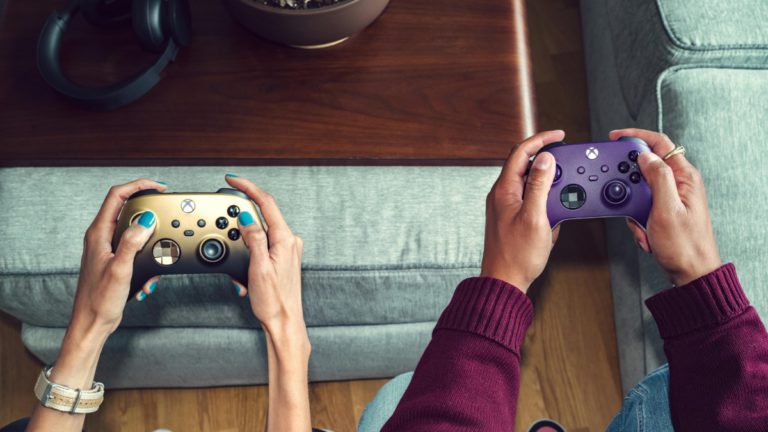

Microsoft Takes a Stance: Blocks Unauthorised Accessories for Xbox Consoles

0

UNITED STATES: In a move to uphold quality and security standards, Microsoft has announced the blocking of unauthorised accessories for Xbox consoles, leaving third-party manufacturers scrambling for solutions. Microsoft has recently confirmed its decision to prevent the use of unauthorised accessories with Xbox consoles, citing concerns about compromised gaming experiences. 

The company emphasized that licensed Xbox hardware and accessories are meticulously designed to meet high-quality performance, security, and safety standards. Players using custom third-party accessories are now facing potential disruptions as reports emerge of unauthorised or unlicensed devices being slated for blockage from use on Xbox consoles. 

According to sources, users have been encountering error messages after recent firmware updates, warning them that their devices will be rendered inoperable by November 12, 2023. The message advises users to seek assistance from the store of purchase or the manufacturer for returns while directing them to the list of authorised accessories on the Xbox website.

Notably, even some prominent players in third-party gear, lacking the full Xbox seal of approval, have witnessed certain products falling under this blockage. Brook Gaming, a respected name in the gaming accessory industry, has issued a statement addressing potential disruptions to their Xbox console-related products. They assure their customers of their commitment to finding solutions and maintaining product quality.

Windows Central has added that Microsoft is exploring the expansion of programs to approve more third-party wireless controllers, providing users with a wider array of options amidst the crackdown on unapproved devices.

As of now, Xbox has not officially addressed the new messaging or specified the extent of devices affected, leaving users with keyboard and mouse setups and accessible controllers in a state of uncertainty. We will continue to monitor this development and provide updates as they emerge.

Also Read: Indian Space Microbiologist Shines at the 74th International Astronautical Congress

Mice Embryos Thrive in Space, Opening New Frontiers for Human Reproduction Research

JAPAN: Japanese scientists, in collaboration with the Japan Aerospace Space Agency (JAXA), have achieved a major milestone. They have successfully grown mouse embryos on the International Space Station (ISS). Professor Teruhiko Wakayama from the University of Yamanashi’s Advanced Biotechnology Centre led the team that conducted this innovative study.

The journey towards this remarkable achievement began in August 2021, when a rocket was launched to carry frozen mouse embryos to the ISS as part of this pioneering research. Once safely in orbit, astronauts utilized a specialized device to thaw these early-stage embryos, which were subsequently cultivated in the microgravity environment of the space station for four days.

The results of this experiment have been nothing short of astonishing. The mouse embryos developed normally in the microgravity conditions of space. They progressed into blastocysts, the precursor cells responsible for forming the fetus and placenta. Perhaps most notably, gravity had no significant impact on their development.

Furthermore, an in-depth analysis of the blastocysts retrieved from the ISS demonstrated no significant alterations in DNA or gene conditions. This crucial finding suggests that the microgravity environment did not adversely affect the genetic stability of the embryos.

The University of Yamanashi and the National Research Institute Riken have jointly declared this study “the first-ever study that shows mammals may be able to thrive in space.” This pioneering research signifies “the world’s first experiment that cultured early-stage mammalian embryos under the complete microgravity of the ISS.”

The next phase of this research aims to transplant these embryos into mice to determine if normal births can occur in space. The success of this endeavor holds immense significance for future space exploration and colonization plans, as it helps us comprehend the challenges and possibilities of reproduction beyond Earth.

This achievement also aligns with NASA’s ambitious Artemis program, which seeks to return humans to the Moon as a stepping stone for eventual missions to Mars. Understanding reproduction in space is an essential component of preparing for long-duration human space travel and realizing our dreams of colonizing other celestial bodies.

Also Read: NASA to Develop a Nuclear-Powered Lander for Titan

Qualcomm Unveils Game-Changing Snapdragon X Elite and Cross-Platform Technology, Snapdragon Seamless

UNITED STATES: At the highly anticipated Snapdragon Summit held in Hawaii, Qualcomm made groundbreaking announcements with the introduction of two cutting-edge technologies: the Snapdragon X Elite and Snapdragon Seamless.

The Snapdragon X Elite boasts a custom-integrated Qualcomm Oryon CPU, delivering an astonishing two-fold increase in CPU performance compared to its competitors. Operating on a 4nm process, it offers an impressive 136GB per second of memory bandwidth. This powerhouse also promises lightning-fast 5G connectivity and the next-generation Wi-Fi 7.

In a move set to revolutionize cross-platform compatibility, Qualcomm revealed Snapdragon Seamless. This innovative technology facilitates seamless connections across diverse operating systems while effortlessly sharing peripherals and data. With the support of industry giants like Microsoft and Android and collaboration with leading brands including Asus, Honor, Lenovo, and Oppo, Seamless is poised to redefine user experiences.

Qualcomm’s Seamless aims to liberate customers from brand constraints, empowering them to mix and match devices and peripherals from various manufacturers. This includes a seamless integration of mice and keyboards across PCs, phones, and tablets, and earbuds capable of prioritizing audio sources akin to the functionality of Apple AirPods. 

Additionally, Seamless unlocks new possibilities for mixed reality (XR) applications, augmenting the capabilities of smartphones in unprecedented ways. This groundbreaking technology is designed to complement the Snapdragon 8 Gen 3, Snapdragon X Elite, and wearables and hearables platforms. Qualcomm has announced that the global rollout of Seamless for device platforms is imminent, with availability slated for as early as this year. 

With Snapdragon X Elite and Snapdragon Seamless, Qualcomm continues to push the boundaries of what is possible in the world of mobile technology, promising a future of unparalleled performance and seamless integration across devices and platforms.

Also Read: Qualcomm Unveils Snapdragon 8 Gen 3: A Game-Changer in Mobile Technology

Kia Unveils Refreshed K5 Sedan with Sleek Upgrades and Innovative Tech

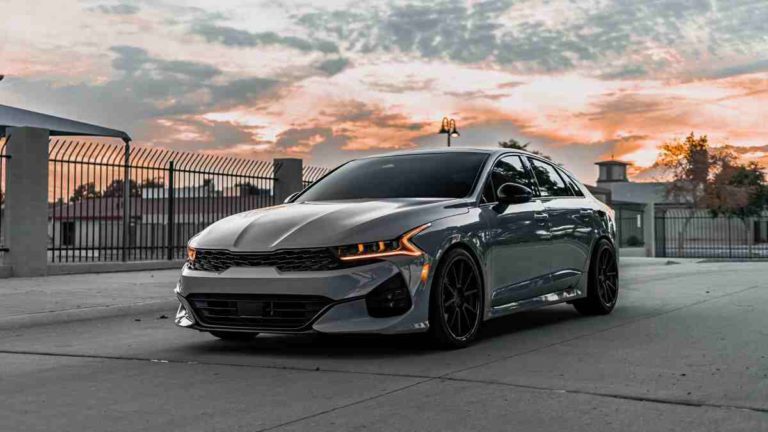
SOUTH KOREA: In a bold move amidst the surge in popularity of crossovers, Kia has unveiled a refreshed version of its midsize sedan, the K5. Formerly known as the Optima, this fifth-generation model receives a mid-cycle facelift, bringing a host of subtle yet impactful updates.

While the changes may not be revolutionary, they are certainly noteworthy. The K5 now boasts redesigned headlights and taillights, drawing inspiration from recent electric vehicle designs. 

A new front bumper with enlarged faux air vents gives the sedan a more aggressive stance. At the rear, new exhaust finishers add a touch of refinement, especially on non-GT-Line models.

The wheels have also received attention, with new designs ranging from 16 to 19 inches, including a sleek, predominantly black version.

The most significant transformations occur inside the cabin. The dashboard has been reimagined to house a pair of gracefully curved screens, embracing a futuristic aesthetic. 

Notably, the traditional gear lever has made way for a compact rotary selector, optimizing space and modernizing the interior layout. Adding an extra layer of security and convenience, Kia has integrated a fingerprint sensor on the lower centre console.

Technological enhancements continue with high-resolution front and rear cameras capable of recording and saving footage. The 2025 K5 also debuts a new head-up display, delivering vital information in an easily accessible format. To enhance the driving experience, additional sound-deadening material has been introduced, ensuring a serene environment.

Under the hood, the K5 offers a range of powertrains to suit diverse preferences. Options include a naturally aspirated 2.0-litre gasoline engine with 160 hp, a turbocharged 1.6-litre unit boasting 180 hp, a 2.0-litre LPI (Liquid Propane Injection) engine delivering 146 hp, and a hybrid variant combining a 2.0-litre engine with 152 hp and an electric motor providing an additional 38.6 kW.

Starting at 27,840,000 won (approximately USD 20,500), the K5 represents a compelling choice for those seeking a refined and technologically advanced sedan in a crossover-dominated market.

The model is currently available for order in Kia’s home market of South Korea, with the global version anticipated to mirror these impressive updates.

Also Read: Kia Carens Sets Sales Record, Boosts Company’s Growth in India

Max Verstappen Dominates Mexican Grand Prix with Record-Breaking Win after Sergio Perez Heartbreak

0

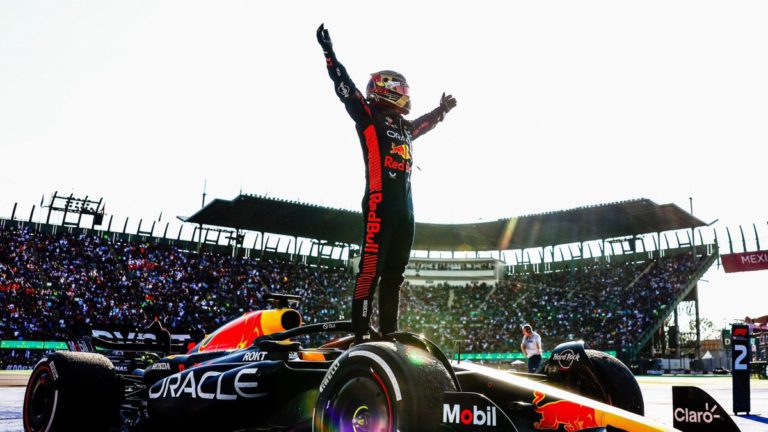
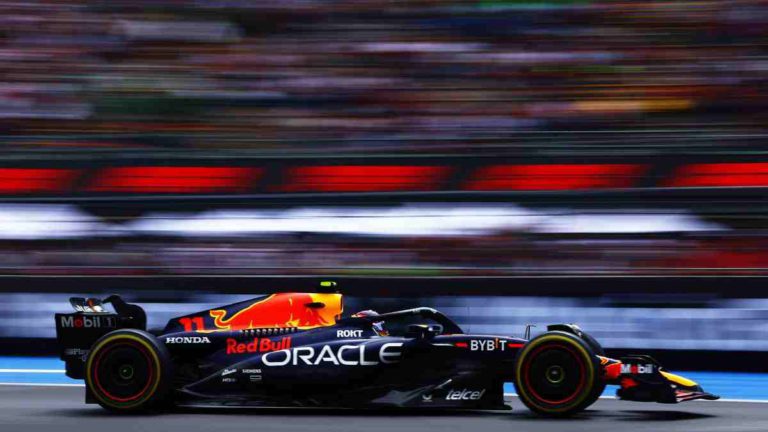
MEXICO: Max Verstappen showcased the dominance of his car by clinching his 16th win of the 2023 season at the Mexican Grand Prix. The race, filled with heart-stopping moments, saw two major crashes, but Verstappen remained unrivalled.

In a jaw-dropping start, hometown hero Sergio Perez shot from fifth to challenge for the lead, only to be sent airborne in a collision, marking an early retirement for the Mexican driver. Shortly after, Kevin Magnussen’s high-speed crash, seemingly due to a car failure, forced a red flag, momentarily halting the race. 

Verstappen’s performance was nothing short of spectacular. He replicated his stunning manoeuvre from two years ago, surging from third to claim the lead at Turn 1. Despite a valiant effort from Charles Leclerc, Verstappen’s brilliance secured him the front position.

Meanwhile, Lewis Hamilton and Charles Leclerc clinched the second and third spots, showcasing their prowess on the challenging Mexico City circuit. Ferrari’s Carlos Sainz and McLaren’s Lando Norris rounded out the top five.

As the race progressed, Verstappen managed his tyres, making a strategic pit stop on lap 19. Hamilton, determined to make his move, executed a flawless overtake on Ricciardo, ascending to fourth place. The battle for supremacy intensified as Hamilton closed in on Sainz, ultimately pitting on lap 25.

However, fate intervened, and a massive crash involving Kevin Magnussen triggered a red flag on lap 35. The impact left Magnussen’s car severely damaged, necessitating barrier repairs. This unforeseen event provided teams with a crucial window for repairs and adjustments.

After the restart, Verstappen and Leclerc defended their positions against a relentless Hamilton. In a breathtaking display of skill, Hamilton secured second place, setting the stage for a high-stakes finale.

At the checkered flag, it was Max Verstappen who reigned supreme, etching his name in the annals of Formula 1 history. His 16th win of the season is a testament to his extraordinary talent and unyielding determination.

Also Read: Trouble in Paradise: Christian Horner Dismisses Rivalry Notions between Verstappen and Perez

SpaceX Gears Up for Second Attempt to Launch 23 Satellites after Aborted Launch

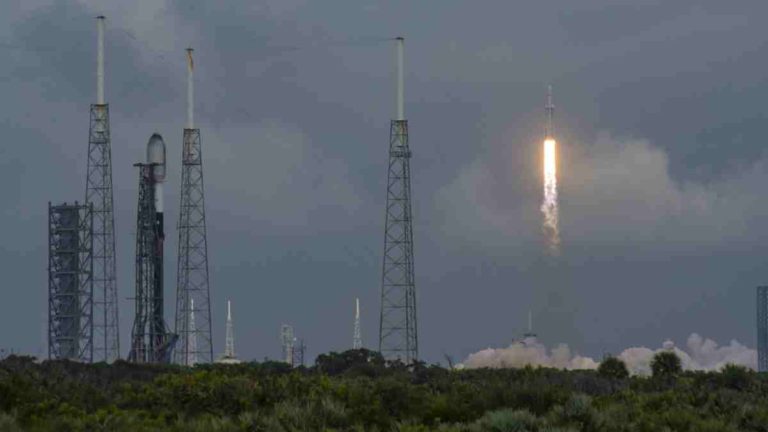
UNITED STATES: SpaceX faced a momentary setback on Sunday (Oct. 29) as the company decided to call off its initial launch attempt due to a detected issue with the Falcon 9 rocket’s stage separation system. Undeterred, SpaceX is poised to make another attempt on Monday (Oct. 30) to propel 23 Starlink internet satellites into space.

The scheduled liftoff is set to occur from Florida’s Cape Canaveral Space Force Station at 7:20 p.m. EDT (2320 GMT). Should unforeseen circumstances delay the launch, a series of seven backup windows are in place, ranging from 7:52 p.m. EDT to 10:22 p.m. EDT (2352 to 0222 GMT on Oct. 30), according to details provided in a SpaceX mission description.

For enthusiasts eager to witness the event, SpaceX’s coverage will be broadcast live via their X platform (formerly known as Twitter), commencing approximately five minutes before liftoff.

Assuming all progresses as planned, the Falcon 9’s inaugural stage is slated for a remarkable return to Earth, executing a vertical landing roughly 8.5 minutes after liftoff on the drone ship, aptly named “A Shortfall of Gravitas,” stationed in the Atlantic Ocean. This mission marks the eighth launch and landing for this particular rocket’s first stage, as detailed in the mission description.

Approximately 65.5 minutes following liftoff, the 23 Starlink satellites are anticipated to gracefully deploy from the Falcon 9’s upper stage into low Earth orbit, further expanding SpaceX’s ambitious Starlink broadband mega constellation. This constellation endeavours to provide high-speed internet service to customers across the globe. 

To date, SpaceX has successfully launched over 5,000 Starlink satellites into Low Earth Orbit (LEO), with plans for additional liftoffs. The company is currently authorized to deploy 12,000 of these spacecraft and has submitted applications for an additional 30,000 satellites on top of that.

Also Read: SpaceX Prepares to Launch Cutting-Edge Science Experiments to Space Station

Abridge Secures $30M in Series B Funding to Revolutionize Medical Documentation with AI

0

UNITED STATES: Abridge, a pioneer in the development of artificial intelligence (AI) solutions for medical documentation, has successfully secured $30 million in a Series B funding round, aimed at accelerating the widespread adoption of its cutting-edge technology.

The funding round was spearheaded by Spark Capital and saw participation from existing investor Bessemer Venture Partners, as well as several prominent institutions, including CVS Health Ventures, University of California (UC) Investments, the American College of Cardiology, Kaiser Permanente Ventures, Lifepoint Health, Mayo Clinic, and SCAN Group.

Abridge’s AI software is a game-changer in the healthcare industry, as it boasts the ability to transmute patient-clinician conversations into structured clinical notes in real time.

This innovative solution offers a tremendous advantage, saving healthcare professionals over two hours each day that would otherwise be consumed by administrative tasks.

Recent deployments of Abridge’s AI software have demonstrated its efficacy, generating over 91% of clinical notes across a spectrum of more than 40 medical specialities with minimal clinician input.

Spark Capital’s general partner, Will Reed, expressed their pride in leading this industry-defining investment, citing Abridge’s remarkable AI talent and its commitment to developing solutions that align with clinical workflows. The overwhelmingly positive feedback from customers further solidified the decision to back Abridge.

Abridge’s recent collaboration with Epic, a healthcare software company, has allowed the seamless integration of its AI solution into Epic’s clinical workflows.

This partnership has facilitated deployments in various healthcare systems, including The University of Kansas Health System, UPMC, and Emory Healthcare, among others.

The impressive part is that the full deployment of Abridge’s solution can be achieved within a mere two-week timeframe.

UCI Health’s Chief Innovation Officer, Scott Joslyn, stressed the importance of enhancing operational efficiency and simplifying documentation for physicians and caregivers.

The investment in Abridge aligns with these objectives, further addressing the pressing issue of clinician burnout and lightening the burden on healthcare professionals.

Abridge’s mission to revolutionize medical documentation with AI is set to transform the healthcare landscape, offering benefits not only to clinicians but also to patients and the healthcare industry as a whole.

Also Read: IBM Unveils WatsonX Code Assistant: Revolutionizing Code Writing with AI-Powered Prompts

Trouble in Paradise: Christian Horner Dismisses Rivalry Notions between Verstappen and Perez

0

MEXICO: Ahead of the Mexican Grand Prix, Red Bull Team Principal Christian Horner has emphatically stated that there is no rivalry between Max Verstappen and Sergio Perez.

The declaration comes in the wake of Verstappen facing boos from a faction of Perez supporters during the podium ceremony in Austin. Verstappen, however, remained unfazed, attributing the chants to Texas Governor Greg Abbott, who shared the podium for the trophy presentation.

Despite Verstappen’s admission of being provided with bodyguards against his preference, he expressed gratitude for the warm welcome he received in Mexico City. Concerns have been raised about the fervent support for Perez potentially creating an adverse atmosphere for Verstappen.

Both Verstappen and Perez voiced support for the ‘Racepect’ campaign, advocating for respect towards all 20 drivers on the grid, irrespective of individual fan fervour. Perez, too, has dismissed any talk of a rivalry between the two Red Bull drivers. 

Horner endorsed Perez’s assertion, emphasizing that Verstappen and Perez have a strong working relationship both on and off the track, contrary to the media’s desire for inter-team conflict.

He also expressed his support for the ‘Racepect’ initiative, emphasizing the importance of respect in both sports and life in general.

Horner echoed this sentiment, quashing any speculation of discord within the team.

He further commended the ‘Racepect’ initiative, emphasizing its applicability beyond sports. 

As the Mexican Grand Prix gets underway, it remains to be seen how the passionate support for Perez and the mutual respect between the Red Bull drivers will impact the race.

Regardless of the outcome, Horner’s words aim to quell any speculation of rivalry, promoting a message of unity and respect among fans and drivers alike.

Also Read: Sergio Perez’s Miserable Monaco Grand Prix: A Weekend of Misfortune and Mistakes

SpaceX Prepares to Launch Cutting-Edge Science Experiments to Space Station

UNITED STATES: SpaceX is gearing up to dispatch a cluster of groundbreaking science experiments to the International Space Station (ISS). These experiments span a diverse range of subjects, encompassing high-speed laser communications to the study of rolling atmospheric waves on Earth.

A SpaceX Falcon 9 rocket will carry the unmanned Dragon spacecraft on the highly anticipated CRS-29 cargo mission. The launch is slated no earlier than November 5, and comprehensive coverage will be accessible through NASA Television.

A standout among the experiments is the laser venture dubbed ILLUMA-T (“Integrated LCRD Low-Earth-Orbit User Modem and Amplifier Terminal”), designed to enhance ISS communications and lay the groundwork for upcoming deep space missions.

ILLUMA-T represents the final component required to transmit data through NASA’s Laser Communications Relay Demonstration (LCRD) satellite launched in 2021. Once operational, the satellite will relay data to optical ground stations in Hawaii and California.

NASA’s Jason Mitchell emphasized the escalating data demands of future missions, asserting, “We all understand that more data means more discoveries.”

Mitchell serves as the director of the advanced communications and navigation technologies division at NASA’s space communication and navigation program, which is backing ILLUMA-T.

While not the inaugural laser demonstration in space, it will mark the premier two-way laser communications relay.

This innovation, harnessing infrared light, is anticipated to expedite the transmission of videos and images. NASA anticipates this advancement will bolster scientific endeavours over extensive distances, particularly during missions to the moon and Mars.

Glenn Jackson, acting project manager for ILLUMA-T at NASA’s Goddard Space Flight Center, explained the monumental challenge of precisely pointing the laser system from the swiftly orbiting ISS. He drew an analogy to a classroom scenario, elucidating how even small Earth lasers encounter challenges in maintaining a steady point.

The ILLUMA-T system’s compactness and reduced mass compared to traditional radio equipment present substantial advantages.

This efficiency allows for additional science payloads or fuel on forthcoming missions. Moreover, it consumes less power, providing more resources for instruments drawing from the spacecraft’s battery.

Furthermore, the optical spectrum’s less stringent regulations facilitate acquiring the necessary spectrum for launch, a stark contrast to radio frequencies.

This promising technology endeavours to minimize risks and expand laser communications across the solar system as it matures.

NASA’s Artemis 2 crew, slated to circumnavigate the moon in 2024, plans to debut its own optical communications system, ushering in a new era of lunar laser communications.

A consortium of partners is spearheading this groundbreaking experiment, with NASA Goddard at the helm, in collaboration with NASA Johnson and the Massachusetts Institute of Technology (MIT) Lincoln Laboratory in Lexington, Massachusetts.

Also Read: NASA to Develop a Nuclear-Powered Lander for Titan