Home Blog Page 80

Pioneer 10: Its Historic Launch and Journey to Outer Solar System

UNITED STATES: On March 2nd, 1972, NASA launched the groundbreaking Pioneer 10 mission into space from Cape Canaveral, Florida.

The Pioneer 10 spacecraft, designed and built by NASA, embarked on a journey that would make history and expand our understanding of the universe.

The Pioneer 10 mission was the first to send a spacecraft beyond the asteroid belt and into the outer reaches of our solar system, ultimately becoming the first man-made object to leave the solar system and enter interstellar space.

https://twitter.com/ron_eisele/status/1631001071861596174?t=EE0YEl-AvVP4u-29s31nfw&s=19

The launch of Pioneer 10 was a significant milestone for NASA and the scientific community. 

NASA designed the spacecraft to explore the outer planets, including Jupiter, Saturn, and beyond, sending back valuable data and images of these uncharted regions of space. 

In addition to scientific discovery, Pioneer 10 also carried a plaque that NASA designed to communicate information about Earth and its inhabitants to any potential extraterrestrial life forms that may come across the spacecraft.

Photo Credit: Twitter/NASA

The plaque, designed by a team led by Carl Sagan, featured a diagram showing the location of Earth relative to other stars in the galaxy, as well as images of a male and female human along with information about our planet’s biology, chemistry, and technology.

The launch of Pioneer 10 was a spectacular sight to behold. The spacecraft was carried into space by an Atlas Centaur rocket, one of the most powerful rockets of its time. 

The launch occurred on a clear day, with the sun shining brightly over the Florida coast. Crowds gathered along the shoreline to witness the historic event, including several scientists, journalists, and the public.

As the countdown reached zero, the engines roared to life, sending a plume of smoke and fire into the sky. 

Slowly but steadily, the rocket lifted off the launchpad, with the force of its engines shaking the ground beneath it. 

The rocket quickly gained altitude, leaving the Earth’s atmosphere and entering space. The spacecraft separated from the rocket, and the mission was officially underway.

Over the next several years, Pioneer 10 would travel over 7 billion miles through space, sending back valuable data about the outer planets, including the first close-up images of Jupiter and its moons. 

The spacecraft also measured the temperature, magnetic fields, and the outer solar system’s radiation levels, providing invaluable insights into the environment beyond our planet.

As Pioneer 10 continued on its journey, it became the first spacecraft to cross the asteroid belt, a region filled with rocky debris that orbits the sun between Mars and Jupiter. 

The spacecraft then made its closest approach to Jupiter in December of 1973, passing within just 81,000 miles of the giant gas planet. 

The data and images sent back by Pioneer 10 provided scientists with a wealth of information about Jupiter’s atmosphere, magnetic field, and moons.

Today, Pioneer 10 still travels through space, although NASA lost contact with the spacecraft in 2003. 

Despite its eventual silence, the Pioneer 10 mission remains a groundbreaking achievement in space exploration’s history, paving the way for future missions to explore the outer reaches of our solar system and beyond.

Also Read: NASA Nominates First Woman for the Position of Science Chief

Susie Wolff Appointed as Managing Director of F1 Academy for New All-Female Series

0

UNITED KINGDOM: Formula One (F1) has announced that Susie Wolff will be the Managing Director of the new F1 Academy series ahead of its launch this season. 

The former Williams development driver has taken on the role as the new all-female junior series will debut in 2023. 

The series will have seven rounds as young female racers get on the single-seater ladder, including an appearance on the F1 support schedule at the United States Grand Prix at Austin later in the year.

Wolff brings experience as a driver and team principal to the role and works towards helping women in motorsport. 

She launched the Dare to Be Different program in 2016, which aims to increase female participation throughout the motorsport spectrum. 

She was the team principal at the VENTURI Formula E team in 2017 before being promoted to CEO in 2021.

Wolff will report directly to F1 CEO Stefano Domenicali in her new job. Her job is to “lead the development of female motorsport talent, with a focus on creating a successful path to higher categories in the F1 pyramid.”

Speaking on Wolff’s appointment, Domenicali said she has a wealth of experience and first-hand knowledge. He added that it would benefit the young drivers as they progress through the racing pyramid.

The F1 Academy will present an opportunity to promote genuine change in the industry by creating the best possible structure to find and nurture female talent on their journey to the higher levels of motorsport, both on and off the racetrack. 

Wolff believes that the F1 Academy can inspire women worldwide to follow their dreams and realise that by nurturing talent, passion, and determination, there is no limit to what they can achieve.

Bruno Michel, F1 Academy general manager, said that Wolff would be invaluable to the F1 Academy team and the drivers. 

Michel was excited to start the new chapter, which gives talented female drivers another way to get into the pyramid system.

The first race of the F1 Academy will take place on April 28-29 at the Red Bull Ring in Austria. 

The F1 Academy aims to prepare the drivers to be ready to progress to the next category within the next three years, and it hopes that their skill and drive will inspire others to follow this path. 

F1 is committed to maximising the opportunities in the sport for anyone to reach their true potential and achieve their dreams. 

The F1 Academy is an integral part of F1 management’s plans to make the sport more diverse and inclusive.

Also Read: McLaren Set to Face Difficult Start to 2023 Season: Sky F1’s Ted Kravitz

Nikki Haley Calls to Cut Off Aid to Pakistan, Citing Terrorist Ties

0

UNITED STATES: Indian-American Republican presidential candidate Nikki Haley has taken a strong stance against Pakistan, calling for the US to cut off all financial aid to the nation.

Nikki Haley, who officially launched her 2024 presidential bid last month, took to Twitter to say that Pakistan is home to at least a dozen terrorist organizations and that the US should cut the financial aid it provides.

Haley has been vocal about her views on US foreign policy and has stated that the US should not be providing aid to countries that are friends and allies of China and Russia. 

She has pledged to cut off foreign aid to countries such as China and Pakistan, which she claims hate America.

In an op-ed in the New York Post, Nikki Haley reiterated her views, saying that if elected to power, she would cut foreign aid to countries that are followers of Russia and China, the two primary adversaries of the US. 

In an interview with Fox News, Haley said that the US should not provide aid to countries that do not support US interests.

Haley announced that she was running for president on February 14. She will be a star speaker at the Conservative Political Action Conference, along with her former boss and former President Donald Trump.

Born Nimrata Nikki Randhawa to immigrant Punjabi Sikh parents, Nikki Haley is the third Indian-American to run for the US presidency in three consecutive election cycles. 

Bobby Jindal ran in 2016, and Vice President Kamala Harris ran in 2020. However, before entering the presidential ballot, Nikki Haley must win the Republican Party’s presidential primary, scheduled to start in January next year.

Haley’s stance on Pakistan has drawn attention from both supporters and critics. Some people have praised her for being strong against terrorism, but others have criticised her for being too general and not taking into account that Pakistan is an important ally in the area.

Even though she has been criticized, Haley has not changed her mind. She still wants the US to stop giving money to countries that don’t support US interests.

The next US presidential election is scheduled to be held on November 5, 2024, and with the race heating up, it remains to be seen how Haley’s views on foreign policy will play out in the coming months.

Also Read: Nikki Haley announces 2024 Presidential Campaign as First Republican Trump Challenger

Australia Dominates India on the 1st Day of the 3rd Test Match at Indore

0

INDIA: Australia started the Third Test against India in Indore in fine form, with rookie left-arm spinner Matthew Kuhnemann leading the charge with five wickets for just 16 runs. 

India vs Australia

India’s decision to bat first backfired as they lost half their side in the first hour of the day to the spinners. 

Mitchell Starc could have easily given Australia the first breakthrough, but the team opted against going for a review twice, with Rohit Sharma being adjudged out on replays each time. 

The introduction of spin in the 6th overturned the game on its head, with Kuhnemann and Nathan Lyon complementing each other well to leave India struggling at 45/5.

Virat Kohli and KS Bharat tried to stem the rot with a confident 26-run stand, but it was short-lived as Todd Murphy got Kohli for the third time in the series, followed by Bharat falling LBW to Lyon. 

India continued to lose wickets after the lunch break, with Kuhnemann picking up his maiden five-fer in First Class cricket, and the hosts were all out for 109. 

The hosts could have been bundled out for an even lower score, but Umesh Yadav’s lusty hitting took India to a better total. Australia’s reply with the bat was confident, led by Usman Khawaja’s artful 60. 

Khawaja and Marnus Labuschagne put up a good stand, taking the Aussies one run within parity. While Khawaja batted cautiously for most of his innings, he eventually fell to a Jadeja delivery after hitting his 21st Test fifty. 

Steve Smith tried to assert his presence by hitting a string of boundaries but was caught behind off the bowling of Jadeja. However, Australia managed to go to stumps without further damage, already eking out a handy lead. 

India’s conservativeness with reviews resulted from burning two against Khawaja off Jadeja, which turned out to be comfortably missing the stumps. Jadeja then used up India’s last review against Steve Smith.

Australia will be buoyed by their strong performance on day one, with the pitch seeming to favour spin. India, on the other hand, will need to rethink their strategy going into day two.

Also Read: Jadeja-Ashwin Shred Aussie Batting as India Wins 2nd Test Match by 6 Wickets

McLaren Set to Face Difficult Start to 2023 Season: Sky F1’s Ted Kravitz

0

UNITED KINGDOM: As the start of the 2023 F1 season approaches, Sky F1’s Ted Kravitz has warned that McLaren is facing a “tough start” to the season. 

According to Kravitz, the team’s poor performance during testing in Bahrain has left them lagging behind their targets. Despite averaging over 100 laps per day during the three days of testing, McLaren clocked the lowest number of laps of any team on the grid. 

Technical issues surrounding the wheel brows on the MCL60 meant that Lando Norris managed just 40 laps on his first day of testing overall.

Kravitz quickly clarifies that McLaren was not holding back its performance. He believes that the team will struggle in the season-opening race in Bahrain. 

The F1 commentator also noted that the second year after a significant rule change divided the grid into two camps: those who got it right last year and those who didn’t. Mercedes, for example, have not changed their concept, but they are still struggling to find a race-winning pace. 

In contrast, Red Bull and Ferrari have seen their concepts bear fruit. Aston Martin changed its concept mid-season last year and is now seeing the benefits of that change. 

Alfa Romeo/Sauber also changed its concept from last year to this year and still has to catch up to match the pace set by leading teams.

McLaren is one of the teams that changed its concept most notably. It went back and down another route, and in doing so, it failed to hit its performance goals for this year. 

However, Kravitz believes that McLaren made the right move, and the team will end up with a quicker car than it would have had if it had kept its old concept.

Last season, McLaren found itself in a similar situation heading into the start of the season. Neither Norris nor Daniel Ricciardo was able to get into contention in Bahrain in 2022, and the team finished P14 and P15.

The hope for McLaren this season is that it can repeat last year’s performance, with Norris taking McLaren’s only podium of the 2022 F1 season a few races later. 

Although it is a long season ahead, McLaren will need to turn things around quickly to stay competitive in the early stages of the championship.

Also Read: Spanish GP: Circuit de Barcelona-Catalunya to Remove Final Chicane from F1 2023 

Denisovians: Mysterious Cousins of Modern Humans That Survived the Ice Age

0

INDIA: Scientists have long been fascinated with the extinct Denisovian human species, which lived thousands of years ago. 

A recent study has shed new light on the Denisovians, providing new insights into their physical characteristics and genetic makeup. Scientists first identified Denisovians in 2010 after discovering a finger bone and a tooth in the Denisova Cave in Siberia

Since then, scientists have found additional bones and genetic material in the cave and elsewhere in Asia. These discoveries have revealed that Denisovians was a distinct human species that lived alongside Neanderthals and modern humans.

The new study, published in the Science Advances journal, analysed the genomes of four Denisovian individuals who lived between 30,000 and 50,000 years ago. 

The researchers found that the Denisovians were more genetically diverse than previously thought and that the species interbred with other hominin species, including Neanderthals and an unknown group of hominins. The study also provided insights into the physical characteristics of the Denisovians. 

The researchers found that the species had several unique features, including a wider skull and a larger dental arch than Neanderthals. They also had a larger thorax and wider pelvis than modern humans.

The genetic analysis also revealed that the species had adapted to high altitudes, suggesting they lived in mountainous regions. Archaeological evidence supports the finding, indicating that the Denisovians inhabited the Altai Mountains in Siberia.

One of the study’s most interesting findings was the discovery of a Denisovian individual who had a half-Neanderthal, half-Denisovian parent. This individual, named by scientists as Denny, was previously identified in a separate study in 2019. 

The fact that Denny had parents from two different hominin species suggests that interbreeding between distinct groups of hominins was more common than previously thought. The discovery of Denny also provided new insights into the genetic makeup of Denisovians. 

The researchers found that Denisovians had inherited genetic material from an unknown hominin group, which they referred to as the “super-archaic” population. Scientists believe this hominin group split from the common ancestor of humans, Neanderthals, and Denisovians around one million years ago.

The study has significant implications for our understanding of human evolution. The fact that Denisovians interbred with other hominin species suggests that the boundaries between different human groups were not as rigid as previously thought. 

It also suggests that there may have been many more extinct hominin species than are known currently. The researchers say that further studies are needed to understand the relationships between different hominin groups and the extent of interbreeding between the hominin species. 

The researchers also note that the genetic diversity of Denisovians suggests that there may have been multiple populations of Denisovians living in different parts of Asia.

Overall, the study provides a fascinating glimpse into the lives of the Denisovians and the complex relationships between different hominin species. 

As scientists continue to unravel the mysteries of human evolution, the story of the Denisovians is likely to become an increasingly important part of the narrative.

Also Read: ISRO Successfully Tests Cryogenic Engine of Chandrayaan-3

Chinese Virologist Hails US ‘Milestone Achievement’ in Acknowledging COVID-19 Lab Leak Theory

CHINA: Dr. Li Meng Yan, a Chinese virologist, has praised the United States for acknowledging that COVID-19 most likely originated from a lab leak in Wuhan, China.

Yan had rung the first alarm bell on the theory of a COVID-19 lab leak as early as 2020.

She had accused the Chinese Communist Party of intentionally manufacturing and releasing the COVID-19 virus into the world, which led to lockdowns and deaths worldwide.

In an interview with FOX News, Yan argued that the lab leak was not an accident, based on her experience working at a research lab using coronavirus. 

She further explained that it would have been impossible for the lab leak to accidentally happen in such a lab and cause the Wuhan outbreak and the pandemic. 

Yan based her argument on evidence she sourced after studying and speaking to several people who said the virus was “intentionally brought out of this strict lab and released in the community.”

Dr. Yan made the shocking revelation in September 2020 that the virus originated from a government-controlled lab in Wuhan when the entire world was reeling under the deadly COVID-19 pandemic.

She said she was assigned to investigate a “new pneumonia” in Wuhan, where she discovered a cover-up operation on a coronavirus.

The US Energy Department recently released a classified intelligence report that confirmed that the COVID-19 virus most likely originated from a lab leak. 

The team later gave their findings to the White House and key members of Congress.

Yan called the report a “milestone achievement,” but he was criticised and told to shut up.

The acknowledgement of the lab leak theory by the US Energy Department is a significant development in the ongoing debate over the origins of the COVID-19 pandemic.

It has also brought back calls for more research into where the virus came from and for those responsible to be held accountable.

Also Read: Top 10 Countries You Can Travel to Without COVID-19 Vaccination

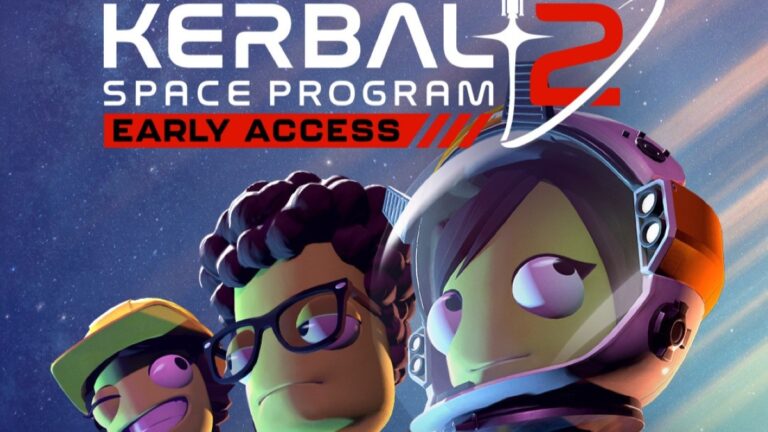
Kerbal Space Program 2 Launches in Early Access; Faces Performance Issues

0

UNITED STATES: Space exploration fans eagerly awaited the Early Access launch of Kerbal Space Program 2 last Friday, but many were disappointed by the game’s performance issues. 

Currently holding a “Mixed” user rating on Steam, players have cited severe performance issues as among the game’s most notable flaws.

Developer Intercept Games posted a Steam news update shortly before the Early Access version’s release, apologising for its communication regarding PC specs. 

The developer also updated the game’s recommended specs to reflect what players can expect going into the game.

According to Intercept Games, the current spec recommendations will not remain static forever. 

Since the game is still in early access, the developers are optimising the game’s performance. The PC-spec recommendations will inevitably be updated as the performance improves. 

The developer assured fans it would try to notify them when specific updates substantially improved the gaming experience.

One method through which the developer plans on improving the game’s performance is by optimising the fuel flow and resource system.

At the moment, equipping your ship with a sizable number of engines negatively affects the game’s framerate, according to Intercept Games. 

The developer acknowledged that the system needs more work and hoped that by improving it, the game would run better.

However, Kerbal Space Program 2 requires numerous other fixes for it to operate satisfactorily. 

In addition to performance issues, players have also reported several bugs, which the developers will need to work on as well.

Despite the game’s current issues, fans remain hopeful that Intercept Games will continue to work on improving the game. 

As one Steam user wrote in a review, “There are definitely issues with the game, but there is so much potential here.” “I can’t wait to see what it looks like when it’s finished.”

It remains to be seen how much work Kerbal Space Program 2 will need before it can reach its full potential, but Intercept Games has promised to keep fans updated on its progress.

For now, fans of the space exploration genre will have to wait and see how the game develops in the coming weeks and months.

Also Read: Elon Musk Regains His Spot as World’s Richest Man as Tesla Shares Surge

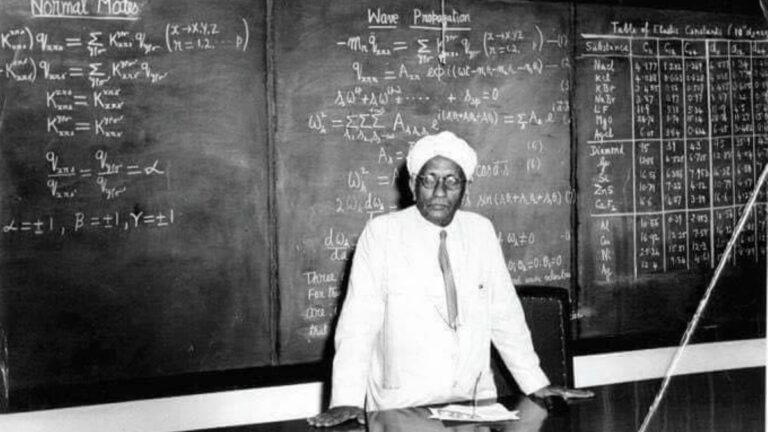
The Legacy of CV Raman: The Discovery of the Raman Effect

0

INDIA: Today marks the 95th anniversary of a groundbreaking scientific discovery: the Raman Effect by Indian physicist Sir Chandrasekhara Venkata Raman. 

On February 28, 1928, Sir Chandrasekhara Venkata Raman, more commonly known as CV Raman, discovered the phenomenon that would later bear his name.

The Raman Effect is a scientific principle that explains how light interacts with matter. It involves the scattering of light by molecules, which causes a shift in its frequency. 

The Raman Effect results from the inelastic scattering of light by molecules, meaning that the photons in the light beam lose or gain energy as they interact with the molecules.

At the time of his discovery, CV Raman worked at the Indian Association for the Cultivation of Science in Kolkata. 

He was studying how light interacts with matter and using it to understand the composition of various materials. 

While experimenting with a beam of light, he noticed that some of the photons scattered at a different frequency than the original light beam. 

This difference in frequency is known as the Raman shift. 

The vibration of molecules in the material that the light interacts with causes the Raman shift.

CV Raman’s discovery had a profound impact on the scientific community immediately, leading to a new field of study called Raman spectroscopy. 

CV Raman spectroscopy uses the Raman Effect to analyse the composition of materials, including chemicals, drugs, and even biological tissues. 

The Raman Effect has also found applications in various fields, such as medicine, forensic science, and nanotechnology.

Raman’s discovery was also significant because it provided evidence for the wave-particle duality of light. 

The wave-particle duality principle suggests that light can act as both a wave and a particle, depending on the situation. Raman’s discovery showed that light could interact with matter on a particle level, leading to the scattering of photons and the Raman shift.

Raman was awarded the Nobel Prize in Physics in 1930 for his discovery. 

He was the first Asian to receive the prize in any category and remains the only Indian to receive the Nobel Prize in Physics. 

His discovery continues to inspire new research and applications in various fields.

As we celebrate the 93rd anniversary of the Raman Effect, it is crucial to recognise the impact of CV Raman’s discovery on the scientific community. 

Raman’s work has revolutionised the way we study and understand the world around us, and his legacy continues to inspire new generations of scientists.

The Raman Effect serves as a reminder of the power of scientific discovery and the importance of investing in research and education. 

It is also a testament to the perseverance and dedication of scientists like CV Raman, who pursued their passion for knowledge and made significant contributions to our understanding of the universe.

As we reflect on Raman’s discovery and its impact, we should also celebrate the spirit of scientific inquiry that continues to drive innovation and progress. 

With continued investment in research and education, we can build on Raman’s legacy and make even bigger strides in our understanding of the world around us.

Also Read: Indian Astronomers Make Headlines with Major Variable Star Discovery in NGC 381

Spanish GP: Circuit de Barcelona-Catalunya to Remove Final Chicane from F1 2023 

0

SPAIN: Barcelona’s Circuit de Barcelona-Catalunya is bringing back its original final-sector layout for the 2023 Spanish GP, F1 has announced. 

The final chicane will be removed as a part of many changes introduced to the track, giving way to faster lap times and providing more overtaking opportunities along the main straight, also referred to as the pit straight. 

The move will result in the circuit having 14 corners, down from 16, and lap times speeding up by several seconds as the slow chicane makes way for the final sweeping right-hander that preceded it.

The Spanish GP will now end with a downhill right-hander that will see the cars enter the final corner, now Turn 14, at around 170-180 mph before a slight lift of the throttle before slinging onto the pit straight. 

The circuit had been using the chicane since 2007, but it will now return to being a faster proposition for drivers once again, similar to when F1 started racing at the circuit in 1991.

The Circuit de Barcelona-Catalunya has confirmed that the FIA has homologated the track to its standards with or without the final chicane. The organisation added that the FIA left it up to the individual series that use the circuit to decide upon the layout. 

Listening to the fans’ requests, Formula 1 has decided to remove the chicane for the 2023 Spanish GP.

The announcement is part of several changes being made to the circuit ahead of this year’s Spanish GP, which will include the installation of new TECPRO barriers at the final two corners to address the risks from the higher speeds in that area of the circuit. 

The track length will be reduced by 18 metres to 4.657 km, and an increased run-off area will also be in place at the start of the lap at Turn 1.

From a fan experience perspective, the pit exit will have a “more modern” signalling system, and the organisers will remodel the scoreboard this year. 

Additionally, the organisers plan to refurbish permanent toilets in fan areas and extend corporate hospitality areas.

Motorsport fans worldwide welcomed the announcement of the change to the circuit’s final sector layout. 

The faster end to the lap will increase excitement and improve the overall fan experience, making the Spanish GP one of the must-see events on the F1 calendar.

Also Read: Formula 1: China Cancels the 2023 GP amid Covid-19 Restrictions