Home Blog Page 97

MG Hector Reveals New and Improved Facelift Prices at Auto Expo 2023

INDIA: The prices of the upcoming MG Hector Facelift variant have been made public by the British automaker Morris Garages (MG).

The company recently displayed the facelifted MG Hector, which has a starting price of ₹14.72 lakhs for the 5-seater base model and a maximum of ₹21.72 lakhs. 

The MG Hector Plus, which has six seats, will cost ₹20.14 lakh for the Sharp Pro. The most expensive model, the Savvy Pro, will cost 21.72 lakhs.The seven-seater trim costs between ₹17.49 lakh and ₹22.42 lakh.

Thanks to various innovative technologies, including 11 Autonomous Level 2 (ADAS) capabilities, the Next-Gen MG Hector Facelift provides hassle-free driving pleasure and enhanced safety. 

Due to its brand-new exterior, cutting-edge safety features, and exquisite design, the Next-Gen MG Hector provides an unparalleled driving and user experience.

The mesmerizing interior of the new SUV features a wooden finish and a dual-tone scheme of argil brown and black. 

The flagship SUV has several well-designed seating options and a lot of space. There are versions with 5, 6, and 7 seats available. While bench seats are available for the 7-seat SUV, captain’s configurations are available for the 6-seat SUV.

The Autonomous Level 2 SUV has 11 Advanced Driver Assistance Systems (ADAS) features, including Traffic Jam Assist (TJA) and Auto Turn Indicators, to give the driver complete peace of mind, safety, and comfort. 

To ensure maximum safety and the least effort possible during a traffic jam, the clever Traffic Congestion Assist (TJA) keeps the vehicle in the centre of the lane and at a safe distance from the vehicle in front.

The Next-Gen MG Hector’s voice commands come standard with the i-SMART technology and segment-first features like touch-screen control for the sunroof, voice commands for the ambient lighting, and navigation voice guidance in five Indian languages. 

The infotainment system supports more than 50 Hinglish commands, other useful apps like Park+ for finding and booking parking, and the Jio-Saavn App for music.

The Infinity premium audio system’s wireless Android Auto and Apple Carplay capabilities enable it to produce rich, truly immersive sound in all directions. All MG Hector models will be available for buyers nationwide on the company’s website or at the closest dealership.

Also Read: MG Hector Facelift: Images of New SUV Leaked ahead of 2023 Launch
Kohli Shines with Ton as India Defeat Sri Lanka by 67 Runs in 1st ODI

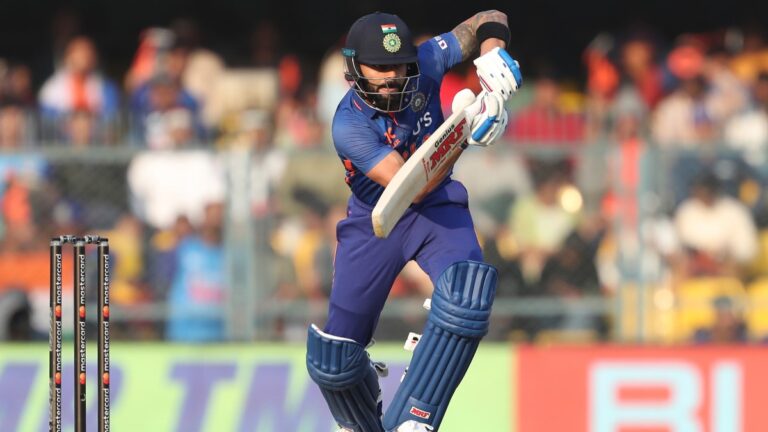
INDIA: Virat Kohli hit his 73rd international century, his 45th in ODI after Rohit Sharma and Shubman Gill gave India the early impetus with a 143-run opening stand. Sharma and Gill hit a half-century each, giving India and Kohli to build the platform for a run fest.

Virat Kohli’s power-packed century led India towards victory

Cameos from Shreyas Iyer and KL Rahul took India to an imposing 373/7 in fifty overs. The Indian pacers controlled the proceedings with the ball early on during the Sri Lankan innings.

However, they lost the plot once the dew factor came in. Sri Lankan skipper Dasun Shanaka made most of the situation with a century, but the target was too big in the end.

India Innings

The Indian openers gave India a flying start on the flat pitch at Barsapara Stadium in Guwahati. Rohit Sharma and Shubman Gill hit a half-century, respectively, as the duo stitched together a 143-run stand for the first wicket.

Virat Kohli came in when Dasun Shanaka trapped Gill plumb in front of the stumps. He made most of the platform set up by the openers and notched up his second consecutive ODI century.

Shreyas Iyer and KL Rahul chipped in cameos. However, the Indian lower middle order failed to deliver towards the fag end of the Indian innings. India ultimately fell short of a better score by 10-15 runs after Kohli’s dismissal towards the end of the Indian inning. 

India folded up for 373/7 in their quota of 50 overs, with Kasun Rajitha picking up three wickets but giving away 88 runs in his ten overs.

Sri Lanka Innings

Sri Lanka was off to a poor start, losing two wickets early, with Mohammed Siraj dealing the early blows. 

A half-century from Pathum Nissanka, who revived the Sri Lankan innings with a 64-run partnership for the fourth wicket with Dhananjaya de Silva, was the only notable score from the Sri Lankan top order.

However, the efforts from the duo couldn’t match the requirements to win the match, and Silva lost his wicket as the pressure mounted.

Dasun Shanaka came in at number six for Sri Lanka and took his time to get his eye in. He put together a hundred-run partnership for the ninth wicket with Rajitha, who contributed just four runs to the cause.

Shanaka reached his century with a boundary off Shami in the last over and followed it up with a six, taking his team to 306/8. 

India takes a 1-0 lead in the 3-match series after a superb display with the bat. The Indian bowlers, however, left a lot to be desired in the match. Umran Malik showed tremendous pace and picked up three wickets but was wayward in his second spell and was taken for runs by Shanaka.

Kohli
Photo Credit: Twitter/BCCI

Virat Kohli received the Player of The Match award for his scintillating inning that was a cornerstone in India’s win.

Also Read: South Africa Manages to Draw the 3rd Test but Australia Wins the Series 2-0

The Treaty of Versailles: Understanding Its Role in Shaping the World Today

0

INDIA: The Treaty of Versailles, signed on June 28, 1919, marked the beginning of the end of World War I between Germany and the Allied Powers. 

The Palace of Versailles, just outside of Paris, France, hosted the negotiation of the treaty, and the representatives of Germany, France, the United Kingdom, the United States, and other allied nations ratified the treaty.

The Treaty of Versailles came into effect on January 10, 1920, which officially meant the end of World War I.

The Treaty of Versailles imposed harsh penalties on Germany, including large reparations payments and territorial losses. It also held Germany responsible for causing the war and imposed strict limits on its military capabilities. 

The terms of the Treaty of Versailles were intended to weaken Germany and ensure that it could not pose a threat to Europe again.

One of the most controversial aspects of the treaty was the War Guilt Clause, which held Germany solely responsible for causing the war. 

The Allied forces used the War Guilt Clause to justify the imposition of large reparations payments, which amounted to 132 billion gold marks (about $442 billion in today’s dollars). 

The payments were meant to compensate the Allied powers for the damage caused by the war and cripple Germany’s economy.

Another contentious aspect of the treaty was the territorial changes it imposed on Germany.

The treaty required Germany to give up large amounts of territory, including Alsace-Lorraine, which was returned to France, and the Polish Corridor, which was given to Poland. 

Germany also lost all of its overseas colonies, and its army was limited to a maximum of 100,000 men.

The treaty also established the League of Nations, an international organisation that was intended to promote peace and resolve conflicts between nations. 

However, the League of Nations was hampered by the United States’ refusal to join, which weakened its effectiveness.

Many Germans were outraged by the harsh terms of the treaty and felt humiliated by the “war guilt” clause. 

The treaty’s economic provisions, in particular, had a devastating effect on the German economy and contributed to widespread poverty and unemployment. 

The resentment towards the Treaty of Versailles fuelled the rise of the Nazi party and its leader, Adolf Hitler, who promised to undo the treaty’s terms and restore German pride.

The Treaty of Versailles is considered by many to have been a failure. The treaty’s harsh terms contributed to the rise of extremism in Germany and set the stage for World War II. 

In conclusion, the Treaty of Versailles was a controversial document that marked the end of World War I but also set the stage for the rise of Adolf Hitler and World War II. 

The Treaty of Versailles imposed harsh penalties on Germany, which contributed to the rise of extremism and resentment towards the treaty. 

Many of its provisions were ultimately discarded, and the League of Nations failed to prevent the outbreak of another war. The treaty is widely considered to be one of the major causes of the Second World War.

Also Read: The Battle of Sarikamish: The Turning Point of World War I

CAKE Introduces Åik E-bike: A Functional and Sustainable Option for Urban Commuters

SWEDEN: CAKE, a well-known Swedish company to fans of electric two-wheelers that produce lightweight electric mopeds and motorcycles over the past few years, launched the Åik, its latest offering.

The Åik is a capable electric off-roader that is a cross between a mountain bike and a motocross bike but in electric form. 

CAKE is notable for electric bikes like the Ösa, a rugged and practical bike that can also double as a workbench and Kalk, an electric version of a hybrid between a mountain and motocross bike. 

The Swedish manufacturer recently introduced the Åik, a pedal-assisted electric bicycle, into the beginner-friendly segment of its already impressive selection of electric two-wheelers. 

Since the name “Åik” loosely translates to “big and heavy load,” the buyers would expect this electric two-wheeler to be able to carry such a load.

The Åik can hold around 80 kilograms, with 20 kilograms on the front and 60 kilograms on the back.

The modular aluminium frame can be attached to various racks, bags, trailers, baskets, and even a passenger seat. 

Additionally, the Åik can be fitted with up to three lockable 750Wh batteries, giving it a potential range of up to 224 miles and a total capacity of 2.25 kWh.

There are two street-legal versions of the CAKE Åik; It comes with a 500W throttle and mid-drive motor with a maximum power of 1000W and a top speed of 20 miles per hour, as standard in the United States. 

In contrast, pedal assist alone is available in Europe, but a 250W motor powers it with a 500W peak output and a maximum speed of 16 mph.

The e-bike can start rolling under a heavy load with 100Nm of torque, regardless of trim level. 

The Enviolo Extreme CVP hub gearbox provides faultless automated shifting support. Hydraulic disc brakes with four pistons on the front and rear wheels provide strong stopping power to the bike. 

Although the electric bike doesn’t feature a built-in suspension, its substantial 20 x 3-inch tires will cushion any bumps.

It’s also important to remember that the Åik is part of CAKE’s Work line and comes with extras designed to make it easier to use the bike for the work commute. 

The Åik is compatible with the CAKE App and CAKE Fleet Management App thanks to its GPS, Bluetooth, and GSM telematics device.

The Åik will begin shipping in May 2023 and is currently available for pre-sale for USD 6,470.

Also Read: Vivo Y02: The Low-budget and High-feature Smartphone Arrives in India

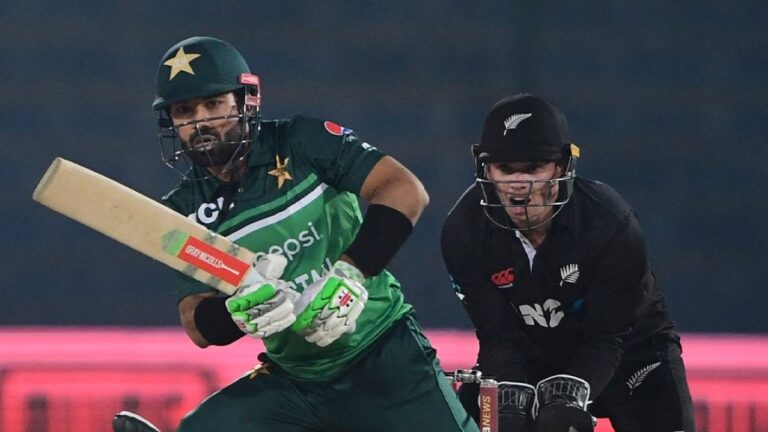
Naseem, Rizwan Guide Pakistan to Comfortable 6-Wicket Win over New Zealand

PAKISTAN: Pakistan defeated New Zealand by 6 wickets in a lop-sided encounter between the two teams at National Stadium in Karachi. Naseem Shah made the ball reverse swing with deadly effect in the later stages of the New Zealand innings, picking up five wickets.

Half-centuries from Fakhar Zaman, Babar Azam and Mohammad Rizwan comfortably took Pakistan over the 256-run target.

New Zealand Innings

Pakistan
Photo Credit: Twitter/ICC

New Zealand limped to 255/9 in their fifty overs on a slow pitch which offered plenty for the spinners. Conway lost his wicket early, and Finn Allen departed after a brief stay at the crease.

Skipper Kane Williamson departed in the fifteenth over, leaving New Zealand at 69/3. Daryl Mitchell and Tom Latham attempted to rebuild the innings, but Nawaz removed Mitchell, who looked out of sorts throughout his innings.

Glenn Phillips, who came in after Latham left, couldn’t free his arms as the Pakistani bowlers kept a tight line. 

Michael Bracewell hit a few lusty blows to take New Zealand closer to a respectable total. Santner chipped in with a brisk 21-run cameo to take New Zealand to 255/9.

The anticipated big hits at the end never came, and the Pakistani bowlers didn’t give away easy runs. Naseem Shah stole the show with a reverse swing and claimed a fiver.

Pakistan Innings

The evening dew on the pitch under the floodlights aided the Pakistani batters, who found it relatively easier to tackle the New Zealand spinners. 

Babar Azam and Fakhar Zaman laid a solid foundation for the run chase with a 78-run partnership after Bracewell dismissed Imam-ul-Haq in the sixth over.

Babar joined forces with Mohammad Rizwan after the fall of Fakhar’s wicket and stitched together a 60-run partnership before being stumped off the bowling of Glenn Phillips. 

Haris Sohail, the new man in, hit a couple of sixes and fours to bring the required run rate below six before becoming Tim Southee’s only wicket of the match.

Agha Salman and Rizwan brought Pakistan home to win the first ODI with 6-wickets and eleven balls to spare.

Naseem Shah won the Player of The Match award for his five-wicket haul, which restricted the New Zealand batters from hitting big shots in the later stages of the innings.

Also Read: Shahid Afridi Might Continue as Chief Selector for Pakistan 

Claustrophobia is a Concern in NASA’s Moon-orbiting Gateway Station Design

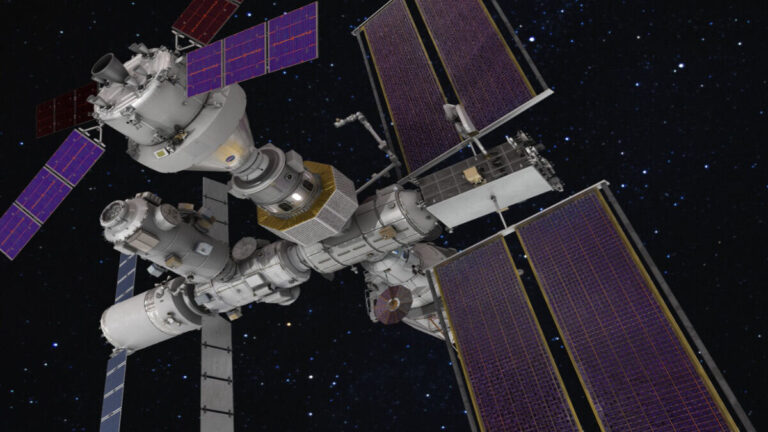
UNITED STATES: According to an architect involved in the design of NASA’s Gateway station, the living quarters will be so small that it will be impossible for the astronauts to stand upright inside.

NASA Gateway Station sparks concern about Claustrophobia

In the coming years, NASA and its international partners intend to begin building the Gateway station in moon orbit.

Once finished near the end of the decade, the space lab will be about one-sixth the size of the International Space Station (ISS). It will have two habitation modules, and as a result of which, the crew members will almost have to give up their personal space.

On 30th November 2022, at the Czech Space Week conference in Brno, the Czech Republic, René Waclavicek, a space architect and design researcher at Austria-based LIQUIFER Space Systems, stated that the International Habitation module of the NASA Gateway station will have habitable space of about eight cubic metres. 

Waclavicek added that the astronauts would have to share it with three others. He explained that the Gateway station’s Habitation module would be a room measuring 2 metres by 2 metres by 2 metres.

NASA
Photo Credit: Twitter/NASA_Gateway

Waclavicek was a part of the design process for the International Habitation or I-Hab, which was built in Europe and is one of the two habitable components of Gateway.

The NASA Gateway station’s I-Hab module is essentially a combination of bedrooms and lab space. The other is the Habitation and Logistics Outpost (HALO), developed in the United States by Northrop Grumman.

According to Waclavicek, the architects had to comply with the project’s practical requirements while working on the design.

Due to the impossibility of launching massive components to the moon, their initial hopes for larger modules, which would provide a larger volume of habitable space comparable to that found on the International Space Station, had to be abandoned.

Compared to what awaits moon explorers on NASA’s Gateway, the International Space Station’s 7.2 by 7.2 feet (2.2 by 2.2 m) interiors, where astronauts could even perform space gymnastics routines, offer a more luxurious experience.

Also Read: SpaceX to Launch 40 Satellites for OneWeb’s Internet Constellation on January 10

Human and Planetary Health Rely on Reduction of Nitrogen Use, Says New Study

UNITED STATES: A new study published in the journal Nature has highlighted the crucial role of nitrogen in human and planetary health. 

Impact of Nitrogen on human and planetary health

Nitrogen is an essential element that is necessary for the growth and development of plants, animals, and microorganisms. It is also a critical component of the Earth’s atmosphere, comprising about 78% of its volume.

However, the way that nitrogen is managed and used has significant impacts on human and planetary health. 

In recent years, there has been increasing concern about the negative impacts of nitrogen on the environment. These concerns include air and water pollution and the destruction of ecosystems.

One of the primary sources of nitrogen pollution is using synthetic fertilizers in agriculture. These fertilizers contain high nitrogen levels, which can leach into the soil and water, leading to the growth of excess algae and other aquatic plants. 

This spurt of algae and aquatic plants can cause oxygen levels in water bodies to drop, leading to the death of fish and other marine life forms. 

Nitrogen pollution can also contribute to the formation of ground-level ozone, which is harmful to the health of humans and animals.

Another significant source of nitrogen pollution is burning fossil fuels, which release nitrogen oxides into the atmosphere. These gases can contribute to the formation of smog, which is harmful to human respiratory health.

Nitrogen emissions from transportation, industrial processes, and waste treatment facilities are also chief contributors to nitrogen pollution.

To address these challenges, the study authors recommend several strategies for improving nitrogen management. 

These strategies include reducing the usage of synthetic fertilizers in agriculture, promoting the use of organic fertilizers and alternative agricultural practices, and increasing the efficiency of nitrogen use in industrial processes. 

The authors also suggest that reducing nitrogen emissions from transportation and waste treatment facilities could help to reduce nitrogen pollution.

The study highlights the need for improved nitrogen management to protect human and planetary health. 

While nitrogen is one of the essential elements, its use and management must be considered carefully to minimize the negative impact on environmental and public health.

Also Read: New Study Shows Nanoplastics Pose Unexpected Dangers When Exposed to Light

Veteran Racer KE Kumar’s Life Ends in Tragic Crash at Madras Circuit

0

INDIA: Following a crash during the second round of the MRF MMSC FMSCI Indian National Car Racing Championship 2022 at the Madras International Circuit, KE Kumar, a well-known and respected racer, passed away on Sunday in a hospital. 

During a Sunday morning saloon car race, Kumar’s car came into contact with a competitor’s vehicle, causing the fatal accident. 

After colliding with a fence, KE Kumar’s race car slid across the track and landed on its roof.

The race was flagged right away after the crash. The track marshals extricated Kumar from the wreckage, and after he underwent a preliminary examination at the track’s Medical Center, an ambulance took him to a nearby hospital within minutes. 

KE Kumar passed away as a result of his injuries, despite the best efforts of the hospital’s medical staff.

The chairman of the meeting, Vicky Chandhok, issued a statement saying that the incident was a very unfortunate occurrence. He added that Kumar had been both a rival and a friend to him for decades.

KE Kumar had competed in a lot of races. Chandhok added that the MMSC and the entire racing fraternity mourned his passing and conveyed heartfelt condolences to his family.

Chandhok went on to say that the MMSC, the event’s organizers, and the sport’s national governing body, the FMSCI, have started an investigation into the incident. 

Meanwhile, the organisers postponed the remainder of the day’s activities out of respect for Kumar, a life member of MMSC.

The event’s video showed KE Kumar’s speeding car colliding with the front of another car racing on his left. Kumar’s car slid off the track and hit the trees at the boundary fence before turning into a turtle.

The impact caused the car’s body components to fall off. After that, the race director immediately stopped the race.

Also Read: Republican Kevin McCarthy Faces 14th Loss in US House Speaker Bid

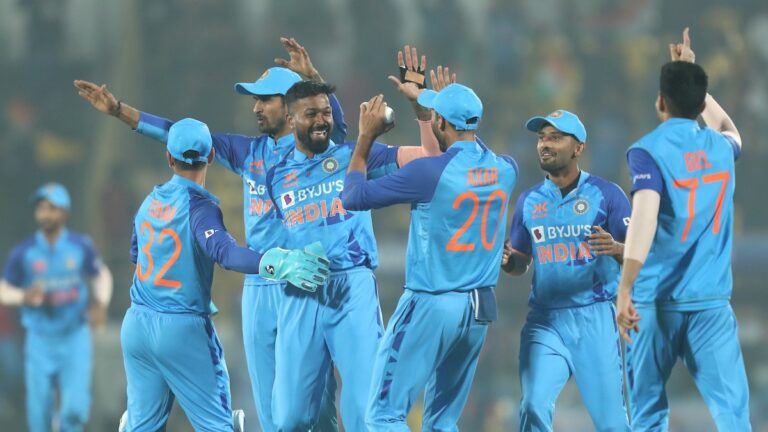
Clinical India Perfectly Demolishes Sri Lanka by 91 Runs, Clinch T20I Series

INDIA: Suryakumar Yadav’s third T20I century and handy cameos from Shubman Gill and Rahul Tripathi followed by some lusty hitting by Axar Patel took India to an imposing 228/5 in 20 overs.

In reply, Sri Lankan batsmen never had an answer to the disciplined bowling attack by the men in blue.

Indian Innings

India
Photo Credit: Twitter/BCCI

After skipper, Hardik Pandya won the toss and opted to bat first at the Saurashtra Cricket Association Ground at Rajkot, opener Ishan Kishan lost his wicket early to an out-seamer from Dilshan Madushanka. 

It took Shubman Gill ten balls to score his first runs, and it was left to Rahul Tripathi to ensure that India had a good power play. 

Suryakumar Yadav came in after the Indian number 3 batsman was dismissed in the powerplay’s final over. The Indian star batsman did what only he can do to get on the scoreboard quickly. 

He scored his third T20I century by firing shots all over the park and treating every bowler with contempt. He couldn’t be stopped by the Sri Lankan bowlers, who were successful in removing his batting partners.

However, the fall of wickets at regular intervals had little effect on India’s rate of scoring runs as Suryakumar Yadav went hammer and tongs after the hapless Sri Lankan bowling. Axar Patel continued his form from the previous game and made a brief cameo at the end, propelling India to 228/5.

Sri Lankan Innings

The pressure of chasing the massive target proved to be too much for the young Sri Lankan team. 

Kusal Mendis made a strong start with a lot of shots, but once India changed their lines and lengths, the Sri Lankan batsmen struggled to score runs. The entire bowling department performed brilliantly, especially the spinners, who bowled tidy spells. 

Sri Lanka kept losing wickets at regular intervals after Axar Patel broke the 44-run partnership between Mendis and Pathum Nissanka. 

Dhananjaya de Silva and Dasun Shanaka chipped in with 22 and 23 runs, respectively, but they could only delay the inevitable.

It was apparent that Sri Lanka was effectively out of the game at the halfway point of the match after India set a massive 229-run target. 

Suryakumar Yadav’s heroics earlier in the match became even more remarkable of the fact that there was a little grip for the slower deliveries. 

India executed their strategies with the ball with precision after Player of The Match, Suryakumar Yadav, helped them to a score that was about 20-30 more than the par score at the ground.

Axar Patel received the Player of The Series award for his heroics with the bat in the T20I and tidy bowling performances throughout the T20I series.

Also Read: David Warner to Retire from Test Cricket after This Year

Introducing the Beginner-friendly Rebbe 125 Motorcycle from Spanish Manufacturer Wottan Motor

SPAIN: Spanish motorcycle manufacturer Wottan Motor is a newcomer to the two-wheeler industry, primarily operating in the beginner-friendly category. 

The company operates in Spain and Italy and is looking forward to expanding across the continent. It offers several appealing products, especially given their reasonable prices.

Take Rebbe 125, for instance. It’s possible to mistake the Wottan Rebbe 125 for a Husqvarna Svartpilen 125 at first glance. 

Indeed, Husky’s retro-modern styling is evident in the tank’s shape and design philosophy. 

However, Rebbe 125 takes on a life of its own when examined more closely. Firstly, it has technology that is much more primitive than the Swedish machine owned by Austria.

The Rebbe 125 has round, retro-style headlights and standard right-side-up telescopic forks at the front. At the very least, the lights are LED, which provides enough light at night. 

The Wottan Rebbe has road-focused tyres instead of dual-purpose rubber like the Svartpilen and rides on front and rear 17-inch wheels. 

To meet the minimum requirements for learner-approved motorcycles, the Wottan Rebbe 125 has front and rear disc brakes with CBS as its braking hardware. 

However, Wottan Motor offers ABS as an option for a premium of 240 euros (USD 252).

In terms of performance, Wottan Motor has fitted the Rebbe 125 with a relatively modern engine. A single-cylinder, liquid-cooled, fuel-injected 125cc engine powers the Wotton Rebbe 125. 

The 125cc engine doesn’t exceed the entry-level segment’s performance limits with 13.5 horsepower and 7.2 lb-ft of torque, but this power is sufficient for daily commuters and first-time drivers alike.

In terms of pricing and availability, Wottan Motor has announced that the Rebbe 125 will cost just 2,950 euros, or USD 3,103, in Spain.

It is one of the most affordable motorcycles in the retro-modern style on the market. It costs nearly half as much as the Husqvarna, which starts at 5,200 euros (5,470 USD).

Also Read: Haibike’s Lyke e-MTB Brings a New Level of Innovation to the Market