
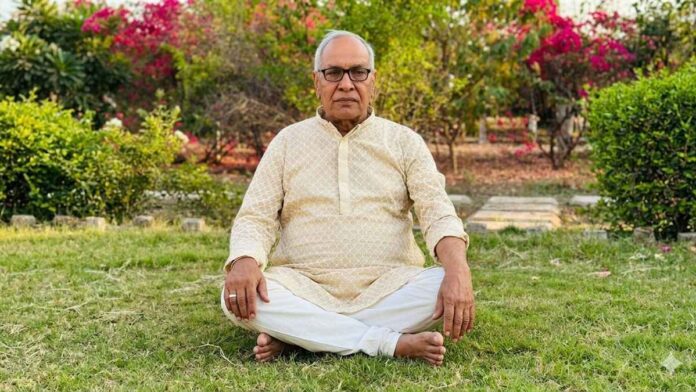
INDIA: In the rural landscape of Maharashtra’s Bhandara district, Vivekanand Polytechnic Sitasaongi has stood for more than four decades as a gateway to technical education for students from remote villages. Established in 1984, the institution has played a crucial role in transforming the lives of young people across the Vidarbha region. Among the figures most closely associated with its growth is former principal Ranvir Singh Roria, whose leadership and commitment helped shape the institution into a respected centre for diploma education.
Located in the mining belt that includes Chikla, Dongribuzurg, and Tirodi, the polytechnic serves students from communities where opportunities for higher education were once limited. The college was founded by the Vivekanand Education Society, an organisation established in 1972 with the aim of improving educational access in backward areas. Initially operating a Hindi-medium high school in Sitasaongi, the society later expanded into technical education after recognising the region’s growing need for skilled professionals in mining, engineering, and infrastructure.
Also Read: US‑Israel War with Iran Escalates Middle East Crisis
When Vivekanand Polytechnic opened its doors in the academic year 1983 to 84, it became one of the first institutions in this part of Vidarbha to offer diploma-level technical programmes. Situated along State Highway No. 87, about 21 kilometres from Tumsar and near Goberwahi railway station, the campus is strategically positioned within a manganese ore mining zone. This location has allowed the institution to remain closely connected to local industry while remaining accessible to students from surrounding rural areas.
Today, the polytechnic offers five full-time diploma programmes approved by the All India Council for Technical Education (AICTE) and affiliated with the Maharashtra State Board of Technical Education (MSBTE). The programmes include Mining and Mine Surveying, Mechanical Engineering, Civil Engineering, Information Technology, and Electrical Engineering. Each course admits around 30 students and focuses on hands-on technical training that prepares graduates for careers in mining, manufacturing, construction, and technology sectors.
Over the years the campus has expanded significantly. Spread across 17 acres, the institution now features laboratories, engineering workshops, and a central library equipped with books, journals, and digital resources. Students also have access to a computer centre, internet connectivity, sports grounds, and medical facilities.
The Leadership Vision of Ranvir Singh Roria
Central to much of this development has been the contribution of Ranvir Singh Roria. Serving as principal and senior academic leader for several years, Roria played a key role in guiding the institution through important stages of its growth. His approach emphasised aligning technical education with the economic realities of the region. Under his leadership the polytechnic strengthened its connection with nearby mining operations, including those run by Manganese Ore India Limited. These collaborations created opportunities for internships, industrial visits, and placements for students.
Roria also focused on improving academic standards and infrastructure. He supported the development of modern laboratories and workshops so that students could gain practical exposure alongside theoretical learning. Recognising that many students came from economically challenged backgrounds, he encouraged scholarship support, mentoring programmes, and counselling initiatives that helped young learners remain in the education system.
Also Read: Marc Rompf and Marcel Ramin Derakhchan Drive dla with Vision and Purpose
Former students recall his leadership style as approachable and supportive. He frequently organised workshops, guest lectures, and technical seminars that connected students with industry professionals. Cultural programmes and extracurricular activities were also encouraged to build confidence and a sense of community on campus. Roria’s vision was influenced by the ideals of Swami Vivekananda, emphasising education as a tool for empowerment and character building.
Today many alumni of Vivekanand Polytechnic work in mining companies, infrastructure projects, and engineering firms across India and abroad. Their professional journeys reflect the institution’s long-standing mission to create opportunities for rural youth.
As Vivekanand Polytechnic Sitasaongi continues its journey into the future, the legacy of Ranvir Singh Roria remains deeply embedded in its identity. His dedication helped transform a rural technical institute into a respected educational hub for Vidarbha. For generations of students who passed through its classrooms, his leadership remains a reminder that visionary educators can leave a lasting impact on communities far beyond the campus gates.
Also Read: Spain Prepares for a Queen as Princess Leonor Comes of Age