
Home Blog Page 59

Monty Hall’s Puzzling Paradox: The Mind-Bending Conundrum That Defies Intuition

INDIA: In the realm of probability puzzles, there is one that continues to confound and divide even the most seasoned mathematicians and puzzle enthusiasts: the Monty Hall problem.

Named after the popular game show host, this paradox has captured the attention of the curious and perplexed for decades, challenging our understanding of probability and human intuition.

The Monty Hall problem originated from a game show called Let’s Make a Deal,” hosted by Monty Hall in the 1960s.

The setup was simple: contestants were faced with three closed doors, with a valuable prize hidden behind one of them while the other two concealed goats.

The objective was to select the door with the prize, but here’s where the twist comes in.

After the contestant chose their initial door, Monty Hall, who knew the location of the prize, would open one of the remaining doors, revealing a goat.

At this point, the contestant would be given a choice: stick with their original selection or switch to the other unopened door.

The puzzling question is: What should the contestant do to maximise their chances of winning the coveted prize?

At first glance, many people believe that there is an equal probability of the prize being behind either of the two remaining doors, making the decision to switch or stick inconsequential. However, this intuition is surprisingly incorrect.

The key to unravelling the Monty Hall problem lies in understanding conditional probability.

Initially, when the contestant selects a door, there is a 1/3 chance of choosing the door with the prize and a 2/3 chance of selecting a door with a goat.

When Monty Hall opens one of the remaining doors to reveal a goat, the probability distribution changes dramatically.

By opening a door with a goat, Monty Hall provides new information to the contestant. The door he opens is never the one with the prize, narrowing down the possibilities.

In fact, by switching doors, the contestant doubles their chances of winning the prize to 2/3, while sticking with their initial choice keeps the probability at 1/3.

To understand this counterintuitive outcome, imagine there are 100 doors instead of three. You select one, and Monty Hall opens 98 doors, revealing 98 goats.

Would you stick with your original choice or switch to the one remaining closed door? The answer becomes clearer when presented with this scenario: switching gives you a 99/100 chance of winning, while sticking provides a mere 1/100 chance.

The Monty Hall problem challenges our intuitive understanding of probability by demonstrating that new information can significantly alter the probabilities.

The problem reveals the power of conditional probability and shows that switching doors maximises the chances of winning the prize.

Despite numerous explanations and demonstrations, the Monty Hall problem continues to provoke debate and spark fascination among mathematicians, statisticians, and puzzle enthusiasts.

The Monty Hall problem serves as a reminder that our instincts and intuition can sometimes lead us astray when faced with perplexing scenarios where probabilities are at play.

So, the next time you find yourself in a game show, faced with three doors and a chance at a grand prize, remember the Monty Hall problem and consider whether your intuition is the best guide or if a counterintuitive switch might just be the key to winning it all.

Also Read: The Elusive Enigma: Unravelling the Missing Mass Paradox and Its Cosmic Conundrums
Sergio Perez Debunks Notion of Max Verstappen as a Bad Loser, Praises Sportsmanship

0

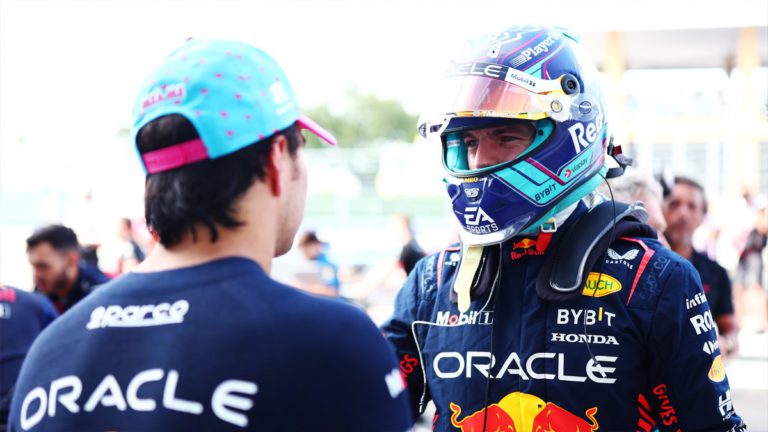
ITALY: Sergio Perez has come forward to dismiss claims that his Red Bull teammate, Max Verstappen, is a bad loser.

In an interview on a podcast, Sergio Perez revealed that Verstappen has always been gracious in defeat, defying the reputation that precedes him.

Perez joined the Red Bull team in 2021 and played a crucial role in Verstappen’s maiden World Championship victory over Lewis Hamilton.

The Mexican driver’s stature has grown during his tenure with the team, securing wins in Monaco and Singapore in 2022, while Verstappen continued his dominance with a second consecutive crown.

The 2023 season has seen Sergio Perez make a good start, clinching victories in Saudi Arabia and Azerbaijan.

Currently sitting 14 points behind championship leader Max Verstappen, Sergio Perez has proven himself a formidable contender for the title.

Red Bull, the reigning constructors’ champion, also enjoys a significant advantage over Aston Martin, having won every race this season.

With the championship likely to be a showdown between the two Red Bull drivers, expectations regarding Perez’s ability to challenge his teammate have increased in the minds of his fans.

Despite Verstappen’s influential position within the team, having been promoted at a young age, Perez highlighted that the 25-year-old is not the sore loser social media often portrays him as.

“He’s a good loser, I’ll say,” says Perez. He adds that Verstappen has the reputation of being a bad loser and that whenever he defeats him, Verstappen congratulates him.

The tension between Verstappen and Perez intensified after the Monaco Grand Prix in 2022.

Verstappen’s father, former F1 driver Jos, criticised Red Bull for not doing enough to help his son move up the order.

There were implications that Verstappen’s refusal to swap positions with Perez in Brazil was a form of payback for the Monaco incident.

However, recent races have shown a shift in Verstappen’s demeanour. After Perez’s victory in Jeddah, Verstappen, despite facing setbacks in qualifying, expressed his satisfaction with a second-place finish and the valuable points gained.

In Baku, Verstappen even described his struggles in the race as a learning experience, signalling a growing understanding of his car’s capabilities.

As the championship battle unfolds, fans and pundits will continue to watch the dynamic between Sergio Perez and Max Verstappen, appreciating the skill and sportsmanship they bring to the sport.

Also Read: Sergio Perez Takes Pole for Miami GP, Leclerc Crash Ends Qualification Early

Toto Wolff Admits Mercedes Limited in Addressing Lewis Hamilton’s Seating Woes

0

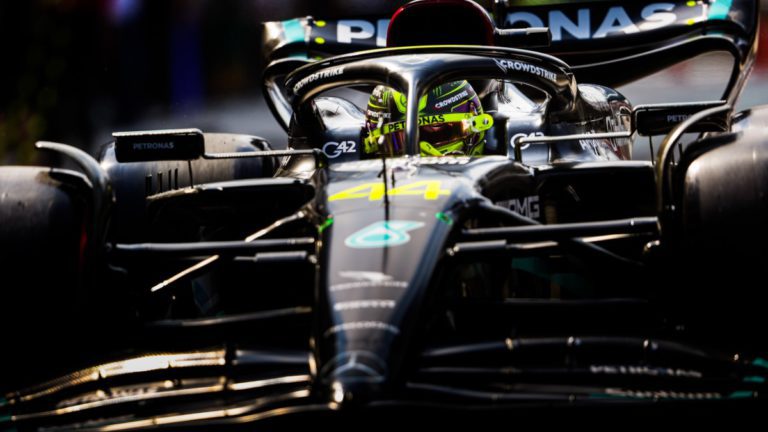
ITALY: Mercedes team boss Toto Wolff has acknowledged the limitations faced by the team in resolving Lewis Hamilton’s complaints about his seating position.

Hamilton had voiced his concerns, stating that the cockpit of the Mercedes F1 car placed him closer to the front wheels when compared to other drivers, affecting his driving experience.

However, addressing this issue is not a simple task, as Wolff explained that the range for adjusting the seating position is within five to fifteen centimetres.

The start of the F1 season has seen Mercedes fall short of their pre-season expectations, with their W14 car significantly slower than the Red Bull RB19.

Hamilton and his teammate George Russell have highlighted various problems with their Mercedes, including a lack of downforce, cornering speed, and straight-line performance. Hamilton’s seating position now joins the list of concerns.

The seven-time World Champion expressed his dissatisfaction, explaining that sitting closer to the front wheels gave him an uncomfortable sensation, altering the car’s dynamics and making it harder to predict its movements.

Wolff acknowledged Hamilton’s feedback, emphasising the importance of listening to a driver of his calibre.

However, altering the seating position to Hamilton’s preference is not a quick fix to their problems. Wolff clarified that the team could adjust the cockpit position by five to fifteen centimetres and added that moving it further back is not feasible.

While the team takes the drivers’ feedback seriously, they believe the issue does not pose significant technical problems.

Instead, the team is determining the broader concept of the driver’s position in the cockpit, considering factors such as weight distribution, aerodynamics, and the driver’s overall comfort and feeling in the car.

Wolff expressed confidence that Mercedes’ upcoming upgrades, initially planned for Imola but postponed due to flooding, will improve driveability and pace for both Hamilton and Russell.

The enhancements include new suspension parts, bodywork, and other components. Wolff tempered expectations, noting that significant performance gains rarely come from a single change but from a combination of improvements.

However, he believes these upgrades could enhance stability, predictability, and lap times. While a silver bullet solution that magically unlocks significant performance is unlikely, Wolff remains optimistic about Mercedes’ prospects.

Addressing the stability and predictability issues could provide a valuable boost. As the team continues to fine-tune their car and respond to feedback, Hamilton’s seating position will be just one aspect of their comprehensive efforts to reclaim their competitive edge in the fiercely contested F1 season.

Also Read: Toto Wolff Reveals Upgrade Details for W14 ahead of Emilia Romagna Grand Prix

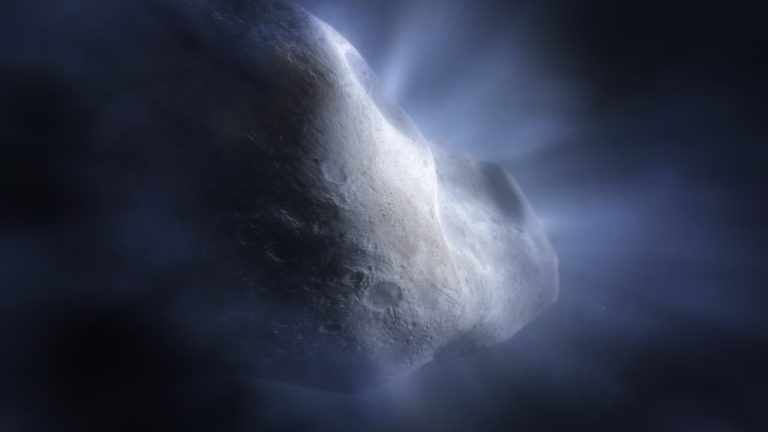
Mysterious Yarkovsky Effect: Revealing How the Solar Push Shapes Asteroids’ Destiny

INDIA: In a stunning revelation, scientists made significant strides in understanding the enigmatic Yarkovsky effect, a force exerted by sunlight that subtly alters the trajectories of asteroids throughout the solar system.

This celestial phenomenon, named after the Russian engineer Ivan Yarkovsky, has captivated researchers for over a century, but its intricate mechanics have remained elusive.

A breakthrough study published in a prestigious scientific journal has shed new light on this mesmerising effect, offering crucial insights into the dynamic interplay between asteroids and the Sun.

The Yarkovsky effect centres around a deceptively simple concept: the sun’s radiation heats one side of an asteroid, causing it to emit thermal radiation as heat energy.

In response, the asteroid experiences a little but consequential push, nudging it along its orbital path.

Over long periods, this effect accumulates, resulting in subtle alterations to an asteroid’s trajectory.

These minute changes can have far-reaching implications, as even a tiny deviation in an asteroid’s course can bring it closer to or farther from our planet.

Scientists have long recognised the importance of understanding the Yarkovsky effect, as it plays a crucial role in predicting the future paths of asteroids and assessing potential threats to Earth.

However, unravelling the intricacies of this phenomenon has proven to take time and effort.

Previous attempts to measure the Yarkovsky effect relied on indirect observations and complex calculations, leaving room for uncertainty and imprecision.

The recent study, conducted by an international team of astrophysicists, employed advanced modelling techniques to simulate the Yarkovsky effect in unprecedented detail.

By combining observational data, computer simulations, and laboratory experiments, the researchers were able to refine their understanding of the underlying physics.

The study revealed that the Yarkovsky effect can vary significantly depending on an asteroid’s composition, shape, and rotation rate, highlighting the intricate interplay between these factors and solar radiation.

Moreover, the researchers discovered that the Yarkovsky effect is not limited to altering an asteroid’s trajectory.

It also plays a vital role in reshaping their physical properties. The subtle radiation-induced push can cause asteroids to spin faster or slower over time, leading to changes in their shape and orientation.

These findings open new avenues for studying the evolution of asteroids and provide invaluable insights into their internal structures.

Beyond its theoretical implications, the newfound understanding of the Yarkovsky effect holds practical significance for planetary defence.

By accurately measuring and predicting the trajectories of asteroids, scientists can refine their strategies for deflecting potentially hazardous objects away from Earth.

This knowledge equips astronomers with the tools to develop more effective mitigation techniques to safeguard our planet from potential cosmic collisions.

The revelation of the Yarkovsky effect’s inner workings marks a monumental step forward in the asteroid research field.

Scientists now possess a more comprehensive understanding of the complex dance between solar radiation and these celestial bodies.

As ongoing investigations continue to unravel the mysteries of the Yarkovsky effect, the scientific community edges closer to safeguarding our planet against the cosmic hazards that lurk in the vast expanse of space.

Also Read: NASA’s Scientific Balloon Mission Cut Short Due to Irreparable Leak

New Study Finds Evidence That Carrying Pollen Raises Body Temperature of Bumble Bees

UNITED STATES: A new study by North Carolina State University researchers discovered that carrying pollen is challenging for bumble bees. It significantly increases their body temperature.

This newfound understanding of how active bumble bee body temperatures are affected has raised important questions about the potential impact of a warmer world due to climate change on these crucial pollinators.

Observing a nearby flower patch, one can spot bumble bees with distinctive yellow bumps on their back legs. These bumps are solid packets of pollen that the bees meticulously collect during their foraging trips, transporting them back to their nests. 

Despite their seemingly effortless movement from flower to flower, these pollen packets can weigh up to a third of the bees’ body weight. 

The study revealed that when accounting for environmental temperature and body size, bumble bees carrying pollen had significantly higher body temperatures than their unladen counterparts.

https://twitter.com/vja1999/status/1657479976386539520

The researchers found that for every milligram of pollen carried, bee body temperatures rose by 0.07°C, resulting in fully laden bees being 2°C warmer than those without pollen. 

While the body temperature of bumble bees, like other ectotherms, is primarily influenced by the environment, researchers knew little about their heat tolerance.

The discovery that pollen-laden bumble bees have higher body temperatures suggests that carrying a full load of pollen on a hot day could increase the risk of exceeding their temperature tolerance, potentially reaching critically hot and lethal temperatures. 

Malia Naumchik, the study’s lead author, explains that getting warmer from carrying pollen puts bumble bees in the range of stressful, critically hot temperatures. This warmth has essential implications for bumble bees and climate change. 

As environmental temperatures increase, the bees’ operational range of temperatures could shrink significantly. Bumble bee populations and species diversity have been declining worldwide, especially in regions experiencing the effects of climate change. 

However, the exact mechanisms by which climate change impacts bumble bees still need to be fully understood. This recent finding adds a valuable piece to the puzzle.

Pollen is vital in every stage of a bumble bee’s life cycle. Newly emerged queens in the spring rely on pollen to sustain themselves and nourish their sister workers. 

These workers, in turn, take charge of feeding the colony, including the larvae and future queens. 

More pollen must be available to prevent colony development, jeopardizing future generations and the species survival. Additionally, this could have far-reaching consequences for pollination, impacting agriculture and ecosystems.

Elsa Youngsteadt, the research supervisor and a professor in applied ecology, emphasizes the need to understand how bumble bees might alter their behaviour in response to increased temperatures. 

This knowledge is crucial for assessing the potential impact on pollen collection and pollination activity during hot days. Whether it involves carrying smaller pollen loads or shorter foraging times, any behaviour change could result in reduced pollen supply to colonies and decreased plant pollination. 

Pollination is particularly significant because bumble bees are vital ecosystem service providers and critical agricultural pollinators, particularly in the United States and Europe.

Also Read: New Zealand Forbids Export of Live Animals

Dell G15 5530: The Stylish Mid-Range Gaming Laptop with Stellar Performance

INDIA: The Dell G15 5530 has emerged as a game-changer in the mid-range gaming laptop market, combining impressive performance with a sleek and stylish design.

Dell G15 5530 is a force to be reckoned with and aims to provide gamers and content creators with a remarkable experience.

Dell’s G series has undergone a remarkable transformation in recent years, and the G15 5530 showcases the brand’s commitment to delivering high-quality gaming laptops.

With a starting price of Rs 89,990, the Dell G15 5530 stands out with its design overhaul, resembling the premium Alienware gaming notebooks rather than a budget-friendly option.

The design of the Dell G15 5530 is full of surprises and delights. The dual-tone quantum white with deep space blue thermal shelf finish adds a funky and trendy touch to the laptop.

Although it is a slightly thick and heavy machine, weighing 2.8 kg, its appearance fits a capable gaming laptop primarily residing in a dedicated gaming den.

Connectivity options and ports on the G15 5530 are plentiful, and placing essential ports such as HDMI, DisplayPort, and the charging port at the back is a thoughtful design choice.

Other ports, such as the LAN port, 3.5mm headphone jack, and USB-A ports, are conveniently located on the sides.

Furthermore, the laptop supports Bluetooth 5.2 and Wi-Fi 6E, ensuring seamless connectivity.

The display of the G15 5530 impresses with its improved colour accuracy compared to its predecessor, although the peak brightness of 300 nits and lack of HDR certification may be slight drawbacks.

While the laptop’s display may not match the quality of more professional notebooks, it more than suffices for gaming.

The keyboard on the G15 5530 is tactile, featuring a dedicated number pad with an orange backlight that enhances the gaming experience.

However, a complete RGB treatment for the keyboard would have been a welcome addition. The trackpad functions as expected, providing a straightforward user experience.

Although the laptop’s 720p web camera resolution and speaker setup are minor setbacks, they do not significantly impact the overall performance. Dell has room for improvement in these areas in future iterations.

When it comes to performance, the G15 5530 excels. The Intel Core i7-13650HX CPU boasts impressive clock speeds up to 4.9 GHz, 14 CPU cores, and a maximum turbo power of 157W, so this laptop delivers desktop-class single-thread and multi-thread performance.

Paired with the RTX 4060 laptop GPU and 8 GB of video memory, the G15 5530 effortlessly handles modern AAA titles, even at 1440p resolution.

The laptop’s cooling system, featuring a dual fan design, ensures sustained performance without thermal throttling.

While the battery life on the G15 5530 is average, lasting over four hours for non-gaming tasks, the laptop comes with a substantial 330W power adapter capable of powering this powerhouse.

Also Read: Leaked Pricing for Nvidia’s GeForce RTX 4070 Graphics Card Raises Eyebrows

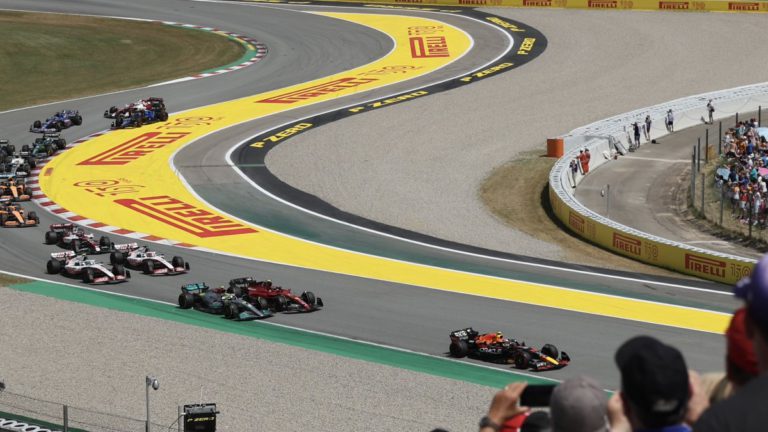
Precautionary Evacuation at Imola: Imminent Emilia Romagna Grand Prix Threatened by Severe Weather

0

ITALY: As the Emilia Romagna Grand Prix looms, local authorities have issued a precautionary evacuation order for Formula 1 staff at Imola due to the adverse weather conditions.

With the Emilia Romagna region on red alert for the upcoming weekend, the circuit has experienced significant water accumulation in broadcast and paddock areas, prompting safety concerns.

Teams had already arrived at Imola to set up their garages, hospitality units, and pit walls, but the inclement weather forced them to put their preparations on hold.

The nearby River Santerno has been steadily rising, and reports indicate that it has even overflowed, passing near the Autodromo Enzo e Dino Ferrari.

The Emilia Romagna region’s Department of Civil Protection has maintained a red alert, warning of strong winds, heavy showers, frequent electrical activity, and potential hailstorms.

These weather conditions threaten not only the Formula 1 event but also the overall safety of the region.

The situation raises concerns about the possibility of the race itself being affected.

The forecast predicts steady rain for the upcoming days, with Wednesday alone expected to bring up to 100mm of rainfall.

Such circumstances may lead to doubts about the race’s feasibility under these conditions.

Local authorities are making contingency plans, considering potential school closures in the region on Wednesday and exploring options for residents to work from home if road closures become necessary.

While the race is still a few days away, scheduled to begin on Friday, May 19, the looming uncertainty regarding the weather has cast a shadow over the event. 

The Formula 1 community, fans, and organisers closely monitor the situation and hope favourable weather conditions will prevail.

The Emilia Romagna Grand Prix holds immense significance for drivers and fans alike, as it showcases the thrilling combination of speed and skill in one of the most renowned motorsport events in the world. 

However, the safety of all involved remains paramount, and the race officials will make decisions regarding the continuation of the race with utmost caution.

As the days progress, attention will be on the weather forecast, with hopes that conditions will improve and allow for a smooth and uninterrupted running of the Emilia Romagna Grand Prix. 

The racing community eagerly awaits updates from local authorities and organisers, fervently hoping that the capricious whims of the weather will not derail the event.

Also Read: Red Bull’s Success Goes Beyond Suspension Trick, Says F1 Commentator Peter Windsor

NASA’s Scientific Balloon Mission Cut Short Due to Irreparable Leak

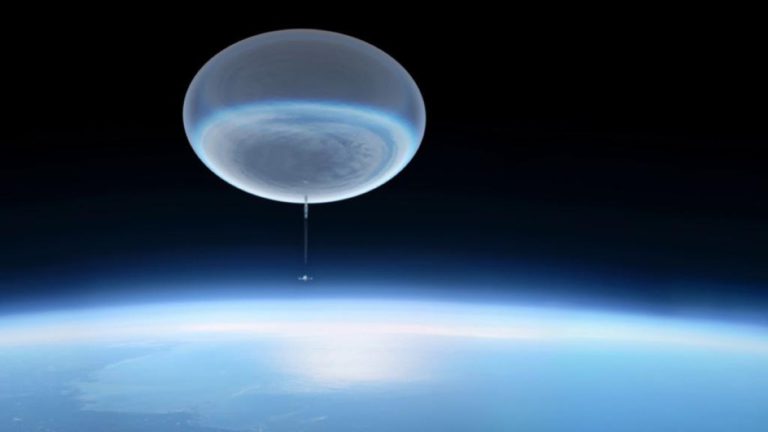
UNITED STATES: A NASA scientific balloon flight intended to study intergalactic cosmic ray particles had to be abruptly terminated by the team after developing an irreparable leak during its flight.

The super pressure balloon (SPB), launched from New Zealand’s Wnaka Airport, carried the Extreme Universe Space Observatory 2 (EUSO-2) payload.

However, NASA discontinued the mission when attempts to fix the leak failed, resulting in the payload sinking to the ocean floor.

The launch occurred on Friday, May 12, and the team detected the leak approximately 36 hours into the flight.

Despite the best efforts of the flight teams, the irreparable damage forced NASA to terminate the mission over the Pacific Ocean.

EUSO-2, designed to detect elusive cosmic ray particles, will remain on the ocean floor, and there are no immediate plans for another SPB launch this year.

NASA Scientific Balloon Programme Chief Debbie Fairbrother expressed disappointment at the mission’s untimely end, emphasising the agency’s commitment to investigating the cause of the leak to enhance super-pressure balloon technology.

EUSO-2 was the second and final SPB launch scheduled for NASA’s 2023 New Zealand balloon launch manifest.

The previous launch, which occurred on April 15, is still ongoing. This SPB, carrying the SuperBIT telescope, has been traversing the Southern Hemisphere, measuring dark matter in galaxy clusters from its near-space altitude.

The use of super-pressure balloons offers a cost-effective alternative to traditional orbital launches.

With the ability to float in the stratosphere at around 100,000 feet, these balloons provide significant savings compared to the high costs associated with space-bound payloads.

EUSO-2, weighing approximately two tonnes, would have been considerably expensive to launch into space.

In a peculiar twist, the payload of the SPB serves as an anchor when mission control cannot salvage it.

The payload ensures safe termination while minimising potential environmental impact by pulling the balloon to the bottom of the ocean.

NASA officials likened the process to the “spacecraft cemetery” found in the Pacific Ocean.

While the unfortunate conclusion of the SPB mission is a setback for cosmic ray research, NASA remains committed to advancing its super-pressure balloon technology.

Lessons learned from this incident will contribute to future improvements, ensuring the success of future missions exploring the mysteries of the universe.

Also Read: NASA’s Webb Telescope Uncovers Water in Unlikely Place

Red Bull’s Success Goes Beyond Suspension Trick, Says F1 Commentator Peter Windsor

0

UNITED KINGDOM: F1 powerhouse Red Bull Racing’s exceptional performance in the 2023 season is not solely an attribute of their highly-discussed suspension design, according to renowned F1 commentator Peter Windsor.

Windsor asserts that the team’s aerodynamically efficient car, crafted under the guidance of legendary chief technical officer Adrian Newey, is the true secret behind their success.

Red Bull has been unstoppable this season, achieving a perfect start with Max Verstappen and Sergio Perez clinching victories in all five opening races.

Red Bull’s dominance has propelled them to the top of the Drivers’ and Constructors’ Championship standings, with Verstappen leading the pack, closely followed by Perez.

The team’s revolutionary suspension design, often called a “trick” suspension, has been widely credited for the RB19’s remarkable speed.

This innovative system minimises dive under braking and squat during acceleration, enabling the car to maintain a lower ride height and maximise downforce.

As underbody performance plays a crucial role in a car’s speed, this design allows Red Bull to run with less rear wing, resulting in impressive straight-line performance.

However, Windsor emphasises that the suspension trick is merely a part of Red Bull’s overall success. He believes that the team’s aerodynamically efficient car, developed by Newey and his aero team, is crucial.

The car’s platform, built around precise aerodynamic parameters, offers superior efficiency compared to rival teams.

Windsor praised the team’s structure and ability to coordinate various departments, including packaging, suspension, battery, and power unit, to complement Newey’s vision flawlessly.

Red Bull team principal Christian Horner also expressed surprise at the lack of progress from their rivals.

Horner questioned the performance of Ferrari and Mercedes, stating that he was wondering where the others were in terms of development. He adds that the teams are working hard on significant upgrades for Europe.

As the Emilia Romagna Grand Prix approaches at Imola, the racing world awaits to see if Red Bull’s dominance will continue and if rival teams can catch up.

The success of the RB19 serves as a testament to the meticulous design and efficient structure of the Red Bull team, providing them with a formidable advantage on the track.

Also Read: Former F1 Pundit Highlights the Delicate Balancing Act of Broadcasting Opinions

The Lunar Laser Ranging Anomaly: Unravelling the Mystery of the Moon’s Peculiar Behaviour

UNITED STATES: Scientists were perplexed when observing an enigmatic anomaly during lunar laser-ranging experiments. 

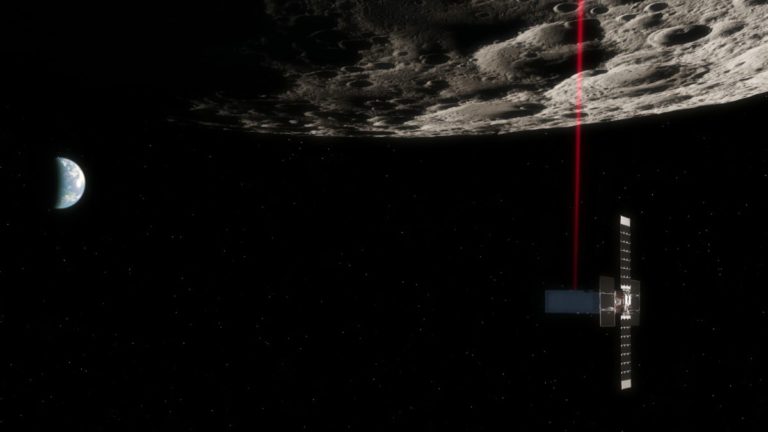
These experiments involved firing a laser beam from Earth to the Moon and measuring the time it takes for the light to bounce back. 

While researchers have used this technique for decades to precisely determine the distance between our planet and its natural satellite, the unexpected behaviour of the laser beam has led to a flurry of scientific curiosity and raised intriguing questions about the Moon’s composition and structure.

A team of researchers at a prominent astronomical observatory first detected the lunar laser ranging anomaly. 

Upon analysing the data collected during routine experiments, they noticed intermittent variations in the returning laser signal. 

https://twitter.com/thechunckypiece/status/1655991960195436546

These unexpected fluctuations contradicted the predictable pattern scientists had observed for years.

Scientists worldwide quickly joined the investigation, aiming to unravel the mysterious phenomenon. 

One prevailing hypothesis suggests that the lunar anomaly is an attribute of the gravitational interactions between the Moon and hidden space objects, such as minor asteroids or even hidden lunar satellites. 

These interactions could perturb the laser beam’s trajectory, causing the fluctuations observed during the experiments.

Another hypothesis focuses on the internal structure of the Moon. It suggests that seismic activity within the Moon’s interior, although minimal, could create subtle vibrations that affect the laser signal. 

Scientists are considering the possibility of hidden geological processes or even the presence of an undiscovered layer within the Moon that influences its behaviour during laser ranging experiments.

Furthermore, some researchers speculate that the anomaly may result from lunar dust. Over time, the Moon’s surface accumulates a layer of fine particles that could scatter the laser beam, leading to the observed variations. 

This hypothesis has gained traction due to recent studies indicating the presence of an electrostatic charge on lunar dust particles, potentially affecting their behaviour in the laser experiment.

Scientists plan to conduct additional lunar laser-ranging experiments with increased precision to shed light on this perplexing phenomenon. 

The experiments aim to gather more data and explore potential correlations with known lunar events, such as meteor showers or solar activity. 

Furthermore, space agencies are contemplating future missions dedicated to investigating the Moon’s surface and subsurface to identify any hidden features that could contribute to the anomaly.

The lunar laser ranging anomaly has rekindled scientific curiosity about Earth’s closest celestial neighbour. 

While the anomaly is intriguing, it also underscores the importance of further exploring the Moon to understand better its geological history, composition, and interaction with the solar system.

The scientific community eagerly awaits additional research, collaboration, and technological advancements to help unravel the mystery behind this peculiar lunar behaviour. 

Solving the lunar laser ranging anomaly could pave the way for a deeper understanding of the Moon’s past, its present state, and its potential role in the future exploration of our cosmic neighbourhood.

Also Read: Asteroid 2023 HG1 to Pass Close to Earth: NASA Assures No Danger Posed