Home Blog Page 58

Stratolaunch Bids $17 Million for Virgin Orbit’s Aircraft Assets in Bankruptcy Sale

UNITED STATES: In a bid to acquire Virgin Orbit’s aircraft assets, hypersonic vehicle company Stratolaunch has submitted an offer of $17 million, according to court filings released on Tuesday.

Virgin Orbit filed for bankruptcy in April due to a lack of long-term funding, and Stratolaunch, known for building the world’s largest aeroplane called Roc, has entered into a “stalking horse bid” agreement.

This agreement allows competing offers from other interested parties while establishing a minimum asset price.

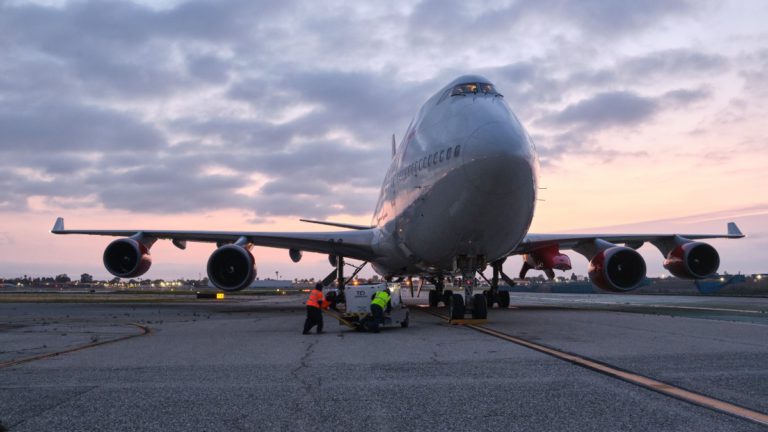
Stratolaunch’s bid specifically targets Virgin Orbit’s modified Boeing 747-400 aircraft, Cosmic Girl, and the necessary assets required for its operation.

Cosmic Girl is renowned for carrying Virgin Orbit’s LauncherOne rocket to an altitude of approximately 35,000 feet (10,700 metres) before releasing it, allowing it to ignite its onboard motor and reach space.

Virgin Orbit engaged in extensive negotiations with Stratolaunch over several weeks to finalise the terms of the agreement, resulting in the $17 million cash bid.

Although Stratolaunch has not publicly announced its bid, it will immediately deposit the amount in escrow if the deal is approved.

The failure of Virgin Orbit’s January 2023 mission, which resulted in the loss of nine customer satellites, likely influenced the bankruptcy filing.

The investigation into the failure identified a dislodged fuel filter within LauncherOne as the cause, and the company subsequently made modifications for future launches.

After failing to secure long-term financing, Virgin Orbit furloughed all but 100 employees and filed for bankruptcy in early April.

However, more than 30 parties have expressed interest in continuing the company’s operations and retaining the remaining staff.

The deadline for final bids in the sale of Virgin Orbit’s assets is Friday, May 19, with a bankruptcy auction scheduled for May 22 if multiple companies are bidding.

The final hearing on the sale will take place in Delaware Court, where the bankruptcy was initially filed, on May 24.

Virgin Orbit’s CEO, Dan Hart, expressed satisfaction with the level of interest received and attributed it to the team’s hard work and innovative ideas.

Hart had previously mentioned the potential of LauncherOne to serve as a boost stage for hypersonic vehicles like those developed by Stratolaunch.

Stratolaunch recently conducted a successful drop test with its Roc plane and aims to perform a hypersonic test later this year.

As the bankruptcy proceedings continue, the future of Virgin Orbit’s assets remains uncertain. The bids from Stratolaunch and potential competitors will determine the outcome, potentially shaping the landscape of the aerospace industry.

Also Read: Volcanic Earth-size World Unveiled: NASA’s TESS and Spitzer Detect Exoplanet LP 791-18 d


Airoh Connor: The Stylish and Affordable Full-Face Helmet for the 2023 Riding Season

ITALY: Airoh, the renowned Italian helmet manufacturer, has unveiled its latest offering for the 2023 riding season: the Connor full-face helmet. Combining sporty aesthetics with affordability, the Connor aims to become popular among motorcyclists looking for stylish and reliable helmets.

Crafted with an HRT thermoplastic shell, the Airoh Connor boasts an impressive exterior design that blends durability with lightweight construction.

The helmet’s three different shell sizes ensure an optimal fit for riders of varying head sizes, with a range of six sizes from XS to XXL.

Weighing in at just 1,450 grams, with a tolerance of about fifty grams, the Connor offers enhanced comfort and reduced strain during long rides.

Riders will discover a range of convenient features designed for comfort and hygiene inside the helmet.

The multi-density EPS liner provides excellent impact absorption, ensuring enhanced safety on the road.

The removable and washable interior comes with a 2DRY, Sanitized, and Microsense-treated coating, wicking away moisture, preventing odour build-up, and offering a soft and comfortable feel against the skin.

The Airoh Connor features a well-designed ventilation system, incorporating chin and front air inlets with added rear extractors. This system ensures optimal airflow, keeping riders cool and comfortable during intense rides.

The wide-view vision visor, easily removable, provides an expanded field of view. The anti-scratch and anti-UV coatings protect it from damage and ensure clear visibility in bright sunlight.

Additionally, the helmet comes ready to accommodate the supplied Pinlock 70 anti-fog lens, guaranteeing unobstructed vision in various weather conditions.

Safety is a top priority, and the Airoh Connor has top-notch certification according to the ECE R22.06 standard.

This certification assures riders that the helmet meets safety standards and regulations, offering reliable protection on every journey.

The Airoh Connor is available in a range of plain colours, including black, white, grey, and silver, as well as six graphic options.

Priced at 119.90 euros (approximately USD 130), the Connor is an affordable choice for riders who seek both style and value.

As motorcyclists gear up for the 2023 riding season, Airoh’s Connor full-face helmet presents an attractive option.

Combining sporty styling, comfort-enhancing features, and adherence to safety standards, the Connor might become a popular choice among riders seeking a reliable and affordable helmet.

Whether cruising through city streets or embarking on long journeys, the Airoh Connor offers a perfect balance of style, comfort, and protection for riders across the globe.

Also Read: New Arai Contour-X Helmet Takes the US by Storm with Style and Substance

Do-or-Die Situation for CSK as They Face Delhi Capitals to Secure IPL Playoff Spot

0

INDIA: Chennai Super Kings (CSK) will feel the pressure as they face the Delhi Capitals (DC) in their final group game of the Indian Premier League.

After a disappointing six-wicket defeat against Kolkata Knight Riders (KKR) in their last home match, CSK finds themselves in a precarious position, needing a win against DC to secure a spot in the playoffs.

CSK had a chance to secure their playoff berth in their previous match but faltered, leaving their fate hanging in the balance. 

The good news for CSK is that their destiny is still in their hands; a victory against DC will ensure their qualification for the playoffs. 

However, even with a win, CSK cannot guarantee a top-two finish since Lucknow Super Giants (LSG) could also reach the same number of points.

With the recent elimination of the Punjab Kings (PBKS) by the Rajasthan Royals (RR), the race for the remaining three playoff spots is heating up. 

Royal Challengers Bangalore (RCB), LSG, RR, CSK, KKR, and Mumbai Indians (MI) are all in contention, but RR and KKR have little chance of qualifying as they can only reach a maximum of 14 points. 

The battle for the playoffs is primarily between RCB, MI, CSK, and LSG.

If CSK doesn’t win against DC, it will severely impact their chances. They will then rely on MI and RCB losing their last group matches against Sunrisers Hyderabad (SRH) and Gujarat Titans (GT), respectively. 

If LSG, RCB, and MI win their remaining games while CSK loses to DC, the campaign for MS Dhoni-led CSK will come to an end. 

In this scenario, CSK will be left with just 15 points, while LSG (17), MI (16), and RCB (16) will secure their spots in the playoffs.

Meanwhile, CSK’s batting coach, Michael Hussey, expressed confidence in captain MS Dhoni, stating that he is still fit and can continue playing for the next five years. 

Speaking to the media ahead of the crucial match against DC, Hussey said that Dhoni is still batting well and is motivated to keep coming to training and working on his game. 

As CSK gears up for their do-or-die battle against DC, their fans and cricket enthusiasts will eagerly await the outcome of this high-stakes match that will determine CSK’s fate in the IPL 2023 playoffs.

Also Read: IPL 2023: Conway Catapults PBKS to Victory with a 4-wicket Victory over CSK

Formula 1 Donates €1 Million After Cancelling Emilia-Romagna GP to Support Flood-Stricken Region

0

ITALY: In a gesture of solidarity, Formula 1 has announced a €1 million donation to the disaster relief fund in Emilia-Romagna following severe flooding that has wreaked havoc in the region.

The Emilia Romagna Grand Prix, scheduled for this weekend, has been cancelled to allow emergency services to focus on aiding those affected by the catastrophe.

The area has been grappling with adverse weather conditions since the beginning of the month, leading to the Santerno River adjacent to the racetrack, bursting its banks and causing extensive damage to the paddock area. 

Tragically, the situation is even graver in other parts of the region, with at least nine lives lost and thousands of residents evacuated from their homes.

https://twitter.com/F1/status/1659537913481252864

Formula 1’s donation will be channelled through the Emilia-Romagna Region’s Agency for Territorial Safety and Civil Protection, matching the generous contribution made by Ferrari. 

Moreover, Formula 1 management has redirected food and water for the Paddock Club, circuit facilities, and team/F1 hospitality to a food bank organization to aid those affected by the flooding.

Expressing his heartfelt concern for the region, Stefano Domenicali, CEO of Formula 1, said that Emilia-Romagna is experiencing some of the saddest moments in its history. 

He added that the situation in the region is terrible, but he firmly believes that the resilience and passion of the people will prevail through the crisis.

Domeniciali pledged support to the region and said Formula 1 management would do everything to support the affected people during this difficult time. 

Formula 1 is not alone in its support, as Ferrari pledged an identical amount earlier in the week. AlphaTauri, based in the region, has urged people to contribute to relief funds, and their driver, Yuki Tsunoda, was spotted helping with the cleanup efforts.

The cancellation of the Grand Prix came after Italy issued its most severe red weather warnings due to the devastating floods and landslides that have ravaged parts of the region. 

https://twitter.com/F1/status/1658793544918679553

The officials prioritised the safety of fans, teams, and personnel following discussions between Formula 1, local authorities, and race organizers. 

The organisation recognised the difficulties the towns and cities in the area were experiencing and decided it was inappropriate to put more pressure on the local government and emergency services during this trying time.

As the Emilia-Romagna Grand Prix bows out this year, Formula 1’s compassionate donation and cancellation underscore the significance of supporting communities in times of crisis. 

The racing world stands united in providing relief and aid, sending a powerful message of compassion and solidarity to those affected by the devastating floods in Emilia-Romagna.

Also Read: Precautionary Evacuation at Imola: Imminent Emilia Romagna Grand Prix Threatened by Severe Weather

Understanding the Celestial Dance: The Enchanting 4:1 Resonance Unveiled between Jupiter and Saturn 

0

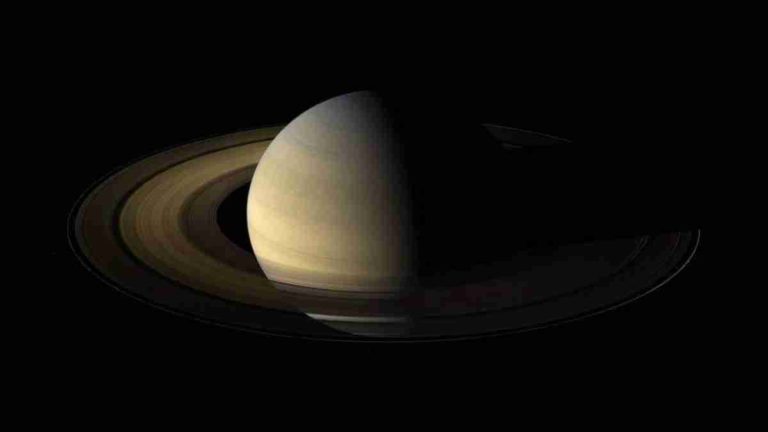
INDIA: Astronomers discovered an extraordinary celestial dance between the gas giants of our solar system, Jupiter and Saturn. Scientists unveiled the fascinating 4:1 resonance these awe-inspiring planets share, providing a mesmerising spectacle that captivates professional stargazers and enthusiastic skywatchers.

Resonance, a phenomenon known to occur in various systems, describes a rhythmic synchronisation between two bodies that interact through gravitational forces. In the case of Jupiter and Saturn, their gravitational pull has resulted in a special orbital relationship, where Jupiter completes four revolutions around the Sun while Saturn completes just one.

The 4:1 resonance between Jupiter and Saturn is an interesting cosmic arrangement, showcasing the delicate balance of gravitational forces involved. This relationship highlights the intricate interplay between these celestial giants.

A combination of observations and advanced computer simulations confirmed the existence of this mesmerising resonance. 

Astronomers discovered a recurring pattern in the positions of Jupiter and Saturn by meticulously analysing data collected over several years. The rhythm of their dance revealed the unmistakable signature of a 4:1 resonance.

The discovery holds significant implications for our understanding of planetary formation and evolution. It sheds light on the complex dynamics that shaped our solar system billions of years ago and continue to influence its behaviour today. 

The 4:1 resonance showcases the delicate balance between gravitational forces and serves as a testament to the remarkable precision of celestial mechanics.

For sky enthusiasts, the resonance between Jupiter and Saturn offers a unique opportunity to witness a captivating celestial event. 

Every 20 years, Jupiter and Saturn align in conjunction, known as the Great Conjunction. However, the 4:1 resonance adds an element of wonder to this already spectacular event. 

When Jupiter and Saturn align, their orbital synchrony becomes visible, creating an awe-inspiring display of celestial harmony. Amateur astronomers and skygazers eagerly await the next Great Conjunction, slated to occur on December 22, 2025. 

The 4:1 resonance will be most pronounced during this event, allowing stargazers to witness the celestial duo in perfect alignment, a sight that promises to leave spectators in awe.

As our understanding of the cosmos deepens, revelations like the 4:1 resonance between Jupiter and Saturn remind us of the sheer beauty and complexity of the universe. 

These celestial wonders fuel our curiosity and inspire new generations to explore the mysteries of space, encouraging us to gaze up at the heavens in search of a greater understanding of our place in the cosmos.

In a world often consumed by the mundane, the discovery of the 4:1 resonance is a humbling reminder that the celestial realm holds secrets waiting to be unravelled.

So, mark your calendars, for the next Great Conjunction will be an event to remember, an invitation to witness the grand cosmic ballet of Jupiter and Saturn in a mesmerising display of resonance.

Also Read: Jupiter’s Great Red Spot: Unravelling the Enigma of the Solar System’s Largest Storm

Jupiter’s Great Red Spot: Unravelling the Enigma of the Solar System’s Largest Storm

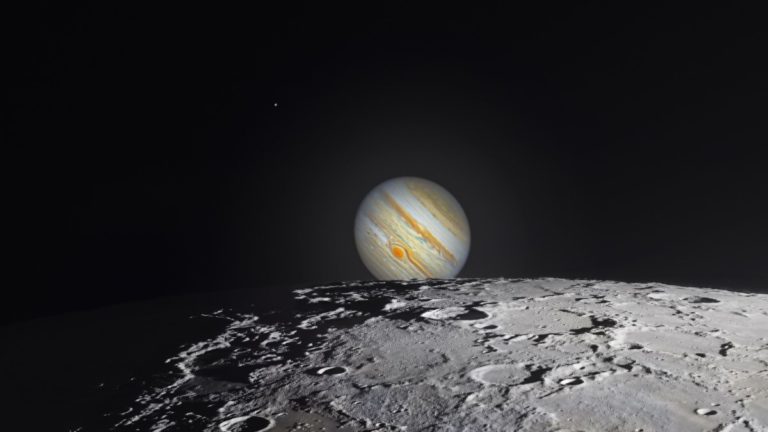
INDIA: Jupiter, the largest planet in our solar system, has long captivated astronomers and space enthusiasts with its awe-inspiring features. Among its many intriguing characteristics, one phenomenon stands out as a true cosmic enigma—the Great Red Spot.

This colossal storm, resembling a gigantic hurricane, has puzzled scientists for centuries, but recent advancements in space exploration and observation techniques are shedding new light on its origins and nature.

Measuring an astonishing 16,350 kilometres (10,160 miles) in width, the Great Red Spot is nearly three times the size of Earth.

This massive tempest is a prominent feature of Jupiter’s turbulent atmosphere in the planet’s southern hemisphere.

The storm’s distinct crimson hue has captured imaginations and sparked curiosity, but the persistence of this celestial cyclone truly boggles the mind.

Scientists have observed that the Great Red Spot rotates anticlockwise, completing a full rotation every six Earth days.

Fierce winds that reach speeds of up to 430 kilometres per hour (270 miles per hour) make the storm one of the most powerful and sustained storms in the solar system.

However, what causes this tremendous storm to persist for centuries remains a subject of ongoing research and debate.

Recent studies utilising data gathered from NASA’s Juno spacecraft, which has been in orbit around Jupiter since 2016, have provided valuable insights into the Great Red Spot.

These observations have revealed that the storm extends deep into Jupiter’s atmosphere, at least 300 kilometres (186 miles) below the cloud tops.

Scientists believed that the storm’s longevity was due, in part, to the planet’s immense size as well as its unique atmospheric conditions.

While the exact mechanisms behind the storm’s vivid coloration are still unknown, scientists speculate that chemical reactions between sunlight and compounds in Jupiter’s atmosphere, such as ammonia and methane, may contribute to the Great Red Spot’s striking red hue.

The storm’s complex interaction with other atmospheric disturbances on Jupiter, including weaker tempests and atmospheric jets, further adds to its intriguing nature.

However, recent observations also indicate that the Great Red Spot is slowly shrinking. Over the past century, the storm has decreased in size by approximately 50 percent, raising questions about its eventual fate.

Some scientists theorise that the storm may dissipate entirely, while others propose that it could transform into a different atmospheric feature.

Understanding the Great Red Spot is crucial for unravelling the mysteries of Jupiter and studying weather patterns and atmospheric dynamics in general.

The turbulent storm serves as a natural laboratory for scientists to explore fluid dynamics, atmospheric physics, and the formation and behaviour of storms on a grand scale.

As our exploration of Jupiter continues, with future missions like the European Space Agency’s JUICE (Jupiter ICy Moons Explorer) scheduled for launch in the late 2020s, we can expect further revelations about the Great Red Spot.

These discoveries will deepen our understanding of the storm’s evolution, dynamics, and role in shaping Jupiter’s complex weather system.

The Great Red Spot on Jupiter remains a mesmerising celestial spectacle that has fascinated generations of skygazers.

As our knowledge of the solar system’s largest storm expands, we inch closer to unlocking the secrets hidden within this mesmerising cosmic masterpiece, which continues to astound and inspire scientists and stargazers alike.

Also Read: NASA’s Juno Spacecraft to Make Historic Close Flyby of Jupiter’s Volcanic Moon, Io

Volcanic Planet Discovered 90 Light Years away, Providing Insights into Planetary Evolution

0

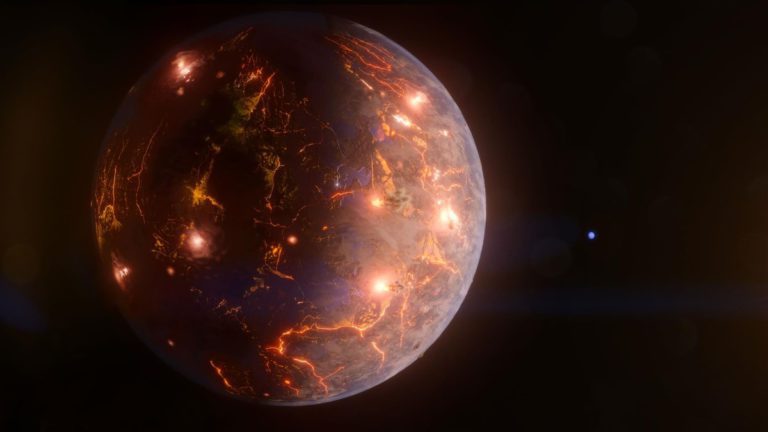
UNITED STATES: Astronomers have made a remarkable discovery by finding a volcanic planet, LP 791-18d, similar in size to Earth but vastly different in its characteristics. This intriguing planet, located 90 light-years away in the southern constellation Crater, is covered with active volcanoes.

The discovery and analysis of LP 791-18d relied on data collected from NASA’s TESS (Transiting Exoplanet Survey Satellite), the decommissioned Spitzer Space Telescope, and several ground-based observatories.

This finding has garnered significant attention from astronomers, as the presence of volcanism plays a crucial role in the interaction between a planet’s interior and exterior.

Volcanism is particularly significant for a planet’s atmosphere, which is essential for supporting surface liquid water, a key ingredient for life as we know it.

LP 791-18d is part of a system that contains two other planets: LP 791-18b, approximately 20% larger than Earth, and LP 791-18c, nearly seven times more massive and 2.5 times larger than Earth.

The gravitational interaction between LP 791-18c and LP 791-18d results in an elliptical orbit, bringing the two planets closer.

Due to tidal locking, LP 791-18d always presents the same side to its star. While the daytime is too hot for liquid water, the planet’s extensive volcanic activity may support the existence of an atmosphere.

Björn Benneke, a professor of astronomy at the Trottier Institute for Research on Exoplanets, believes that the planet’s constant eruption of volcanoes could allow water to condense on the cooler nightside.

Although LP 791-18d is unsuitable for sustaining life due to its uninhabitable conditions, the presence of its active volcanoes offers valuable insights into the evolution of planetary ecosystems.

Scientists believe that the greenhouse effect caused by volcanic emissions played a significant role in rendering Venus uninhabitable.

By studying LP 791-18d, researchers can better understand the influence of volcanoes on shaping planetary ecosystems throughout time.

The discovery of LP 791-18d opens new avenues for exploring temperate Earth-sized exoplanets around late M dwarfs.

These findings contribute to understanding the conditions necessary for hospitable climates to develop on planets.

The amplified atmospheric transit signature caused by the small stellar radius increases the potential for characterizing compact secondary atmospheres dominated by gases such as N2 or CO2 using existing instrumentation.

The study of LP 791-18d within its coplanar system provides a unique opportunity to investigate a temperate exo-Earth alongside a sub-Neptune planet that has retained its gas or volatile envelope.

The gravitational interaction between the two planets prevents LP 791-18d’s orbit from fully circularising, resulting in continued tidal heating and the likelihood of robust volcanic activity on the planet’s surface.

As astronomers delve further into the mysteries of LP 791-18d and similar celestial bodies, our understanding of planetary evolution and the factors that shape habitability continues to expand. This discovery serves as a reminder of the diversity and complexity of the universe.

Also Read: Covert Solar Flare Unleashes Powerful Burst, Triggering Radio Blackouts across America

Glucocorticoid Treatment for Severe COVID-19 Raises Endocannabinoid Levels and Lowers Platelet-Activating Factor

BRAZIL: Since the onset of the COVID-19 pandemic, glucocorticoids (GCs), a class of corticosteroids, have emerged as a primary treatment option, particularly for severe cases, due to their anti-inflammatory and immunosuppressant properties.

In a recent study conducted by Brazilian researchers, the team uncovered new insights regarding the impact of these drugs on the body’s inflammatory response during an infection.

The study revealed that GCs elevate levels of endocannabinoids (eCBs), molecules produced naturally by the body that binds to the same receptor as cannabidiol, while simultaneously reducing the blood levels of platelet-activating factor (PAF), a lipid mediator of inflammation and clotting.

The study’s findings were published in the journal Viruses, shedding light on the intricate effects of glucocorticoid treatment on COVID-19 patients.

Carlos Arterio Sorgi, the chief investigator of the research and the last author of the article, explained the team’s objectives.

The team aimed to investigate whether patients with mild COVID-19 symptoms were more protected due to the natural production of endocannabinoids and whether their levels were lower in severe cases, resulting in intensified inflammation and the need for intensive care.

Additionally, the researchers sought to determine whether severe cases of COVID-19 exhibited higher levels of PAF, which could potentially explain the excessive clotting and microthrombus formation observed in these patients.

The team utilized the Center of Excellence in Lipid Quantification and Identification (CEQIL), affiliated with the Ribeirão Preto School of Pharmaceutical Sciences (FCFRP-USP).

Interestingly, the high-resolution mass spectrometry analysis yielded unexpected results: severe patients displayed increased levels of endocannabinoids and reduced levels of PAF.

To comprehend these outcomes, the researchers conducted a comprehensive data analysis from a large group of patients, including mild and severe cases treated at home, in hospital wards, or intensive care units (ICUs).

This analysis encompassed clinical parameters and pharmaceutical management, with all data subjected to multivariate statistical tests.

Sorgi elaborated on their conclusions, stating that they determined that the increase in endocannabinoids and the decrease in PAF were not caused by the disease but by the glucocorticoid treatments.

Furthermore, the researchers explored the transcriptome analysis of leukocytes from patients treated with GCs, revealing differential modulation of gene expression in monoacylglycerol lipase and phospholipase A2.

This finding indicates that these drugs can modify the enzyme activities involved in the metabolism of the lipid mediators under investigation.

Leukocytes, which are part of the immune system, were the focus of this investigation. The study’s discoveries promise future treatments involving corticosteroids not only for COVID-19 but also for other severe inflammatory and neurological conditions.

Moreover, the research suggests that cannabinoids, whether natural or artificial, could be employed as adjuvant therapy.

Sorgi expressed enthusiasm for the potential synergistic effects of combining the two compounds.

Next, the research will extend to patients with other viral diseases, such as influenza, to determine whether corticosteroid action alters the production of the lipidic biomolecules investigated.

Additionally, investigations will explore whether the body’s capacity to produce endocannabinoids remains the same after COVID-19 vaccination and during the convalescent phase of the disease.

Sorgi emphasized the team’s interest in collaborating with groups researching cannabidiol for animal trials as they enter a new phase of COVID-19 research.

These collective efforts aim to pave the way for innovative treatments that harness the benefits of both glucocorticoids and cannabinoids, ultimately improving patient outcomes in the face of severe viral infections and related inflammatory diseases.

Also Read: Volcanic Planet Discovered 90 Light Years away, Providing Insights into Planetary Evolution

Covert Solar Flare Unleashes Powerful Burst, Triggering Radio Blackouts across America

0

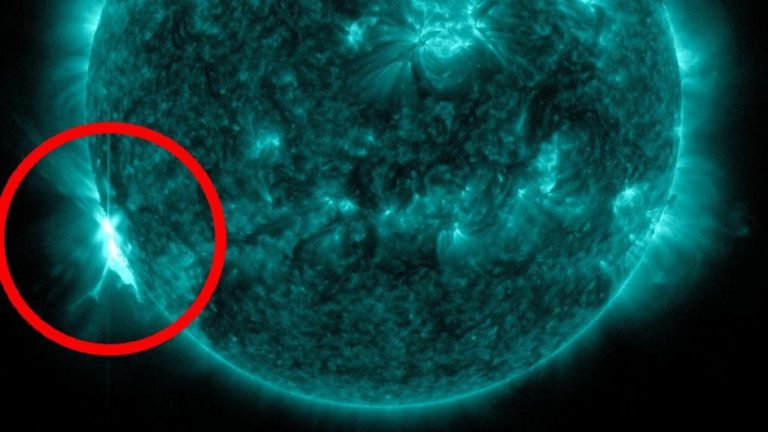
UNITED STATES: In a dramatic display of solar activity, a hidden sunspot on the southeast limb of the sun erupted in a powerful M9.6-class solar flare on May 16 at 12:43 p.m. EDT (1643 GMT).

While not directly facing Earth at the time, the effects of the eruption caused moderate radio blackouts over parts of North America, Central America, and South America due to the radiation from the event, according to the Space Weather Prediction Centre of the National Oceanic and Atmospheric Administration (NOAA).

The sunspot, concealed by the sun’s rotation, will soon come into view of Earth and directly face us by the weekend.

Solar flares occur when magnetic energy accumulates in the solar atmosphere and the sun releases it in an intense electromagnetic radiation burst.

The solar flares are categorized by size and strength, with X-class flares being the most potent, followed by M-class, C-class, B-class, and A-class flares. The recent eruption registered as an M9.6 flare, shy of X-class intensity.

The unique circumstance of the flare being partially eclipsed by the sun’s edge resulted in its classification as an M-class flare.

Despite its hidden position, the M-flare had significant impacts, causing extensive radio blackouts due to the intense pulse of X-rays and extreme ultraviolet radiation directed towards Earth.

The radiation reached our planet in just over eight minutes, travelling at the speed of light and ionising the upper layer of Earth’s atmosphere known as the thermosphere.

This ionisation triggered shortwave radio blackouts in the sun-lit areas of Earth at the time. Solar activity is rising as part of solar cycle 25, which scientists predict will peak in 2025.

With increased solar flares expected, it is critical to stay informed about space weather conditions.

The National Oceanic and Atmospheric Administration’s Space Weather Prediction Centre provides the latest updates and solar X-ray data from their GOES weather satellites stationed over the eastern and western United States.

As we continue to observe and study these awe-inspiring solar phenomena, it serves as a reminder of the dynamic nature of our sun and its impact on our technological systems.

Understanding and monitoring space weather is crucial for protecting satellites, communication networks, and power grids from the potential disruptions caused by powerful solar flares.

Also Read: Sun’s Powerful Solar Flare Activity Poses Risks to Technology and Infrastructure

Nvidia Unveils GeForce RTX 4060 GPUs, Offers Chance to Win RTX Giveaway Event

UNITED STATES: Nvidia, the leading graphics card manufacturer, has made an exciting announcement today with the official unveiling of its new GeForce RTX 4060 family of desktop GPUs.

The highly anticipated lineup includes the RTX 4060 and the RTX 4060 Ti, offering affordability without compromising performance.

With prices starting at $299 and $399, respectively, Nvidia is bringing the power of the GeForce RTX 40 Series to a broader audience.

To celebrate the launch of these new GPUs, Nvidia is hosting the “biggest GeForce summer event—ever,” providing enthusiasts with a unique opportunity to win incredible prizes.

The Summer of RTX 2023 Sweepstakes and Contest will give away $150,000 worth of prizes. In the sweepstakes, participants can win one of the 160 RTX 4060 and RTX 4060 Ti graphics cards up for grabs.

The excitement doesn’t stop there, as two lucky winners will receive an RTX 4090 Founders Edition, while two more winners could secure an RTX 4080 Founders Edition.

As if that wasn’t enough, Nvidia will also give away a custom PC gaming rig featuring an RTX 4090, two 360 Hz Asus G-Sync monitors, and other fantastic goodies.

In addition to the sweepstakes, Nvidia is contacting the gaming community with the Summer of RTX 2023 Contest.

They are seeking nominations for 100 “creators,” who will receive an RTX 4060 Ti. These chosen creators can also have the opportunity to gift two RTX 4060 cards to their audience members, spreading the joy of high-performance gaming. Interested participants must follow Nvidia on Twitter, Facebook, and Instagram.

Fans can maximise their chances of winning by staying tuned to Nvidia’s updates and engaging with their posts using the #RTXOn hashtag.

Mark your calendars for upcoming events during the Xbox and Bethesda Games Showcase on June 11 and Ubisoft Forward on June 12.

The RTX 4060, equipped with the ADA107 GPU, comes with 8GB of VRAM and will be available in July, starting at $299.

The RTX 4060 Ti, featuring the ADA106 GPU, offers two options: an 8GB VRAM configuration priced at $399 and a 16GB VRAM configuration priced at $499.

The 8GB variant of the RTX 4060 Ti will be available for buyers starting May 24, while the 16GB variant will arrive in July.

The GeForce RTX 4060 GPUs provide an affordable entry point into the powerful RTX 40 Series, ensuring that exceptional gaming experiences are accessible to a broader audience.

Don’t miss out on the chance to win big in Nvidia’s Summer of RTX 2023 event, and stay tuned for the availability of these impressive graphics cards.

Also Read: Tweaked Nvidia Chips Developed for China under US Export Laws