
Home Blog Page 57

Dell Unveils New XPS Series Laptops in India, Combining Power and Elegance

INDIA: Dell has made its mark in the Indian market by launching its three new laptops: the XPS 13 Plus, XPS 15, and XPS 17. Powered by the latest 13th-generation Intel Core processors, these notebooks continue Dell’s tradition of elegant design and premium build quality.

The 2023 XPS laptop series has impressive features, including a quad-speaker setup, a 4-sided InfinityEdge touch display, and a sleek metal build.

The laptops also offer dual-sensor cameras and Windows Hello face recognition for enhanced security.

The Dell XPS 15 strikes a perfect balance between portability and power. The XPS 15 features a colourful 3.5K OLED touch screen protected by Corning Gorilla Glass 6.

Under the hood, this convertible laptop is equipped with up to a NVIDIA GeForce RTX 4050 GPU, up to 32GB of DDR5 RAM, and up to 1TB of storage.

For those seeking unmatched performance, the Dell XPS 13 Plus is the ideal option as the most powerful 13-inch laptop in the XPS series.

The laptop sets a new standard with a UHD+ 4K resolution display and a seamless glass touchpad. Powered by the 13th-generation Intel Core processor and Intel Iris Xe graphics, the XPS 13 Plus weighs just over 1kg, making it incredibly portable.

As for the powerhouse of the lineup, the Dell XPS 17 boasts a stunning 17-inch display. This variant offers the exceptional NVIDIA GeForce RTX 4070 GPU, a graphics card typically found in high-end gaming machines, with up to 32GB of DDR5 RAM.

The Dell XPS series is now available in India, with the XPS 15 9530 priced at Rs 2,49,990, the XPS 13 Plus 9320 at Rs 1,99,990, and the XPS 17 9730 at Rs 2,99,990.

Customers can purchase these laptops through Dell’s official website, various e-commerce platforms, and select offline stores across India starting May 23.

Dell continues to raise the bar with its XPS series, providing users with powerful performance, stunning displays, and a premium user experience.

These new laptops offer something for everyone, whether you prioritise portability, cutting-edge technology, or sheer power. With Dell’s reputation for quality and innovation, these XPS laptops will impress customers in India and beyond.

Also Read: Dell G15 5530: The Stylish Mid-Range Gaming Laptop with Stellar Performance
Mercedes Unveils Upgraded W14 with Radical Sidepod Redesign ahead of Monaco Grand Prix

0

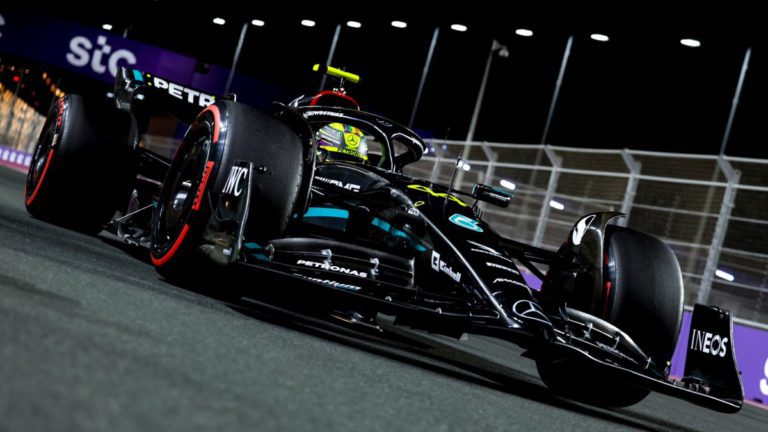
MONACO: Mercedes has given F1 fans a glimpse of their heavily upgraded W14 ahead of the Monaco Grand Prix, with a leaked image revealing a radical sidepod redesign that strikingly resembles championship leaders Red Bull.

The Mercedes garage will be the centre of attention as the F1 world converges on Monaco this weekend.

Described by some as a B-spec car, Mercedes fans are desperately hoping the updated W14 will mark a significant turning point for the eight-time constructors’ champion, bidding farewell to the problematic zero-pods that have plagued them since the start of 2022.

F1 journalist Albert Fabrega took to Twitter to share an image of the new Mercedes car, showcasing the reimagined sidepod design that closely resembles that of their fierce rivals, Red Bull.

The leaked picture confirmed earlier speculations surrounding the team’s decision to abandon their infamous zero-pods.

Originally planned to be unveiled at the Imola race, the Mercedes team had to reveal the upgraded W14 at Monaco due to its cancellation.

The hype train is in full steam over the upgrades as Mercedes aims to regain its competitive edge after a challenging start to the 2023 season.

Team principal Toto Wolff has been cautious about setting overly high expectations, acknowledging that the upgrades will not serve as a “silver bullet” to instant success.

However, he hoped that the revamped design would provide their drivers with a more stable and predictable platform, serving as a foundation for further development in the coming weeks and months.

Emphasising the competitive nature of Formula 1, Wolff acknowledged that Mercedes still has work to do to reach their desired position but stressed the team’s commitment to hard work and dedication.

With a determination to reclaim their position at the front of the grid, Mercedes is working hard in their quest for success.

As the Monaco Grand Prix approaches, all eyes will be on Mercedes as they unleash their upgraded W14 on the legendary street circuit.

The team’s bold decision to revamp the sidepod design marks a clear statement of intent, signalling their relentless pursuit of performance and a fierce battle for supremacy in F1.

Also Read: Liam Lawson Focused on Super Formula Success, Downplays F1 Speculations

The Enigmatic Soviet Amber Room: A Stolen Treasure Shrouded in Mystery

0

INDIA: In a tale that combines artistry, intrigue, and a dash of espionage, the Soviet Amber Room stands as one of the most captivating mysteries of the 20th century. This breathtaking artwork, an ornate chamber adorned entirely with amber, vanished into thin air during World War II, leaving historians, treasure hunters, and art enthusiasts puzzled and enthralled.

Crafted in the 18th century by German artisans Andreas Schlüter and Gottfried Wolfram, the Amber Room was a masterpiece. Covering over 55 square meters, it consisted of six tons of amber, gold leaf, and precious gemstones, meticulously fitted together to create a symphony of radiant colours and intricate designs. 

Housed within the Catherine Palace near St. Petersburg, Russia, it symbolized Russian opulence and artistic prowess.

However, during World War II, tragedy struck. As German forces advanced on Russia, they decided to protect the Amber Room from potential destruction by the Nazis. 

The Russian army carefully dismantled the amber panels and hid them in a daring operation. Yet, despite these efforts, the room would never be reassembled in its original form.

In 1941, German troops captured the Catherine Palace, and the Amber Room fell into their hands. Despite the allure of this precious treasure, its true fate remains shrouded in mystery. 

Some theories suggest that the Russians shipped it to Königsberg, present-day Kaliningrad, for safekeeping. However, the Allied forces heavily bombed the city in 1944, leaving little trace of the precious chamber.

Throughout the years, treasure hunters have attempted to recover the lost treasure. However, despite intensive searches and investigations, the Amber Room has yet to resurface. 

This enigma has captivated the curiosity of treasure hunters, historians, and conspiracy theorists, fuelling countless books, documentaries, and even Hollywood movies.

As time passes, the legend of the Amber Room only grows stronger. Tales of secret underground bunkers, hidden treasures, and international intrigue persist. 

Many people think that the room is still there, just waiting for an adventurous explorer or a chance discovery.

While the original Amber Room remains absent, a partial reconstruction was unveiled in 2003, symbolizing the enduring allure and importance of the cultural artefact.

The recreated chamber, located within the Catherine Palace, showcases the magnificence and beauty of the original masterpiece, serving as a poignant reminder of what was lost.

The mystery of the Soviet Amber Room continues to fascinate, capturing the hearts and minds of people worldwide. 

Its disappearance represents a devastating loss of cultural heritage and a symbol of the countless treasures that have vanished throughout history, leaving behind only legends and unanswered questions.

As we navigate the complexities of the modern world, the hunt for the Amber Room persists, an ongoing quest to unravel its secrets and restore a piece of history to its rightful place. 

Also Read: Mikhail Gorbachev, Soviet Leader Who Peacefully Ended Cold War Dies

Unravelling the Kuiper Cliff: The Drop in Number of Objects Beyond Neptune

0

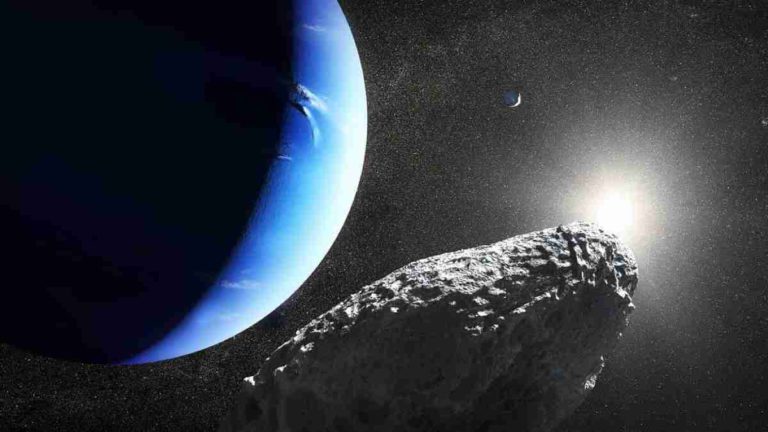
INDIA: In the outer reaches of our solar system, beyond the orbit of Neptune, lies a mysterious phenomenon known as the Kuiper Cliff. This enigmatic feature has puzzled astronomers for years, but new research has shed light on its origins and provided insights into the formation and evolution of our cosmic neighbourhood.

The Kuiper Cliff refers to a sudden drop in the number of small, icy objects in the Kuiper Belt, a region beyond Neptune populated by countless dwarf planets, asteroids, and comets. 

This abrupt decrease in the population of objects was first observed in the early 2000s and has since captured the attention of scientists seeking to understand its underlying causes.

A study by a team of researchers from the Southwest Research Institute (SwRI) and the University of Colorado Boulder unravelled the mystery of the Kuiper Cliff. 

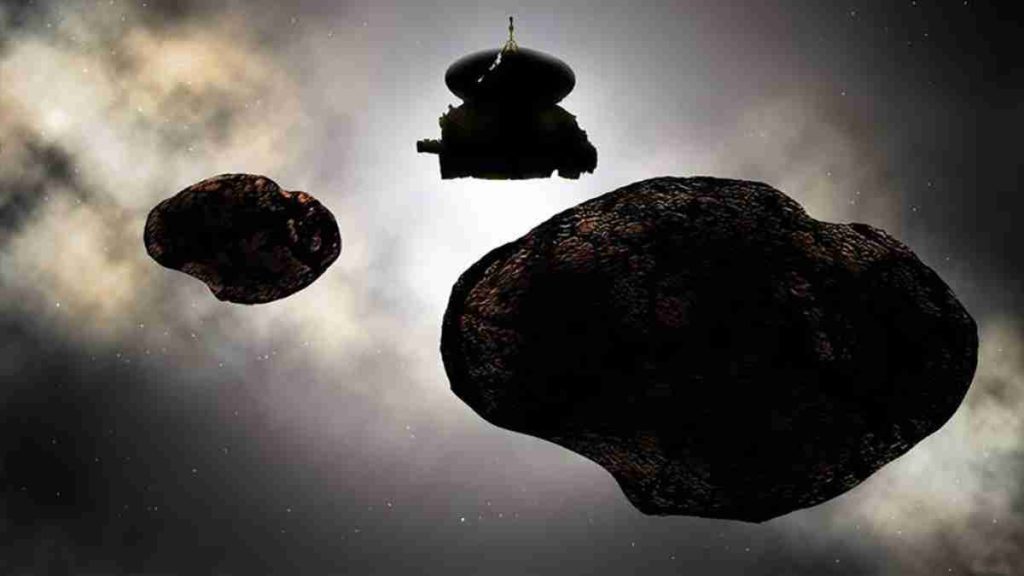
Using data from NASA’s New Horizons spacecraft, which conducted a flyby of the dwarf planet Pluto and its moon Charon in 2015, the scientists examined the distribution and characteristics of objects within the Kuiper Belt.

The study’s findings suggest that the Kuiper Cliff is likely the result of “resonant jumping.” 

Resonances occur when objects within the Kuiper Belt interact with Neptune’s gravitational pull in a way that causes their orbits to become unstable. Over time, these objects can transition from one resonance to another, reshuffling their distribution within the Kuiper Belt.

Kuiper Belt
Photo Credit: Twitter/NASA

The researchers propose that resonant jumping can explain the sudden drop in the number of objects beyond Neptune. 

As the objects transition from one resonance to another, some are propelled out of the Kuiper Belt altogether or are scattered into more distant orbits, creating a noticeable depletion of objects in certain regions.

This explanation aligns with previous hypotheses that suggested gravitational interactions with Neptune were responsible for shaping the distribution of objects in the Kuiper Belt. 

However, the new research provides a more detailed understanding of the specific mechanisms in action.

The implications of these findings extend beyond the Kuiper Belt itself. By studying the dynamics of objects in the outer regions of our solar system, scientists can gain insights into the early formation and evolution of our cosmic neighbourhood. 

The Kuiper Belt is supposedly a remnant of the original material that formed the planets and other celestial bodies in our solar system, making it a valuable source of information about the initial stages of planetary formation.

Understanding the Kuiper Cliff also has implications for understanding other planetary systems beyond our own. 

Many exoplanetary systems have exhibited similar regions of small objects, like the Kuiper Belt. 

By unravelling the mysteries of our own Kuiper Belt, astronomers can refine their models and theories about the formation and dynamics of such systems in the broader universe.

As astronomers continue to explore the outer reaches of our solar system and gather more data, they hope to gain further insights into the Kuiper Cliff’s nature and the complex dynamics of the Kuiper Belt. 

By piecing together the puzzle of this intriguing feature, we come one step closer to comprehending the vast and intricate workings of our cosmic neighbourhood.

Also Read: NASA’s Perseverance Rover Reveals Stunning View of Mars’ Belva Crater

Apple Supplier Wistron Sells iPhone Assembly Factory in India Amid Profitability Challenges

INDIA: Wistron, a key supplier for Apple, has decided to sell its iPhone assembly factory in India as it struggled to achieve profitability under Apple’s terms. The move comes as Wistron gradually scales down its operations in the country and plans to reduce its presence significantly in the coming year.

According to reports, Wistron faced challenges in generating long-term profitability solely as an iPhone assembly provider. The company is now shifting its focus to core IT manufacturing operations in countries like Vietnam and Mexico. 

An executive stated that Wistron could not profit from its Apple business in India and attempted to negotiate for higher margins. 

However, as a smaller player compared to global giants like Foxconn and Pegatron, Wistron lacked the necessary leverage. Despite its role in assembling iPhones, including the iPhone SE, for Apple in India, Wistron struggled to achieve profitability. 

Unlike the major suppliers for inventory handling for Apple in India, such as Foxconn and Pegatron, Wistron faced difficulties establishing itself in the business.

Challenges such as the need for effective demand gauging and product shipment to various units contributed to Wistron’s struggles.

The company’s smaller size compared to competitors like Foxconn and Pegatron also presented obstacles.

Additionally, Wistron encountered management issues and faced difficulties retaining workers at its facility in Kolar, India. The report suggests that differences in work culture between China and India contributed to the challenges faced by the company. 

The firm did not adequately address Indian workers’ concerns, leading to a high attrition rate.

Wistron is selling its iPhone assembly facility in Kolar, near Bengaluru, to the Tata Group, as part of its restructuring efforts. A previous report from TrendForce indicates that the Tata Group is conducting trials to assemble upcoming iPhone 15 models in India.

Wistron entered the Indian market in 2008 by establishing a repair facility for various devices manufactured by the company, including PCs, laptops, and servers. 

In 2017, the tech company expanded its operations and began manufacturing smartphones for Apple. The decision to sell its iPhone assembly factory in India reflects Wistron’s challenges in achieving profitability and competing with larger players in the market. 

The company’s focus on core IT manufacturing operations in other countries signals a strategic shift in its business strategy. 

Also Read: Apple CEO Tim Cook Sees India as Key Market for Future Growth

Tonga Eruption: Underwater Volcanic Eruption Generated Plasma Bubbles Disrupting Space Communications

TONGA: In a groundbreaking study, scientists have discovered that an underwater volcanic eruption that occurred last year had the power to generate plasma bubbles that disrupted radio communications in outer space.

The findings of this research have implications for avoiding disruptions to satellite and GPS systems on Earth and offer insights into the study of volcanoes on other planets.

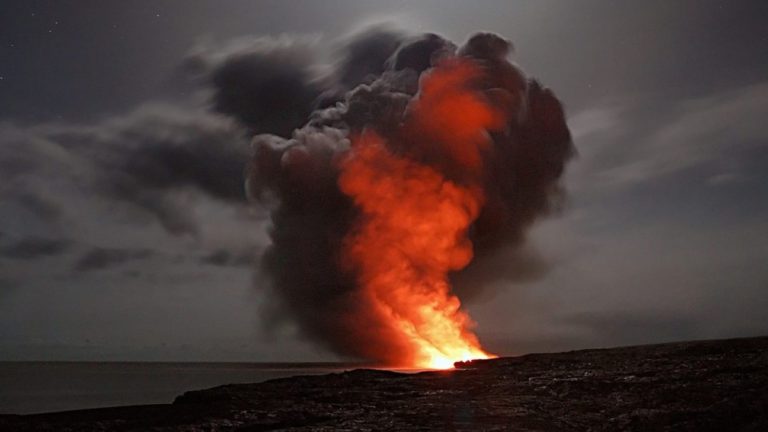
The eruption of the Hunga Tonga-Hunga Ha’apai submarine volcano in January 2022, near the Kingdom of Tonga in the South Pacific, was an explosion that produced the highest volcanic plume ever recorded, reaching a towering height of 35 miles (57 kilometres).

The eruption also triggered tsunamis in places as far as the Caribbean, making it the most powerful natural explosion in over a century, comparable to the strength of the biggest U.S. nuclear bomb.

Previous studies showed that the atmospheric waves generated by the eruption were strong enough to disturb the ionosphere, a high layer of Earth’s atmosphere spanning from 50 to 620 miles (80 to 1,000 km) above the surface.

The ionosphere is electrified by solar radiation, resulting in the formation of electrically charged ions.

Scientists had long speculated about the potential of disrupting the ionosphere’s F-region, which harbours the highest concentration of ions in the atmosphere by volcanic activity.

They wondered if such events could create “equatorial plasma bubbles,” which can interfere with satellite communications and GPS signals in the equatorial areas of the ionosphere.

In their new study, researchers utilized Japan’s Arase satellite to detect equatorial plasma bubbles, the Himawari-8 satellite to monitor atmospheric waves, and ground-based stations to track ionosphere movements.

The team observed that the shockwave from the Tonga eruption caused equatorial plasma bubbles to extend up to an altitude of at least 1,240 miles (2,000 kilometres), surpassing the predictions of standard bubble models.

Surprisingly, the scientists also noticed a sudden increase in electron density and the height of the ionosphere hours before the initial shockwave arrived.

The researchers attributed this rapid response to the interaction between atmospheric waves from the eruption and the electrically charged ions in the ionosphere, facilitating the quick transmission of energy along Earth’s magnetic field lines.

These findings hold significant implications for forecasting plasma bubbles associated with volcanic eruptions and other surface events on Earth.

While we cannot prevent the severe effects on satellite communications and GPS signals, the ability to alert operators of aircraft and ships expected to pass through these regions in the future can vastly mitigate potential risks.

Furthermore, this research opens avenues for studying the atmospheric effects of volcanoes on Earth and distant celestial bodies.

For instance, Venus shrouded in thick clouds, poses challenges for direct observation of active volcanoes using optical satellite observations alone.

However, measurements of the plasma, similar to those conducted by the Arase satellite, could confirm the presence of active volcanoes on Venus.

The scientists shared their groundbreaking findings in the journal Scientific Reports, highlighting the potential for future research to enhance our understanding of volcanic phenomena and their impact on our planet and beyond.

Also Read: ‘The Kerala Story’ Faces Major Setback as Movie Screening Gets Cancelled in UK

Liam Lawson Focused on Super Formula Success, Downplays F1 Speculations

0

JAPAN: Rising motorsport talent Liam Lawson has dismissed speculations about his potential move to F1, despite being linked as a candidate to replace Nyck de Vries at AlphaTauri.

The 21-year-old driver bolstered his chances by clinching his second win of the Super Formula season, propelling him to the top of the standings.

Lawson’s impressive performances throughout the season have caught the attention of Red Bull, making him one of two potential candidates for the coveted F1 seat.

However, the young driver remains firmly focused on his Super Formula campaign and believes a strong year in the series will provide him with the best opportunity for 2024.

In an interview with the media, Lawson expressed his commitment to his current championship aspirations, saying he wants to finish the year and fight for the championship.

Despite facing the challenge of not starting from the pole position at Autopolis and competing without his teammate Tomoki Nojiri, who sat out of the race due to a collapsed lung, Lawson demonstrated his skill and determination by making an impressive recovery to secure victory.

The win propelled him ahead of Ritomo Miyata in the 2023 Super Formula standings. The win also solidified Team Mugen’s lead in the constructors’ standings, with a substantial 42-point advantage over second-placed Tom’s Racing.

Red Bull senior advisor Helmut Marko, who oversees the team’s driver academy, previously mentioned Lawson as a potential candidate for the AlphaTauri seat.

However, Marko’s recent comments suggested that the team would prioritise their pool of young talent over veteran driver Daniel Ricciardo.

Lawson’s association with the Red Bull junior team makes him one of the longest-serving members, second only to Dennis Hauger.

The New Zealand-born driver has already tasted F1 action, having completed FP1 sessions for AlphaTauri and Red Bull in previous seasons.

As speculation continues to swirl around the future of Nyck de Vries at AlphaTauri, it is uncertain whether Red Bull will make a driver change.

If they do, Lawson’s exceptional performances in Super Formula may ultimately pave the way for his F1 debut in 2024.

Until then, the young driver remains focused on his immediate goals and eager to fight for the Super Formula championship title.

In the high-pressure world of Formula 1, Liam Lawson’s composed approach and determination to excel in his current series serve as a testament to his talent and potential.

Motorsport enthusiasts will keep a keen eye on his progress as he continues to make waves on the path to F1.

Also Read: Red Bull’s Success Goes Beyond Suspension Trick, Says F1 Commentator Peter Windsor

Mysterious Flyby Anomaly Baffles Scientists as Spacecraft Defy Known Laws of Physics

INDIA: In the vast expanse of space, scientists have been perplexed by an intriguing phenomenon known as the flyby anomaly, in which spacecraft travelling past Earth experience unexplained deviations in their trajectories.

This mysterious anomaly has sparked intense curiosity and led researchers to question our current understanding of the laws of physics.

The flyby anomaly refers to the unexpected changes in velocity that spacecraft encounter during close approaches to Earth.

As spacecraft pass by our planet, they experience a slight boost in speed, which cannot be accounted for by conventional gravitational forces alone.

Scientists have observed this unexplained acceleration on various missions, including NASA’s Galileo spacecraft and the European Space Agency’s Rosetta mission.

Scientists have diligently studied the flyby anomaly to unravel its enigmatic nature. Several hypotheses have tried to explain the phenomenon, but none have provided a definitive answer.

One possible explanation is the presence of undetected gravitational forces or exotic matter in Earth’s vicinity that influence the spacecraft’s trajectory.

Another hypothesis suggests that the anomaly arises from a subtle interaction between the spacecraft and Earth’s magnetic field.

Despite these theoretical possibilities, the flyby anomaly remains an unsolved puzzle. The persistent deviation from expected trajectories challenges the fundamental principles of physics and prompts scientists to explore new avenues of research.

The anomaly raises questions about our understanding of gravity and electromagnetism. It also hints at the existence of yet-undiscovered phenomena in the universe.

To investigate the flyby anomaly further, scientists have conducted meticulous analyses of spacecraft data, scrutinising every aspect of the missions.

The team examined factors such as atmospheric drag, onboard fuel consumption, and the influence of solar radiation.

While these studies have provided valuable insights, they have not explained the anomaly. The flyby anomaly has far-reaching implications, extending beyond our immediate understanding of space travel.

The anomaly’s resolution could contribute to advancements in space exploration and spacecraft navigation.

By unravelling the mystery, scientists hope to refine our models and calculations, ensuring more accurate trajectory predictions for future missions.

Researchers worldwide are investigating the anomaly, utilising advanced mathematical models, sophisticated computer simulations, and innovative experiments.

The quest to unlock the secrets of this perplexing phenomenon involves collaborations between astrophysicists, engineers, and mathematicians, with contributions from governmental space agencies and private aerospace companies.

While the flyby anomaly remains an enduring mystery, the scientific community remains undeterred in its pursuit of knowledge.

Each new piece of data, each observation, brings scientists closer to comprehending this enigma and potentially revolutionising our understanding of the universe.

As researchers strive to shed light on the flyby anomaly, they hope to uncover new insights into the cosmos’ fundamental laws.

The resolution of this puzzling phenomenon can revolutionise our understanding of gravity, electromagnetism, and the nature of space itself.

Until then, scientists will continue their relentless pursuit of knowledge, leaving no stone unturned in their quest to solve the captivating mystery of the flyby anomaly.

Also Read: Monty Hall’s Puzzling Paradox: The Mind-Bending Conundrum That Defies Intuition

G7 Summit: Russia Warns the West as US Donates F-16 Jets to Ukraine

0

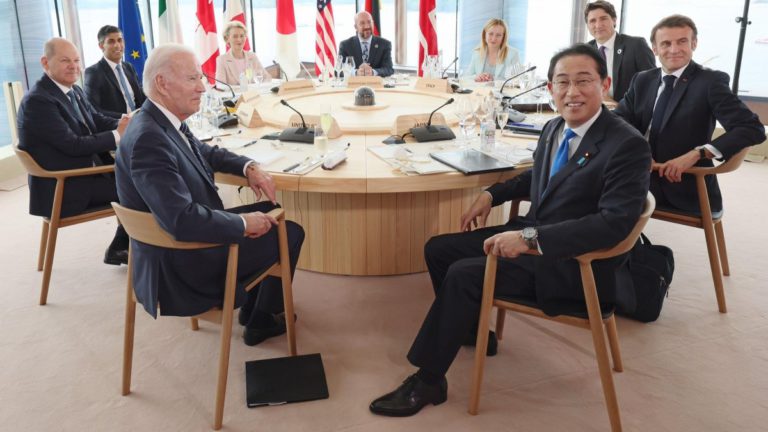
JAPAN: In the latest development at the G7 summit in Japan, tensions between Russia and Western countries escalated as Russian Deputy Foreign Minister Alexander Grushko issued a warning, highlighting the “colossal risks” involved.

Grushko accused Western nations of persisting with an escalation scenario and asserted that Russia would consider these risks in its plans, firmly asserting its capabilities to achieve its objectives.

The warning from Russia came after US President Joe Biden announced his decision to donate F-16 fighter jets to Ukraine, a move that Ukrainian President Volodymyr Zelensky welcomed.

Advanced warplanes are known for their high-speed capabilities and the ability to engage aerial and ground targets.

The announcement about the F-16 jets and training for Ukrainian pilots came during the summit, further solidifying support for Ukraine’s acquisition of combat air capabilities.

UK Prime Minister Rishi Sunak, a strong advocate for supporting Ukraine, welcomed Biden’s decision and expressed unity among nations.

The UK, the USA, the Netherlands, Belgium, and Denmark will collaborate to ensure Ukraine receives the necessary combat air capabilities.

This decision highlights the determination of these nations to bolster Ukraine’s defence capabilities.

President Zelensky’s presence at the G7 summit allowed him to engage with world leaders who have not officially supported Ukraine in the past.

During the summit, Zelensky interacted with Indian Prime Minister Narendra Modi and former Brazilian President Luiz Inacio Lula da Silva, potentially strengthening Ukraine’s alliances and garnering further international support.

At the summit, Chancellor Sunak held talks with French President Emmanuel Macron and briefly met with German Chancellor Olaf Scholz.

The conversations centred around providing military assistance and long-term security support to Ukraine.

Additionally, they addressed the issue of small boat crossings in the English Channel, an ongoing concern for the region.

In a significant announcement, the G7 leaders established a new team aimed at detecting and countering Russia’s and China’s use of economic coercion to influence the decisions of other nations.

In a joint statement, the leaders emphasised the importance of pressuring China to urge Russia to halt its military aggression and withdraw its troops from Ukraine immediately, completely, and unconditionally.

The leaders warned that countries employing trade as a weapon would face repercussions, specifically targeting Beijing and its alleged economic coercion practises.

While the G7 leaders clarified that they are not advocating for decoupling or isolation, they acknowledged the necessity of economic resilience through risk mitigation and diversification.

The heads of state emphasised that a thriving China adhering to international rules would benefit the global community, demonstrating their commitment to maintaining a balanced and cooperative approach in dealing with economic and geopolitical challenges.

The G7 summit continues to be a platform for high-stakes discussions, highlighting the shifting dynamics between major powers and the mounting concerns over Russia’s actions in Ukraine and China’s economic influence on the world stage.

Also Read: Giorgia Meloni Leaves G7 Conference Early as Floods Affect 36,000 in Italy

Aston Martin Technical Director Urges Mercedes and Ferrari to Change Car Concepts Sooner

0

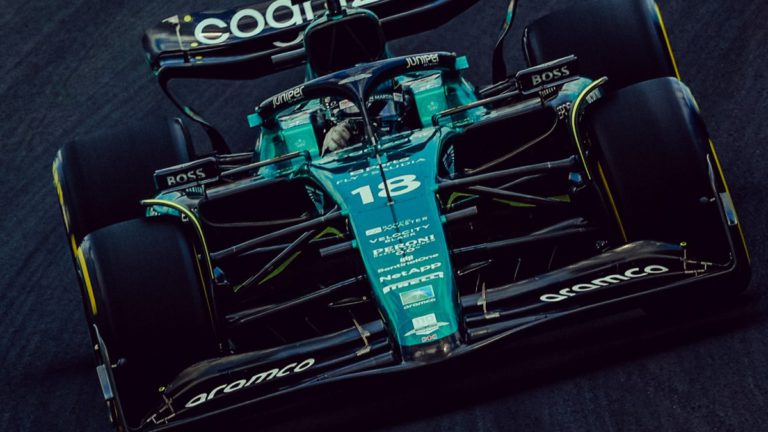
UNITED STATES: Aston Martin’s technical director, Dan Fallows, has warned powerhouse teams Mercedes and Ferrari, emphasising the increasing difficulty of changing car concepts the longer they delay.

Last season, as the sport introduced ground-effect aerodynamic cars, teams surprised observers with their design choices, particularly about sidepods.

While Red Bull opted for an undercut to channel airflow, Ferrari went for a baby bath design, and Mercedes took a bold step with no sidepods at all.

Aston Martin, on the other hand, switched to the Red Bull philosophy midway through the season.

The current season has seen more teams adopt the Red Bull design, inspired by the team’s success in claiming the 2022 championship double with 17 wins out of 22 races.

Red Bull has continued its dominance in 2023 with five victories in five races. Aston Martin, often called the “third” Red Bull, is currently second in the championship with four podium finishes.

In contrast, Mercedes and Ferrari, adhering to their design concepts, have struggled to match Red Bull’s pace, with only two podium finishes between them.

Speculation is rife that Mercedes and Ferrari may consider abandoning their current concepts and embracing the Red Bull approach.

While Ferrari downplays these reports, Mercedes will unveil a new design at the upcoming Monaco Grand Prix.

However, Fallows cautions that shifting the design philosophy is challenging, and the sooner the team makes the change, the better.

He explains that once a team commits to an aerodynamic concept, it becomes more difficult to make fundamental shifts.

Fallows suggests that Ferrari and Mercedes would face difficulties admitting they had gone in the wrong direction or expressing a desire for change. Nonetheless, he remains curious to see if any team will make the shift.

Aston Martin serves as an example of what teams can achieve by taking a gamble on a new concept.

Last season, they introduced a B-spec “green Red Bull” at the Spanish Grand Prix, which propelled them from a mere six points in the first five races to an impressive tally of 55 points by the season’s end.

This year, Aston Martin has continued with their Red Bull-inspired look and accumulated 102 points, placing them ahead of Mercedes and Ferrari in the standings.

As the Formula 1 season progresses, the pressure is mounting on Mercedes and Ferrari to reassess their design concepts and adapt to the changing landscape of the sport.

Fallows’ warning serves as a reminder that delaying the shift may only make it more challenging to catch up with the dominant Red Bull team and its successful design philosophy.

Also Read: Aston Martin Teases Next-Gen DB with Revolutionary Styling and Performance