Home Blog Page 56

Indian Government Issues Warning Against ‘Daam’ Malware Targeting Android Phones, Stealing Sensitive Data

INDIA: A dangerous new malware called ‘Daam’ is wreaking havoc on Android phones, infiltrating call records, stealing passwords, and compromising sensitive data. In response, the government has issued a warning to raise awareness about this menacing threat.

The Indian Computer Emergency Response Team (CERT-In), the country’s national cybersecurity agency, has released an advisory outlining the risks associated with the ‘Daam’ malware.

This malicious software can bypass antivirus programs, making it challenging to detect and remove. It often spreads through third-party websites or applications downloaded from untrusted sources.

Once the ‘Daam’ virus infects an Android phone, it evades security measures and gains unauthorized access to various device components.

These components include call records, contacts, browsing history, and even the camera. The malware can also deploy ransomware, which locks the device and demands a ransom for its release.

The government advisory highlights that the ‘Daam’ virus can hack into call records and manipulate phone call recordings, access the camera, modify device passwords, steal text messages, and even download and upload files.

It further warns that the stolen data may be transmitted to a remote command-and-control server, threatening users’ privacy and security.

To safeguard against such threats, CERT-In recommends taking precautions. Users should avoid visiting untrusted websites or clicking on suspicious links.

It is essential to keep antivirus software up-to-date to enhance device security. The advisory advises users to exercise caution when dealing with unknown phone numbers, as scammers often mask their identities using email-to-text services.

Legitimate SMS messages from banks usually display a sender ID containing the bank’s short name rather than a phone number.

In addition, users are urged to be extra vigilant while handling shortened URLs, such as those containing ‘bitly’ or ‘tinyurl’ hyperlinks.

These URLs may redirect to malicious websites, putting users at risk of malware infections. Android users can significantly reduce their vulnerability to the ‘Daam’ malware and similar threats by following these recommended precautions.

Protecting personal information and maintaining the security of their devices should be a top priority in today’s digital landscape.

Also Read: US Imposes Sanctions on Iran over Cyber Attacks in Albania

Understanding Kepler’s Equation: Unlocking the Mysteries of Planetary Motion

0

INDIA: Kepler’s equation is a fundamental mathematical formula describing the orbit of planets around the Sun.

This equation, developed by renowned astronomer Johannes Kepler in the early 17th century, has unlocked the mysteries of celestial mechanics and paved the way for our comprehension of the motion of planets in our solar system and beyond.

Kepler’s equation is a crucial component of Kepler’s laws of planetary motion, which he formulated based on his extensive observations using the precise astronomical data collected by his mentor, Tycho Brahe

These laws laid the foundation for modern astronomy and became a cornerstone of Isaac Newton’s laws of motion and gravitation.

The first of Kepler’s laws, known as the law of elliptical orbits, states that planets move in elliptical paths around the Sun, with the Sun positioned at one of the focal points of the ellipse. 

However, understanding the precise mathematical relationship between a planet’s position and time proved to be a formidable challenge for astronomers of the time.

It was Kepler who ultimately discovered that an equation that relates the planet’s position in its orbit to the time it takes to complete that orbit could describe a planet’s motion. 

This groundbreaking equation provides a direct link between the position and time of a planet, allowing astronomers to predict and calculate various planetary motion aspects.

Kepler’s equation is expressed as M = E – e sin(E), where M represents the mean anomaly, E denotes the eccentric anomaly, and e represents the eccentricity of the planet’s orbit. 

https://twitter.com/oliver_philcox/status/1377254514156302338

The eccentric anomaly represents the angular distance between the centre of the elliptical orbit and a fictitious point on the orbit known as the “eccentric point.”

By solving Kepler’s equation, scientists can determine the position of a planet in its orbit at any given time, providing valuable insights into its speed, distance from the Sun, and the geometry of its orbit. 

This equation has enabled astronomers to accurately predict planetary positions and conduct detailed observations and measurements of celestial objects.

Kepler’s equation has far-reaching implications, extending beyond our solar system. It is a fundamental tool for studying exoplanets, planets orbiting stars outside our solar system. 

Astronomers can infer the existence of planets, estimate their orbital characteristics, and gain a deeper understanding of planetary systems beyond our own by applying Kepler’s equation to the data collected from distant star systems.

Kepler’s equation marks a significant milestone in our quest to comprehend the laws governing the motion of celestial bodies. 

This mathematical breakthrough provides astronomers with a powerful tool to accurately predict and describe the movements of planets while opening new frontiers in the study of exoplanets and the broader field of astrophysics.

As scientists continue to refine our understanding of planetary motion by applying Kepler’s equation, we can anticipate even more remarkable discoveries and a deeper appreciation for the intricate dance of planets around stars in the vast expanse of the universe. 

Kepler’s equation has unlocked the mysteries of planetary motion, propelling humanity’s knowledge of the cosmos to unprecedented heights.

Also Read: Mysterious Flyby Anomaly Baffles Scientists as Spacecraft Defy Known Laws of Physics

Verstappen Secures Thrilling Pole Position in Monaco Grand Prix Qualifying

0

MONACO: Max Verstappen showcased his exceptional skills by claiming his first-ever pole position at the Monaco Grand Prix in a nail-biting qualifying session. The Red Bull driver delivered a stunning final sector to edge out Fernando Alonso and secure the top spot for Sunday’s race.

The qualifying session proved to be a thrilling battle from start to finish, with Verstappen initially sitting sixth in the timing sheets in the closing stages of Q3.

Alonso, a two-time World Champion, had set an impressive benchmark, and Verstappen was trailing by two-tenths of a second on his final flying lap after the second sector.

However, a remarkable performance in the final part of his lap propelled Verstappen ahead of his fellow competitor, securing pole position. Local boy Charles Leclerc narrowly missed his third consecutive home pole position and will start from third place on the grid.

Esteban Ocon of Alpine was impressed with an upgraded A523 and secured a fantastic fourth place. The qualifying session was a mixed bag for Red Bull, as Sergio Perez, Verstappen’s teammate, will start from the back of the grid due to a heavy crash in Q1.

Perez carried too much speed into the first corner at Sainte Devote, causing a significant impact and rendering his car undrivable.

Qualifying in Monaco is always a standout event, with drivers pushing the limits on the tightest circuit of the season.

However, the session presented its own challenges, particularly with the bottleneck at the penultimate corner, Rascasse, where faster cars had to navigate around slower ones. Verstappen’s pole position marked a remarkable achievement, considering the intense competition and the unique demands of the Monaco circuit.

With the top six drivers separated by only 0.206 seconds, the final moments of qualifying epitomized the excitement and unpredictability of racing in Monaco. Sunday’s race promises to be a captivating spectacle as Verstappen aims to convert his pole position into a victory.

Alonso, Leclerc, and the other top drivers will aim to challenge him and secure a coveted win in the prestigious Monaco Grand Prix, where overtaking is notoriously difficult.

Also Read: Liam Lawson Focused on Super Formula Success, Downplays F1 Speculations

ATLAS and CMS Collaborations Find First Evidence of Rare Higgs Boson Decay

0

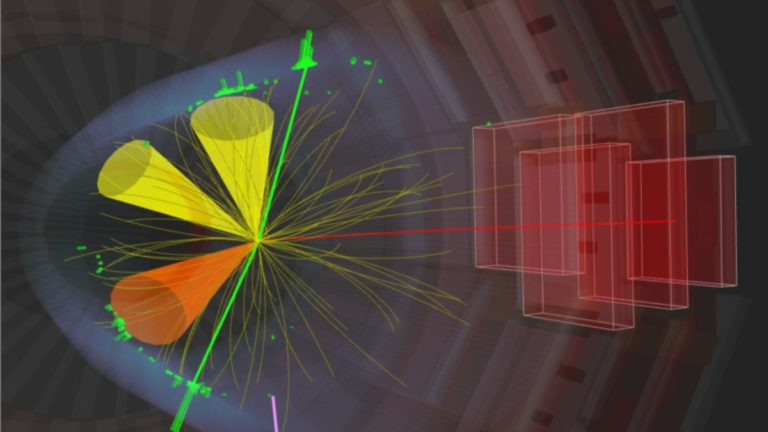
SWITZERLAND: Scientists at CERN’s Large Hadron Collider (LHC) have achieved another breakthrough in particle physics as the ATLAS and CMS collaborations joined forces to provide the first evidence of the Higgs boson decaying into a Z boson and a photon.

This rare decay process could shed light on particles beyond the Standard Model and deepen our understanding of the nature of the Higgs boson.

The discovery of the Higgs boson in 2012 opened new avenues for research in particle physics. Since then, scientists have meticulously explored its properties and investigated its various decay processes.

At the recent Large Hadron Collider Physics conference, ATLAS and CMS presented their joint efforts to uncover the elusive decay of the Higgs boson into a Z boson and a photon.

The decay of the Higgs boson into a Z boson and a photon resembles a degeneration into two photons. However, these decays do not occur directly but involve an intermediate “loop” of “virtual” particles that researchers cannot observe directly.

These virtual particles could include yet undiscovered particles that interact with the Higgs boson, potentially challenging the predictions of the Standard Model.

According to the Standard Model, around 0.15% of Higgs bosons with a mass of approximately 125 billion electronvolts should decay into a Z boson and a photon.

However, theories extending beyond the Standard Model propose different decay rates. Scientists gain valuable insights into physics beyond the Standard Model and the characteristics of the Higgs boson itself by measuring the decay rate.

Previously, both ATLAS and CMS independently conducted extensive searches for the Higgs boson decay using data from proton-proton collisions at the LHC.

Employing similar strategies, they identified the Z boson through its decay into pairs of electrons or muons, heavier counterparts of electrons. The team found these Z boson decays in approximately 6.6% of the cases.

In their searches, ATLAS and CMS looked for collision events associated with the Higgs boson decay, represented by a narrow peak in the combined mass distribution of the decay products against a smooth background.

The collaborations categorized events based on the characteristics of the Higgs boson’s production processes and implemented advanced machine-learning techniques to distinguish between signal and background events.

In a new study, ATLAS and CMS combined their datasets from the second run of the LHC (2015-2018) to maximize the statistical precision of their search.

The collaboration resulted in the first evidence of the Higgs boson decaying into a Z boson and a photon, with a statistical significance of 3.4 standard deviations.

While the standard deviation falls short of the conventional requirement of 5 standard deviations for claiming an observation, the measured signal rate is 1.9 standard deviations above the Standard Model prediction.

Pamela Ferrari, an ATLAS physics coordinator, emphasized the significance of rare Higgs decays, stating that each particle has a unique relationship with the Higgs boson and searching for it is a high priority.

Florencia Canelli, a CMS physics coordinator, highlighted the potential implications of new particles on rare Higgs decay modes and expressed optimism about future advancements using the ongoing third run of the LHC and the forthcoming High-Luminosity LHC.

This collaborative effort by ATLAS and CMS brings us one step closer to unravelling the mysteries surrounding the Higgs boson and provides an insightful test of the Standard Model.

With further advancements and precision expected in future experiments, scientists anticipate probing even rarer Higgs decays, potentially uncovering new particles and revolutionizing our understanding of the universe’s fundamental building blocks.

Also Read: NASA’s Juno Probe Reveals Startling Similarities in Lightning Processes Between Jupiter and Earth

Private Japanese Moon Lander Crashed after Being Confused by a Crater 

0

JAPAN: The highly anticipated moon landing attempt by the private Japanese moon lander Hakuto-R failed as the spacecraft crashed due to its onboard altitude sensor misinterpreting the rim of a lunar crater.

Despite completing eight out of nine mission milestones, the lander’s unfortunate landing became a setback for the Tokyo-based company iSpace.

The spacecraft’s onboard computer, relying on the altitude sensor, erroneously determined that its altitude measurement was incorrect when confronted with the unexpected terrain feature.

Consequently, it decided to rely on a calculated altitude based on the mission’s expected progress, leading to a fatal miscalculation. On April 25, the lander crashed, believing it was at a lower distance from the lunar surface than it was.

In a statement released on May 26, iSpace explained that the lander estimated its altitude to be zero or on the lunar surface. However, it later determined its height to be approximately 5 kilometres [3.1 miles] above the lunar surface.

As the lander reached the scheduled landing time, it continued descending at a low speed until its propulsion system ran out of fuel. The spacecraft free-fell to the moon’s surface with no controlled descent possible.

iSpace acknowledged that the failure was partially due to insufficient consideration of the terrain topography around the landing site. The mission had experienced a landing site change several months before liftoff, which contributed to the oversight.

The intended landing site was the floor of the 54-mile-wide Atlas Crater in the Mare Frigoris region on the moon’s near side. NASA’s Lunar Reconnaissance Orbiter recently located the wreckage near the original target.

Had the landing been successful, Hakuto-R would have become the first privately operated moon lander to achieve a lunar landing. Only NASA, China, and Russia have soft-landed spacecraft on the moon’s surface.

Despite the setback, iSpace highlighted that the mission accomplished eight out of nine milestones without any issues, with the failure occurring during the final stages of the powered descent.

The company reassured that the incident would not affect the planned launches of its second and third missions, scheduled for 2024 and 2025, respectively.

Fortunately, since a software issue caused the mission failure, there is no need for a hardware redesign for the upcoming missions.

Takeshi Hakamada, Founder and CEO of iSpace, explains that the team identified the issue during the landing and has a clear picture of how to improve their future missions.

While the crash of Hakuto-R is undoubtedly a setback, it highlights the challenging nature of space exploration and the continuous learning process in pushing the boundaries of scientific achievement.

As iSpace looks ahead to future missions, they are determined to apply the lessons learned from this incident to ensure the success of their upcoming lunar endeavours.

Also Read: Japan Coast Hit by 6.2 Magnitude Earthquake, No Alert of Tsunami 

Unearthing History: Ancient Temple of Bhagwan Nageshwara in Nellore, Andhra Pradesh

0

INDIA: In a remarkable archaeological discovery, the ancient temple of Bhagwan Nageshwara was unveiled in June 2020 in Nellore, Andhra Pradesh, shedding light on a long-lost piece of history and captivating the local community.

Located in the heart of Nellore, the temple, dedicated to Lord Shiva, is a testament to the region’s rich cultural and religious heritage.

The significance of this archaeological find cannot be overstated, as it provides valuable insights into the ancient civilization that once thrived in the area.

The temple’s origins can be traced back to the ninth century, during the reign of the Pallava dynasty.

The Pallavas were known for their patronage of art, architecture, and religion, and their influence is apparent in the intricate carvings and architectural style of the Bhagwan Nageshwara temple.

The structure is a remarkable example of Dravidian architecture, characterised by its pyramid-shaped gopuram (tower) adorned with intricate sculptures depicting various deities and mythological figures.

The temple complex also features a spacious courtyard, several smaller shrines, and a sacred tank called Pushkarini.

Archaeologists and historians have hailed the temple’s discovery as a significant milestone in understanding the cultural and religious practises of ancient Andhra Pradesh.

The intricate carvings on the temple walls depict scenes from Hindu mythology, including stories of Lord Shiva, Lord Vishnu, and the various avatars of the gods. The Bhagwan Nageshwara temple holds immense religious and spiritual significance for the local community.

The temple has long been a place of worship and pilgrimage, attracting devotees from far and wide who seek blessings and solace in the divine presence of Lord Shiva.

The unearthing of this ancient temple has rekindled a sense of pride and reverence among the people of Nellore. The restoration and preservation efforts undertaken after the discovery have been meticulous and comprehensive.

Archaeological teams worked tirelessly with the support of the local government to unearth and showcase the temple’s historical and architectural splendour.

The teams carefully cleaned and restored the intricate carvings, allowing visitors to marvel at the craftsmanship of the artisans who lived centuries ago.

The unveiling of the Bhagwan Nageshwara temple has also spurred tourism in the region. Visitors from across the country have flocked to Nellore to witness this architectural marvel and experience the spiritual ambience of the temple.

The local economy has received a boost as hotels, restaurants, and businesses cater to the needs of the growing number of tourists.

The ancient temple of Bhagwan Nageshwara bridges the past and the present, connecting the modern inhabitants of Nellore with their rich cultural heritage.

The temple stands as a reminder of the enduring legacy of the Pallava dynasty and their contributions to art, architecture, and spirituality.

As the temple continues to symbolise devotion and cultural identity, the archaeologists are working hard to ensure its preservation for future generations.

The Bhagwan Nageshwara temple is a testament to the enduring power of history and the significance of heritage in shaping our collective identity.

Also Read: Discover the Wonders of Jagannath Puri Temple: A Spiritual Journey Like No Other

Virgin Galactic’s Successful Fifth Space Test Flight Signals Commercial Launch on the Horizon

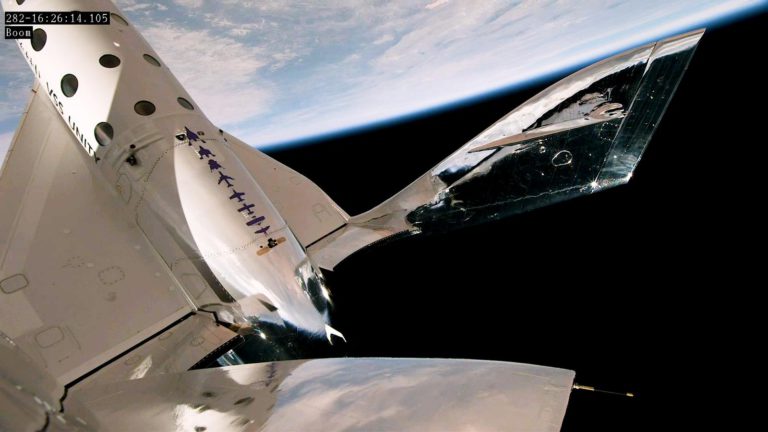
UNITED STATES: Virgin Galactic achieved another significant milestone today as it completed its fifth test flight to suborbital space, bringing the company closer to its goal of commencing commercial operations soon.

The mission, named Unity 25, marked Virgin Galactic’s return to the final frontier since July 2021, when the company’s founder, Richard Branson, and other passengers embarked on a groundbreaking journey. However, the gap between Unity 25 and the next spaceflight will be much shorter.

Mike Moses, the president of spaceline missions and safety at Virgin Galactic, said during a pre-flight call on May 24 that if all goes well, the company will fly its first commercial flight in June.

The upcoming milestone mission, a research flight booked by the Italian Air Force, sets the stage for Virgin Galactic’s transition to commercial operations.

Virgin Galactic employs an air-launch system consisting of the VSS Unity space plane and the VMS Eve carrier aircraft to transport passengers and research payloads to suborbital space.

Eve releases the Unity at approximately 50,000 feet altitude, and the space plane ignites its onboard rocket motor, propelling it into suborbital space.

Passengers on Unity experience several minutes of weightlessness and witness the Earth against the backdrop of space before gliding back for a runway landing.

Unity 25, which represents the total number of test flights conducted by the space plane, took place today at 11:15 a.m. EDT (1515 GMT) from Spaceport America in New Mexico.

The mission involved eight Virgin Galactic employees, including pilots Jameel Janjua, Nicola Pecile, Mike Masucci, C.J. Sturckow, and Beth Moses, the company’s chief astronaut instructor. The mission marked Beth Moses’ third spaceflight and the first for her three fellow crew members.

During today’s flight, Unity reached a maximum speed of Mach 2.94 (nearly three times the speed of sound) and a peak altitude of 54.2 miles (87.2 kilometres), meeting the criteria for spaceflight set by NASA and the U.S. Air Force.

The crew returned after their successful mission at 12:37 p.m. EDT (1637 GMT), with both Unity and Eve safely touching down on the runway at Spaceport America.

Following the July 2021 flight, Virgin Galactic grounded Eve and Unity for maintenance and upgrades. The work primarily focused on enhancing Eve’s capabilities to support a higher flight cadence in the future.

The improvements, which include replacing Eve’s pylon, have made the Eve-Unity system more robust and resilient.

While Unity 25 served as a final checkout before the upcoming commercial launch, it also provided an opportunity to assess astronaut training practises.

The inclusion of astronaut trainers Luke Mays, Christopher Huie, and Jamila Gilbert, alongside customer representative Nicola Pecile, allowed for validation of the customer-training profile and an enhanced experience for future passengers.

Looking ahead, Virgin Galactic plans to achieve a flight rate of approximately once per month with Eve and Unity upon the commencement of commercial operations.

However, the company is already envisioning even greater frequency by developing a fleet of new “Delta-class” space planes designed for weekly flights.

This ambitious goal aims to transform space travel into a common experience for a broader range of individuals.

As Virgin Galactic progresses towards its commercial launch, it faces competition from Blue Origin, Jeff Bezos’ space tourism company.

While Blue Origin has completed six space missions with its New Shepard rocket-capsule combo, it has not flown since September 2022 due to an anomaly encountered during an uncrewed mission.

Also Read: Virgin Orbit Sells Assets Worth over $35 Million as Company Ceases Operations

ASUS Vivobook S15 OLED: A Budget-Friendly Laptop with Stunning Display

INDIA: The Asus Vivobook S 15 OLED is a laptop that aims to balance affordability, display quality, and performance. With its competitive price tag, the question is whether it deserves attention and hard-earned money.

Let us delve into the details to provide a comprehensive overview of the factors that work in favour of and against this new offering from Asus.

One of the standout features of the Asus Vivobook S 15 OLED is its display. Boasting a 15.6-inch 2.8K OLED panel with a 2880 x 1620 pixel resolution and a 120 Hz refresh rate, the visual experience is nothing short of stunning.

With 100% DCI-P3 coverage, Pantone, and Delta 2 certifications, the colours are vibrant and accurate. The OLED technology ensures a peak brightness of six hundred nits and an impressive contrast ratio.

However, the display’s colour calibration might not meet the needs of professionals looking for accurate content creation or editing. The punchy and warm colours make it an ideal choice for multimedia consumption.

In terms of design and portability, the Asus Vivobook S OLED excels. Despite its 15.6-inch display, the laptop maintains a sleek and compact design.

The aluminium lid and ABS body lend it a premium feel, while the 180° Ergo Lift hinge enhances ergonomics. Weighing just 1.7 kg and measuring 17.9mm thin, it is highly portable and convenient to carry in a standard bag.

The laptop is available in various colour variants, including Midnight Black, Cool Silver, Solar Blue, and Cream White, with the Cool Silver option effectively concealing fingerprints.

In terms of performance, the Asus Vivobook S15 OLED offers a range of options. Configurable with Intel’s latest processors, including the Intel Core i9-13900H, Core i7-13700H, and Core i5-13500H, the laptop provides ample power for day-to-day tasks and multitasking.

Up to 16GB of LPDDR5 RAM and a PCIe Gen 4 SSD with 512GB or 1 TB of storage ensure smooth performance and fast data transfer rates.

While the laptop manages average browsing and basic editing tasks effortlessly, graphically intensive gaming titles may strain the CPU and GPU, causing increased heat production. Furthermore, its Iris XE graphics may not meet the expectations of avid gamers.

The Asus Vivobook S OLED offers a commendable selection of ports, including Thunderbolt 4, USB 3.2 Gen 2, HDMI 1.4, and a 3.5mm combo audio jack, in terms of connectivity and convenience.

Wi-Fi 6E ensures faster and more stable wireless connectivity, while the glass touchpad provides a responsive and smooth user experience.

The Full HD 3DNR camera with an infrared sensor and Windows Hello support facilitates facial recognition login.

The laptop’s 75 Wh battery, coupled with 90 W fast charging, offers decent battery life of up to 4 hours during casual browsing and video streaming.

Additional features and bundled software such as Microsoft Office Home and Student 2021, AI Noise Cancellation, MyASUS, and Alexa integration add value to the overall package.

However, it is worth noting that the speakers do not deliver the desired loudness, despite support for Dolby Atmos and Smart Amp technology.

Also Read: Asus Unveils Impressive Lineup of 13 Gaming Laptops in India

Mercedes Unveils New Sidepods for Monaco Grand Prix: A Deep Dive into the Upgrades

0

MONACO: All eyes were on Mercedes’ garage as the F1 teams continued to unpack their freight and complete their final preparations for the Monaco Grand Prix weekend.

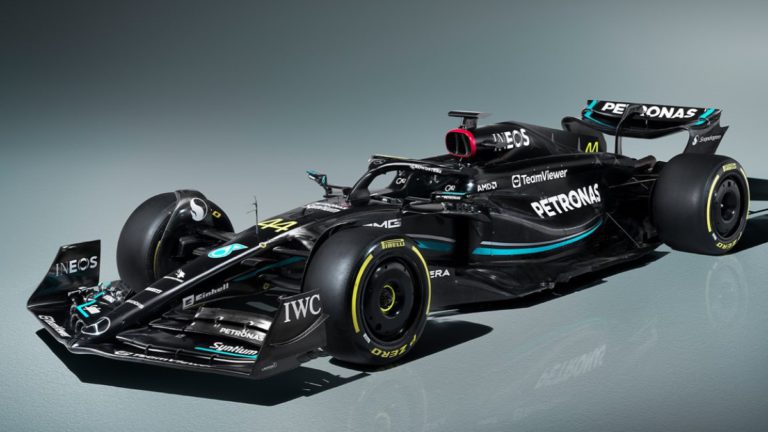
However, it wasn’t just the usual race-day buzz that had everyone talking. The spotlight was on Mercedes’ new-look sidepods, which will be the talk of the town during this star-studded event.

Last season, Mercedes introduced a radical design with their W13, featuring what was popularly dubbed the “zero-pod.”

The design was unique compared to Ferrari’s baby bath look and Red Bull’s undercut. However, as the season progressed, it became apparent that the zero-pods were causing stability issues for the team.

Mercedes suffered from more porpoising than any other team on the grid, leading to a disappointing third-place finish in the constructors’ championship and a winless season for Lewis Hamilton.

Despite the setbacks, Mercedes stuck with the zero-pods for this year’s W14, promising significant changes to performance.

However, after the Bahrain Grand Prix, Team Principal Toto Wolff admitted that the car needed alterations to win races. Mercedes has finally made the long-awaited decision, and the zero-pods are no more.

Displayed in the Monte Carlo pit lane, the new sidepod design features a wider and rounded inlet with a tunnel underneath, drawing inspiration from Red Bull’s downwash design without the severe undercut.

Observers have noted that the new sidepods lean more towards the aesthetics of Aston Martin and Alpine than Red Bull.

Mercedes has also adjusted the front suspension layout, introduced a new floor for the W14, and modified the cooling system.

These upgrades aim to provide a notable improvement over the car that raced in Miami. Although fans are hopeful for a significant leap forward, Lewis Hamilton remains cautiously optimistic.

Recognising the team’s challenges, Hamilton admitted that he didn’t expect a one-second improvement, which he believes is necessary.

However, he views the changes as a step in the right direction and hopes they will facilitate progress for Mercedes. Team principal Toto Wolff echoes Hamilton’s sentiments, urging everyone to manage their expectations.

While he doesn’t anticipate an immediate surge in performance, Wolff believes that the changes lay a new foundation and address issues that have hindered the team’s speed. He remains eager to see how these adjustments will shape Mercedes’ performance in the future.

As the Monaco Grand Prix approaches, all eyes will be on Mercedes, scrutinising their new sidepods and the impact of the modifications.

Also Read: Liam Lawson Focused on Super Formula Success, Downplays F1 Speculations

Virgin Orbit Sells Assets Worth over $35 Million as Company Ceases Operations

0

UNITED STATES: Satellite launch company Virgin Orbit has agreed to sell critical assets worth more than $35 million to three aerospace companies to recover from financial turmoil.

With the company filing for bankruptcy two months ago, the sale marks the end of operations for the beleaguered California-based company.

Following a bankruptcy auction held on Monday, aerospace companies Stratolaunch, Rocket Lab, and Launcher emerged as the winning bidders in a weeks-long sale process.

https://twitter.com/VirginOrbit/status/1643151582299815936

The court’s approval, expected today, will finalise the transactions, allowing the transfer of assets to the respective buyers. Stratolaunch secured Virgin Orbit’s flagship carrier plane, Cosmic Girl, and the necessary assets for its operation with an initial bid of $17 million.

The modified Boeing 747 was responsible for transporting Virgin Orbit’s LauncherOne rocket to high altitudes before releasing it for independent orbital travel.

Stratolaunch’s plans for Cosmic Girl, which may involve utilising it as a boost stage for their hypersonic Talon vehicle, are yet to be publicly announced.

Rocket Lab, a private spaceflight company specialising in launch services for small satellites, emerged as the winning bidder for Virgin Orbit’s headquarters and manufacturing facility in Long Beach, California.

The $16.1 million deal includes the expansive 144,000-square-foot facility, equipped with essential equipment such as 3D printers and a specialty tank welding machine.

Rocket Lab intends to utilise these assets to advance their new launch vehicle, Neutron, a reusable rocket set to debut in 2024.

Launcher, recently acquired by space station builder Vast Space, secured Virgin Orbit’s test facility in Mojave, California, through a $2.7 million bid.

The purchase includes rocket engine test stands, an aircraft hangar, and associated machinery. Launcher’s parent company aims to build artificial gravity-rotating space stations, with plans to launch their first four-person space station by 2028.

As part of the asset sale, a liquidation company called Inliper won a $650,000 bid to acquire Virgin Orbit’s office equipment.

The distribution of assets among multiple buyers confirms the cessation of operations for Virgin Orbit, whose sale hearing will occur in a Delaware court, where the company initially filed for bankruptcy.

The sale of these assets will allow Virgin Orbit to recoup a portion of its losses and is an opportunity for the buyers to leverage the acquired resources in their ventures.

As the aerospace industry evolves, companies seize opportunities to strengthen their positions and pursue innovative space exploration and satellite deployment solutions.

Also Read: Skyroot Aerospace Successfully Tests Fully 3D-Printed Cryogenic Engine Dhawan-II for 200 Seconds