Home Blog Page 61

Stem Cells to Be Sent to Space to Test the Effect of Microgravity

0

UNITED STATES: Scientists plan to send induced pluripotent stem cells (iPSCs) to space to investigate the effect of microgravity on stem cells.

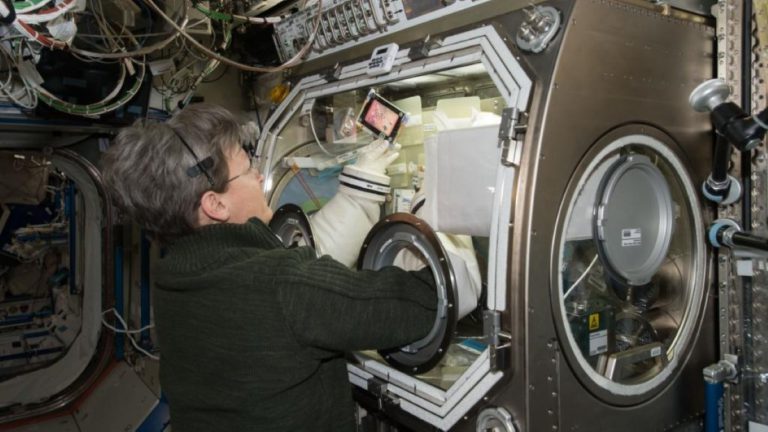
The iPSCs, which have the potential to develop into the three primary groups of cells that make up a human body, will be grown and cultivated on the International Space Station (ISS) by astronauts aboard the Axiom Space’s private Ax-2 mission.

The mission will launch on May 21 from Kennedy Space Center in Florida. The research will determine whether microgravity impacts how iPSCs develop into other cell types, like heart and brain cells.

The study is fascinating to Cedars-Sinai, as they aim to mass-produce the cells to discover new drugs to improve heart function.

Microgravity could help researchers overcome some limitations when producing these stem cells on Earth due to gravitational effects that can restrict their growth.

By sending them to space, the researchers will test whether cells grow faster, present fewer genetic mutations, and remain in their versatile pluripotent state.

The Cedars-Sinai team will arrive at Kennedy Space Center a week before the launch to prepare the stem cells and load them onto the Dragon spacecraft.

The Ax-2 crew will launch in the Dragon Craft atop a SpaceX Falcon 9 rocket. This mission, which will last just a week, will pave the way for future missions that will test the ability of stem cells to divide and take up DNA during spaceflight.

The study results could affect disease modelling, tailored treatments, and drug discovery. Axiom Space is a private astronaut training and mission management provider based in Houston, Texas. It aims to “provide universal access to low Earth orbit so that innovators, governments, and individuals can do the same.”

Ax-2 will be the second mission that Axiom Space has organized and operated aboard the ISS. The first, Ax-1, launched in April 2022, sending four private astronauts to the orbital laboratory.

The ground-breaking research promises to offer exciting new insights into the impact of microgravity on human cells and could lead to significant advancements in regenerative medicine.

Also Read: MPs to Probe into Met Police Protestors’ Arrests Made During Coronation 
Fernando Alonso Jokes about His Confusing “Plan A minus 12” Radio Call

0

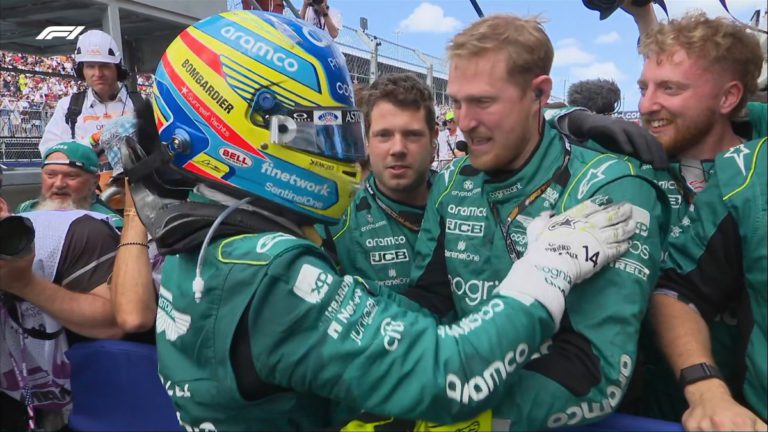
UNITED STATES: Spanish Formula One driver Fernando Alonso provided some amusing radio banter during the Miami Grand Prix on Sunday when he confused his engineers and fans with a comment about his team’s race strategy.

Running in second place behind Sergio Perez, Alonso told Aston Martin over the radio that it “feels like plan A minus 12”. 

The radio message implied that he wanted to pit 12 laps before the pre-planned strategy, potentially undercutting Perez for a shot at the race lead.

However, Alonso stayed out on the track and later admitted to the media that the “minus 12” was a slip of the tongue.

“No, I had Plan A and Plan B, and I mixed them up; minus 12 was not what I meant,” he clarified.

He apologised for the mix-up over the radio and said that the engineers were laughing about it. “It was impossible to do minus 12 because we had already passed that lap.”

Alonso’s comment caused some confusion among viewers and social media users, but his team boss, Mike Krack, opted to explain the team’s strategy rather than point out his driver’s error.

Krack explained that the team wanted to stick to their strategy and not rush into undercuts. He wanted the drivers to get a tyre advantage.

He elaborated that the team did not know how long the hard tyres would last and didn’t want to get the drivers into traffic.

Despite the confusion, Alonso finished in third place and recorded his fourth podium in five races, bringing his total points in the Drivers’ Championship up to 75.

Formula One fans are already anticipating the next race, which will take place in Imola on May 21.

The historical Imola circuit is a favourite among drivers and fans alike, with its challenging corners and high speeds providing plenty of excitement.

Alonso will undoubtedly be looking to build on his impressive performance in Miami and climb even higher in the rankings.

With the 2023 season shaping up to be competitive for Mercedes, Ferrari, and Aston Martin, it promises to be an exciting few months for Formula One enthusiasts worldwide.

Also Read: Fernando Alonso Sets the Pace in Rain-interrupted Australian Grand Prix FP2

NASA’s Hurricane-Hunting CubeSats Take Flight in New Zealand

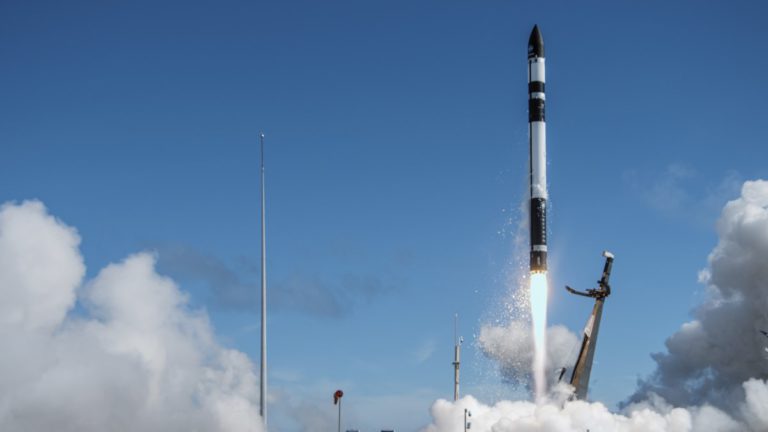
UNITED STATES: NASA’s new hurricane-hunting TROPICS constellation is off to a great start as Rocket Lab’s Electron rocket successfully launched the first two CubeSats into low Earth orbit.

The launch occurred on May 7, atop the company’s New Zealand site. The TROPICS constellation, short for “Time-Resolved Observations of Precipitation Structure and Storm Intensity with a Constellation of SmallSats,” aims to measure the hour-by-hour formation and progression of tropical cyclones and hurricanes with improved specificity.

Intending to improve the understanding of the fundamental processes driving these storms and enhance the ability to forecast and track their intensity, the TROPICS programme researchers are excited about this innovation leap to augment much heftier weather-focused satellites.

These CubeSats are about the size of a loaf of bread, and by complementing larger weather satellites, they allow for new innovation and exciting data collection.

Rocket Lab can launch from two parts of the planet, including the Mid-Atlantic Regional Spaceport in Virginia.

NASA had initially planned to fly both TROPICS missions from MARS but shifted them to New Zealand to take advantage of an earlier launch date.

The change in launch sites, which came at no significant extra cost to NASA or Rocket Lab, allows the constellation to run before the 2023 hurricane season in the Northern Hemisphere, officially starting on May 15 in the Eastern Pacific.

NASA initially planned the TROPICS constellation to consist of six satellites, but the first two CubeSats were lost when their rocket ride failed during launch in June 2022.

NASA then selected Rocket Lab to launch the remaining four satellites. If the second Rocket Lab mission experiences any anomalies on its way to orbit, the TROPICS constellation will not be useless.

If only two CubeSats make it to orbit, it will result in a slower TROPICS observation cadence.

Rocket Lab has been researching ways to make the Electron’s first stage reusable, recovering boosters on several previous flights.

However, it did not perform any recovery operations during this launch. With the successful launch of the first two TROPICS CubeSats, Rocket Lab is now preparing for the launch of the other two satellites, slated to take place about two weeks from now, to complete the TROPICS constellation.

Also Read: NASA’s JWST Discover Complex Debris Disks Around Nearby Star Fomalhaut

Max Verstappen Dominates Miami Grand Prix, Lewis Finishes 6th

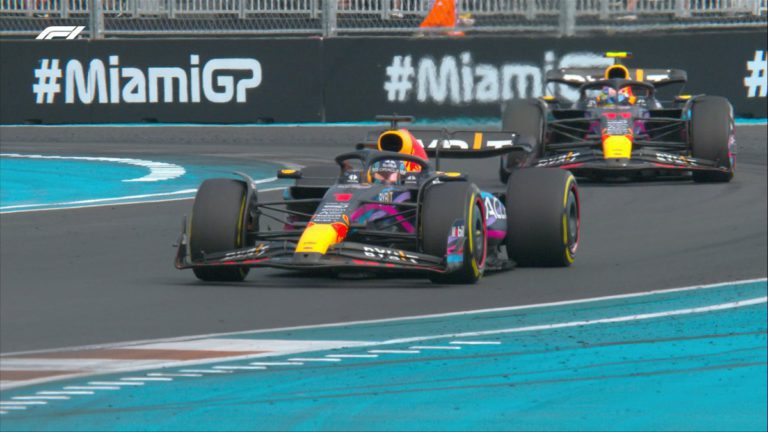
UNITED STATES: Max Verstappen claimed his third season victory after a dominant performance at the Miami Grand Prix on Sunday.

Starting from ninth on the grid, the Red Bull driver made an early move on the field, progressing to second place and battling with his teammate Sergio Perez for much of the race.

In the end, Max Verstappen made a crucial move around the outside of Turn 1 and into Turn 2 to take the lead from Perez and win the race.

Fernando Alonso finished third for Aston Martin, while George Russell and Carlos Sainz completed the top five.

A mixed-up grid marked the race after a frantic qualifying session. Perez started on the front row alongside Alonso and held his lead from the outset, while Max Verstappen had a slow start, dropping down to 10th.

However, the Dutchman soon made up for lost ground, passing his rivals one by one to make his way up the grid.

Lewis Hamilton, who started in 13th, climbed through the field in his Mercedes, eventually finishing sixth behind Sainz.

Max Verstappen’s performance strengthened his spot at the top of the championship standings, fourteen points ahead of his teammate, Sergio Perez, who struggled to keep up with Verstappen in Miami.

However, the race was not without controversy, with Sainz receiving a five-second penalty for speeding in the pit lane.

Despite the penalty, Sainz remained fifth in the race result, ahead of Lewis Hamilton and Ferrari teammate Charles Leclerc.

Max Verstappen’s easy victory is a significant morale boost for Red Bull and puts them in a strong position heading into the rest of the season.

With Perez struggling to make an impact in Miami, this year’s championship could be an easy one for Max Verstappen.

Fans will eagerly anticipate the next race in Imola to see whether Verstappen can build on his success in Miami and extend his lead at the top of the standings.

Also Read: Former F1 Driver Encourages Max Verstappen to Take a Page from Hamilton’s Book

Dell Launches G15 and G16 Gaming Laptops Powered by 13th-Gen Intel Processors

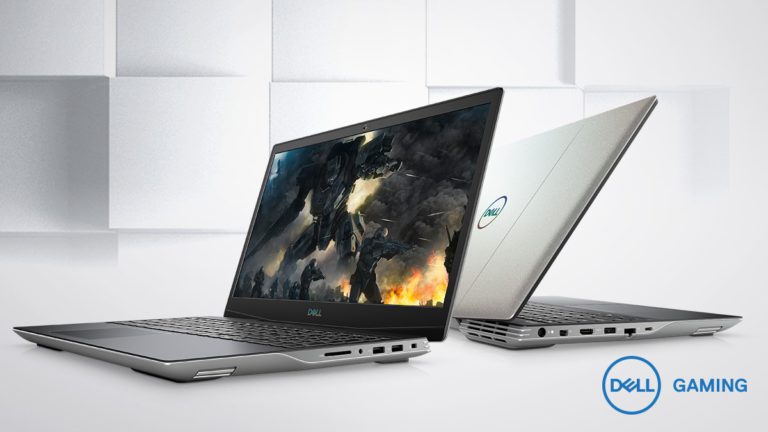
INDIA: Dell, a leading computer technology company, has added two new gaming laptops, the G15 and G16, to its G-series line-up.

The latest laptops come with 13th-generation Intel Core HX processors and Nvidia GeForce RTX 40 series graphics cards.

Dell has packed these high-performance gaming laptops with Alienware-inspired vapour chamber cooling and an Element 31 thermal interface that helps dissipate heat.

Dell’s G15 and G16 laptops will surely attract gamers who want the best performance and graphics available.

The Dell G15 comes with up to 13th Gen Intel Core i7 HX processors with up to fourteen cores and a Nvidia GeForce RTX 4060 GPU, making it capable of managing the latest AAA titles with ease.

The G15 has a 15.6-inch FHD+ screen and lets gamers choose between a 120 Hz and a 165 Hz refresh rate.

The laptop comes in three colours: Dark Shadow Grey, Quantum White with Deep Space Blue, and Pop Purple with Neo Mint thermal shelf.

If you want a more powerful gaming machine, check out the Dell G16, which comes with up to a 13th Gen Intel Core i9 HX processor with up to 24 cores and the Nvidia GeForce RTX 4070 GPU.

The Dell G16 sports a 16-inch QHD+ display, allowing users to choose between 165 Hz and 240 Hz refresh rates.

The G16 supports Alienware Command Centre 6.0 and lets gamers change or adjust the keyboard’s lighting effects and control the backlight.

It is available in two colours with a retro-inspired colour-blocked design: Metallic Nightshade and Quantum White.

Both laptops come with two speakers with Dolby Audio support, IntelliGo AI noise cancellation that helps stream in noisy environments, and Game Shift that can help unlock performance from the Alienware Command Centre.

Dell’s G15 and G16 laptop prices start at Rs 89,990 and Rs 1,61,990, respectively, and are available at Dell Exclusive Stores, the Dell website, Amazon, and multi-brand laptop stores.

These laptops pack extraordinary features for serious gamers who want the best performance and graphics available.

The new Dell G-series laptops will compete with high-end gaming laptops like the Asus ROG and MSI gaming laptops.

Dell has a reputation for producing high-quality laptops; the G15 and G16 are no exception.

Dell has again demonstrated its commitment to providing gamers with the latest and most advanced technology with these new laptops.

Also Read: Thailand: Toyota Stops Sales of the Yaris Model after Safety Test Issue

The Pioneer Anomaly: A Mystery of Spacecraft Movement That Scientists Can’t Explain

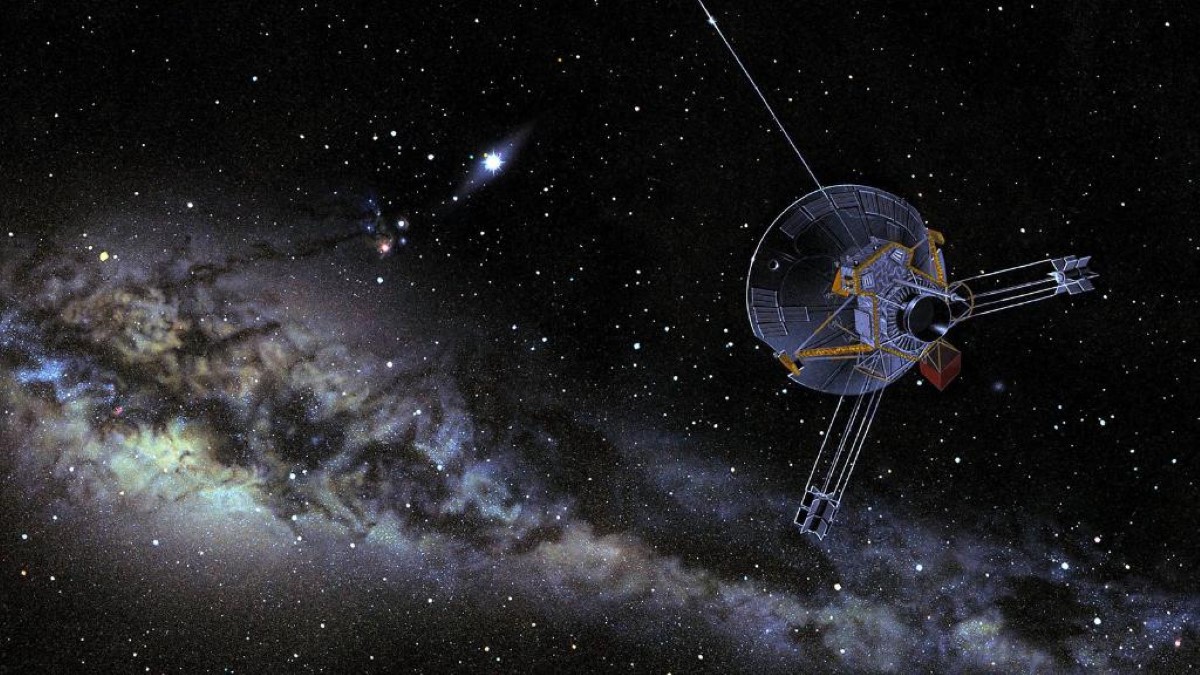
UNITED STATES: The Pioneer Anomaly is a phenomenon that has puzzled researchers since the 1980s. The anomaly refers to the unexpected slowing down of two spacecraft: Pioneer 10 and Pioneer 11, launched by NASA in the early 1970s to explore the outer regions of our solar system.

Despite the successful mission, scientists noticed that the Pioneer spacecraft was experiencing a slight deceleration that they couldn’t explain.

The anomaly is a tiny but persistent difference in the trajectory of the Pioneer spacecraft from what scientists expected based on their calculations of gravity and other known forces in the solar system.

The anomaly, first detected in the 1980s, is tiny, on the order of about 10 nanometers per second squared, but it persisted over decades of observations.

Scientists have investigated many possible causes, including the spacecraft’s own thermal emissions, the solar wind, and even the gravitational pull of undiscovered objects in the Kuiper Belt beyond Pluto.

However, these explanations have yet to fully account for the anomaly. The anomaly has persisted over the decades, even as the Pioneer spacecraft have journeyed farther and farther from Earth.

Scientists have also observed the anomaly on other spacecraft, including the Galileo mission to Jupiter and the Cassini mission to Saturn.

Scientists have proposed various theories to explain the Pioneer Anomaly, but they have yet to be proven right.

A breakdown in our understanding of gravity could cause the anomaly. In contrast, others have proposed that it could result from a previously unknown force acting on the spacecraft.

To solve the mystery, a team of researchers at the European Space Agency (ESA) launched a mission in 2018 called the Gravitational Pioneer Anomaly Experiment (GPA).

The mission’s goal is to test a new theory that suggests the anomaly is caused by how spacecraft reflect radio waves back to Earth.

According to the theory, the radio waves emitted by the spacecraft are partly absorbed by their own structure and then reemitted in a way that produces a small but persistent force.

The GPA mission aims to test this theory by measuring the Doppler shift of the radio waves transmitted by and reflected from the spacecraft to Earth.

While the GPA mission has not reported any results, it represents a significant step forward in our understanding of the Pioneer Anomaly.

The mission’s success could help scientists finally unravel this decades-old puzzle’s mystery.

In the meantime, the Pioneer Anomaly remains one of the greatest mysteries of space exploration.

Despite decades of study, scientists have yet to fully understand what’s causing the Pioneer spacecraft to slow down.

But with ongoing research and new missions, they hope to one day solve the mystery and unlock the secrets of our solar system’s outer reaches.

Also Read: Israel Adesanya Defeats Alex Pereira to Reclaim the Middleweight Championship at UFC 287

Scientists Capture Fastest Molecule Movements Ever Seen with Advanced X-ray Techniques

UNITED STATES: Researchers at the SLAC National Accelerator Laboratory have captured one of the fastest movements of a molecule called ferricyanide by utilising two ultrafast X-ray spectroscopy techniques.

This breakthrough marks the first time that scientists have recorded such a movement. Scientists are excited about this discovery, as it could help map more intricate chemical reactions in the body, like oxygen transportation in blood cells or hydrogen production using artificial photosynthesis.

The research team, comprised of members from SLAC, Stanford, and other institutions, used a mixture of ferricyanide and water and zapped it with an ultraviolet laser and bright X-rays from the Linac Coherent Light Source (LCLS) X-ray free-electron laser.

By analysing a second emission region, known as valence-to-core, which has been significantly more demanding to measure on ultrafast timescales, the team obtained a detailed picture of the ferricyanide molecule as it evolved into a critical transitional state.

The scientists showed that ferricyanide enters an intermediate, excited state for about 0.3 picoseconds, or less than a trillionth of a second, after being hit with a UV laser.

The valence-to-core readings revealed that following this short-lived, excited period, ferricyanide loses one of its molecular cyanide “arms,” called a ligand.

The molecule Ferricyanide then fills this missing joint with the same carbon-based ligand or, less likely, a water molecule.

The ligand exchange is an essential chemical reaction that scientists thought occurred in ferricyanide. However, according to SLAC scientist and first author Marco Reinhard, there was no direct experimental evidence of the individual steps in this process.

Over many years, the research team refined their X-ray spectroscopy technique at SLAC’s Stanford Synchrotron Radiation Lightsource (SSRL) and LCLS.

The team then combined all this expertise with LCLS’s X-ray Correlation Spectroscopy (XCS) instrument to capture the molecular structural changes of ferricyanide.

The research team hopes to study more complex molecules, such as hemeproteins, which transport and store oxygen in red blood cells but are challenging to learn due to scientists need to understand all the intermediate steps of their reactions.

Roberto Alonso-Mori, a SLAC lead scientist, said the team leveraged SSRL and LCLS to complete the experiment.

He added that the team couldn’t have finished developing their method without access to both facilities and their longstanding collaboration.

This exciting development has opened up a world of possibilities in the field of chemistry, as researchers can now utilise advanced X-ray techniques to map and understand complex chemical reactions.

Also Read: Scientists Offers New Explanation for Why We Haven’t Found Aliens Yet

Exploring the Cosmic Connection: Universe’s Frequency Linked to Om Chanting

INDIA: New research suggests that the frequency of the universe and the sacred sound of “Om” may be more connected than previously thought.

A team of scientists from India and the United States have delved into the physics behind the ancient practise of chanting Om and found surprising similarities with the fundamental vibrations of the universe.

Om is a spiritual symbol and mantra in Hinduism, and the Hindus believe that it represents the sound of the universe and is considered sacred in many cultures.

The syllable consists of three sounds—A, U, and M—chanted together to create a vibration that is said to have a calming and centring effect on the mind and body.

Scientists have long been fascinated by sound and its effects on the physical world.

Recent studies have shown that sound waves can affect the behaviour of particles at the quantum level and that specific frequencies can have therapeutic benefits for humans.

In this study, published in the journal Scientific Reports, the researchers analysed the frequency of the sound Om. They compared it to the frequency of the cosmic microwave background radiation—the afterglow of the Big Bang that permeates the entire universe.

Using advanced mathematical models and spectral analysis, the team found that the frequency of Om is remarkably similar to the frequency of the universe, both hovering around 7.5 hertz.

This discovery is significant because it suggests a fundamental connection between the sound of Om and the vibration of the universe, said Dr. Arvind Sharma, a physicist at the Indian Institute of Technology in Delhi and lead author of the study.

The team also found that chanting Om produced a unique waveform that had a calming effect on the brain, similar to the effects of meditation.

This finding supports the long-held belief that chanting Om can help reduce stress and promote relaxation.

Sharma explains that the research shows a scientific basis for the spiritual practise of Om chanting. “It is more than just a symbolic sound; it has a real effect on the physical world.”

The study has generated excitement among scientists and spiritual practitioners alike, with many seeing it as a bridge between science and spirituality.

This research is a fascinating example of how science and spirituality work together to deepen human understanding of the universe, said Dr. Deepak Chopra, a leading figure in integrative medicine and spirituality.

The study’s findings could have practical applications in medicine, psychology, and space exploration.

If the connection between Om’s frequency and the universe’s frequency is genuine, scientists can use it to develop new technologies for sensing and measuring cosmic phenomena.

As our understanding of the universe continues to evolve, it becomes increasingly clear that we have yet to learn much.

This latest study adds another layer to the complex tapestry of the cosmos and offers a tantalising glimpse into the mysteries that still await us.

Also Read: The Athirathram Ritual of 2011: The Significance of Rituals in Hindu Culture

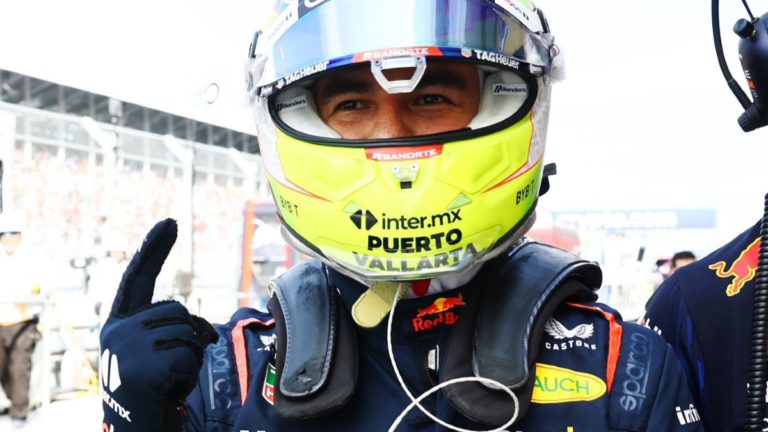
Sergio Perez Takes Pole for Miami GP, Leclerc Crash Ends Qualification Early

UNITED STATES: Sergio Perez secured pole position for the Miami GP in a dramatic qualifying session on Saturday, with Fernando Alonso starting on the front row beside him.

The session ended early after Charles Leclerc spun into the barriers, leaving an unusual but exciting starting grid for Sunday’s race.

Max Verstappen aborted his first flying Q3 lap after being caught out by a gust of wind. Meanwhile, Hamilton had to take evasive action to avoid a collision with Kevin Magnussen earlier in Q1.

The tightness of the field was evident throughout the session, with only 1.214 seconds separating the entire grid in Q1.

Lando Norris and Yuki Tsunoda were among the casualties of the session, while Lance Stroll, Oscar Piastri, and Logan Sargeant will line up at the back of the grid.

In Q2, Carlos Sainz impressed, setting ‘purple’ first and second sectors before fading slightly in the final part of the lap.

Leclerc briefly went to the top with a lap of 1:26.964 before Verstappen set a time of 1:26.751, knocking Leclerc into second.

Hamilton failed to progress to Q3, qualifying 13th on the grid, his worst qualifying performance in any American race in his career.

Hamilton’s lack of pace led to appearances in Q3 for both Alpine drivers, with Kevin Magnussen out-qualifying his Haas teammate for the first time this year.

In Q3, Verstappen was forced to abandon his first flying lap due to gusts of wind, leaving Perez to set the benchmark with a time of 1:26.841, with Alonso in second.

The Q1 session ended prematurely when Leclerc crashed into the barriers after losing control of his car, bringing out the red flag.

As a result, the race director decided not to restart the session. The premature finish set the grid with Perez starting first, Alonso alongside him on the front row, and Verstappen in ninth after failing to set a representative time in the final qualifying session.

The Miami GP will take place on Sunday, and with Perez starting from pole and Verstappen in ninth, it promises to be an exciting race.

Also Read: ‘Jawan’ Postponed: SRK Unveils New Release Date With a Striking Poster Reveal 

Citroen C3 Gets Mileage Revision and BS6 Phase 2 Compliant Engines

INDIA: French car manufacturer Citroen recently updated its C3 powertrains to comply with India’s BS6 Phase 2 emission norms.

The hatchback now comes with a 1.2-litre naturally aspirated and 1.2-litre turbo-petrol engines. Citroen offers the updated C3 with manual gearboxes compliant with the new emission norms.

The 1.2-litre naturally-aspirated petrol motor generates 80 bhp and 115 nm of torque, while the turbo-petrol produces 109 bhp and 190 nm of maximum torque.

The C3’s transmission options include a five-speed and six-speed manual, respectively.

The updated engines and mileage revisions make the Citroen C3 a more environmentally friendly option for car buyers in India.

When Citroen first introduced the C3 in July 2022, it offered it in two variants: Live and Feel.

However, with the 2023 update, the Citroen C3 has a new top-spec Shine variant. The new variant includes electrically-adjustable ORVMs, 15-inch alloy wheels, a rear wiper with a washer, and a rear defogger.

The Citroen C3 is a competitor in the Indian car market, facing off against rivals such as the Tata Punch and Maruti Suzuki Ignis.

However, it’s worth noting that the Tata Punch boasts an ARAI-certified mileage of 20.10 kmpl, slightly higher than that of the C3.

https://twitter.com/CitroenIndia/status/1654735323572609024

The updated Citroen C3 is an attractive option for Indian car buyers looking for a stylish and reliable hatchback that is environmentally friendly and fuel-efficient.

With the new Shine variant, customers have even more options when considering the C3.

The C3 powertrains and mileage updates align with Citroen’s commitment to reducing its environmental impact and providing sustainable transportation options.

As more car manufacturers shift towards environmentally friendly vehicles, it’s essential to have options like the Citroen C3 that offer both style and sustainability.

Also Read: BMW X1 sDrive18i M Sport: Sleek and Powerful Addition to India’s Luxury Car Market