Home Blog Page 65

Max Verstappen Criticises F1 Sprint Format Even after Alterations for Azerbaijan GP

0

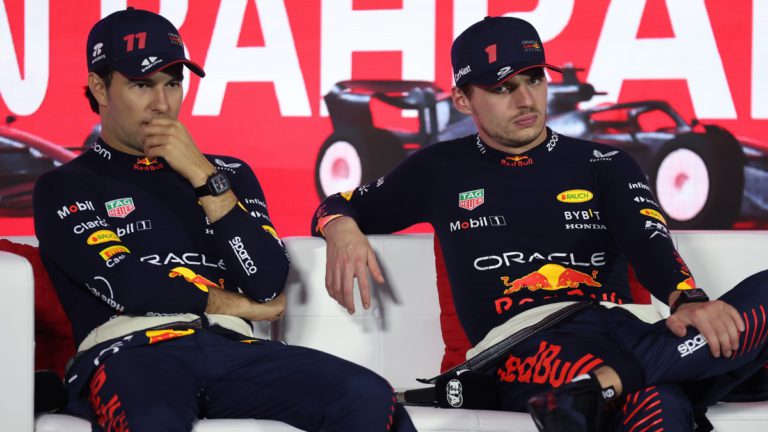
AZERBAIJAN: Despite F1 bosses changing the format of the Azerbaijan Grand Prix with a sprint shootout deciding the sprint grid and Saturday acting as a separate event from the race itself, Max Verstappen continues to criticise the sprint format.

The sprint is now a standalone race, with qualifying on Friday afternoon deciding the main race’s grid.

Verstappen has often been against the sprint format and explained that there is not much reward for the level of risk placed on the cars at the front.

He believes that the sprint race does not make a massive difference once a driver is upfront. He elaborates that the risk of potentially having a shunt is much higher.

Verstappen has often suggested that further changes to the weekend format could make him consider his future in F1. He reiterated that he believed the traditional way of doing things was the best.

While other drivers seem primarily pleased with the shake-up, Verstappen thinks that the sprint format would not change much for drivers who are already at the front, as they would be happy with their position and focus on getting points and preparing for the race.

“At the end of the day, you have to be okay with it,” Verstappen said. He adds that he loves racing. However, he feels no need to change the usual F1 weekend structure. “I always thought that Sunday was great,” he remarked.

Verstappen also suggested shortening the weekend if there are more than 24 or 25 race weekends to make it healthier for the drivers.

He stated that adding sprint weekends would make it even more busy for the teams and their personnel.

The F1 Sprint format was introduced in 2021 and received mixed reviews from drivers and fans alike.

Some believe it adds excitement to the sport, while others think it is unnecessary and risky.

While everyone may not share Verstappen’s criticisms of the sport, it highlights the importance of considering the opinions and concerns of the drivers at the forefront of the sport.

As the F1 Sprint format evolves, it will be interesting to see how the drivers and the sport respond to these changes.

Also Read: F1 Unveils New “Sprint Shootout” Format for Azerbaijan Grand Prix
Yashasvi Jaiswal Takes Dominant RR to 32-Run Win over CSK

0

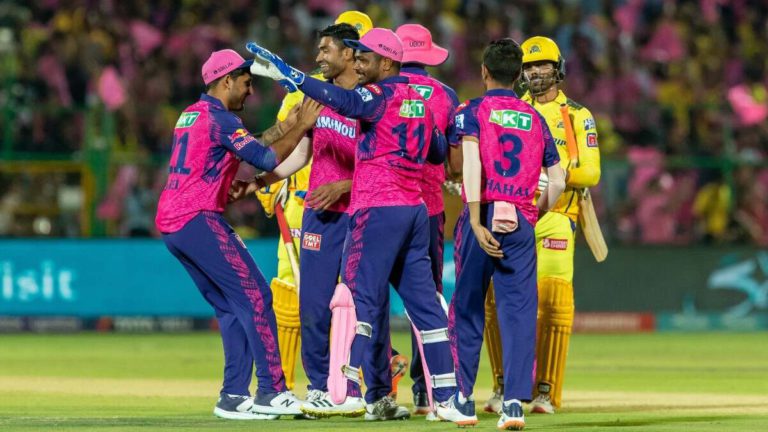
INDIA: Rajasthan Royals (RR) put on a comprehensive display in all departments to secure a 32-run victory over Chennai Super Kings (CSK) in their Indian Premier League fixture. 

RR Vs CSK

The win also marked the second time RR has defeated CSK this season. The Royals set an imposing total of 202 after winning the toss and electing to bat. 

https://twitter.com/IPL/status/1651651484340330496

Yashasvi Jaiswal shone for the home side, smashing 77 runs off just 43 deliveries with a dazzling array of shots, including a switch-hit that sailed over the boundary. Jaiswal’s knock in the powerplay helped RR race to 64 runs in the first six overs.

Adam Zampa returned to the RR side with a bang, bagging three wickets to add to R Ashwin’s two as Chennai struggled to keep up with the required run rate. Eventually, the Dhoni-led side fell short by 32 runs.

https://twitter.com/IPL/status/1651648757958864899

The contrast in Rajasthan’s powerplay performance compared to Chennai’s highlighted their dominance.

While Jaiswal stole the show for the home side, Chennai’s Devon Conway struggled and eventually lost his wicket to Zampa in the final ball of the powerplay. Due to Conway’s struggles, Chennai could score just 13 runs in the first three overs.

https://twitter.com/IPL/status/1651624850946134016

Chennai attempted a fightback with Shivam Dube and Moeen Ali combining for a 51-run partnership. Still, it was not enough as Sandeep Sharma returned at the death overs to deny the visitors any boundaries.

The victory was crucial for Rajasthan, who had lost their previous two matches. The Royals will now face Mumbai Indians on Sunday with renewed confidence. 

Meanwhile, Chennai will host Punjab Kings on the same day, hoping to secure a much-needed victory on home turf.

Overall, Rajasthan’s all-round performance showcased their potential as a team to beat in the IPL, while Chennai will need to regroup and find a way to bounce back after a disappointing outing.

Also Read: ​All-round KKR Defeats Lacklustre RCB by 21 Runs at the Chinnaswamy Stadium

SpaceX’s Starship Grounded by US Government after Debris Plumes from Launch Causes Damage

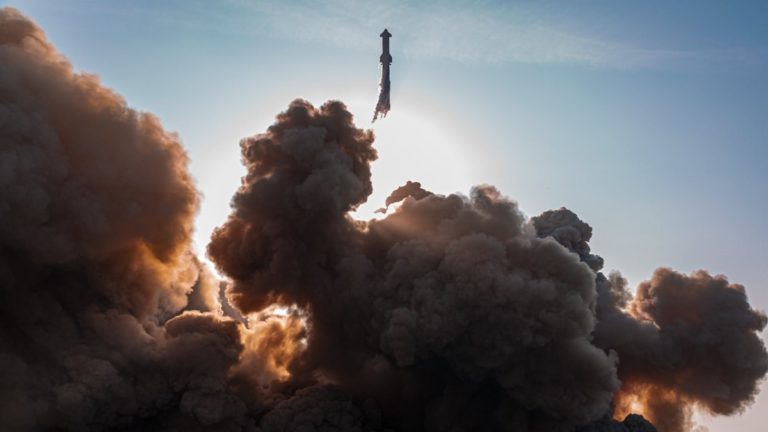
UNITED STATES: The US Federal Aviation Administration (FAA) has grounded SpaceX’s Starship following claims that the debris plumes from its explosive first launch may have spread potentially hazardous materials over homes and endangered habitats.

The FAA is conducting a “mishap investigation” into Starship’s April 20 test launch, after which the rocket exploded in mid-air around four minutes later.

Dust and debris from the launch are said to have rained down on residents in Port Isabel, Texas, and over Boca Chica’s beaches, which are nesting grounds for endangered animals.

SpaceX’s launchpad suffered extensive damage, with concrete shooting out into the ocean and a hole punched in the launchpad with a crater beneath it.

The debris spread far further than anticipated, with broken windows reported in local businesses and ash-like particles covering homes and schools.

The FAA’s “anomaly response plan” has come into force, requiring SpaceX to complete extra “environmental mitigations” before reapplying for its launch licence.

The investigation needs to conclude that Starship does not affect public safety before it can launch again.

The FAA has stopped SpaceX from conducting further launches until this investigation is complete.

The investigation is standard practise when rockets go astray, and SpaceX has reportedly been working on a massive water-cooled steel plate to go under the launch mount.

Standing tall at 120 metres and propelled by a record-breaking 7.5 million kilogrammes of thrust, SpaceX’s Starship is the largest and most powerful rocket ever built.

SpaceX designed the massive rocket to transport crew members, spacecraft, satellites, and cargo to locations in the solar system.

Despite the rocket’s explosive first launch, SpaceX and its founder, Elon Musk, have hailed the test as a success that enabled engineers to gather essential data for the next launch.

Musk has warned that this is just the beginning of a long journey that requires many flights.

The rocket’s engines caused Starship to flip and roll, leading SpaceX to order it to self-destruct.

The company hopes to have Starship ready to launch again in one to two months.

The FAA’s mishap investigation is crucial in ensuring public safety before future launches of Starship.

SpaceX has been working hard to ensure the launchpad is safe and has implemented environmental mitigations to prevent debris from spreading too far.

As the largest and most powerful rocket ever built, the Starship has the potential to revolutionise space travel, but it has to ensure safety and responsibility to ensure its success.

Also Read: Japanese Space Startup ispace’s Moon Landing Attempt Fails

The Discovery of Neptune: How Uranus Led to the Discovery of Eighth Planet 

0

INDIA: It was a momentous day for astronomy when the eighth planet of our solar system, Neptune, was discovered on September 23, 1846.

The discovery culminated years of careful observation and calculation by two brilliant mathematicians, Urbain Le Verrier and John Couch Adams.

But, as it turns out, the discovery of Neptune owes a great deal to another planet, Uranus.

Uranus was discovered in 1781 by William Herschel, and it was immediately apparent that it was a strange and unusual planet.

Its orbit was unlike any other planet in our solar system, leading astronomers to suspect that there might be another planet beyond it, exerting a gravitational pull and causing Uranus’ strange behaviour.

In the early 1800s, two mathematicians, Alexis Bouvard and John Couch Adams, independently set out to calculate the orbit of this hypothetical planet.

However, their calculations were not accurate enough to pinpoint the exact location of the planet.

It wasn’t until Urbain Le Verrier, a French mathematician, entered the scene that the puzzle began to be solved.

Le Verrier had a reputation for precision and accuracy in his calculations, and he applied his skills to the problem of the mysterious planet.

In 1845, Le Verrier sent a letter to Johann Galle, an astronomer at the Berlin Observatory, detailing his calculations and predicting the planet’s location.

On September 23, 1846, Galle and his assistant, Heinrich d’Arrest, used Le Verrier’s calculations to identify Neptune in the night sky.

But what was it that enabled Le Verrier to make such a precise prediction of Neptune’s location? The answer lies in Uranus.

Unlike Bouvard and Adam’s suspicions, another planet was not causing Uranus’ unusual orbit.

Instead, it was due to the gravitational pull of Neptune, which orbits around the sun beyond Uranus’ orbit.

This external pull meant that the scientists could use Uranus’ orbit to calculate the location of Neptune.

Le Verrier was able to use the observed anomalies in Uranus’ orbit to calculate the location of Neptune with a remarkable degree of accuracy.

His calculations were within one degree of the actual location of Neptune, a remarkable feat given the limited technology of the time.

The discovery of Neptune was a significant milestone in astronomy, but it also had a practical application.

The accuracy of Le Verrier’s calculations demonstrated the power of mathematics and the importance of precision in scientific research.

The discovery of Neptune also had a lasting impact on our understanding of the solar system.

It helped to confirm the existence of the Kuiper Belt, a region beyond Neptune that is home to many icy bodies, including Pluto, and provided evidence that there was more to our solar system than just the planets we could see with the naked eye.

Also Read: The Threat of Supernova-Generated X-rays to Planets, including Earth

AlphaTauri’s Franz Tost to Step Down as Team Principal, Replaced by Laurent Mekies

0

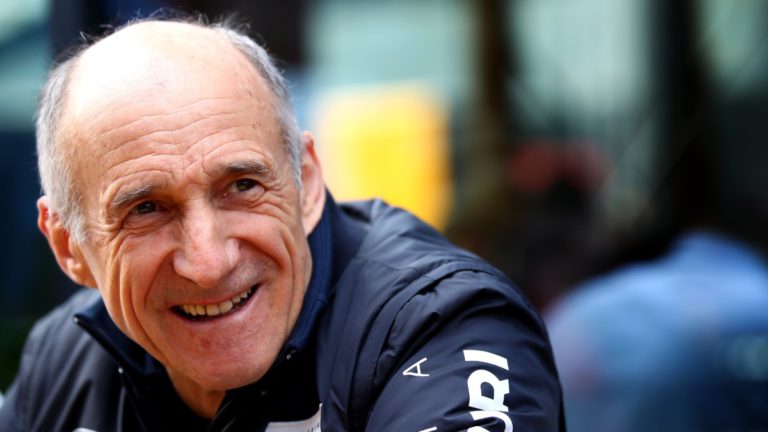
ITALY: AlphaTauri, the Italian-based Formula 1 team, announced that Franz Tost, the team principal, will retire at the end of the current season.

Tost has been with the team since its inception in 2005 and is the second-longest-serving team principal on the grid after Christian Horner of Red Bull.

Tost has been principal to some of the top names in F1, including Sebastian Vettel and Max Verstappen.

Tost has hinted at his retirement, mentioning that he would not want to be in the paddock when he turns 70 in three years.

The team has announced that Laurent Mekies, the former Ferrari man, will replace Tost.

Mekies had a history with the team and was promoted to team engineer after Red Bull took over the Minardi F1 team.

https://twitter.com/F1/status/1651259940143607810

The Frenchman left the team in 2014 to take up a role at the FIA before moving to Ferrari in 2018.

Mekies, who most recently served as deputy team principal and racing director at Ferrari, will take on his first role as team principal.

He said it is an “honour” to be joining his former outfit and expressed his gratitude to Tost for the job he has done over almost two decades in charge at Faenza.

Mekies added that he looks forward to taking on the role of team principal and returning to the team where he spent most of his early career.

Mekies believes that Scuderia AlphaTauri has all the necessary ingredients for success in the future. In tandem with Peter Bayer, who will join as CEO later this year, he is looking forward to making that happen.

According to the team, Mekies will be responsible for the team’s daily operations, including technical, manufacturing, support functions, and race team operations.

Bayer’s role, on the other hand, will be strategically focused. Tost thanked Dietrich Mateschitz, the late Red Bull co-founder, for allowing him to be the team principal of Scuderia Toro Rosso and Scuderia AlphaTauri for the past 18 years.

Tost said it was time to hand over the reins and that he was confident that Mekies and Bayer would bring the team to the next level.

The announcement has generated excitement among Formula 1 fans eager to see what changes Mekies and Bayer will bring to the team.

AlphaTauri is Red Bull’s junior team, and according to reports, Mekies will focus on developing talent from within the team rather than pursuing more experienced drivers from other teams.

The announcement comes as part of a recent wave of personnel changes in Formula 1, with Mercedes, Aston Martin, and Alpine also making significant changes to their teams.

Also Read: F1 Unveils New “Sprint Shootout” Format for Azerbaijan Grand Prix
​All-round KKR Defeats Lacklustre RCB by 21 Runs at the Chinnaswamy Stadium

0

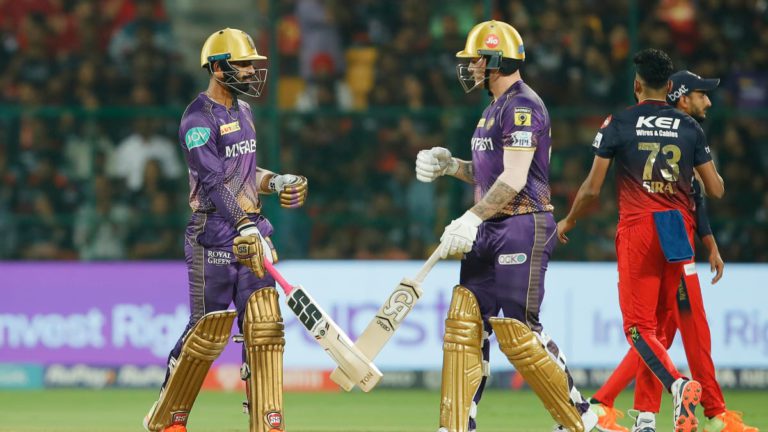
​INDIA: In a high-scoring thriller, Kolkata Knight Riders (KKR) emerged victorious over the Royal Challengers Bangalore (RCB) by 21 runs at the M. Chinnaswamy Stadium in Bangalore on Wednesday, April 26. The win marked a comeback for KKR, who had lost three out of their previous four games.

KKR Vs RCB

KKR won the toss and elected to bat first. After a quiet start, Jason Roy took a liking to his England teammate David Willey and scored 17 runs off his over. Shahbaz Ahmed’s next over went for 25 runs, and KKR ended the powerplay at 66 without losing a wicket. Roy scored 56 off 29 balls and set the stage for a big total.

However, after Roy’s dismissal, Royal Challengers Bangalore tightened things up and kept picking up wickets regularly. Nitish Rana (48) and Venkatesh Iyer (27) steadied the ship, but it wasn’t until Rinku Singh (18) and David Wiese (12) that gave KKR the late impetus. The duo smashed 15 runs off the last over to take KKR to 200 for 5, which ultimately proved to be a winning total.

RCB started their chase strongly, with Faf du Plessis and Virat Kohli hitting boundaries at will. However, Suyash Sharma’s introduction to the attack turned the tide in KKR’s favour. Sharma dismissed du Plessis and Shahbaz Ahmed in quick succession, and Varun Chakravarthy removed Glenn Maxwell to leave RCB reeling at 58 for 3 in the powerplay.

Kohli (54) and Mahipal Lomror (34) staged a recovery with a 55-run partnership, but their dismissals in quick succession swung the game back in KKR’s favour. Despite Dinesh Karthik’s valiant effort of 22 off 18 balls, RCB fell short by 21 runs in the end.

KKR’s win took them from eighth to seventh on the points table, while RCB remained fifth. The result also broke RCB’s momentum, as they had won four of their previous five games.

KKR’s next match is against the Delhi Capitals on April 29, while RCB will face the Punjab Kings on May 1.

Also Read: Controversies and Penalties Mar Lucknow Super Giants’ IPL Victory over Royal Challengers Bangalore

Black Holes Could Be Devouring Stars Like Messy Toddlers, Finds Study

0

UNITED STATES: A new study led by Northwestern University has found that intermediate-mass black holes, if they exist, devour wayward stars like messy toddlers, taking a few bites and then flinging the remains across the galaxy. In new 3D computer simulations, astrophysicists modelled black holes of varying masses and hurled stars past them to see what might happen. 

Initially, when a star approaches an intermediate-mass black hole, it gets captured in the black hole’s orbit. Once the black hole catches the star in its deadly orbit, it begins its lengthy and violent meal. Every time the star completes a lap, the black hole takes a bite, further cannibalizing it with each passage. 

Eventually, the black hole consumes everything except the star’s incredibly dense core. Then, the black hole ejects the remains, and the star’s remnant flies across the galaxy. The new simulations also provide astronomers with new clues to finally pinpoint these hidden giants within our night sky. 

Northwestern’s Fulya Kıroğlu, who led the study, said that the team obviously could not observe black holes directly because they don’t emit light. Instead, the team looked at the interactions between black holes and their environments. 

The team found that stars undergo multiple passages before being ejected. After each pass, the stars lose more mass, causing a flair of light as it’s ripped apart. 

Each flare is brighter than the previous, creating a signature that can help astronomers discover them. While astrophysicists have proven the existence of lower- and higher-mass block holes, intermediate-mass black holes have eluded them. 

Created when supernovae collapse, stellar remnant black holes are about three to ten times the solar mass of our sun. 

On the other end of the spectrum, supermassive black holes, which lurk in the centres of galaxies, are million to billion times the mass of our sun. 

If they exist, intermediate-mass black holes would be 10 to 10,000 times more massive than stellar remnant black holes but not nearly as huge as supermassive black holes. 

Although these intermediate-mass black holes should exist theoretically, astrophysicists have not found indisputable observational evidence.

The study led by Kıroğlu and her team developed new hydrodynamic simulations. First, they created a model of a star consisting of many particles. 

Then, the team sent the star toward the black hole and calculated the gravitational force acting on the particles during the star’s approach. 

Through the simulations, Kıroğlu and her team observed that stars could orbit an intermediate-mass black hole as many as five times before finally being ejected. 

With each pass around the black hole, the star loses mass as it’s ripped apart. 

Then, the black hole throws the leftovers back out into the galaxy at extremely high velocities. 

The repeating pattern would create a stunning light show that could help astronomers identify and prove the existence of intermediate-mass black holes.

“It’s amazing that the star isn’t fully ripped apart,” Kıroğlu remarked. He added that certain stars might get lucky and survive the event. 

The ejection speed of the stars is so high that the team identified them as hyper-velocity stars, which astronomers have observed at the centres of galaxies.

Next, Kıroğlu plans to simulate different types of stars, including giant and binary stars, to explore their interactions with black holes.

Also Read: NASA Discovers Rapidly Moving Supermassive Black Hole Triggering Star Formation

El Niño and La Niña: Understanding the Natural Phenomena Affecting Weather Worldwide

INDIA: El Niño and La Niña are a couple of interrelated climate patterns that significantly impact weather systems globally. These phenomena occur in the Pacific Ocean, affect everything from agriculture to fisheries, and can even result in natural disasters like floods, droughts, and hurricanes. El Niño and La Niña are opposite phases of what’s known as the El Niño-Southern Oscillation (ENSO) cycle. 

https://twitter.com/DavidUllrich202/status/1650556515986681901

During an El Niño event, warm water from the western Pacific Ocean flows eastward towards the coast of South America. This flow can cause the ocean temperature in the eastern Pacific to rise by several degrees Celsius, leading to changes in atmospheric pressure and wind patterns.

These changes in atmospheric pressure and wind patterns can have far-reaching consequences for weather patterns worldwide. 

For example, during an El Niño event, rainfall patterns in parts of South America, Africa, and Asia can shift dramatically, often leading to droughts in some areas and floods in others. 

Similarly, El Niño events can lead to an increase in hurricane activity in the Atlantic Ocean. La Niña, on the other hand, is the opposite of El Niño. During a La Niña event, cooler water from the deep ocean rises to the surface of the eastern Pacific Ocean. 

This updraft can cause the ocean temperature in the eastern Pacific to drop by several degrees Celsius, leading to changes in atmospheric pressure and wind patterns.

The impacts of La Niña are generally the opposite of those of El Niño. During a La Niña event, areas of South America, Africa, and Asia that experienced drought during El Niño events may receive more rainfall than usual. 

Conversely, areas that received heavy rainfall during El Niño events may experience droughts during La Niña events. La Niña events can also lead to decreased hurricane activity in the Atlantic Ocean. These climate patterns can have significant impacts on agriculture and fisheries. 

For example, during an El Niño event, crops in parts of South America may fail due to drought, while fish populations off the coast of Peru may decline due to changes in ocean currents. 

Conversely, during a La Niña event, fish populations off the coast of South America may increase due to changes in ocean currents. Meanwhile, crops in other parts of the region may thrive due to increased rainfall.

It’s important to note that while El Niño and La Niña events occur naturally, human activities like deforestation, industrial emissions, and agriculture can exacerbate their impacts. 

Climate scientists have warned that as human-caused climate change continues to warm the planet, the frequency and severity of El Niño and La Niña events may increase.

Also Read: From Melting Ice Caps to Extreme Weather: Devastating Effects of Climate Change

F1 Unveils New “Sprint Shootout” Format for Azerbaijan Grand Prix

0

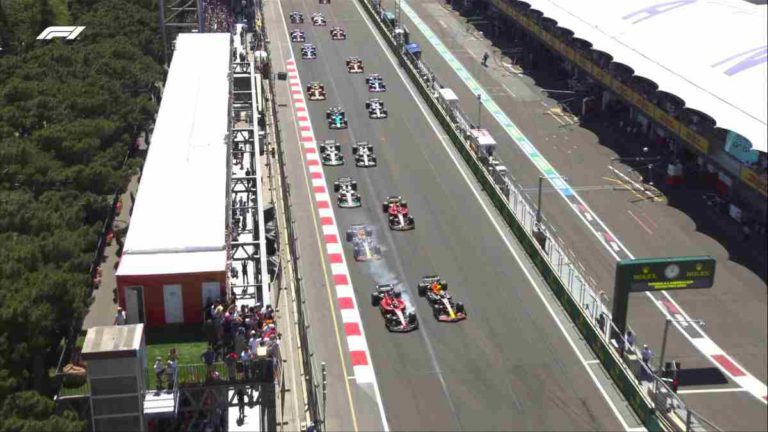
AZERBAIJAN: F1 has confirmed a significant change to the sprint format ahead of this weekend’s Azerbaijan Grand Prix. The new “Sprint Shootout” format will replace the second practice session, with a separate qualifying session determining the grid for a standalone sprint race on Saturday, which will have no bearing on Sunday’s Grand Prix.

The sprint format has had a set schedule since its introduction in 2021, with qualifying taking place on Friday after one 60-minute practise session. A second practice session would be held on Saturday morning before the 100 km sprint race determined the starting order for Sunday’s Grand Prix.

However, F1 and the FIA have now ratified the changes, and the new format will make the middle day of a race weekend a designated “Sprint Saturday.” 

In the new format, qualifying for the Grand Prix will come after a single practise session on the Friday of a sprint weekend.

The Sprint Shootout will follow the standard Q1/Q2/Q3 format but with reduced timings for each segment and a requirement to run mandated tyre compounds. 

SQ1 will last for 12 minutes with only medium tyres allowed, SQ2 will last for 10 minutes, and the pole position shootout – SQ3 – will last just eight minutes, with the soft compound used by all drivers.

F1 and FIA hope that the changes will leave a smaller margin for error for teams and drivers, increasing the jeopardy and resulting in more unpredictability during the race.

The Grand Prix will happen as usual on Sunday, but the new format has also changed the application of penalties on a sprint weekend. 

F1 has confirmed that grid penalties in FP1 and Friday qualifying will apply to the race, and grid penalties from the sprint shootout will apply to the sprint.

Furthermore, grid penalties in the sprint race will apply to the Grand Prix, and parc ferme breaches will mean a pit lane start in both the sprint and race. PU penalties will only apply to the Grand Prix.

Baku will host the first of six sprint events spread across the 2023 season, with the remaining five taking place at the Austrian, Belgian, Qatar, United States, and Sao Paulo Grands Prix. With this new format, F1 continues to experiment and innovate, and we can expect an exciting and unpredictable weekend of racing in Azerbaijan.

Also Read: Former F1 Champion Nelson Piquet Fined for Making Racist and Homophobic Comments

Gujarat Titans Crush Mumbai Indians with Stunning Death-Over Assault

0

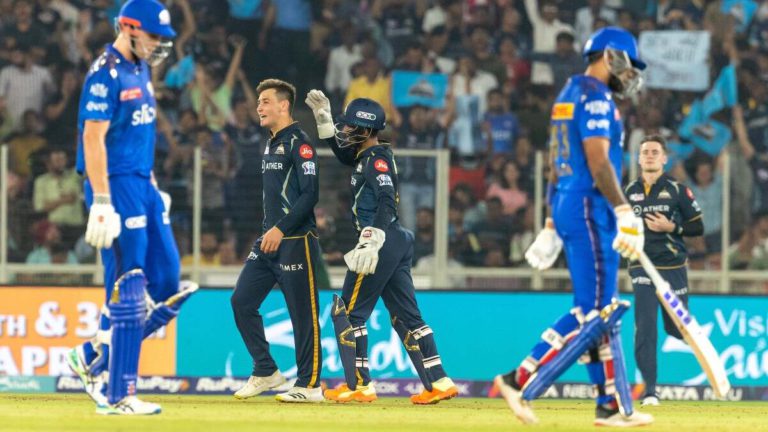
INDIA: Defending champions Gujarat Titans handed a resounding defeat to five-time IPL champions Mumbai Indians in a match that saw a violent death-over assault by Abhinav Manohar and David Miller. 

Later, Noor Ahmed and Rashid Khan led a spin demolition of the Mumbai batting. The match at the Sawai Mansingh Stadium in Jaipur witnessed a comprehensive victory for Gujarat Titans, who moved up to the second spot in the points table.

Gujarat Titans Vs Mumbai Indians

Gujarat Titans won the toss and chose to bat first, but they had a shaky start, losing three wickets in the first ten overs. However, Shubman Gill’s brisk and beautiful fifty set the stage for a 35-ball assault by David Miller and Abhinav Manohar. 

https://twitter.com/IPL/status/1650926690728804352

The pair outscored Mumbai’s bowling unit by 71 runs in 35 balls, with skipper Rohit Sharma unable to control his bowling unit. 

The Mumbai Indians’ bowling attack seemed deflated as Gujarat Titans massacred 94 runs in the last six overs, creating their own version of the powerplay.

Mohammed Shami and Hardik Pandya rocked Mumbai’s chase early against the pacers, but Rohit Sharma and Ishan Kishan had trouble finding their timing. 

https://twitter.com/IPL/status/1650898514426339328

Rohit Sharma’s dismissal off Pandya’s bowling brought Cameron Green to the crease, but the momentum never came for Mumbai. 

A middle-order collapse ensued, with Rashid Khan and Noor Ahmad picking up two wickets each in an over, leaving Mumbai Indians far behind in the required run rate. Mumbai Indians eventually lost the match by 55 runs.

https://twitter.com/IPL/status/1650924536857239552

Nehal Wadhera and Piyush Chawla stitched together a 45-run partnership to bring little consolation to the Mumbai Indians. Arjun Tendulkar also got a bat but only hit a six in the final over when Mumbai was already staring down the barrel.

After two consecutive defeats, the Mumbai Indians will play against Rajasthan Royals at the Wankhede Stadium on Sunday (April 30) and try to reclaim their fortress. 

Gujarat Titans will travel to Kolkata to face off against the Kolkata Knight Riders on Saturday (April 29) to gain the top spot on the points table.

Also Read: IPL 2023: Jadeja and Conway Lead the Way as CSK Cruises to Victory against SRH