
Home Blog Page 71

Berkson’s Paradox: How Correlations Can be Deceiving

0

INDIA: Correlation is a statistical measure that shows the relationship between two variables, and Berkson’s Paradox tells us to be careful of the inferences made from the statistic.

Mathematicians widely use correlation to identify patterns and predict future outcomes. However, the accuracy of correlations can be deceiving in some cases, as demonstrated by Berkson’s paradox.

Berkson’s paradox is a statistical phenomenon occurring when a negative correlation between two variables disappears or reverses when a mathematician introduces a third variable. The paradox was named after Joseph Berkson, a physician and statistician who first described it in 1946.

An example can illustrate the paradox. Suppose a hospital is conducting a study investigating the relationship between diabetes and obesity. The researchers measure the participants ‘body mass index (BMI) and blood glucose levels. 

The researchers found a negative correlation between BMI and blood glucose levels, meaning blood glucose levels decrease when BMI increases. However, when the researchers introduce a third variable, such as age, the negative correlation disappears or reverses. 

This disappearance or reversal happens because age correlates positively with BMI and blood glucose levels. The correlation confounds the relationship between the two variables. Berkson’s paradox has important implications for medical research and clinical practice. 

For example, a study finds a negative correlation between two risk factors for a disease, such as smoking and alcohol consumption. The correlation may be misleading if it doesn’t account for a third variable, such as age or genetic predisposition.

This negative correlation can lead to incorrect conclusions and ineffective interventions.

The paradox also has implications for machine learning and artificial intelligence, which rely on correlations to make predictions and decisions. If the correlations are spurious or confounded by a third variable, the models can produce biased or inaccurate results. 

This confusion is particularly relevant for sensitive domains such as criminal justice, finance, and healthcare, where decisions based on faulty correlations can have serious consequences. To avoid Berkson’s paradox, researchers and data analysts must be aware of the potential confounding variables and adjust for them in their analyses. 

Analysts can make themselves aware of the potential confusion through statistical methods such as regression analysis, which allows for the control of multiple variables simultaneously. 

Additionally, researchers can use experimental designs that manipulate the variables of interest while holding other factors constant, such as randomized controlled trials.

Also Read: Indian-origin Engineer Amit Kshatriya Appointed as Head of NASA’s Moon to Mars Program
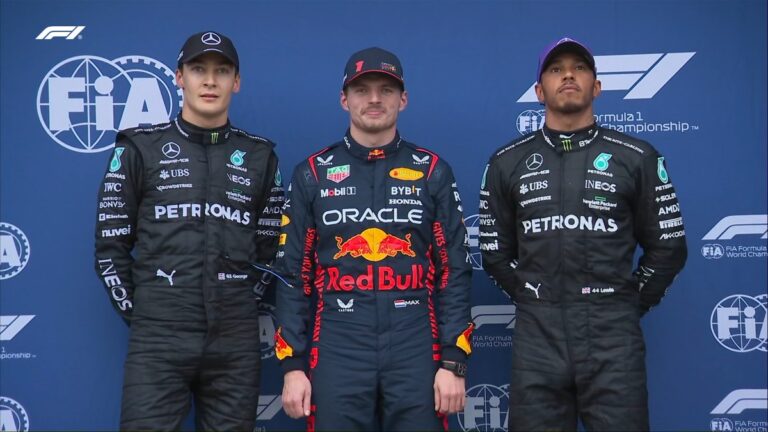
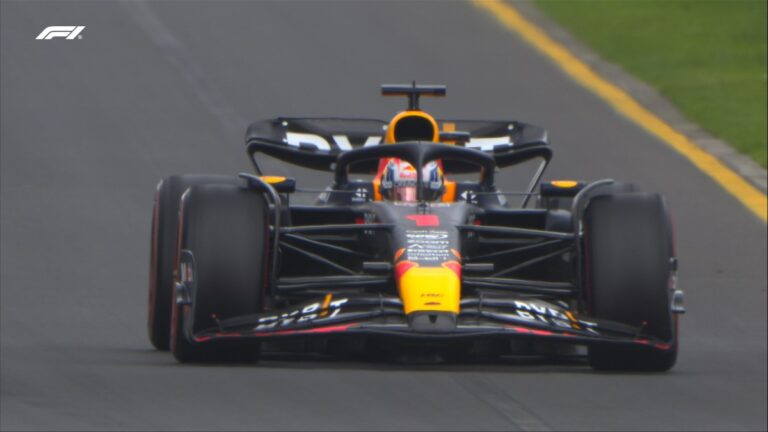
Max Verstappen Clinches Pole Position at Australian Grand Prix 2023

0

AUSTRALIA: Max Verstappen Clinches Pole Position at Australian Grand Prix 2023. Max Verstappen continued Red Bull’s run of pole positions for 2023, beating out George Russell in qualifying at the Australian Grand Prix. 

https://twitter.com/F1/status/1642114834568212480

Despite light rain and a slippery track, Verstappen set the fastest time in qualifying with an impressive 1:16.732, while Russell came in second, two-tenths down. 

Lewis Hamilton was the third fastest and will line up on the second row of the grid alongside Fernando Alonso.

https://twitter.com/F1/status/1642090172387827713

Verstappen had been fastest in final practice and was the one to beat going into the session, while his teammate Sergio Perez was hoping to shake off his practice struggles. 

However, Perez’s day was over early as he locked his front wheels into Turn 3 and went off into the gravel, finishing in P20 on the grid.

While Verstappen took the pole, his run was not without its challenges. 

https://twitter.com/F1/status/1642034819369521152

A small mistake on his hot lap saw him initially down in P6, but he managed to recover and set the day’s fastest time. 

He also experienced some issues with his downshifts but overcame them to take the coveted grid slot.

The qualifying session was not without drama, as the red flags came out during Q1 when Perez went off into the gravel on his very first flying lap. 

https://twitter.com/F1/status/1642057456330346498

The red flag opened the door for a non-Red Bull driver to bag a front-row spot, which ultimately went to Russell.

Carlos Sainz in fifth, Lance Stroll in sixth, Charles Leclerc in seventh, Alex Albon in eighth, Pierre Gasly in ninth, and Nico Hulkenberg in tenth rounded out the top 10 grid spots.

While Verstappen’s pole position is a strong start for the reigning World Champion, the results of the Australian Grand Prix are very much open. 

The race will occur on Sunday, and with a competitive field of drivers, anything could happen until the chequered flag waves.

Also Read: F1 Resumes Business: Verstappen Secures Pole Position for Bahrain Grand Prix

Max Verstappen Tops Final Practice for Red Bull at Australian GP Weekend

0

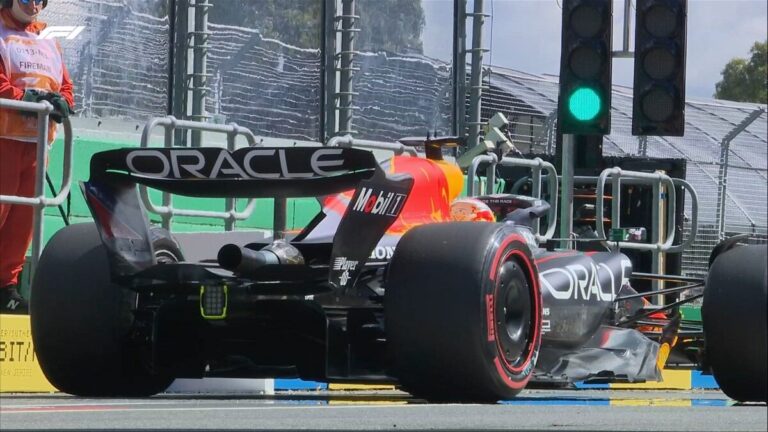
AUSTRALIA: Max Verstappen, the reigning World Champion, finished in the P1 position during the final practice session of the Australian Grand Prix weekend. 

The Red Bull Racing driver moved up to the top spot despite teammate Sergio Perez providing most of the session’s off-track drama.

https://twitter.com/F1/status/1641991126000320515

Although there was a 40 per cent chance of rain, and teams were looking to bounce back from an interrupted Friday, Perez’s side of the garage was still empty when the session began.

Lance Stroll, who hasn’t recovered from his pre-season injuries yet, came out of the pits first, but came back in after just one lap, leaving Verstappen P1 with a time of 1:19.6 on the medium tyres.

The Ferraris of Carlos Sainz and Charles Leclerc beat Verstappen’s time by going 1-2, but Verstappen upped his pace to take the P1 spot with a time of 1:18.7 after 15 minutes. 

https://twitter.com/F1/status/1641992148844257282

While Verstappen continued to put in laps, his teammate Perez was stuck in the pits as mechanics worked on his RB19.

When Perez finally ventured out of the pits and onto the track, his first flying lap involved a near-miss with Nico Hulkenberg, who closed the door on the Mexican driver. 

https://twitter.com/F1/status/1641996412521963520

“Why did you put me in this gap?” Perez asked. His race engineer responded, “I didn’t realise he was on high fuel.” Perez struggled throughout the session with multiple off-track excursions.

The session was briefly red-flagged due to debris on the track at Turn 9, a piece of Nyck de Vries’ AlphaTauri. After the break, the drivers moved from race pace to qualifying simulations. 

Sainz improved his time to 1:18.1, with Lewis Hamilton in second and Russell in third. Verstappen went fastest, a 1:17.565, with Alonso in second and Ocon in third, while neither Ferrari driver did a soft tyre qualifying run.

https://twitter.com/F1/status/1642023169698455553

The session ended with another off for Perez as he took a trip through the gravel, only to enter the pits and then try to leave but ran out of time, stopping at the end of the pit lane.

Verstappen finished quickest of all drivers, with Alonso and Ocon in second and third, respectively.

Also Read: Former F1 Champion Nelson Piquet Fined for Making Racist and Homophobic Comments

Simpson’s Paradox Explained: The Paradox That Flips Statistics on Its Head

0

INDIA: Statistics is a crucial tool in analysing data, but there is a paradox that can completely flip the results of statistical analysis. 

This strange paradox is known as Simpson’s paradox, and it has the power to mislead even the most experienced statisticians.

Simpson’s paradox is a statistical phenomenon where a trend or pattern appears in different data groups but disappears or even reverses when the groups are combined. 

This phenomenon means that a conclusion drawn from the combined data may be different from the conclusions drawn from the individual data groups.

To understand this better, let us consider a hypothetical example. A university wants to compare the admission rates of male and female applicants. 

The data shows that the admission rate for male applicants is 60%, while the admission rate for female applicants is 50%. 

At first glance, it is apparent that the university is biassed towards male applicants, but this is not the whole picture.

Upon further analysis, it appears that male applicants tend to apply to highly competitive programmes where the admission rate is only 40%. Meanwhile, female applicants tend to apply to less competitive programmes, where the admission rate is 80%. 

When compared separately, it is clear that there is no gender bias in the admissions process. 

The paradox is that when these groups are combined, it appears to the observer that the university is biassed towards male applicants.

Simpson’s paradox arises because of a confounding variable, which is a variable that affects both the dependent and independent variables in a study. 

In this case, the confounding variable is programme competitiveness. When the data are combined, the effect of the confounding variable is lost, leading to a paradoxical result.

Simpson’s paradox can have serious consequences in fields like medicine, where it can impact the efficacy of treatments. 

For instance, a drug may appear effective when analysed across a population. However, when the analyst separates the data by age or gender, the results may show that the drug is ineffective or harmful in some subgroups.

To avoid this paradox, statisticians must be careful in their analysis and ensure that they account for the confounding variables. 

They should also pay attention to the sizes of the groups and the differences between them before drawing conclusions based on combined data.

Also Read: Time Traveller’s Dilemma: The Grandfather Paradox and its Mind-Bending Consequences

Fernando Alonso Sets the Pace in Rain-interrupted Australian Grand Prix FP2

0

AUSTRALIA: The second practice session for the Australian Grand Prix saw just 20 minutes of dry running, with Fernando Alonso topping the timesheets ahead of Charles Leclerc and Max Verstappen. 

Alonso set his fastest lap on the medium tyres, clocking in at 1:18.887, 0.4s ahead of Leclerc.

The session got off to a chaotic start as rain loomed on the horizon, prompting a mad dash to get out of the pits. 

Lando Norris had a tank-slapper as he exited the McLaren garage, while Logan Sargeant missed out on vital track time due to earlier electric problems with his Williams.

As with FP1, Carlos Sainz set the opening benchmark before Alonso smashed his time by eight-tenths of a second. Despite the overcast conditions and the impending rain, most drivers could put in a few laps before the deluge arrived. 

Lewis Hamilton and Verstappen both went off track, with Verstappen later commenting on how sensitive the car was, commenting on how “you quickly lose the rear.”

Traffic was again a problem in the second free practice session, with Sergio Perez, Sainz and Norris having to back off due to being held up. 

The rain intensified, leading most drivers to return to the pits. George Russell stayed out, setting the second-fastest time on intermediate tyres, while Alonso and a few others joined in the action.

As the track conditions worsened, most drivers ventured out for a few laps on intermediate tyres, while Nyck de Vries opted to stay in the pits. 

Lance Stroll lost grip of his AMR23 and nearly hit the wall, while Norris ended up in the gravel.

The session ended with Alonso on top, followed by Leclerc and Verstappen. Sargeant missed out on valuable track time due to his earlier problems. 

The weather forecast for the rest of the weekend is mixed, which could make for an unpredictable race.

Also Read: Former F1 Champion Nelson Piquet Fined for Making Racist and Homophobic Comments

Verstappen Leads Red Bull 1-2 in Bumpy Opening Practice for Australian Grand Prix

0

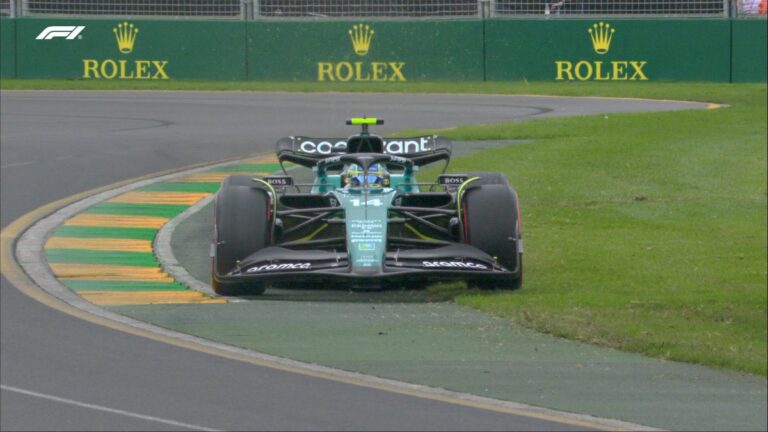
AUSTRALIA: Max Verstappen led the way for Red Bull Racing in the opening practice session for the Australian Grand Prix, with the Dutch driver posting the fastest lap time of 1:19.3. 

Verstappen’s teammate, Sergio Perez, finished second, just two-tenths of a second behind, while Fernando Alonso claimed the third spot on the leaderboard.

The session got off to a flying start, with all 20 drivers completing at least one lap within the first five minutes. 

However, several drivers struggled with the circuit’s bumps, with Logan Sargeant reporting that they were so bad he couldn’t see. Hamilton also complained of bouncing on the track surface.

Verstappen set his fastest lap on the soft Pirelli tires, one step harder than last year’s softs that Pirelli brought to Melbourne. Midway through the session, Norris rejoined the action and put in his fastest lap on medium tires. 

He finished in sixth place, behind Charles Leclerc and Carlos Sainz of Ferrari. Yuki Tsunoda had a near miss with the Turn 1 wall, while Nyck de Vries got in Hamilton’s way. 

The session was interrupted by a red flag with 23 minutes remaining due to a problem with the track’s GPS, leading to traffic issues. 

The session resumed with 14 minutes on the clock, but Leclerc and Sainz were absent as Ferrari worked on their SF-23s.

Verstappen was left unsatisfied with his car’s performance, complaining to his team that they were “dragging the rear brakes too much.”

There was also late drama for Sargeant, whose car “shut off,” leaving him stranded on the side of the track at Turn 11.

The session ended with Verstappen, Hamilton, and Perez finishing in the top three spots, while Alonso and Leclerc finished fourth and fifth, respectively. 

Carlos Sainz, Lando Norris, and Pierre Gasly rounded out the top eight, while George Russell and Lance Stroll completed the top ten.

Also Read: Former F1 Champion Nelson Piquet Fined for Making Racist and Homophobic Comments

Continental Wins Big at Tire Technology International Awards

0

GERMANY: German tire manufacturer Continental has won two awards at the prestigious Tire Technology International (TTI) Awards for Innovation and Excellence, held recently in Hanover, Germany. 

Continental was honoured with the “Environmental Achievement of the Year – Manufacturing” award for its innovative ‘invisible markers in tires’ project. 

The ‘invisible markers in tires’ project aim to bring greater transparency and traceability to the natural rubber supply chain by using special marker technology developed in collaboration with Security Matters (SMX). 

This initiative impressed the judges, who recognized Continental’s commitment to improving sustainability and environmental awareness in its tires. 

The invisible markers contain information about the natural rubber’s origin, which the users can read using special devices and software.

The PremiumContact 7 tire is Continental’s seventh generation of its successful premium tire. The company claims that it resolves the trade-off between mileage and rolling resistance to provide a sustainable tire offering unparalleled driving safety. 

The tire’s size-special design, innovative compound for the tread nicknamed RedChili, and adaptive tread design have set new standards in safety and comfort for a wide range of vehicles, including EVs.

Dr. Boris Mergell, Head of Research & Development at Continental Tires, accepted the awards and stated that the company’s commitment to performance, sustainability, and safety runs right across its organization. 

He added that winning awards for both innovative technologies and products is a tremendous motivation for the entire team.

The TTI Awards for Innovation and Excellence are considered the most important awards in the global tire industry and its recognises the latest developments and advances in tire technology. 

An international jury of leading experts from the tire industry and more than 20 journalists judge the awards. 

Matt Ross, editor-in-chief at Tire Technology International, commented on Continental’s success, saying that the company’s development of invisible markers to increase the traceability of natural rubber impressed the judges. 

He elaborated that the technology showcases Continental’s commitment to improving the sustainability of its tires but also being part of a global supply chain that holds itself accountable to environmental awareness. 

According to him, the award was a tough one to call. However, Continental’s seventh generation of the PremiumContact tire, built upon the strengths of its predecessors, impressed the jurors. 

The high levels of technological innovation on display and the focus on passenger comfort and safety caught the attention of the jury panel.

Continental’s wins at the TTI Awards for Innovation and Excellence reaffirmed its commitment to sustainability, performance, and safety and its position as a leading manufacturer of innovative and technologically advanced tires.

Also Read: Lamborghini Unveils Its New Flagship Supercar, the Revuelto

Vistara Becomes First Indian Carrier to Use Sustainable Aviation Fuel on Long-haul Flight

INDIA: Indian airline Vistara has become the first carrier in the country to operate a long-haul flight on a wide-body aircraft using sustainable aviation fuel (SAF).

The Dreamliner was operated on a ferry flight without passengers, using a blend of 30% SAF and 70% conventional jet fuel on a route from Charleston, US, to Delhi.

This initiative allowed Vistara to reduce carbon dioxide emissions by about 1.5 lakh pounds over the fuel’s life cycle.

While other Indian airlines like IndiGo and SpiceJet have used SAF on smaller planes, the main issue remains the sustainable availability of SAF in the required quantities.

Vistara, which will soon merge with Air India, now has four Dreamliners in its fleet. The airline’s CEO, Vinod Kannan, described the SAF flight as an important milestone in its commitment towards achieving carbon neutrality. 

Vistara has invested in modern and advanced new aircraft with fuel-efficient engines and remains committed to reducing carbon emissions across all areas of its operations.

The Boeing 787-9 Dreamliner used in the Vistara SAF flight features GE Aerospace’s newest GEnx-powered engine, which is up to 15% more fuel-efficient than its predecessor. 

The improved fuel-efficient engine combined with SAF significantly reduces fuel consumption and carbon emissions. 

GE Aerospace country head Vikram Rai stated that the GEnx engine can operate on approved SAF blends, a critical factor in achieving the aviation industry’s goal of becoming net-zero by 2050.

Boeing India President Salil Gupte congratulated Vistara on this achievement and said it is a significant milestone in the Indian aviation industry’s journey towards decarbonization. 

He added that Boeing remains committed to promoting the use of SAF in the Indian aviation industry and globally supporting the collective goal of achieving a sustainable future for air travel.

SAF is a cleaner and more sustainable alternative to conventional jet fuel and has the potential to lower carbon emissions by up to 80% over the fuel’s life cycle, depending on the feedstock. 

Vistara is working with the Tata Aviation Sustainability Working Group and other aviation arms of the Tata Group to reduce carbon emissions.

Tata Airlines recently signed a Memorandum of Understanding (MoU) with the Council of Scientific and Industrial Research—Indian Institute of Petroleum to collaborate on the research, development, and deployment of SAFs. 

The airline is also working through the “Carbon Offsetting and Reduction Scheme for International Aviation” (CORSIA) to lower CO2 emissions for international flights and curb the airline industry’s impact on climate change.

The use of SAF on this Vistara flight is a significant step towards decarbonization in the Indian aviation industry. 

Climate workers hope that the initiative will encourage greater adoption of sustainable technologies by the industry and lead to more opportunities to use SAF on long-haul flights.

Also Read: Nepal Plane Crash: The Deadly Crash Leaves No Survivors

Mercedes-AMG to Launch Its Most Powerful Hybrid Production Car in India

INDIA: Luxury car manufacturer Mercedes-AMG will launch its most powerful production car ever, the GT 63 S E Performance, in India on April 11, 2023.

The super sedan is the first-ever hybrid model from the brand and boasts an impressive combination of a 4.0-litre twin-turbocharged V8 engine and an electric motor.

Mercedes-AMG unveils new hybrid car in India

The V8 engine of the GT 63 S E Performance produces an impressive 637 bhp power, while the electric motor adds 202 bhp. 

Together, they generate a combined output of 841 bhp and over 1,400 Nm of torque. The high-power powertrain enables the car to accelerate from 0 to 100 kmph in just 2.9 seconds with a top speed of 316 kmph.

A 6.1kWh, 400V battery that weighs only 89 kg powers the electric motor. According to Mercedes, the PHEV has an electric-only range of 12 km, and the electric motor can achieve a top speed of 130 kmph. 

In certain driving situations, the car boasts one-pedal-driving capabilities and four levels of regenerative braking. The GT 63 S E Performance is a game-changer in the luxury car segment, combining high performance and eco-friendliness. 

The car’s hybrid technology enhances its performance and reduces its carbon footprint. According to a spokesperson for Mercedes-AMG, the GT 63 S E Performance is a masterpiece of engineering that sets a new benchmark for performance and sustainability. 

The company is excited to bring the Mercedes-AMG GT 63 S E Performance to India, a market showing a growing appetite for high-performance vehicles. Mercedes expects the car’s launch in India to generate buzz among automobile enthusiasts and luxury car buyers. 

Mercedes
Photo Credit: Twitter/MercedesBenzInd

India is an important market for Mercedes-Benz, and the company has been introducing its latest models to cater to the growing demand for luxury cars. Mercedes-AMG has been at the forefront of automotive innovation, and the GT 63 S E Performance is a testament to the brand’s commitment to sustainability and performance. 

The car combines cutting-edge technology, precision engineering, and a sleek design to deliver an unparalleled driving experience. The GT 63 S E Performance’s launch in India will boost Mercedes-AMG’s market presence and establish the brand as a leader in the luxury car segment. 

The car will cost a premium, but its exceptional performance and eco-friendliness make it worth the investment for enthusiasts who value speed and sustainability.

Also Read: Former F1 Champion Nelson Piquet Fined for Making Racist and Homophobic Comments

De Broglie’s Theorem: Explaining the Wave-Particle Duality of Matter

0

INDIA: In 1924, the French physicist Louis de Broglie stunned the scientific community with a revolutionary discovery that would forever change how we understand the fundamental nature of matter.

He proposed that all matter, including particles such as electrons and atoms, exhibit wave-like behaviour, challenging the long-standing belief that particles and waves were fundamentally different.

De Broglie based his idea on the observation that if light could behave as both a wave and a particle (dual nature of light), then perhaps matter could too. 

https://twitter.com/PhysInHistory/status/1639846389856256000

He suggested that matter has a wavelength, just like light. Physicists can calculate this wavelength using a simple equation: λ = h/p, where λ is the wavelength, h is Planck’s constant, and p is the particle’s momentum.

Initially, many physicists were sceptical of de Broglie’s hypothesis, as it contradicted the traditional view of matter as composed of discrete, indivisible particles.

However, several experiments supported his ideas that demonstrated the wave-like properties of electrons, such as diffraction patterns when they passed through a crystal lattice. 

Physics can explain the dual nature of matter only if electrons behave like waves, interfering with each other similar to what waves do in the water.

https://twitter.com/FeralMathPhysic/status/1640324859241668609

De Broglie’s discovery had profound implications for our understanding of quantum mechanics and the behaviour of subatomic particles. 

It gave us a new way to talk about particles in terms of how they behave as waves and led to the development of wave mechanics, which is now one of the most important parts of modern physics.

One of the most significant applications of the de Broglie theorem is the concept of wave-particle duality, which suggests that all particles, including those that makeup matter, have both wave-like and particle-like properties.

This idea has helped to explain some of the bizarre and seemingly paradoxical behaviour of subatomic particles, such as the famous double-slit experiment, where particles appear to behave like waves and interfere with each other.

Another area that de Broglie’s theory has influenced is the development of quantum mechanics and the study of atomic and molecular structures.

By describing particles in terms of their wave properties, physicists have been able to explain phenomena such as chemical bonding and the behaviour of electrons in atoms and molecules.

De Broglie’s discovery also helped pave the way for important technologies like electron microscopy and X-ray crystallography, which have changed the way we look at the atomic structure of materials and biological molecules.

Overall, de Broglie’s theorem has a profound impact on our understanding of the fundamental nature of matter and the behaviour of particles at the subatomic level.

It has helped to shape modern physics and has led to a whole new way of thinking about the nature of the universe.

Also Read: Scientists Use a Massive Laser to Divert Lightning