
Home Blog Page 70

Hypothetical Asteroid Scenario Revealed by NASA Highlights Need for Planetary Defense

0

UNITED STATES: NASA’s Near-Earth Object (NEO) Programme Office Manager, Paul Chodas, presented a hypothetical asteroid scenario at the 8th Planetary Defence Conference in Vienna on April 4 to demonstrate the need for planetary defence. 

The exercise illustrates how an asteroid threat might evolve over several years and the potential devastation such a strike could cause. Chodas’ hypothetical scenario begins on January 10, 2023, with the discovery of a new asteroid, which NASA names 2023 PDC. 

The object is initially designated a “potentially hazardous asteroid” (PHA), which NASA defines as any asteroid that intersects Earth’s orbit at a distance from the planet of around 7.4 million kilometres or less when discovered.

Another criterion for defining an asteroid is when its magnitude is 22.0 and it is only a little brighter than the faintest stars visible to the Hubble Space Telescope.

The probability of the PDC’s 2023 havingan impact with Earth is initially just 1 in 10,000. However, Chodas explained that the impact probability steadily increases as asteroid tracking facilities on Earth continue following the asteroid, better constraining its orbit around the sun. 

The hypothetical scenario becomes serious on April 3, 2023, at a point that Chodas refers to as “Epoch 1.” “Today is Epoch 1, and the impact probability has reached 1%,” Chodas says. He determines the impact will be felt in 13 years, so it is not imminent. However, NASA can already predict the date of impact.

The 2023 PDC’s size is between 720 and 2,200 feet (220 and 660 metres), but it could be as wide as 1.3 miles (2 km). 

The asteroid’s size is crucial because it determines how much damage it can do. It also determines what measures a planetary defence system must take to divert it or whether this would be possible.

Chodas explains that the 2023 PDC is too close to the sun to use infrared astronomy to help determine its size. 

As a result, space-based telescopes that rely mainly on infrared observations, such as the James Webb Space Telescope (JWST) and the Hubble Space Telescope, won’t be able to help NASA observe the rock. 

Likewise, the asteroid will be too far away during the early stages of its approach for us to measure it with radar.

According to Chodas, during the 13-year lead time, NASA can dispatch a reconnaissance spacecraft to the 2023 PDC and determine its size. 

Not only would this help us better ascertain the size and mass of the asteroid, but such a mission would also help better calculate another crucial aspect of the asteroid vital to mitigating its impact on Earth: its orbit.

Reducing the red “hitbox” in the team’s calculation to less than the size of the Earth means that Chodas’s hypothetical scenario indicates a potentially catastrophic event that could have serious consequences. 

Therefore, NASA now has to make crucial decisions to avert this disaster. When an asteroid is on a collision course with Earth, every moment counts, and NASA and other space agencies must act quickly to develop and implement a plan to mitigate the impact. 

This hypothetical scenario is a wake-up call for space agencies and underscores the need for continued research on ways to detect, track, and deflect asteroids that pose a risk to our planet.

Also Read: Indian Students Entering Canada on Fake Study Permits Face Investigations
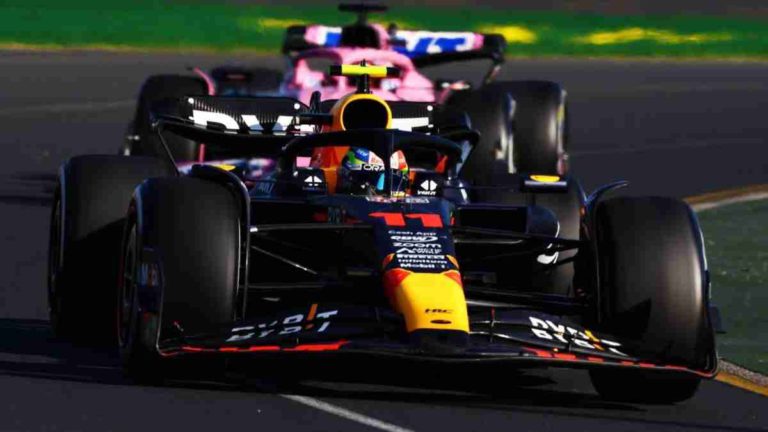
Sergio Perez Raises Concerns over Dangerous Light Conditions at Australian Grand Prix

0

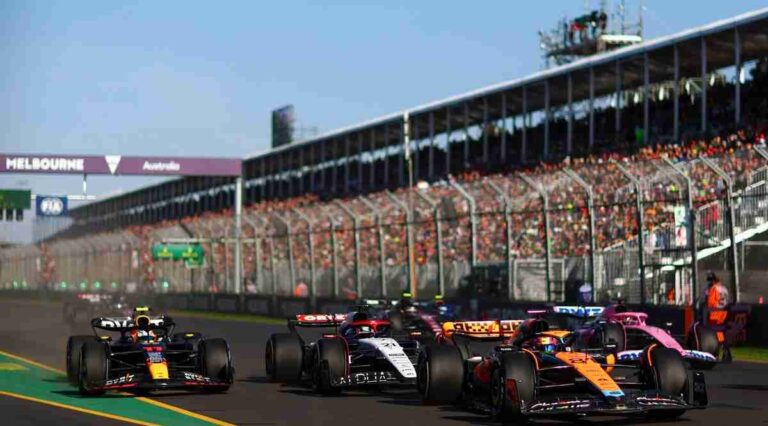
AUSTRALIA: Red Bull driver Sergio Perez has voiced concerns about the dangerous lighting conditions at the Australian Grand Prix, suggesting that the low sun played a role in the chaotic restart of the race. 

Perez, who won the Driver of the Day award, finished fifth at the Melbourne race. 

He has criticized the conditions at the end of the race, saying that drivers struggled with visibility at the halfway point of the 58-lap race.

The Australian Grand Prix has faced challenges in finding the right balance between safety and attracting the strongest possible audience. 

https://twitter.com/F1/status/1642926180872638464

Over the years, the FIA has changed the start time of the race many times, which has made fans and drivers worry about safety and complain. Perez’s comments echo those of other drivers who have criticized the light conditions at Albert Park.

Perez said that the drivers no longer can drive in low sun conditions. He felt there was a possibility of a big crash in the future. 

He told the media that driving was even more difficult in the last 30 laps. “We are only passengers; we don’t see anything at all,” he commented.

The race lasted around two and a half hours after being punctuated by three red flag stoppages. 

A mistake by Kevin Magnussen late in the race set up a two-lap sprint to the chequered flag, which a series of collisions ultimately halted after a matter of moments.

https://twitter.com/AstonMartinF1/status/1642421331147780096

Perez’s concerns raise questions about the race’s future and whether it should embrace nightlife. 

After Singapore hosted F1’s first-ever night race in 2008, it will hold five after-sunset Grands Prix in 2023. 

Despite this, the Australian Grand Prix remains among the highlights of any season and does not need change to improve the event’s atmosphere. 

However, switching to night-time racing would be a happy medium for all concerned, allowing the race to continue while addressing concerns about dangerous light conditions.

Also Read: Aston Martin’s Unique “Slidepods” Take F1 by Storm after Bahrain GP Success

Free Will Paradox: Questioning Whether Our Choices Are Really Our Own

0

INDIA: In philosophy and science, the question of free will has long been a hot topic of debate. Do humans have control over their actions, or are they predetermined by factors beyond their control? The answer to this question has been controversial for centuries, and the paradox of free will puzzles and intrigues experts today.

The concept of free will is a fundamental tenet of our society, as we rely on the belief that individuals have the power to make their own choices. 

This belief is at the core of our legal system, which assumes that people are responsible for their actions and can be held accountable for their decisions. 

The paradox becomes apparent when we delve deeper into the free will concept.

On the one hand, we feel like humans have free will because we experience the ability to make choices. 

We can choose what to wear, what to eat, and how to spend our time. But on the other hand, our choices seem to be influenced by a variety of factors that are beyond our control. 

Our upbringing, our environment, our genetics, and even our unconscious thoughts all play a role in the decisions we make.

In one study, researchers found that participants’ brain activity predicted their decisions up to seven seconds before they were aware of making them. 

This finding suggests that unconscious processes in our brains determine our choices rather than them being the result of conscious decision-making.

Other studies have shown that external factors, such as the order in which a situation presents the choices can influence our choices. 

For example, if a situation presents two choices in quick succession, we are more likely to choose the second option, even if it is objectively worse than the first. The finding suggests that factors that we are unaware of may influence our choices.

Despite these findings, many experts argue that the paradox of free will is not as straightforward as it may seem. 

Some philosophers argue that we can still choose between options. According to them, we can make decisions even if uncontrollable factors influence our choices. 

In other words, we may not completely control our decisions, but we still have some control.

Others argue that the concept of free will is inherently flawed and that the paradox is simply a result of our limited understanding of the universe. 

According to the latter view, the laws of physics and the interactions of particles in our brains determine our choices, but this does not mean we do not have free will. 

Instead, it implies that our choices are part of a larger, deterministic system. The paradox of free will raise important questions about the nature of consciousness and the limits of human understanding. 

As scientists learn more about how the brain works and how complicated it is to make decisions, we may learn more about the paradox and the role of free will in our lives.

In the meantime, the debate over the paradox of free will continues to fascinate and challenge experts in philosophy and science. 

Whether we decide that our choices are predetermined or that we have some control over them, the paradox of free will remains a complicated and interesting puzzle that has been puzzling people for centuries. 

Also Read: Jevons Paradox: Why Increasing Efficiency Could Lead to Increased Consumption

IPL 2023: Steely Sam Helps PBKS Clinch Second Consecutive Win, Defeats RR

0

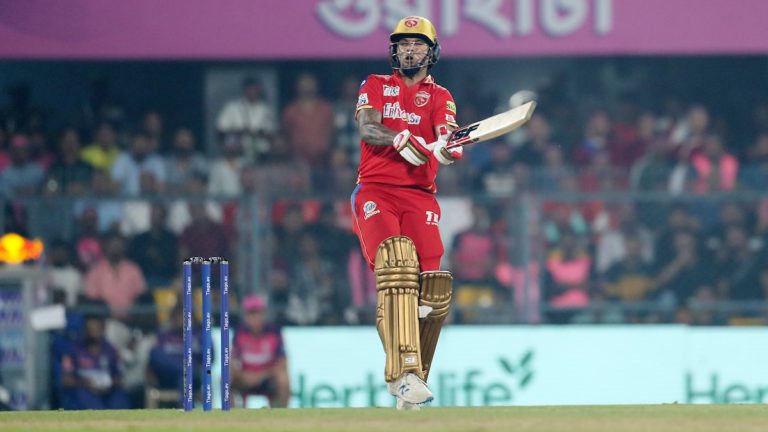
INDIA: Punjab Kings (PBKS) made it two wins in two matches in the Indian Premier League (IPL) 2023 season after defeating Rajasthan Royals (RR) by five runs in the first-ever IPL game held in Guwahati. 

PBKS Vs RR

An outstanding performance from their top order batsmen, Shikhar Dhawan and Prabhsimran Singh, and a four-wicket haul by Nathan Ellis before Sam Curran’s tight last over fuelled PBKS’ last-over victory.

Punjab Kings’ Prabhsimran Singh set the tone in the opening overs, driving the ball beautifully and hitting 15 runs off KM Asif’s second over. 

Dhawan took over after Singh’s dismissal and scored his 50th half-century in IPL, ending the innings with an unbeaten 86 off 56 balls, taking Punjab Kings to 197/4 in 20 overs. 

However, Ellis’ four-wicket spell helped PBKS keep RR’s scoring rate under check after Sanju Samson revived hopes of a Rajasthan comeback. 

Sanju Samson, Riyan Parag, and Devdutt Padikkal were all dismissed by Ellis, who ended the night with figures of 4-30.

Despite the strong performance, RR fought back in the final overs. Shimron Hetmyer and Dhruv Jurel added 62 runs in just 27 balls, giving RR hopes of winning the game. 

However, Sam Curran held his nerve in the last over, conceding ten runs and dismissing Hetmyer with a run-out, restricting Rajasthan Royals to 192/7, securing the win for PBKS.

PBKS captain Dhawan praised his team’s performance, stating that they had played to their strengths and adapted well to the Guwahati pitch. Meanwhile, RR’s captain Samson was disappointed with the result and cited poor decision-making as the cause for the loss.

The match also saw a surprise move from PBKS, as Ravichandran Ashwin opened the innings, but the move failed to pay off as Arshdeep Singh dismissed Ashwin for a duck. 

Yuzvendra Chahal, on the other hand, had a forgettable night, finishing with figures of 1-50.

PBKS will look to continue their winning streak in their next match against Kolkata Knight Riders, while RR will hope to bounce back against Royal Challengers Bangalore.

Also Read: Virat Kohli Becomes First Indian Cricketer to Achieve Fifty 50+ Scores in IPL

Grand Theft Auto 6: Rockstar Games’ Opportunity to Provide Ultimate Online Experience

INDIA: Grand Theft Auto 6 is one of the most highly-anticipated games in the world right now, with fans eagerly anticipating what the game’s developers, Rockstar Games, have in store for them. 

Although there is little available information about the release date or features of the game, there is already plenty of speculation among fans about what it will entail.

All about Grand Theft Auto 6

https://twitter.com/RockstarGames/status/1489617718009606150

One of the most consistent talking points among fans is the possibility of Grand Theft Auto 6 being a significant step up from its predecessor, Grand Theft Auto 5. 

This constant talking point has led to speculation about improvements to both the single-player and online modes, with particular attention on how Rockstar will improve upon the highly successful Grand Theft Auto Online experience.

Grand Theft Auto Online, which Rockstar Games first introduced in Grand Theft Auto 5, has proven to be a hugely popular mode, offering several activities and adventures for players to explore. 

From simple free-roam exploration to explosive races and heists, this dynamic sandbox offers no shortage of things to do. However, many fans believe that Grand Theft Auto 6 allows Rockstar to take the mode to the next level by providing an interconnected world that connects both Vice City and Los Santos. 

https://twitter.com/RockstarGames/status/1458821578821713920

The interconnection of the two worlds would essentially double the scale of the content offered in Grand Theft Auto Online and enable players to travel freely between the two locations.

Such a move would allow players to continue building upon the characters they have created in Grand Theft Auto Online and provide an expansive hub for the ultimate GTA experience. 

Additionally, Rockstar can expand this platform infinitely, with other franchise locations, such as Liberty City, potentially being added in future updates.

While the story mode of Grand Theft Auto 6 will undoubtedly be a focal point of the release, there is no doubt that the game holds tremendous potential for curating the franchise’s ultimate online experience. 

With Grand Theft Auto Online already generating significant revenue for Rockstar via its Shark Card microtransaction system, it is logical to assume that the developers will place even greater importance on the mode in Grand Theft Auto 6.

https://twitter.com/RockstarGames/status/1636366756523409408

Overall, the possibilities for Grand Theft Auto 6 are endless, and fans are eagerly anticipating what Rockstar Games has in store for them. 

If the developers do indeed provide the ultimate online experience by connecting Vice City and Los Santos, it could be a game-changer for the franchise and take the Grand Theft Auto experience to a whole new level.

Also Read: Rockstar Games Responded to the GTA 6 Major Gameplay Leaks

Tehrik-i-Taliban Pakistan Mocks Pakistan Army’s Incompetence over Domestic Issues

0

PAKISTAN: The Tehrik-i-Taliban Pakistan (TTP) rejected allegations by the Pakistani military that it was being backed by India. 

In a statement, the TTP criticised the Pakistan Army for its inability to “liberate even an inch of Kashmir” from India and questioned the Army’s competence in dealing with domestic issues. 

The TTP also dismissed the Pakistan Army’s claim that it is a proxy of the Research and Analysis Wing (R&AW), India’s intelligence agency.

The TTP’s propaganda wing, TTP Umar Media, questioned the Pakistan Army’s claims. They asked that if the TTP is indeed supported by India, then why the Pakistani establishment is talking to the Taliban rulers of Afghanistan regarding TTP sanctuaries on Afghan soil.

The TTP has also blamed the Pakistan Army for fueling the economic crisis and political chaos in Pakistan.

Meanwhile, Taliban spokesperson Zabiullah Mujahid has urged the international community to establish diplomatic ties with the current regime in Afghanistan. 

Mujahid stated that the international community should engage with the Islamic Emirate so that it can take responsible actions regarding some issues, some laws, and other issues in the world.

The TTP’s rejection of the Pakistan Army’s allegations underscores the growing tensions between the Pakistani military and the Taliban in Afghanistan. 

The Taliban’s recent takeover of Afghanistan has emboldened militant groups in Pakistan, including the TTP, to step up their attacks on Pakistani forces.

The TTP’s criticism of the Pakistan Army’s inability to resolve the Kashmir issue also highlights the continuing tensions between India and Pakistan over the disputed territory. 

The TTP’s comments may be seen as an attempt to exploit these tensions and further destabilise the region.

The international community will be closely watching the situation in Pakistan and Afghanistan, as the Taliban’s takeover of Afghanistan has raised concerns about the spread of militant groups across the region. 

The TTP’s rejection of the Pakistan Army’s allegations will only add to these concerns and increase the pressure on Pakistan to take action against militant groups operating on its soil.

Also Read: 6.5-magnitude Earthquake Shakes Northern Afghanistan and Pakistan, Kills at Least 13

The Giffen Good: A Rare and Puzzling Economic Phenomenon

INDIA: In economics, the Giffen good is a rare and puzzling phenomenon that challenges the simple laws of supply and demand. 

A Giffen good is a product or service for which demand increases when its price goes up and decreases when its price goes down. 

This paradoxical behaviour goes against the law of demand, which states that as the price of a good or service increases, its demand should decrease.

Named after the Scottish economist Sir Robert Giffen, who first observed this phenomenon in the 19th century, the Giffen good is a rare case where the income effect of a price change dominates the substitution effect. 

In other words, when the price of a Giffen good goes up, its increased price makes it relatively more expensive when compared to other goods, and people who are already struggling to afford necessities like food may find it necessary to buy even more of the Giffen good to sustain themselves. 

Inferior goods that people consume more of when their income is low, but less when their income is high, often exhibit this paradoxical behaviour.

One classic example of a Giffen good is potatoes in Ireland during the 19th century. 

During this time, the Irish population had low income, and potatoes were a staple food that accounted for a large portion of their diet. 

When the price of potatoes increased due to a blight that destroyed many crops, people could no longer afford to buy more expensive foods like meat and vegetables. 

As a result, they bought even more potatoes, despite the higher price. This peculiar phenomenon led Giffen to conclude that, in certain situations, the law of demand may not hold.

The concept of the Giffen good has important implications for policymakers, as it challenges the conventional wisdom that increasing the price of a good will always decrease its demand. 

In the case of a Giffen good, increasing the price may increase demand, which can create problems for policymakers who want to reduce demand for specific goods or services. 

For example, if a government wants to reduce the consumption of cigarettes by increasing taxes, but cigarettes are a Giffen good for some people, the tax increase may lead to an increase in cigarette consumption.

In addition to its practical implications, the Giffen good is also an interesting topic for economists who study consumer behaviour. 

Understanding why some goods behave counterintuitively can explain the complex psychological and social factors influencing consumer choices. 

For example, some scholars have suggested that the Giffen good phenomenon may be related to social signalling, where people use their consumption choices to signal their social status or identity to others.

Also Read: Jevons Paradox: Why Increasing Efficiency Could Lead to Increased Consumption

Jevons Paradox: Why Increasing Efficiency Could Lead to Increased Consumption

0

INDIA: The Jevons paradox is a theory that says improvements in technology that make a resource more efficient and lower its cost could, in the long run, cause more of that resource to be used. The phenomenon has important implications for sustainable development and resource management.

In the mid-19th century, economist William Stanley Jevons first described the paradox. He observed that as steam engines became more efficient and used less coal per unit of work, the demand for coal increased rather than decreased.

This rise in coal use was caused by lower prices for making energy, which made coal more accessible to a wider range of users.

The Jevons paradox can be seen in many different industries today. 

For example, as cars have become more fuel-efficient, people have been able to travel further and more often, leading to an overall increase in fuel consumption. 

Similarly, as LED light bulbs have become more energy-efficient, people can use more lighting in their homes and businesses. 

Using more lighting devices leads to an overall increase in electricity consumption.

One of the main reasons for the Jevons paradox is the rebound effect. As the cost of a resource decreases, people can use more of it for the same amount of money. 

The redistribution of resources leads to more demand as people take advantage of the lower cost. 

Also, as the resource gets easier to get to and cheaper, more people can use it, which leads to a rise in consumption.

Another reason for the Jevons paradox is the income effect. As the cost of a resource decreases, people can spend less on it. Instead, it frees up money for other things. 

This extra money leads to more overall consumption as people use the surplus capital to purchase more goods and services.

The Jevons paradox has important implications for sustainable development and resource management. 

The paradox suggests that increasing efficiency is insufficient to achieve sustainable development goals. 

It could cause more people to buy things and put more pressure on resources.

It is important to consider efficiency and behavioural and systemic changes to mitigate the Jevons paradox.

For instance, policies that encourage people to use public transportation or switch to renewable energy sources could help reduce the overall amount of resources used.

Additionally, it is crucial to consider the entire lifecycle of a product or service, from production to disposal. 

By reducing waste and improving the circularity of resources, it is possible to reduce overall resource consumption and minimize the impact of the Jevons paradox.

Also Read: Simpson’s Paradox Explained: The Paradox That Flips Statistics on Its Head

Max Verstappen Secures Win at Chaotic Australian Grand Prix after Three Red Flags

0

AUSTRALIA: In a thrilling and chaotic race at the Albert Park circuit, Max Verstappen claimed victory in the Australian Grand Prix after initially trailing the Mercedes duo. The race saw three red flags, including one on the penultimate lap, leading to confusion over the sport’s regulations. 

Verstappen had his work cut out at the start after George Russell, and then Lewis Hamilton led the race. 

However, once Verstappen was ahead, passing Hamilton on lap 12, it was game over as the championship leader built up a nine-second lead only for a late red flag — the second of the day — to throw in a lot more drama. Verstappen survived that restart, but many behind him did not.

The confusion over the rules meant that the drivers completed the final lap behind the safety car based on the order at the start of lap 57, excluding the cars too damaged to continue. 

Verstappen won the race, while Hamilton secured his first podium of the season with a runner-up finish, and Fernando Alonso came in third.

Eighteen drivers lined up on the Albert Park grid, with Valtteri Bottas and Sergio Perez taking pit lane starts after Alfa Romeo made overnight changes to the former’s car. 

Only seven drivers chose not to start on the medium Pirellis, and the top eight all opted for the yellow-marked tyres. The race saw several incidents, including Charles Leclerc’s off at Turn 3, which led to the race director deploying a safety car.

Esteban Ocon jumped on the opportunity to pit, swapping his softs for mediums, while Perez came in to switch his hards for mediums. 

The racing resumed on lap 4, and Russell was not bothered by Hamilton, who put a decent gap between himself and Verstappen.

However, the safety car was out for the second time on lap 8 when Albon crashed at the Turn 7 wall as he lost the rear and spun into the wall in a hard hit.

Russell and Sainz pitted, and it turned out to be the wrong call as the red flag came out, allowing all drivers to change tyres.

The drivers all swapped to hard tyres, excluding Nyck de Vries and Logan Sargeant. 

Hamilton nailed the restart to hold off Verstappen, with Alonso trying to fight the Red Bull but settling for third. 

Russell immediately took fifth on the restart, passing Lance Stroll and Nico Hulkenberg. 

Once DRS was available, Verstappen passed Hamilton easily around the outside on lap 12, with the two dropping Alonso.

Behind the leading trio, Russell moved up to fourth as he overtook Pierre Gasly. Yuki Tsunoda barged past Oscar Piastri to move into a points-paying position, and Sergio Perez made his way up to 13th with passes on Kevin Magnussen and Zhou Guanyu.

Russell’s charge ended on lap 18, his Mercedes on fire as its engine gave up on him, bringing out the VSC.

Perez broke into the top 10 on lap 23, passing Ocon and Piastri, with Tsunoda becoming his next victim.

The Mexican driver charged up to P9 but was over 13 seconds shy of the podium.

Sainz was another driver on the move, aggressively climbing up the inside of Gasly at Turn 3 to run fourth until the final restart, where he made contact with Alonso and received a 5-second time penalty.

Also Read: McLaren Announces Shake-up of Technical Department Following Poor Start to F1 Season

LSG Starts Campaign With a Bang, Crushes DC by 50 Runs 

0

INDIA: Lucknow Super Giants (LSG) started their campaign in the Indian Premier League (IPL) on a high note with a convincing 50-run win over Delhi Capitals (DC) at the Ekana stadium in Lucknow.

LSG’s victory was largely attributed to the explosive batting performance of Nicolas Pooran and Kyle Mayers and the breathtaking display of express pace from Mark Wood.

LSG vs DC

Winning the toss, DC chose to bowl first on a wicket with green patches and red soil, and despite keeping LSG quiet in the powerplay, picked up the wicket of KL Rahul. 

Mayers, who was dropped early in his innings, took advantage of the reprieve and smashed 73 off 38 balls, setting the stage for a late surge by Pooran and Ayush Badoni. Krishnappa Gowtham’s last-ball six ensured LSG ended with 190 for 6 on the board.

LSG
Photo Credit: Twitter/IPL

In response, DC got off to a flier, but Wood’s fiery spell saw the toppling of the team’s top order, with the English pacer picking up five wickets in his first appearance for LSG. Despite a brief fightback by Rilee Rossouw and Axar Patel, DC’s meek surrender resulted in a dull finish, with LSG winning by 50 runs.

The victory for Lucknow Super Giants would be a huge confidence booster, setting them up nicely for the rest of the tournament. Mark Wood’s stunning spell of bowling, combined with the batting heroics of Pooran and Mayers, showed that LSG has a well-rounded team capable of competing with the best in the IPL.

The Delhi Capitals, on the other hand, will be left to ponder their strategy after a lacklustre performance in both the batting and bowling departments. Their decision to bowl first backfired, and their top-order collapse proved to be the turning point of the match.

Lucknow Super Giants’ next match will be against the Sunrisers Hyderabad, while DC will take on the Royal Challengers Bangalore in their next fixture.

Also Read: IPL 2023 Introduces New ‘Impact Player’ Rule: How it Could Change the Game