
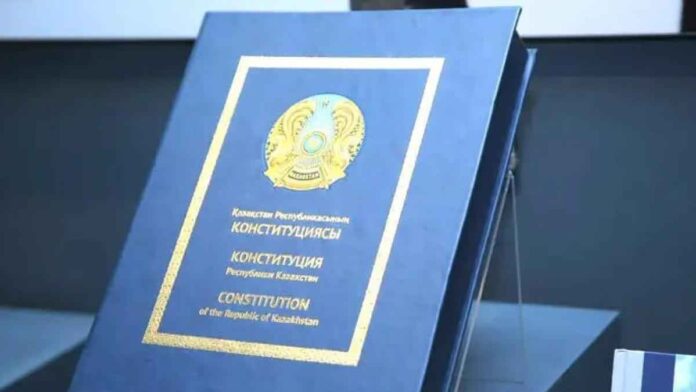
KAZAKHSTAN: The Constitutional Court of the Republic of Kazakhstan published the draft of a new constitution on January 31, setting the stage for one of the most far reaching political and legal transformations in the country’s post independence history. The proposed document follows an extensive reform process initiated by President Kassym Jomart Tokayev and will ultimately be put to citizens in a nationwide referendum.
Unlike previous constitutional changes that relied on selective amendments, the current initiative represents a comprehensive rewrite of the foundational law. Officials describe it as a response to evolving political realities, governance needs, and social expectations, as well as Kazakhstan’s growing international engagement.
From proposal to full rewrite
The reform process began with President Tokayev’s annual Address to the Nation on September 8, 2025, where he proposed the establishment of a unicameral Parliament as part of a broader reset of the political system. This announcement marked a clear signal that incremental reforms were no longer sufficient.
In October 2025, a Working Group on parliamentary reform was formed. Over six months, it reviewed public feedback and policy options, receiving more than 2,000 proposals from citizens through the e Otinish and eGov digital platforms. These submissions reflected concerns ranging from legislative efficiency to accountability and representation.
Also Read: From Bastar to the Byline: Jyoti Markam Writes Back Against Invisibility
The scope of the reform expanded further in January 2026 with the creation of a Constitutional Commission. The body includes 130 members representing all regions and major social groups, including members of the National Kurultai, legal scholars, government officials, journalists, maslikhat chairs, and civil society representatives. The Commission examined proposed changes affecting 77 articles, roughly 84 percent of the existing Constitution, and concluded that drafting an entirely new text was the most coherent option.
All Commission meetings were open to the public and broadcast live, drawing participation from legal professionals, human rights advocates, parliamentarians, political analysts, and academic experts. This transparency was intended to reinforce public trust in the reform process.
A new parliamentary model
One of the most significant institutional changes in the draft Constitution is the establishment of a unicameral Parliament, to be known as the Kurultai. The new body would consist of 145 deputies elected through a proportional electoral system for five year terms.
According to the draft, the Kurultai will be granted expanded powers, strengthening its role in lawmaking and oversight. The proportional system is designed to support the institutional development of political parties and enhance their accountability to voters.
In addition, the draft introduces a new consultative body, the People’s Council of Kazakhstan. Envisioned as the highest nationwide consultative institution, the Council is tasked with representing public interests and is granted the right of legislative initiative, a notable expansion of participatory mechanisms in governance.
Changes to the executive branch
The draft Constitution also proposes the introduction of the office of Vice President. The Vice President would act on behalf of the President in engagements with domestic and foreign socio political, scientific, cultural, and educational organizations. Supporters of the reform argue that this role would strengthen coordination and continuity within the executive branch.
Strengthening the rule of law
A central pillar of the draft Constitution is the reinforcement of legal safeguards and procedural rights. For the first time, the legal profession is explicitly protected through a dedicated constitutional article on advocacy. Intellectual property rights receive enhanced protection, reflecting the growing importance of innovation and creative industries.
The draft also includes a clear prohibition on the retroactive application of laws that impose new obligations or worsen citizens’ legal position. The presumption of innocence and the ban on double jeopardy are constitutionally reinforced, while the so called Miranda rule is enshrined at the constitutional level, guaranteeing the right to remain silent and to legal counsel.
Values and strategic direction
Structurally, the draft Constitution consists of a Preamble, 11 sections, and 95 articles. It updates terminology and reflects what the drafters describe as Kazakhstan’s institutional maturity and accumulated state building experience.
Human rights and freedoms are placed at the center of the constitutional framework. For the first time, they are declared in the Preamble as the highest priority of the state and serve as the guiding principle of the entire text. The draft reaffirms unity and solidarity, interethnic and interfaith harmony, sovereignty, independence, territorial integrity, justice, law and order, and responsible stewardship of nature as foundational values.
The Constitution also redefines the country’s long term development trajectory by identifying education, science, culture, and innovation as constitutional priorities. This signals a strategic shift toward human capital as the primary driver of growth, reducing reliance on natural resources. Digital transformation is addressed explicitly, with new protections for citizens’ rights in the digital environment.
Secularism and social provisions
The draft reinforces the secular nature of the state, clearly separating religion from government and affirming the secular character of education. In the social sphere, marriage is constitutionally defined as a voluntary and equal union between a man and a woman. The provision is framed by the drafters as a measure to protect traditional values and strengthen legal protections for women.
Public consultation on the draft Constitution continues through the e Otinish and eGov platforms. The Constitutional Commission is expected to refine the text based on feedback before it is submitted to a nationwide referendum, where citizens will make the final decision on adoption. If approved, the new Constitution would mark a defining moment in Kazakhstan’s political evolution.
Also Read: Teen Chess Master Lorenzo Perea Puts International Stars on Notice