
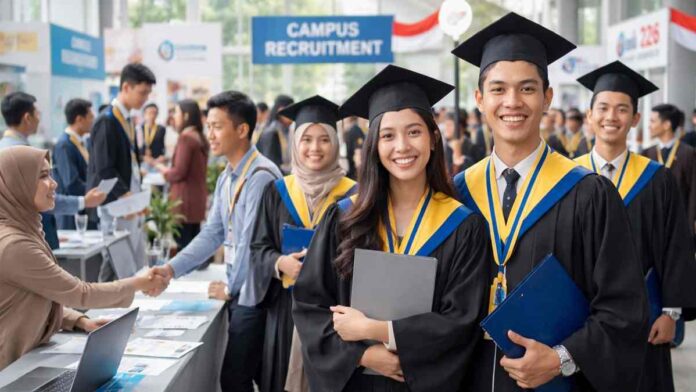
INDONESIA: In 2026, Indonesia is witnessing a renewed focus on employment generation, particularly for fresh graduates entering an increasingly competitive job market. As economic recovery stabilizes and digital transformation accelerates across sectors, the government is stepping up efforts to ensure that young talent is not left behind.
Campus hiring, once concentrated among a handful of elite universities, is now expanding across the country. Public and private institutions alike are seeing increased engagement from companies seeking early talent. Industries such as technology, manufacturing, finance, and renewable energy are actively participating in structured recruitment drives, reflecting a broader shift toward skills based hiring.
Also Read: Congo Strengthens Push for Universal Education Access
The Indonesian government has introduced several initiatives to bridge the gap between education and employment. One of the key measures includes strengthening partnerships between universities and industry leaders. Through these collaborations, students are gaining access to internships, apprenticeships, and real world projects even before graduation. This approach aims to make graduates job ready and reduce the time they spend searching for employment after completing their studies.
Another significant step has been the expansion of vocational training programs aligned with market demands. Authorities are investing in technical education and certification programs that equip students with practical skills. By focusing on areas such as digital literacy, artificial intelligence, and green technologies, the government is preparing the workforce for future industries rather than traditional roles alone.
Digital platforms are also playing a major role in transforming campus hiring. Government backed job portals are connecting students from remote regions to employers nationwide. These platforms allow companies to conduct virtual assessments and interviews, making the recruitment process faster and more inclusive. As a result, students from smaller cities now have opportunities that were previously limited to metropolitan areas.
Also Read: US‑Israel War with Iran Escalates Middle East Crisis
In addition, incentives are being offered to companies that actively hire fresh graduates. Tax benefits and subsidies are encouraging businesses to invest in training and onboarding new employees. This not only reduces hiring costs for companies but also creates a more supportive environment for young professionals entering the workforce.
Education institutions are responding by updating their curricula to match industry needs. Universities are introducing interdisciplinary courses and emphasizing soft skills such as communication, problem solving, and adaptability. Career counseling services are also being strengthened, helping students navigate career choices and prepare for recruitment processes.
Despite these efforts, challenges remain. Employers often cite a mismatch between academic training and practical skills as a persistent issue. However, ongoing reforms indicate a clear commitment to addressing this gap. By fostering closer ties between academia and industry, Indonesia aims to create a more seamless transition from education to employment.
Experts believe that the current approach could significantly improve employment outcomes for graduates over the next few years. With a young and dynamic population, Indonesia has the potential to build a workforce that is both skilled and adaptable. The emphasis on campus hiring and early career development is expected to play a crucial role in achieving this goal.
As 2026 progresses, the combined efforts of the government, educational institutions, and private sector are shaping a more inclusive and efficient employment ecosystem. For fresh graduates, this signals not just new opportunities, but also a more structured and supportive path into the professional world.
Also Read: Deepansh Duggal Leads Freelance Journalism Revolution