UNITED KINGDOM: Spy photos have shown that Mercedes is finishing up the second-generation GT Coupe, but AMG is still working on the first model.
Mercedes-AMG new race car specifications
Mercedes’ GT2, Affalterbach’s most potent homologated customer race car in history, joins the GT3 and GT4 models, which have been around for a long time. The new model targets “gentlemen drivers” and fills in for the two previous track-only machines.
AMG GT2’s powertrain, a twin-turbo 4.0-litre V8 with a flat crankshaft, is, without a doubt, its best feature. The engine is related to the one found in the Black Series’ roadgoing version.
The tuned engine produces a respectable 707 horsepower (520 kilowatts) in race car specifications. That’s a little less than the street-legal supercar, which has 730 horsepower (537 kW), but dyno tests have shown that it has more than 770 horsepower.
The latest Mercedes-AMG customer racing car produces 800 Newton meters (590 pound-feet) of torque and will compete with the upcoming Maserati MC20 GT2.
The powerful V8 powertrain mates a sequential six-speed racing transmission with shift paddles mounted on the steering wheel and an adjustable self-locking differential.
With air conditioning included, Mercedes has kept the weight to less than 1,400 kilograms (3,086 pounds) by utilizing carbon fibre for the driver safety cell, 120-liter fuel tank, hood, and other components.
The AMG GT2 boasts safety features borrowed from the GT3 and GT4, and it has forged centre-lock wheels measuring 18 inches with 325/660 front and 325/705-18 slicks.
The newly designed aerodynamic kit includes a ground-up rear wing. Thanks to its swan neck mount, it can be adjusted to fit the circuit.
AMG created the GT Coupe without a license plate with adjustable anti-roll bars, shock absorbers, and aluminium double wishbone suspension front and rear.
Before going on sale later in 2023, the race car will be subjected to rigorous testing. Additional evaluations will be carried out during the GT2 European Series season next year. AMG intends to organize an endurance test run and participate in races.
UNITED STATES: According to recent reports, Tesla informed the US Federal Communications Commission (FCC) that it would launch a new radar at the beginning of next year. The publication says this may raise concerns regarding Tesla’s Full Self-Driving hardware suite, which may require future updates.
Tesla Notifies the FCC of an Upcoming Radar Device
A brand-new, vision-only camera-based hardware setup replaced Tesla’s radar from all of its vehicles. Although some sceptics believed that Tesla’s advanced driver-assist systems would fail due to the absence of radar, this has not always been the case.
While Tesla lost its proposal from different well-being associations after eliminating the radar, the suggestions were once conceded after fruitful testing. Recently, Tesla has also begun removing ultrasonic sensors from its automobiles.
For many years, the manufacturer of electric vehicles in the United States claimed that all of its vehicles were equipped with the hardware required for full self-driving capability (FSD).
However, this is untrue, as some automobiles require computer upgrades. The concern is that more cars may eventually require hardware upgrades for Tesla’s FSD to become increasingly successful.
Currently, Tesla is primarily improving the safety system by providing free software updates over the air. About six months ago, Tesla filed with the FCC about a new radar it might use in its vehicles. The FCC granted it confidentiality to prevent the revelation of plans.
Tesla requested a sanctioned extension to the original arrangement in a letter to the FCC dated November 18, 2022, which would have ended on December 7, 2022.
The letter states that the information should be kept confidential for an additional sixty days to prevent “unnecessary disclosure and competitive harm” before the launch of the new product. According to the letter, Tesla will begin selling the product in mid-January 2023.
Even though this “new radar” may be causing some people concern at this point, no information regarding its usage is known yet. It might or might not have anything to do with Full Self-Driving or Tesla Autopilot.
Next year, Tesla intends to introduce the highly sought-after Cybertruck and a new Model 3. Additionally, it regularly updates the software and hardware in its vehicles. To be clear, the Cybertruck will feature the company’s “Hardware 4” system in 2023.
NETHERLANDS: Zandvoort underwent significant changes and investments to get back to F1 standards before hosting its first Dutch GP last year; its return was delayed by the COVID-19 pandemic.
An underlying three-year bargain was initially endorsed in 2020, with the postponement pushing its expiration until after the 2023 race. Yet, the organisers and F1 held negotiations about extending the Dutch GP at Zandvoort in the upcoming F1 seasons.
Early on Thursday, F1 announced that it had agreed with Zandvoort to stay on the calendar for the next three years, until the end of 2025.
Zandvoort hosted the Dutch GP, its first F1 world championship round in 1952, and remained a fixture until 1985, when F1 dropped it from its calendar.
After Max Verstappen’s debut in 2015 and his subsequent race-winning exploits in Formula 1, efforts to restore the track to F1 standards intensified.
Zandvoort has received praise from the entire F1 paddock for the way it holds the Dutch GP. It ensures an enhanced fan experience through numerous off-track events and is easy to access for those attending the race.
Frederic Vasseur, the chief executive officer of Alfa Romeo F1, stated in May that he believed Zandvoort marked a “big change” for Formula One, focusing on “not just the show, but everything else around the Grand Prix.”
This year’s race saw a sell-out crowd of 100,000 people as Max Verstappen won at home. Max was the victor in the previous year’s race after a close battle with Mercedes rival Lewis Hamilton.
This year, however, the race organisers were compelled to expel several fans from the circuit. Despite being prohibited from the track, the fans used flares, causing security risks for the drivers on the track.
A fan threw a flare onto the track during Q1 before another fan threw a second flare during Q3 before rolling under the pit wall, necessitating a red flag.
Verstappen criticised the “silly” and “stupid” use of flares, and Mercedes CEO Toto Wolff expressed disappointment that a few “total idiots” had ruined the otherwise electric atmosphere.
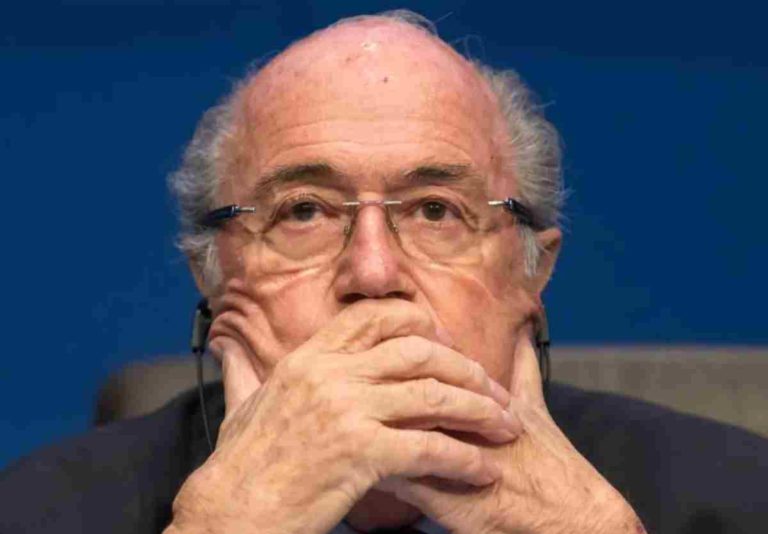
QATAR: In the early 1990s, several European FIFA members were unhappy with how João Havelange and Sepp Blatter ran FIFA. The football associations in Europe chose Lennart Johansson to run for the FIFA presidency in 1998.
CONCACAF was the federation of football in North America. It was one of FIFA’s most crucial vote banks, with 30 votes due to the number of Caribbean nations.
Jack Warner was the president of CONCACAF, backed by Chuck Blazer. Sepp Blatter won the support of CONCACAF by filling Jack Warner’s pockets.
Sepp Blatter focused on CAF, the Association of Football Federations in Africa. Molefi Oliphant headed it. Blatter again swayed the vote bank by winning over Oliphant, allegedly through bribes.
Mohamed Bin Hammam, who had a close relationship with Blatter, led the Asian Football Confederation. There were allegations of monetary transactions between members in Paris hotel rooms to turn votes in favour of Blatter.
On June 8, 1998, the day of the election for the FIFA presidency, Sepp Blatter delivered a persuasive speech in which he said he would bring the World Cup to Africa if elected president.
With three prominent vote banks in his favour, Blatter won the elections easily, stunning his opponent, Lennart Johansson, who claimed that he did not get the votes as promised by the members who had nominated him in the first place.
Early days of Sepp Blatter at the helm of FIFA
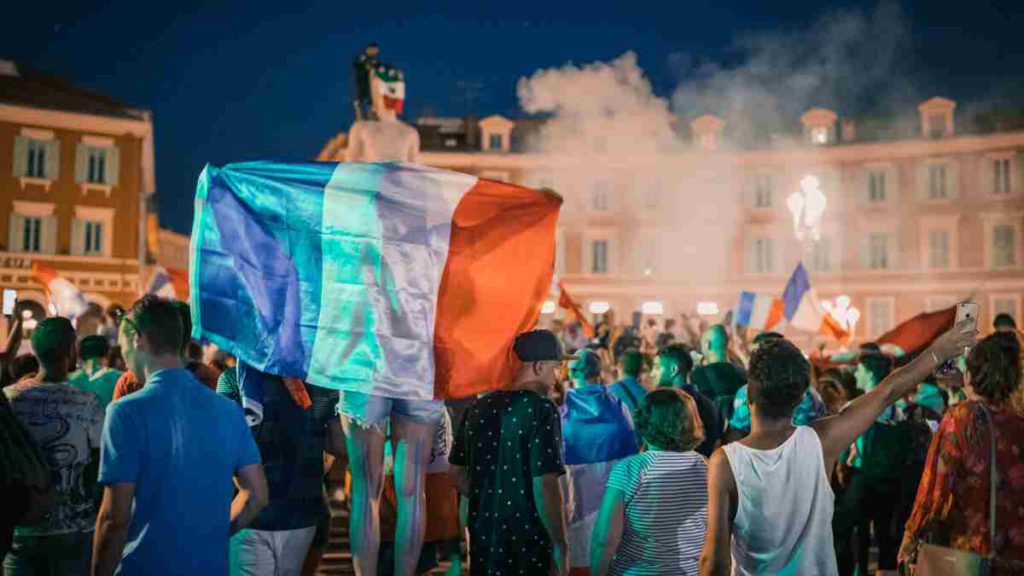
Soon after the 1996 FIFA World Cup in France, Sepp Blatter began several development programs for football on a global scale. FIFA directed each country to form its own national football headquarters.
The mission, christened “Project Goal,” headed by French football star Michel Platini, allotted a budget of $400,000 to each country. The money FIFA gave was to build and repair stadiums, procure artificial pitches, and provide educational programs to nurture talented youngsters in football.
There were widespread reports of corruption related to Project Goal. The football associations reportedly received the funds, but these funds should have been used more.
In Kenya, the buildings erected for football activities bore a worn look, and hordes of chickens inhabited the area.
Challenge to Sepp Blatter
In 2001, the International Sports & Leisure Company (ISL) collapsed, triggering massive economic and political consequences for FIFA. ISL was FIFA’s primary source of money, which financed its multiple projects.
In 2002, Michel Zen Ruffinen, a Swiss lawyer who was appointed as the Secretary General of FIFA by Blatter after the 1998 elections, began questioning FIFA. He compiled a document pointing out the blatant mismanagement of funds on a massive scale by FIFA under Sepp Blatter.
Accusations of Sepp Blatter overstepping his authority arose. However, he denied all allegations, including criminal complaints levied against him. Several FIFA executive committee members, led by Chuck Blazer, backed Blatter.
After the fallout between FIFA and its Secretary General, Blatter again faced a serious challenge ahead of the 2002 FIFA presidential elections. Issa Hayatou, the Cameroonian football executive and President of the Confederation of African Football, was backed by European associations in the polls.
However, Blatter managed to hold on to his position at the top of FIFA. He registered a resounding victory, winning 139 of the 195 votes.
Soon after retaining the top spot, Sepp Blatter immediately dismissed the services of Ruffini. He solidified his position as the leader of FIFA by battling the fallout from the collapse of ISL and fending off challenges from the Secretary-General and Issa Hayatou in the elections.
Scams that overshadowed 2006 brilliance
An election in which representatives from 24 football federations participate decides the host of the FIFA World Cup.
Jack Warner, the president of CONCACAF, had moved up to senior positions within FIFA. His efforts to uplift Caribbean nations in the international football arena bore fruits when Trinidad & Tobago qualified for the 2006 FIFA World Cup in Germany.
However, corruption overshadowed the country’s historic achievements. Trinidad & Tobago footballers agreed with Warner regarding the finances of the team and the players. They decided upon a 70-30 split of revenue from commercial activities, with 30% of the income going to the players and the qualification bonus from the World Cup.
After the World Cup concluded, each player received a meagre sum of $800, setting off a massive controversy. CONCACAF deducted vast sums of money from the 30% allotted to the players. These included charges for accommodation in Austria and Germany, along with airplane fares.
The Trinidad & Tobago Football Association lost trust in Jack Warner, and multiple players called him out for his corruption. As a result, a dispute arose due to discrepancies in bonuses for the players, which resulted in several Trinidad & Tobago players ending up barred from playing for the national team again.
Eight years later, Trinidad & Tobago acknowledged the corruption and paid the footballers USD 1.3 million. As per reports, the whereabouts of $15 million of the revenue from commercial profits still need to be discovered.
The corruption behind the scenes of the 2010 World Cup
Morocco, South Africa, and Egypt were the forerunners to host the 2010 FIFA World Cup. A delegation of FIFA executive committee members toured the contenders before the elections. South Africa emerged victorious in the end thanks to publicity stunts by Jack Warner, who used an ageing and sick Nelson Mandela to profit from his public image.
FIFA held the election to finalize the host for the 2010 FIFA World Cup in 2004. There were rumours of an agreement of payment to a few CONCACAF members. Jack Warner was one of the beneficiaries of the deal. In 2007-2008, South Africa negotiated for the payment in three parts; one for Jack Warner, one for Chuck Blazer, and the final part for an unknown CONCACAF committee member.
The money paid to CONCACAF was supposed to be used to support the minority African community in the Caribbean. Jack Warner had put immense pressure on FIFA to proceed with the payments. Chuck Blazer received 10 per cent of the $10 million paid to Warner.
The payments sparked allegations that South Africa bribed FIFA officials to win the hosting rights for the World Cup, which the South African government vehemently denied. There were rumours that Morocco had won the hosting rights before FIFA rigged the election in South Africa’s favour.
Beginning of the end for Sepp Blatter at FIFA
During the FIFA Congress of 2009 in Australia, Sepp Blatter proposed electing hosts for the 2018 and 2022 World Cups in the same bidding process. He said the move would give FIFA executives the “possibility to make the best choice.”
In October 2010, 2 months before the voting took place. Two of the 24 representatives in charge of voting in the elections were found guilty and subsequently suspended for trying to sell their votes during the bidding process. The executives were representatives from Nigeria and Tahiti.
In a press conference that followed the scandal, Sepp Blatter admitted that deciding to elect two hosts in the same bidding process was wrong. However, he added that FIFA had no choice but to proceed.
FIFA set the meeting for the bidding process in Zurich, Switzerland, in December. Great Britain seemed the clear favourites to bag the hosting rights for the 2018 World Cup, with the USA poised to become the 2022 World Cup hosts.
The expectations were ripped apart by the shocking series of events that followed. Russia was declared the winner to host the 2018 World Cup. The entourage from other nations met the result with cynicism.
A few moments later, Blatter announced Qatar as the host of the 2022 World Cup. There was an evident atmosphere of shock and disbelief among the US delegates as the Qatari entourage celebrated the result.
Several executives weren’t shy about expressing their disappointment. Jerome Valcke was appointed as the Director of Marketing of FIFA in 2002 to restructure the marketing department of FIFA, admitting later that there was nothing in favour of them (Qatar).
Qatar managed to fend off the USA, South Korea, Australia, and Japan’s challenges to bag the 2022 FIFA World Cup hosting rights. Then US President, Barack Obama, said, “It was the best decision bythe organizing body to pick Qatar over the USA.”
According to reports, the USA had by far the best bid of all nations to host the World Cup. Qatar faced heavy backlash from the media after winning the bidding process. FIFA and Qatar were under immense global scrutiny and scathing attack campaigns.
Sepp Blatter had the backing of Jack Warner in the vote for Qatar. Warner’s move surprised Chuck Blazer since he considered Warner a close ally. Ironically, Warner was the president of CONCACAF, the football federation for North America.
UNITED KINGDOM: Six F1 Sprint race weekends will be held during the 2023 season, up from three in 2021 and 2022, according to the venues recently revealed by Formula 1.
F1 Sprint race qualifying session
For formula 1 Sprint, the standard one-hour qualifying session is held on Friday. The Sprint event then creates a grid for the 100-kilometer dash on Saturday, determining the starting order for the main event on Sunday.
Azerbaijan’s Baku City Circuit, Austria’s Red Bull Ring, Belgium’s Spa-Francorchamps, Qatar’s Losail Circuit, the Circuit of the Americas in the USA, and Sao Paulo’s Interlagos will host the Sprints in the upcoming 2023 F1 season.
After hosting the Sprint races in 2021 and 2022, Interlagos continues to be a Sprint venue, and the Red Bull Ring also hosted the revised format last season. Additionally, Silverstone, Monza, and Imola previously hosted Sprint races.
Photo Credit: Twitter/F1
Overtaking opportunities, close racing, and high-speed sections were considered in the 2023 selection of venues to guarantee competitive on-track action on all three days of the selected Grand Prix weekends.
Stefano Domenicali, President and CEO of Formula 1, was pleased with the increase from three to six events for the upcoming year.
He said that F1 received a hugely positive reaction to the Sprint events during its first two years of running. He actively expressed his excitement to bring the action to fans with the six Sprint races planned for next year, including the first US F1 Sprint in Austin.
Domenicali felt that the F1 Sprint creates an F1 weekend that includes three days of competitive racing action, which adds to the entertainment value for the fans.
The FIA’s President, Mohammed Ben Sulayem, expressed pleasure in the announcement. He said, “Following strong collaboration between the FIA and FOM and the approval of the World Motor Sport Council, we are pleased to reveal the six Sprint events for the 2023 season.”
INDIA: The Nagpur Metro in Maharashtra has established the record for the longest double-decker viaduct metro, a significant accomplishment. This viaduct is about 3.14 kilometres long and spans along Wardha Road.
Nagpur Metro embarks on a record-breaking spree
At an event on Tuesday in Nagpur, Maharashtra, Guinness World Records recognised Metro Managing Director Brijesh Dixit for his accomplishment. Dixit mentioned during the event that the team’s most significant obstacle for the Nagpur metro viaduct was finishing the Wardha Road project.
The Asia Book of Records and the India Book of Records, respectively, have already acknowledged that it is the longest such structure in Asia. There are three of them.
Maharashtra Metro and NHAI collaborated on the construction of this double-decker viaduct for the Nagpur metro. A three-layered transportation corridor was made possible by the construction of this viaduct.
In the first layer, there is an existing highway; in the second layer, there is a flyover highway; and in the third layer, there is the Nagpur metro rail.
The metro was constructed 20 meters from the ground, whereas the flyover highway was nine meters above the ground.
On the Ganeshkhind road, the Pune Metropolitan Region Development Authority (PMRDA) has already begun construction on yet another integrated double-decker flyover.
Rahul Mahiwal, the PMRDA’s metropolitan commissioner, explained that PMRDA made a move to ease traffic congestion on Ganeshkhind Road.
The PMRDA will construct the metro rail-topped double-decker flyover. It will connect three roads through a flyover with the Ganeshkhind road. In addition, the Pune Municipal Corporation (PMC) will construct four underpasses.
PMRDA has already obtained the necessary permits for the construction, and as per expectations, it will finish the construction by November 2024. Importantly, Baner, Pashan, and Aundh are connected to the city by the Ganeshkhind road.
The road connects Pune to the Pimpri-Chinchwad Municipal Corporation (PCMC) and the Bengaluru-Mumbai bypass. Because the construction could cause issues for commuters, the company has also proposed vehicle traffic divisions.
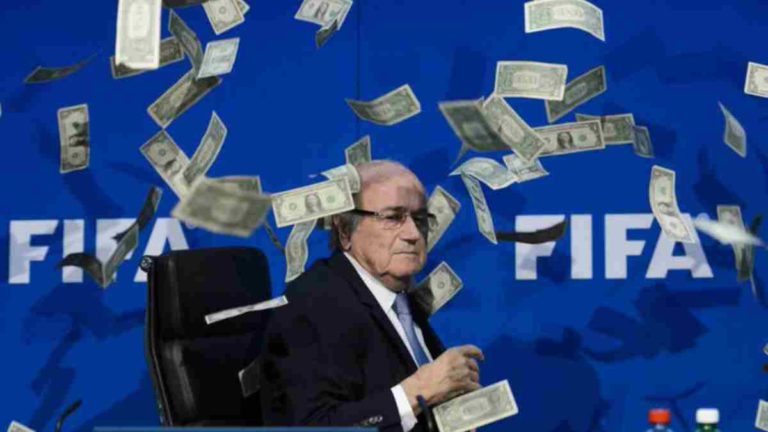
INDIA: The global football community was shocked when many senior members of FIFA, the World Governing Body for Football, were arrested. The arrests occurred in Zurich, Switzerland, on May 27, 2015.
The FBI indicted the members with multiple charges of racketeering, wire fraud, money laundering, and other felonies spanning over two decades. The incident sparked a major controversy regarding FIFA, headed by Sepp Blatter.
History of FIFA
Seven European football associations formed FIFA in 1904. It was an amateur organization until 1974, when major political movements for power ensued inside the organization, which became a turning point in its tryst with corruption.
Sir Stanley Rous, an ex-English football administrator, was the President of FIFA at that time. He was notorious for having a tolerant view regarding the Apartheid regime in South Africa.
João Havelange, a Brazilian businessman, was a candidate for the FIFA presidency. He promised money and the development of football in Africa. His promises swooned the African football associations, and he won the election.
Despite the promises, FIFA could not support African football due to financial limitations. João Havelange called upon Sepp Blatter to help the organization increase its financial capabilities.
Blatter convinced Coca-Cola, one of the most famous soft drink companies, to sponsor FIFA events. FIFA became the first sporting organization to introduce sponsors for development purposes.
The FIFA-Coca Cola Program laid the foundation for modern-day FIFA. Once the partnership between FIFA and Coca-Cola benefitted both parties, more companies began proposing sponsorship deals with FIFA.
The German sporting equipment company Adidas signed a deal with FIFA to supply equipment for its events. KLM, Phillips, Canon, Gillette, and a Brazilian firm, Cafes Do Brasil, penned contracts with FIFA. Multiple companies began to attach themselves to football at a global level.
1978 FIFA World Cup in Argentina
In 1978, FIFA raked in massive money through sponsorship deals and partnerships. However, the 1978 FIFA World Cup held in Argentina was a turning point for FIFA, both financially and politically.
On March 24, 1976, a coup led by the military overthrew Isabel Peron as president of Argentina. The military administrative council, also known as the “Military Junta,” was installed to replace her. Lt. General Jorge Rafael Videla headed the council.
The military government persecuted the minority systematically, a genocidal process.
Despite the crimes against humanity committed by the Argentinian government, the FIFA World Cup went ahead. FIFA faced heavy criticism for its decision to proceed with the World Cup. It drew comparisons to the 1936 “Hitler Olympics” in Berlin. There were several calls for nations and players to boycott the World Cup. Despite the criticism, the event went smoothly, and Argentina won the World Cup.
It seemed that sport was following a disturbing trend of being “bought” by nations despite being crippled with human rights issues rather than using its power and voice to take an opposing stance against global human rights issues. Notable examples of this are the 1936 Olympics in Germany and the 1978 FIFA World Cup.
Roots of corruption inside FIFA
The 1978 World Cup kicked off the speculations of João Havelange being corrupt despite his historic figure within the organization. He was known to have maintained a close relationship with Horst Dassler, the owner of Adidas.
For the 1982 FIFA World Cup in Spain, Adidas did the overall marketing for FIFA. Horst Dassler tactically handed a payout to João Havelange through a shady contract to ensure he got the rights to market the event. This payout by Dassler was effectively a bribe.
With the advent of televisions and their rapid development, broadcasting FIFA World Cup matches guaranteed money-making prospects. Dassler bought the rights to the World Cup from FIFA and sold it to different broadcasting companies.
João Havelange was aware of the dealing of rights by Dassler but turned a blind eye towards the actual market value of the FIFA World Cup. As per speculation, he did so because of his financial gains from Horst Dassler. Horst Dassler formed ISL, the International Sports & Leisure Company, and turned his attention to the broadcast of FIFA matches. He bought almost all the TV rights from FIFA.
In 1981, Sepp Blatter, who had been on the sidelines of the FIFA administrative council, became the Secretary-General. He was effectively the second in the power of FIFA, next only to João Havelange. FIFA was making a lot of money, and Havelange was virtually untouchable within FIFA.
After an unknown period, Sepp Blatter found proof of corruption by João Havelange. He discovered receipts of $1.5 million accidentally sent by ISL to FIFA instead of Havelange. Blatter made a deal with Havelange that he would relinquish his presidency after four years and put Blatter in charge of FIFA as his successor. The agreement ensured that Havelange could leave with his reputation intact, with Blatter finally getting the reigns of the most prominent sporting organization in the world.
UNITED KINGDOM: Marnus Labuschagne has surpassed Joe Root in the latest ICC Test players rankings for batters. He is currently the number one Test batsman in the ICC men’s rankings, a position he has occupied for the past nine months.
Marnus Labuschagne lands as the eighth batsmen in history with the given scores
In the first Test match against the West Indies, Marnus Labuschagne became the eighth batsman in Test history to score 204 runs and 104 without being dismissed.
Marnus Labuschagne now has 935 rating points, one less than his career high, and the second Test match on Thursday will give him a chance to set a new personal best in the ICC rankings.
Joe Root, who had risen to the top of the ICC rankings after scoring five centuries and a fifty in 12 Test matches this year, hit 23 and 73 in Pakistan’s first Test, falling to No. 4 behind Steve Smith and Babar Azam, who both scored hundreds last week.
Smith converted his century into a massive double century, which propelled him to the top two for the first time since January 2021.
Regarding bowlers, Ollie Robinson, who took five wickets during the Rawalpindi Test, achieved a career-high rating of 754 points and moved up seven spots to ninth place on the list. His appearance in the top ten is his first.
His colleague James Anderson, who likewise took five wickets, climbed two spots to No. 3. With 887 points, Australian skipper Pat Cummins maintained his lead in the rankings. He is 45 points ahead of R Ashwin, who is second.
Nathan Lyon has moved up a spot to 15th in the ICC bowlers’ rankings with an eight-wicket effort that helped Australia win by 164 runs. The win helped Australia to stay atop the WTC points table.
West Indies’ Kraigg Brathwaite has climbed back into the top 20. He scored 64 and 110 in the test match against Australia at Perth, and Kyle Mayers has moved up to number 41 in the bowlers’ rankings.
Marnus Labuschagne was born in Klerksdorp, a South African city that isn’t very well-known. When he was ten years old, he moved to Australia after his father got a job in the mining industry.
QATAR: After a 120-minute deadlock, Spain missed three penalties against Morocco in a dramatic shootout. With the win, Morocco advanced into the World Cup quarterfinals for the first time in history.
Spain’s missed opportunities in the game finalized Morocco’s victory
Spain’s weaknesses in the attack were made clear throughout the match. They had only one shot on target throughout the match, their lowest total in a World Cup game.
Before the first half, Nayef Aguerd missed Morocco’s best chance when he shot from close range. After a drab second half, Morocco substitute Walid Cheddira was stopped one-on-one by Unai Simon in extra time. Pablo Sarabia’s volley in the final minute grazed the post.
After Carlos Soler and Sergio Busquets had their penalty kicks saved by Bono, Achraf Hakimi coolly chipped the winning penalty down the middle to send Morocco through, with both teams unable to separate. Sarabia incredibly hit the post once more with Spain’s first spot kick, but the two teams were unable to separate.
In the quarterfinals on Saturday, December 10, at 3 p.m., Morocco will face either Portugal or Switzerland, who will play tonight at 7 p.m.
Although Luis Enrique’s team had 77% possession and 926 precise passes, they could not break down a determined Morocco. Bono pushed Gavi’s shot over the crossbar throughout the match, and the goalkeeper stopped Ferran Torres’ follow-up shot in the six-yard box, but the offside flag was still up.
Marco Asensio scored their best goal of the first period by volleying a ball into the side net from behind the Morocco defence.
Before Simon saved Noussair Mazraoui’s long-range effort at the second attempt, Morocco had already seen Hakimi flag a free kick that was just wide of the goal.
Their brilliant opportunity, however, came when Sofiane Boufal crossed for Aguerd, who headed the ball over the goalpost.
The second half of the game was more frustrating for Spain because of the outstanding play of Sofyan Amrabat in the middle of the Morrocan midfield and the dominant performances of Romain Saiss and Aguerd at centre-back.
After Abdelhamid Sabiri had given Morocco the lead, he side-footed his penalty kick off the right post, striking the woodwork again. Bono saved them from Soler by doubling Hakim Ziyech’s advantage and putting them on the verge of victory.
But Badr Benoun was stopped by Simon to keep Spain in the game, and Bono did it again, stopping captain Busquets right away before Hakimi boldly won it with a Panenka.
INDIA: According to a new landing page on Amazon’s website, Prime Gaming may be coming to India.
Prime Gaming is available in the United States, the United Kingdom, and other nations. Fans in India have been unable to access the popular gaming subscription service from the retail giants for years.
According to the website, Prime Gaming will be available to Prime subscribers who already have access to Prime Music and Video, as well as the advantages of shopping with Prime on the well-known online retail website.
Prime Gaming is the best place for PC gamers to get cool rewards, games, and more, along with Xbox Game Pass.
Additionally, the assistance gives elite in-game content on titles like Zenith Legends and FIFA 23, and that’s just the beginning. In addition, players benefit from other Amazon experiences geared toward gamers, such as Twitch’s streaming platform.
While the website shows the service’s rollout in India, Amazon has not provided any additional information, and Prime Gaming remains unavailable in the region. On the other hand, the addition of the website indicates that Prime Gaming will arrive in India sooner rather than later.
A dedicated Prime Gaming page on the Amazon India website states that Prime Gaming is now in India. However, when the user selects the “Games or In-game Content” option, an error message stating that “Prime Gaming is not available” appears. The Amazon Prime Gaming page has gone online before scheduled.
In addition, the Amazon app displays the Prime Gaming page and the same error message as the website.
An official announcement is imminent, even though Amazon India has not yet provided any confirmation. As part of Prime Gaming in India, which PC games Amazon will be given away remains to be seen.
This month, Prime Gaming has eight games available in the United States, including Quake, The Amazing American Circus, Rose Riddle 2: Werewolf Shadow, Spinch, and Brothers: A Tale of Two Sons, Doors: Paradox, and Desert Child. According to expectations, the Indian version of Prime Gaming will provide a similar experience.
We use cookies to ensure that we give you the best experience on our website. If you continue to use this site we will assume that you are happy with it.