Home Blog Page 107

Tata Nano Will Return to the Indian Market as the Most Affordable Electric Vehicle

0

INDIA: Tata Motors stopped selling the country’s Nano small car and Safari Storme SUV when BS6 emission standards went into effect in April 2020.

The car, said to be the cheapest in the world, was not a successful venture for the country’s automaker. In May 2018, the Tata Nano came off the production line.

The 624-cc twin-cylinder gasoline engine that came standard on the compact hatchback produced 38 bhp and 51 nm of torque. A 4-speed manual, or AMT, gearbox was fitted in the Nano to transfer power to the rear wheels.

A recent media report suggests that the Indian automaker may consider reintroducing the Tata Nano with an electric drivetrain. Underpinning, suspension setup, and tyres will likely undergo significant adjustments for the Tata Nano EV.

In addition, the car manufacturer may resume negotiations with the government of Tamil Nadu to acquire Ford’s Maraimalainagar plant in the state if the Tata Nano EV plan reaches production. Notably, there has yet to be an official announcement for the Tata Nano electric car.

The Tigor EV, Xpres-T, and Nexon EV are the three electric cars the company sells in India. The Tiago EV’s prices, which range from Rs 8.49 lakh to Rs 11.79 lakh, were recently announced by Tata.

In January 2023, production of the electric hatchback will begin. Two lithium-ion batteries, rated at 19.2 kWh and 24 kWh, are available for the Tata Tiago EV, promising a range of 250 and 315 kilometers, respectively (MIDC).

Tata Ziptron high-voltage technology powers the electric hatch, which has a permanent magnet synchronous electric motor that generates 61 PS (110 Nm) from the smaller battery and 74 PS (114 Nm) from the larger battery.

The Tiago EV has three charging options: a 50 kW DC fast charger, a 7.2 kW AC fast charger, and a 3.3 kW home charger.

Also Read: Tata Group Plans to Borrow Rs 15,000 Crore for Air India’s Working Capital

Ola S1 Pro Will Surpass Sales of Honda Activa, Claims Ola Electric CEO

0

INDIA: Ola Electric has dominated India’s premium electric scooter market with its sales. The manufacturer of electric vehicles has sold 20,000 vehicles for three months in a row, including November 2022.

Given this, Ola Electric Chief Executive Bhavish Aggarwal has shown certainty that the Ola S1 will become the top of the line in August 2023. 

The manufacturer of electric vehicles went so far as to assert that the sales of the electric two-wheeler will surpass those of the ICE scooter, which is currently the most popular on the market. To put it another way, the Ola S1 will surpass the Honda Activa as India’s most popular vehicle.

Bhavish Aggarwal tweeted that all variants of the Ola S1 will become the best-selling scooter in India by August 2023. He adds that the electric scooter sales will be higher than those of the best-selling ICE scooter. 

Ola has made similar claims in the past and successfully met its promises. Nevertheless, the company has chosen a more significant target this time around.

Ola Electric is getting ready to reach the milestone on the ground. The production of the company’s electric scooter has begun to increase. 

However, the goal is enormous; for context, in September 2022, 2.45 million Honda Activa’s were sold. Ola Electric sold 9,649 units that same month.

A few things could tip the balance in Ola’s favour, despite the seemingly impossible target. For instance, the government has policies that favour electric vehicles, such as the subsidy offered to buyers of electric vehicles. In addition, the Ola S1’s cheapest model is significantly less expensive than the Honda Activa.

Besides, Honda has plans to enter the EV market with swappable battery technology. The Japanese automaker might shift its resources and attention away from ICE vehicles. 

The Japanese automaker would enter a market where Ola has proactively secured itself and has plans to reinforce its foundation.

Also Read: Australia Puts Sanctions on Iran and Russia for Violating Human Rights

FIFA Controversy Part 3: The Key to Qatar’s Victory

0

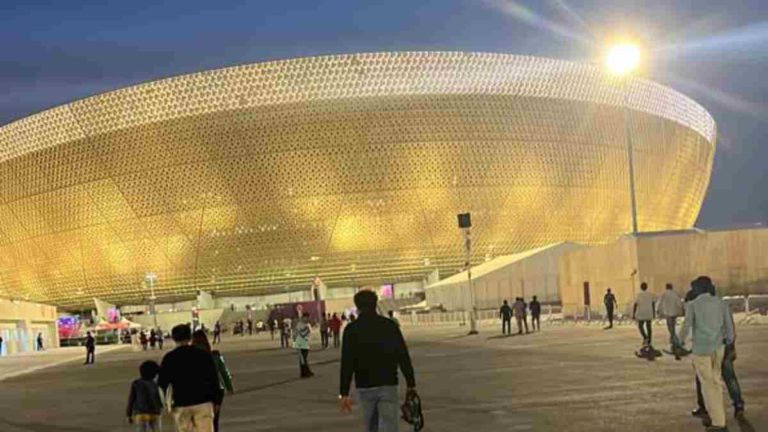
QATAR: Qatar was not seen as a serious contender by many to win the hosting rights due to various reasons, like the small size of the country and the soaring temperatures experienced in the Arabian Peninsula.

Qatar’s bidding committee persuaded Mohamed bin Hammam to back them. Mohamed bin Hammam, a Qatari national and the President of the Asian Football Confederation, was reluctant to bring the World Cup to Qatar since he felt the conditions there were not suitable for the physically draining game.

For Qatar to win the bidding process, they needed the support of the FIFA Executive Committee members. Mohamed bin Hammam was the key for the Qatar bidding committee to reach the electing members.

Ten months before the voting process, Hassan Al Thawadi, the Secretary-General for Qatar’s 2022 Bidding Committee, delivered a powerful speech to CAF in Luanda, the capital of Angola. 

It was the turning point in Qatar’s contention for the World Cup bid. The executive members took note of Qatar as a serious candidate for a win in the upcoming elections.

The endless bribery inside FIFA

CAF’s three executive committee members were Issa Hayatou, Jacques Anouma, and Amos Adamu. 

According to an anonymous Qatari whistleblower, Hassan Al Thawadi offered Hayatou $1 million in exchange for his vote. Hayatou turned down the initial offer but finalised a deal for $1.5 million. 

Anouma and Adamu, the other two members, also accepted the same deal in exchange for their votes.

FIFA and Qatar denied the whistleblower’s claims. The whistle-blower, an ex-employee of Qatar’s Bidding Committee, was accused of falsely accusing her former employers, who had fired her.

There were further suspicions of insider dealings between Qatar and FIFA officials. The Thai and Qatari governments signed a massive gas deal shortly after Qatar’s declaration as the host for the 2022 FIFA World Cup. The suspicion arose from the fact that there was a Thai representative among the voting executive committee members.

Everyone involved in the controversy vehemently denied any links between the incidents and asserted that the Thailand gas deal was not a favour in return for helping Qatar win.

Nine days before the vote, Michel Platini had lunch with then-French President Nicolas Sarkozy and the son of the Emir of Qatar. Michel Platini, the President of UEFA, heavily influenced who the European representatives voted for in the elections.

Interestingly, soon after Qatar won the bidding, the state-owned Qatar Investment Authority bought majority stakes in the France-based Paris Saint-Germain football club. 

A Qatar-based broadcaster, beIN TV, bought the television rights to the French football games for considerable money. Massive deals between Qatar and France, including Qatar buying many French Airbus airplanes, followed these deals.

The fallout between friends

Three months after the election, the relationship between Mohamed bin Hammam and Sepp Blatter turned sour. After the 1998 FIFA Presidency elections, Blatter allegedly promised that he would lead FIFA only for a couple of terms. 

Even though the exact number of terms is unknown, it is safe to say that Blatter did not want to relinquish his role at the top of FIFA, and he backtracked from the promise he made.

Mohamed bin Hammam was involved in an electoral battle for the post of Chairman of the AFC in 2009. Mohamed bin Hammam was a loyal friend and supporter of Sepp Blatter. He shockingly found out that Blatter did not reciprocate his loyalty and friendship when Blatter voted in favour of his rival candidate.

On March 18, 2011, Mohammed bin Hammam announced his candidature for the post of FIFA President. The US denied Hammam a visa to attend the CONCACAF congress held in Miami on May 3, 2011, in the run-up to the polls.

According to Hammam, “someone” didn’t want him to visit the USA and the Caribbean nations, the central vote bank of FIFA.

Since he could not attend the congress, Mohamed bin Hammam requested that Jack Warner convene the meeting again. Warner agreed to Hammam’s request and set the meeting for Port of Spain, Trinidad & Tobago.

Chuck Blazer was wary of the new meeting and voiced his concerns to Warner, who promptly shut down his complaints. 

On May 13, 2011, at the meeting held at the Hyatt Regency hotel, Jack Warner and Mohamed bin Hammam were caught attempting to bribe the CONCACAF members. Most members reportedly accepted the bribe, except for a few, who took photographs of the money received inside envelopes and reported the incident to Chuck Blazer along with the evidence.

Blazer’s friendship with Jack Warner turned sour after the World Cup hosts’ controversy. He turned on Jack Warner and reported the bribery attempt to Jerome Valcke, who, in turn, informed the Ethics Committee of FIFA.

Mohamed bin Hammam denied any ill-intention and said that the money he gave the members was strictly to support the Caribbean football associations.

The fresh bribery scandal reopened the allegations of wrongdoing in the 2022 World Cup bidding process. Sepp Blatter accused Mohamed bin Hammam of influencing the bidding. Blatter exploited the situation to the hilt to eliminate Hammam’s electoral chance, his main rival for the Presidency polls.

Also Read: FIFA Controversy Part 2: Sepp Blatter and the Political Drama of the 1990s

FIFA World Cup: Morocco Creates History by Stunning Portugal 1-0 in Quarterfinals

0

QATAR:  Morocco made history by becoming the African country to arrive at a World Cup elimination round as they dazed Portugal with a 1-0 win thanks to a Youssef En-Nesyri header.

Morocco held firm despite Portugal’s dominance at Al Thumama Stadium thanks to En-Nesyri’s towering effort in the 42nd minute, which proved to be the only goal of the quarterfinal match.

Morocco enters semifinals with a historic win

Walid Regragui’s team created history by reaching the competition’s semi-final, where they will play the winners of England’s quarterfinal encounter against France on Saturday night.

After missing Portugal’s round-of-16 victory over Switzerland, the spotlight was back on Cristiano Ronaldo before the game began, as he started on the bench for the second game in a row.

En-Nesyri headed home a cross from Yahia Attiyat-Allah in the 42nd minute after Morocco capitalized on a Portugal goalkeeper’s mistake. Portugal’s goalkeeper hesitated.

Morocco missed a great opportunity to go further ahead when Attiyat-Allah skewed a shot wide after a fine counterattack. Bruno Fernandes nearly equalized moments later with an audacious half-volley that hit the crossbar.

Ronaldo made an appearance in the 51st minute for his 196th Portugal cap, equalling Kuwait’s Bader Al-Mutawa’s FIFA men’s record for international appearances. However, he failed to make a significant impression in the outcome of the game.

In the 83rd minute, Morocco goalkeeper Yassine Bounou made a fingertip save to deny Joao Felix’s driving shot over the crossbar, and he was also called upon to deny Ronaldo’s effort in the final minute.

Morocco had more last-minute nerves when substitute Walid Cheddira was sent off for two yellow cards in a row and Pepe headed wide in the final moments.

However, Regragui’s team held on for another memorable victory after their round-of-16 victory over Spain.

Also Read: FIFA World Cup: Croatia Stuns Brazil to Enter the Semi-finals

Physicists Move Light Simultaneously Back and Forth in Time

0

UNITED STATES: For the first time, scientists have created the illusion that light is moving simultaneously forward and backward in time. 

An international team of researchers came up with a new method that scientists could use to develop novel methods for quantum computing and gain a deeper comprehension of quantum gravity.

A combination of two principles from the bizarre field of quantum mechanics allowed the accomplishment.

A “quantum time flip,” in which a photon is simultaneously in both forward and backward time states, was achieved by two research groups working side by side in their experiments.

Researchers accomplished this through the convergence of charge, parity, and time-reversal (CPT) symmetry and quantum superposition, both principles of quantum mechanics that describe the physical properties of atoms and subatomic particles.

The previous quantum superposition is a peculiarity. It is so because minuscule particles exist in a few distinct states until they are noticed.

At the same time, the last option, CPT, is a rule that expresses that any framework containing particles will comply with similar actual regulations, regardless of the precise switching of their charges, spatial directions, and developments.

A widely regarded example of superposition is Schrödinger’s Cat experiment. In the thought experiment, a hypothetical cat is alive and dead simultaneously because the cat’s life depends on a random subatomic event that occurs and doesn’t occur until it is observed.

The October 31 and November 2 papers, which published the results of each team’s twin experiments, have not yet been peer-reviewed.

During their experiments, the researchers used superposition to give a photon, a light particle, the ability to travel both forward and backward in time.

Both teams split a photon through a crystal in a superposition of two distinct paths. In addition to the regular movement of the superposed photon through the crystal, the teams devised a second route to alter the photon’s polarization, or point in space, to make it appear to be travelling backward in time.

The scientists then made the superposed photons move through another crystal to recombine. After that, they measured the polarisation of the photons and discovered a quantum interference pattern. If the photon were travelling in both directions, this pattern, which consists of light and dark stripes, would not be possible.

Their findings may advance quantum computing processing because they demonstrated that time flips could be linked to reversible logic gates to enable simultaneous computation in both directions.

In addition, the work contributes to the scientific community’s comprehension of quantum mechanics. It may aid in the search for a unified theory of quantum gravity that integrates the general theory of relativity and quantum mechanics principles.

Also Read: NASA Merges Two Images of Pillars of Creation Taken by JWST to Create a Stunning Picture 

Corvette E-Ray: Images of the Car Accidentally Leaked in Chevrolet Visualizer

UNITED STATES: Chevrolet has accidentally revealed images of the E-Ray on its website, where a car visualizer went online ahead of schedule, giving Corvette fans Christmas early this year. 

The car, complete with the brand-new electrified model, was discovered by a member of the “MidEngine Corvette Forum.”

The user discovered the images while playing with the configurator. The car’s specs are not available, but the quad exhausts indicate that it is a hybrid.

A public announcement from Chevrolet is possible in early 2023, possibly in the spring. The E-Ray will feature three brand-new paints when it debuts: Sea-Wolf Gray, Cacti, and Riptide Blue Metallic Tri-Coat. The car already has that striking green colour, which lends credence to this massive leak.

Since Chevy indirectly confirmed that the 2024 E-Ray is very much an actual vehicle, it is safe to assume that this is not just an elaborate hoax.

A blogger contacted a representative of the company, who stated that Christmas had arrived early for Corvette fans. He advised the public to keep an eye out for more.

The visualizer has already been disabled; however, quick-thinking individuals rushed over to take screenshots.

Even though everything is painted the same colour as the body, it has the broader hips of the Z06.The E-Ray is collecting all the good parts from the Z06 except the flat-plane LT6. 

It doesn’t have the spicy version’s centrally mounted exhaust tips, but other than that, it’s the same. 

The images show that the car is not a plug-in hybrid because it lacks a charging port.

The regenerative braking system appears to be turned on and off via a button on the left side of the centre console. It returns the energy that would otherwise be lost while braking to the battery in hybrids and electric vehicles. 

A start/stop button is next to the regenerative braking system’s switch to make the naturally aspirated LT2 engine run more efficiently.

As per the information available, the 2024 Corvette E-Ray will have all-wheel drive, with an electric motor or motors at the front and a V8 powering the rear wheels.

It is said to replace the Grand Sport, and another model, already confirmed to be entirely electric, will follow later this decade.

Also Read: Mercedes Launches AMG-GT2 Race Car with 707 Horsepower

FIFA World Cup: Croatia Stuns Brazil to Enter the Semi-finals

QATAR: Brazil was eliminated from the World Cup in a heartbreaking manner in a stunning penalty shootout loss to Croatia on Friday.

Neymar scored his 77th international goal in extra time, tying legend Pele for Brazil’s all-time men’s goal record. However, it was not enough to prevent Brazil from reaching the World Cup quarterfinals for the second consecutive time.

Photo Credit: Twitter/FIFAWorldCup

Tite’s team was frustrated most of the game because Croatia’s midfield trio of Marcelo Brozovic, Mateo Kovacic, and Luka Modric played well, and goalkeeper Dominik Livakovic also played well.

The cagey game went to extra time because neither team could register an outright win in regulation time.

Neymar, who had been quiet up until that point, thought he had scored an extra-time goal. He deflected a shot from the edge of the box past Livakovic and into the back of the net.

However, with just four minutes remaining, Croatia, the runners-up in 2018, responded with a goal from Bruno Petkovic that was deflected and brought the score to 1-1.

Brazil lost the penalty shootout after Rodrygo missed the first and Marquinhos missed the fourth, but Croatia won with all their kicks for a memorable victory.

Croatia, who have won two straight knockout games on penalties, will play either Argentina or the Netherlands in the semi-finals on Tuesday or later on Friday.

Croatia successfully stifled most of Brazil’s early moves in the first half, refusing to be intimidated by their more prominent opponents.

Brazil’s only attack came from a weak Vinicius Jr. shot, and Neymar was hindered by a hardworking backline, keeping Brazil at bay.

Croatia looked more honed and gifted in their passing game, and toward the end of the first half, they had the upper hand in terms of possession.

Livakovic did not seem to be bothered by Neymar’s free-kick just before the break. Brazil, whose only previous knockout round victory came against Germany in 2002, struggled to find the net.

However, three minutes after the game’s start, Josko Gvardiol, Croatia’s midfielder, tried to clear the ball, but he almost scored his own goal. The blunder by Gvardiol gave Brazil a chance to take the lead.

After that, the referee denied claims made by Croatian defender Josip Juranovic for a handball after a VAR review, and Richarlison sent through Neymar in the 55th minute. Still, Livakovic stopped his close-range attempt.

Brazil participated in a significantly improved start to the final set and came close again in the 66th when Livakovic denied Lucas Paqueta.

The Croatia goalkeeper had a busy second half of the game, stopping Neymar in the 76th minute. At that point, he had made seven more saves in the match than Alisson did in the entire tournament for Brazil.

Five minutes later, as the Brazilian fans gathered behind the goal and grew more impatient, Livakovic stopped another shot from Paqueta.

Tite, Brazil’s coach, was nervous when the game went into overtime, but Neymar’s goal gave them hope for the semi-finals.

However, Croatia did not give up, and Petkovic’s equaliser resulted in penalties. In the penalty shootout, Livakovic saved Rodrygo’s spot kick, but Marquinos hit the post.

Also Read: Brazil All Set to Face Croatia in QF

11th Generation Amazon Kindle Launches in India

INDIA: The Amazon Kindle (11th Generation) has been released in India by the e-commerce website Amazon. 

The most recent Kindle has a display that is 6 inches wide and a pixel density of 300 PPI. The price of an Amazon Kindle (11th Gen) in India is Rs 9,999; however, the company offers the device at an initial discount of Rs 8,999.

The new model will have a better display and more storage space. Amazon asserts that this is the smallest and lightest Kindle ever shipped.

The Amazon Kindle (11th Gen) is available in black and denim. Potential customers can purchase the device from Amazon India’s official website.

The display on the Amazon Kindle measures 6 inches and has a pixel density of 300 PPI. The package includes other features like dark mode and adjustable screen brightness.

According to the company, the glare-free display has three times as many pixels as the previous e-reader model.

The older model only offered an 8 GB storage option, whereas the newer model has 16 GB of built-in storage.

Additionally, the company asserts that Amazon’s e-reader devices support multiple file extensions, such as AZW, EPUB, HTML, MOBI, PDF, RTF, and TXT, along with Amazon Audible audio content.

The Kindle also comes with parental controls but doesn’t have a waterproof rating, a light that automatically adjusts, and more.

The new Kindle, according to Amazon, is made up of 90% recycled magnesium. The battery can last for up to six weeks on a single charge. The brand claims that it has simplified the setup procedure.

The brand sells custom-designed cloth covers in black, rose, denim, and dark emerald for the Kindle. Customers can purchase these for Rs. 17,999.

In addition to all of these features, the e-book reader also includes a USB-C charging port.

To top it all off, Amazon claims that the Amazon Kindle (11th Gen) box is entirely made of wood fibres.

Also Read: Amazon Prime Gaming is Expected to Launch for PC in India Soon

Lamborghini Launches Huracan Sterrato in India

INDIA: Lamborghini India has officially revealed the cost of its brand-new car for India, the Huracan Sterrato. 

The off-road-focused sports car with a V10 engine costs 4.61 crores (ex-showroom). The car will be unveiled in November 2022 at Art Basel Miami.

The car resembles the Huracan Sterrato concept that Lamborghini showed in June 2019.

Lamborghini’s Porsche 911 Dakar series challenger features numerous significant design and mechanical modifications. 

The Huracan Sterrato receives chunky body cladding, roof rails, redesigned front and rear bumpers, and a roof-mounted scoop.

The 19-inch Bridgestone tyres with cast aluminium alloys and rally-style front bumper-mounted lights are some of its initial features.

Lamborghini Integrated Vehicle Dynamics (LIVD) is also present in the Huracan Sterrato. Additionally, the car cleared the road legality tests in India.

The rally-inspired sports car boasts the new Rally driving mode introduced in the Urus Performante.

The car also features Sport and Sport+ modes. On low-grip terrain, the Urus Performante’s Rally mode promises a fun driving experience.

The Sterrato is made of carbon fibre and aluminium, like other Huracan models. The brakes are carbon-ceramic: 356mm in the back and 380mm in the front. 

Strikingly, Lamborghini has changed its suspension and raised the ride level. The car’s ride height is now 44 millimetres higher than the Huracan EVO.

The 5,204-cc naturally aspirated V10 petrol engine of the Huracan Sterrato produces 610 PS at 8,000 rpm and 560 Nm of torque at 6,500 rpm. The car has all-wheel drive and a seven-speed dual-clutch automatic transmission. 

The Huracan Sterrato can sprint from 0 to 100 kilometres per hour in a mere 3.4 seconds, and it only takes 9.8 seconds to reach 200 kilometres per hour from a standstill. The top speed of the Huracan Sterrato is 260 kph.

The Huracan Sterrato has a price tag of Rs. 4.61 crore. In comparison, the Huracan Tecnica costs 4.04 crore. The third quarter of 2023 marks the beginning of deliveries to India.

Also Read: Revamped Lamborghini Urus Performante Launches in India

OnePlus TV 55 Y1S Pro is Set to Launch in India on December 9

INDIA: OnePlus has confirmed that it will release the OnePlus TV 55 Y1S Pro in India on December 9. As the name suggests, it would be a size increase for the existing OnePlus TV 43 Y1S Pro and OnePlus TV 50 Y1S Pro. 

The 50-inch model costs Rs 32,999, while the 43-inch model costs Rs 29,999. Although it is expected to cost a little more, the 55-inch Y1S Pro should still fall into the affordable category. 

The company has used social media and a dedicated product listing page to tease the product for some time, dropping key specifications. Those are broadly comparable to the OnePlus TV 43 Y1S Pro and OnePlus TV 50 Y1S Pro currently available. 

Additionally, the OnePlus TV 55 Y1S Pro will include a speaker setup with 24W combined output, Dolby Audio, and a 4K UHD panel.

OnePlus’ AI-driven Gamma Engine, which is said to intelligently tune the visuals for what appears to be “ultra-clear content,” will be paired with this.

Similar to the OnePlus TV 43 Y1S Pro and OnePlus TV 50 Y1S Pro, the OnePlus TV 55 Y1S Pro will have no bezels. 

The OnePlus TV 55 Y1S Pro will also provide seamless connectivity with OnePlus devices like the OnePlus Watch and Buds and support for some high-end features like MEMC.

No granular specifications have been revealed yet, but they should roughly match the series’ previous models.

In addition to HDR10+, HDR10, and HLG formats, the OnePlus TV 43 Y1S Pro and the OnePlus TV 50 Y1S Pro support ALLM. 

There are three HDMI 2.1 ports (one with eARC), two USB 2.0 ports, optical, ethernet, dual-band Wi-Fi, and Bluetooth 5.0 connectivity options. The smart TV runs on the Android TV 10 operating system. 

Additionally available is OnePlus’ own OxygenPlay 2.0 interface. The package includes support for Google Assistant and Chromecast, 8 GB of storage, and 2 GB of RAM.

Also Read: OnePlus Nord CE 3 Designs and Renders Leaked Online; Sale Expected Soon