
Home Blog Page 22

Samsung Galaxy S24 Ultra: The Future of Smartphones with Snapdragon 8 Gen 3

0

INDIA: The tech world is abuzz with anticipation as Samsung gears up to unveil its latest flagship, the Galaxy S24 Ultra, slated for a Q1 2024 release. Following the triumph of the Galaxy S23 earlier this year, Samsung aims to set a new standard in smartphone technology with this upcoming release.

One of the most striking features touted for the Galaxy S24 Ultra is its cutting-edge camera system. Boasting a formidable quad-camera setup at the rear, highlighted by a staggering 200MP primary lens, it promises to redefine mobile photography. 

Complementing this powerhouse are a 50MP telephoto lens, a 12MP sensor, and an additional 10MP sensor. Selfie enthusiasts won’t be disappointed either, as a dedicated 12MP front camera is said to be in the works.

Under the hood, the Galaxy S24 Ultra is rumoured to be powered by Qualcomm’s Snapdragon 8 Gen 3, guaranteeing lightning-fast performance and seamless multitasking. 

This is paired with a generous 5,000mAh battery that supports 45W fast charging, ensuring the device keeps pace with even the most demanding users.

Display aficionados can expect a visual treat with a 6.8-inch QHD+ Dynamic AMOLED LTPO panel. The high 120Hz refresh rate promises silky-smooth interactions, elevating the user experience to new heights.

In a bid to enhance durability, Samsung is reportedly incorporating titanium frames into the design, combining style with robustness. Storage options are rumoured to come in 12GB+256GB and 8GB+128GB variants, catering to diverse user preferences.

While leaks and speculation provide a tantalizing glimpse, it’s important to note that these details have yet to be confirmed by the company. As the release date draws closer, tech enthusiasts around the globe eagerly await Samsung’s official statement, poised to witness the next leap in smartphone evolution.

Also Read: Samsung Ventures into Uncharted Territory: Exploring Development of 440MP Camera Sensor

Red Bull Advisor Helmut Marko Issues Apology for Controversial Remarks on Sergio Perez

0

AUSTRIA: Red Bull’s motorsport advisor, Helmut Marko, has publicly apologized for his recent comments regarding Formula One driver Sergio Perez. Marko’s controversial remarks came after Perez’s impressive performance at the Italian Grand Prix, where he secured a commendable second place.

During an appearance on Red Bull’s broadcaster, Helmut Marko suggested that Perez’s South American background was a contributing factor to his performance gap compared to his teammate Max Verstappen. This statement was met with widespread criticism and accusations of cultural insensitivity.

Despite Perez’s impressive second-place finish ahead of two Ferraris at Monza, Marko’s comments seemed to imply that Perez’s South American heritage affected his ability to compete with the same level of focus as drivers like Max Verstappen or Sebastian Vettel. This assertion was met with scrutiny, particularly due to its dismissal of South American Formula One legends such as Ayrton Senna, Nelson Piquet, Juan Manuel Fangio, and Emerson Fittipaldi.

In response to the growing online backlash, Helmut Marko released a statement through the media channel, expressing his regret over his offensive remarks. He clarified that he did not believe in making generalizations about people based on their nationality, race, or ethnicity. Marko acknowledged that attributing Perez’s performance variations to his cultural heritage was a mistake.

Perez’s performance at Monza was widely praised, showcasing his skill and determination as he fought his way to a podium finish ahead of the Ferraris. Marko himself had initially commended Perez’s performance before his controversial comments took centre stage.

The controversy surrounding Helmut Marko’s remarks on Perez highlights the need for greater cultural awareness and respect within the Formula One community. It also serves as a reminder of the power of words in shaping public perceptions and the responsibility that public figures hold in promoting understanding and unity.

Also Read: F1’s 2008 Championship Saga: Felipe Massa’s Hopes Dashed as Ecclestone’s Revelation Denies Appeal

GAO Audit Urges NASA Transparency on SLS Rocket Costs amidst Budget Concerns

0

UNITED STATES: A recent audit conducted by the U.S. Government Accountability Office (GAO) has called for increased transparency from NASA regarding the costs and schedules associated with its Space Launch System (SLS) moon rocket.

The audit raises concerns about the affordability of the SLS program, NASA’s chosen rocket for the ambitious Artemis program, which aims to establish a permanent lunar presence by the end of the 2020s.

According to the GAO report, senior NASA officials have indicated that the current cost levels of the SLS program are deemed unsustainable. The report highlights that the program’s expenses exceed what NASA anticipates being available for the Artemis missions.

Since its initiation in 2011, NASA has invested $11.8 billion in the development of the SLS. After facing multiple delays, the rocket made its debut on November 16, 2022, successfully launching the uncrewed Artemis 1 mission to the moon.

In addition to the initial investment, the White House’s 2024 federal budget request allocates an additional $11.2 billion for future work on the SLS from 2024 through 2028. These funds are earmarked for enhancing the vehicle’s efficiency and increasing cargo capacity for lunar missions.

However, the audit reveals that baseline costs and schedules for this future work have not been established despite nearly a decade of concerns raised by the GAO. The report emphasizes that NASA does not plan to measure production costs, which is critical for monitoring the program’s affordability.

The audit also points out that NASA has not updated its estimates to account for increasing costs, particularly due to the delay of the Artemis 4 mission from 2026 to 2028. The report underscores the importance of establishing official cost baselines for accurate measurement of cost performance over time.

This latest scrutiny follows years of concerns regarding SLS costs, dating back to as early as 2014. While steps have been taken by NASA to implement strategies aimed at cost reduction, the GAO emphasizes that it is too early to assess their impact.

As the Artemis program moves forward, transparency and accurate cost assessments will be essential to ensure its success within budget constraints.

Also Read: NASA’s MOXIE Successfully Generates Oxygen on Mars, Opening Gates for Future Exploration

NVIDIA Joins Forces with Tata Group to Pioneer AI Advancements in India

0

INDIA: NVIDIA, a global leader in technology, has unveiled a groundbreaking collaboration with Tata Group, a powerhouse in Indian industry, to revolutionize the landscape of artificial intelligence (AI) in the country.

The partnership aims to establish cutting-edge AI computing infrastructure and platforms, setting the stage for the development of innovative AI solutions.

Key components of this collaboration involve Tata Communications and NVIDIA teaming up to create an AI-focused cloud platform tailored for India. This platform will provide the essential infrastructure needed to drive the next wave of computing advancements. 

Additionally, TCS, a Tata Group company, will harness the power of this AI infrastructure to construct and process generative AI applications. Moreover, TCS is poised to empower its extensive workforce of 600,000 employees through specialized training made possible by this collaboration.

One of the most ambitious ventures of this collaboration is the development of an AI supercomputer, empowered by the cutting-edge NVIDIA GH200 Grace Hopper Superchip. This supercomputer promises to push the boundaries of AI capabilities, opening up new avenues for innovation and research.

Jensen Huang, the founder and CEO of NVIDIA, emphasized the global significance of generative AI and the vital role that data centres powered by GPU computing play in meeting the surging demand. He expressed his delight in partnering with Tata Group to support the exponential growth of generative AI startups and the processing of large language models.

This landmark collaboration is set to be a catalyst for an AI-driven transformation across a diverse range of Tata Group industries, from manufacturing to consumer businesses. N. Chandrasekaran, the Chairman of Tata Sons, emphasized the profound impact of AI and machine learning across industries and daily life. 

This visionary collaboration between NVIDIA and Tata Group not only signifies a major milestone in India’s technological advancement but also promises to democratize access to AI capabilities, ultimately shaping the future of innovation in the country.

Prime Minister Narendra Modi recently met with NVIDIA CEO Jensen Huang, discussing India’s significant potential in the AI sector. Huang expressed admiration for India’s strides in AI and emphasized his commitment to expanding NVIDIA’s presence in India while focusing on upskilling initiatives.

This collaboration between NVIDIA and Tata Group signifies a pivotal moment in India’s journey toward AI-driven innovation and technological excellence.

Also Read: Apple Invests Millions Daily Advancing Conversational AI Models

Pol Espargaro Demands Improved Crash Coverage Protocol in MotoGP

0

UNITED KINGDOM: A dramatic crash during last week’s MotoGP race left Francesco Bagnaia in the spotlight as a fellow rider inadvertently ran over his leg. However, one rider, Pol Espargaro, expressed vehement dissatisfaction with the way the incident was covered.

According to reports, the Ducati rider’s crash was replayed a staggering 19 times before viewers were informed of his true condition. Before his medical examination, the only information available was that Bagnaia was conscious at the scene of the incident. 

Shockingly, the broadcast also included live shots of Bagnaia’s family and team.

Fellow rider Fabio Quartararo echoed Espargaro’s sentiments, deeming the on-air coverage unacceptable. He emphasized the mental toll it takes on riders as they witness a fellow competitor endure a significant crash while knowing they still have to compete.

Quartararo stressed that while it may be acceptable to show the crash once, repeatedly airing it can negatively impact the mental state of riders preparing to restart the race. He noted, “In the end, the rider is fine, but it can be much worse.”

This incident sparked a conversation about the balance between informing the audience and respecting the privacy and well-being of athletes. The riders’ call for greater sensitivity and decency in coverage echoes concerns raised in other sports, particularly in America, where graphic injuries have sometimes been sensationalized.

In this case, it is evident that boundaries were breached, prompting a pressing need for a reevaluation of crash coverage protocols in the MotoGP world.

This incident raises broader questions about the balance between broadcasting the sport’s drama and respecting the privacy and safety of the athletes involved. It draws parallels with similar debates surrounding injury coverage in other sports, particularly in the United States. 

Riders are united in their call for privacy and common decency to take precedence in these situations, emphasizing the need for a more considerate approach to handling such sensitive incidents.

In the pursuit of thrilling sports coverage, lines were perceived to have been crossed, sparking a crucial conversation within the MotoGP community.

Also Read: Injured MotoGP Star Alex Rins to Miss Catalan GP as Recovery Continues

Virgin Galactic Set to Soar Again with Historic Galactic 03 Mission Carrying Civilians

UNITED STATES: Virgin Galactic is poised to mark another milestone in commercial spaceflight with the launch of its third mission, Galactic 03, scheduled for Friday, September 8. However, unlike previous missions, this historic event will not be available for live viewing.

The mission will see three long-standing ticket holders take flight from the renowned Spaceport America in New Mexico. Company officials have indicated that liftoff is anticipated around 10:30 a.m. EDT (1430 GMT), aligning with the timing of previous missions.

In a break from tradition, the identities of the three customers have not been disclosed. What is known is that they are part of Virgin Galactic’s group of ‘Founder’ astronauts, individuals whose early support and ticket purchases played a pivotal role in turning the vision of routine commercial space travel into reality.

“The Galactic 03 crew bought their tickets as early as 2005 and, since then, have been an active part of the company’s vibrant Future Astronaut community,” stated Virgin Galactic in a release last month. (It’s worth noting that ticket prices back in 2005 were substantially lower than the current $450,000.)

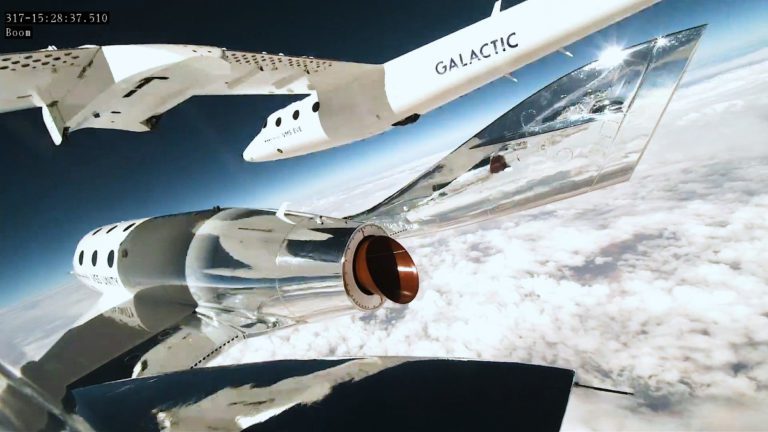
The trio will embark on their journey aboard Virgin Galactic’s VSS Unity space plane, accompanied by astronaut instructor Colin Bennett. The flight will be piloted by Nicola Pecile and Michael Masucci, with Unity launching from beneath the wings of VMS Eve, the company’s carrier aircraft.

At an altitude of approximately 50,000 feet (15,000 meters), Eve will release the space plane, allowing Unity to engage its rocket motor for the ascent into suborbital space. Following the mission, both Unity and Eve will return to Earth for runway landings.

Galactic 03 represents Virgin Galactic’s third foray into commercial spaceflight, following Galactic 02 on August 10 and Galactic 01 on June 29. When factoring in test flights, VSS Unity has successfully breached the final frontier on seven occasions to date.

Also Read: Virgin Galactic Celebrates Historic Milestones with “Galactic 02” Suborbital Mission

US Launches Full-Scale Probe into Huawei’s 5G Chip Development amid Sanctions Backlash

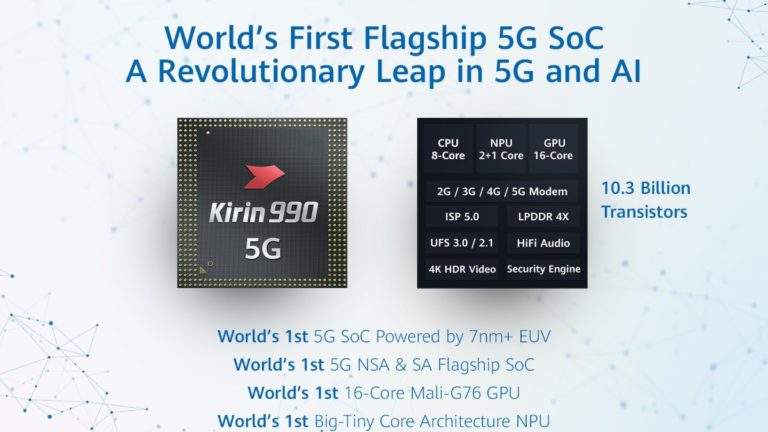
UNITED STATES: In a move driven by frustration over Huawei’s ability to develop its own cutting-edge 7nm 5G chip despite facing sanctions, the United States has announced a comprehensive investigation into the Chinese tech giant’s semiconductor capabilities.

The perplexity in Washington stems from the mystery surrounding how Huawei managed to fabricate a high-performance silicon chip, even under stringent sanctions. The White House has now expressed keen interest in obtaining intricate details about Huawei’s latest flagship smartphone, the Mate 60 Pro.

National Security Adviser Jake Sullivan stated on Tuesday that the United States aims to gather intelligence on the “character and composition” of the chip powering the Mate 60 Pro. This inquiry arises from concerns that US controls on the export of advanced semiconductor technology may have been circumvented.

Although Huawei has not publicly disclosed its suppliers for the Mate 60 Pro, a recent teardown conducted by consulting firm TechInsights suggested the presence of a 7-nanometer processor, likely from Semiconductor Manufacturing International Corp. (SMIC), a partially state-owned Chinese chipmaker. 

SMIC has not yet commented on this revelation. It’s noteworthy that SMIC, subject to export restrictions due to national security concerns, began producing chips at the advanced 7nm level last year for bitcoin mining. This move was surprising, given US efforts to limit China’s access to cutting-edge foreign chipmaking equipment.

Despite not yet matching the capabilities of TSMC, experts highlight that the Huawei smartphone underscores the significant progress achieved by China’s chip sector, even without access to the latest extreme ultraviolet lithography tools.

The US has actively sought to restrict the export of extreme ultraviolet (EUV) machines to China, which are essential for manufacturing chips at nodes of 7nm and below. This development may lead to further limitations on China’s access to critical manufacturing technologies.

Sullivan emphasized that the US would continue to focus on “technology restrictions focused narrowly on national security concerns” rather than pursuing “commercial decoupling.”

Following the 2019 sanctions imposed on Huawei, prohibiting access to advanced chips and technology from the US for its 5G smartphones, the company pivoted towards 4G devices and domestic markets. 

Analysts now speculate that the Mate 60 Pro’s release could breathe new life into Huawei’s smartphone business, potentially leading to a 65 percent surge in overall phone shipments this year, according to Ming-Chi Kuo, an analyst at TF International Securities. This growth trajectory could position Huawei as the “world’s mobile phone brand with the most robust shipment growth momentum.”

Also Read: Google Bids Farewell to Pixel Pass; Axes All-in-One Subscription Service for Pixel Phones

Lotus Unveils Emeya: A Cutting-Edge Electric Sedan Set to Redefine Luxury Performance

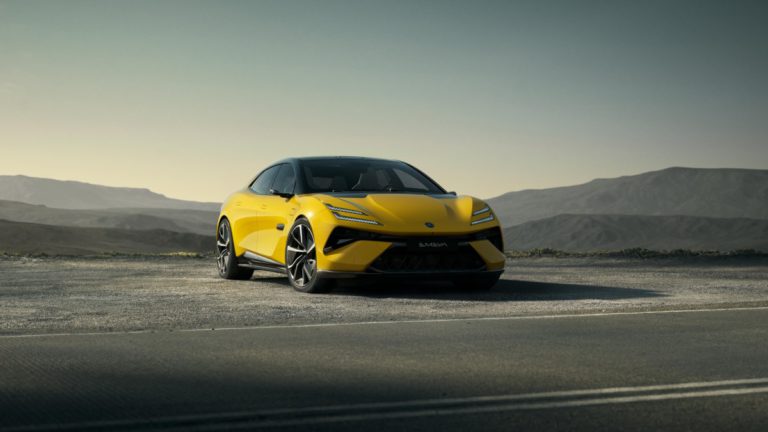
UNITED KINGDOM: Lotus, the iconic British automaker, has taken the wraps off its highly anticipated flagship electric sedan, the Emeya, at a grand unveiling event in New York City.

Formerly known as the Type 133, this four-door marvel is poised to challenge heavyweights like the Tesla Model S and Porsche Taycan Turbo, marking Lotus’s return to the sedan segment since the Opel Omega-based Carlton in the 1990s.

At the forefront of Emeya’s design is an emphasis on aerodynamics, featuring an active grille that optimizes efficiency and cooling. The sedan boasts an array of active aerodynamic elements, including a front spoiler, a motorsport-inspired active diffuser, and a widened rear spoiler that generates an impressive 474 pounds of downforce.

Setting new standards for sustainable luxury, Lotus pioneers the use of yarn derived from cotton waste in Emeya’s upholstery. This innovative approach not only showcases a commitment to eco-conscious materials but also trims weight compared to traditional leather.

Inside, cutting-edge technology is seamlessly integrated. A KEF 3D surround sound system with noise cancellation enhances the cabin experience, while exterior vibration sensors work in tandem with algorithms to reduce interference from tire and suspension movement. A 55-inch augmented reality head-up display provides quick access to crucial driving information.

The Emeya shares its platform with the Eletre, utilizing the bespoke Electric Premium Architecture (EPA) derived from Geely’s Sustainable Experience Architecture (SEA). The impressive 102 kWh battery pack offers a range of approximately 373 miles on the WLTP cycle and can charge at a rapid 350 kW.

Performance is nothing short of astonishing, with the Emeya’s 905 horsepower and 726 pound-feet of torque propelling it from 0-62 mph in a mere 2.8 seconds. A race-grade braking system and a two-speed transmission ensure precise control.

Production is slated to commence in 2024 at the Geely-owned Wuhan plant in China, with the Emeya expected to hit US shores by Q4 2024. Lotus aims for 30 percent of its total sales to come from the US market by 2025.

After amassing over 17,000 orders this year for models like the Eletre and Emira, Lotus is poised to reshape the EV landscape with the Emeya, setting a new standard for electric luxury performance.

Also Read: Kampala Bomb Plot Foiled: 5 Additional Suspects Detained as Explosives Recovered by Police

Mick Schumacher’s F1 Dreams Dwindling: Options Narrowed Down for the 2024 Grid

0

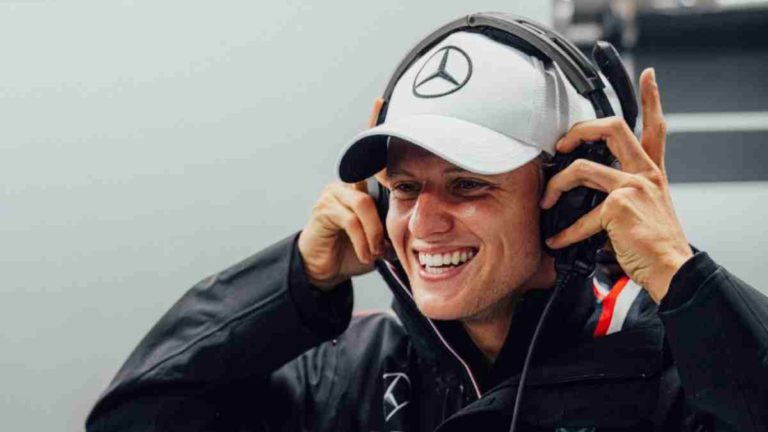
ITALY: Mick Schumacher’s return to the Formula 1 grid in 2024 seems increasingly unlikely. The young driver, currently in talks with Mercedes team boss Toto Wolff on a near-daily basis, faces a dearth of viable options for the upcoming season.

With only AlphaTauri, Alfa Romeo, and Williams offering open seats, the competition is fierce. AlphaTauri is inundated with Red Bull junior drivers vying for a position, while Alfa Romeo deliberates between Zhou Guanyu and Theo Pourchaire.

Williams, the remaining beacon of hope, already has a tentative partnership with Alex Albon, and team boss James Vowles has stated that incumbent driver Logan Sargeant must make an unequivocal case to claim the second seat.

Schumacher’s assessment reflects the stark reality of the situation, stating, “There isn’t much movement at the moment as the majority of drivers are entrenched in contracts extending through the end of the following year.”

Mercedes’ Toto Wolff acknowledges that “all the doors are closing” for Schumacher, hinting at the possibility of him remaining in Mercedes’ reserve or enacting a mysterious “Plan B” yet undisclosed by the 24-year-old.

Timo Glock, a compatriot and former Toyota driver, advises Schumacher to consider alternative avenues, emphasizing the importance of maintaining fitness and motivation, and seizing opportunities as they arise, even if not in the immediate future.

Sky Sports’ Ted Kravitz aligns with this perspective, suggesting that if the elusive Williams seat remains out of reach, Schumacher should explore other racing series rather than endure an extended hiatus from competitive racing.

As the 2024 F1 grid takes shape, Schumacher’s predicament serves as a poignant reminder of the competitive nature of the sport and the intricate jigsaw puzzle that is securing a coveted position on the grid.

Also Read: Carlos Sainz Jr Receives Audi F1’s Interest amid Ferrari Contract Talks

Sony Unveils ELF-SR2 Spatial Reality Display, Redefining 3D Experience Sans Glasses

0

INDIA: Sony has introduced its latest innovation in India, the ‘Spatial Reality Display,’ a groundbreaking monitor that revolutionizes 3D content consumption by eliminating the need for special glasses or VR headsets.

This cutting-edge display, boasting a 27-inch screen with a 4K resolution, brings spatial images to life in 3D, offering users an experience akin to interacting with real objects, complete with depth, texture, and appearance.

The ELF-SR2 Spatial Reality Display is equipped with 10-bit processing, renders a 100 percent Adobe RGB colour gamut, and features a super-resolution engine that adeptly upscales 2K content to 4K.

Sony has invested in advanced facial tracking and recognition technology, ensuring an enhanced and comfortable viewing experience by dynamically following the viewer’s eyes.

The display offers an expansive viewing angle, leveraging high-speed sensors for image processing while maintaining low latency to combat motion blur and crosstalk.

A unique feature allows seamless switching between viewers, enabling two individuals to adjust their optimal viewing angle without shifting their positions in front of the screen.

Designed with specific industries in mind, including industrial design, surgical planning, engineering, architecture, signage, construction, entertainment, software, and game development, Sony is set to launch a ‘Spatial Reality Display App Select’ website, providing users with a curated list of compatible applications.

In addition, a ‘Spatial Reality Display Player’ app will be made available for users to effortlessly playback various 3D file formats. 

The monitor offers both a detachable stand and supports VESA mounts. The software development kits (SDKs) currently support Unity, OpenGL, DirectX 11, DirectX 12, and Unreal Engine, with OpenXR support slated for later this year.

Sony’s ELF-SR2 Spatial Reality Display is now available for purchase through authorized distributors across India for Rs 7,00,000. Notably, this price excludes components such as technical support and software development fees, offering a tailored approach to suit specific user needs.

Also Read: Spider-Verse 2: Sony Features Miles vs Spot Faceoff in the New Visual