Home Blog Page 82

Max Verstappen Tops Opening Day of Bahrain F1 Pre-season Testing

0

BAHRAIN: Max Verstappen set the pace on the opening day of F1 pre-season testing in Bahrain, but the impressive performance of Fernando Alonso in P2 caught everyone’s attention.

With limited on-track interruptions, Verstappen racked up 157 laps in his RB19, while Alonso provided close competition in the Aston Martin after overcoming floor issues earlier in the second session.

Ferrari’s Carlos Sainz set the pace for the first hour with a time of 1:33.767, but Verstappen soon took control with a time of 1:32.959, setting the fastest time of the day and completing 71 laps in the morning session.

Meanwhile, Aston Martin’s Felipe Drugovich suffered an electronic issue after just four corners but managed to return to the circuit later in the day.

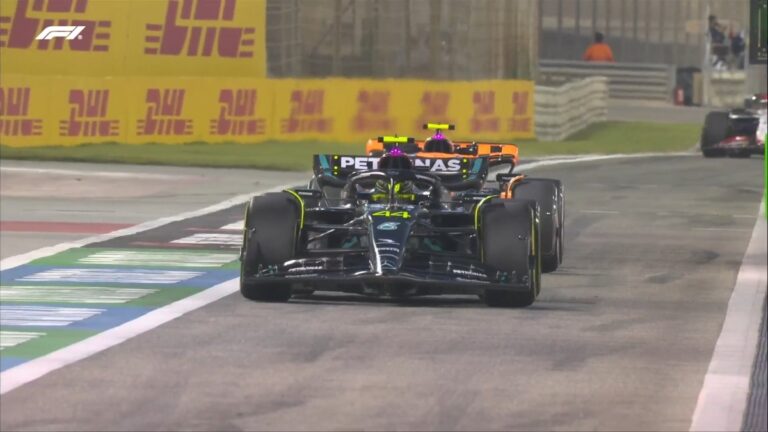
Lando Norris waited patiently for his chance to hit the track in the MCL60, while Lewis Hamilton made moves in the Mercedes W14, entering the top three. 

Williams rookie Logan Sargeant also impressed, pulling off a DRS-assisted pass on Hamilton down the pit straight.

But it was Alonso’s performance that stood out, with the two-time world champion setting a time of 1:32.837, just 0.029 seconds behind Verstappen’s benchmark time.

Despite the encouraging signs from Alonso and Aston Martin, it was Verstappen who ended day 1 of the F1 pre-season test on top, with Alonso, Sainz, Alex Albon, and Zhou Guanyu rounding out the top five.

Red Bull boss Christian Horner even advocated for the three testing days to become two, given the lack of interruptions on the opening day of testing.

While it’s only testing, the performances of Verstappen and Alonso will undoubtedly set the tone for the upcoming F1 season, with fans eagerly anticipating the prospect of more than two teams going head-to-head in their quest for the 2023 F1 titles.

Also Read: Max Verstappen Confident Red Bull Aerodynamic Penalty Won’t Determine 2023 F1 Title Defense


Estonia Celebrates 105 Years of Independence: A Look Back at Its Journey

0

ESTONIA: Estonia marked its 105th Independence Day on February 24th with celebrations across the country. The day is significant for the Baltic nation, symbolising its long and tumultuous journey to independence.

Estonia’s path to independence was not an easy one. After centuries of foreign rule, including a period of Soviet occupation that lasted more than four decades, Estonia finally declared its independence on February 24th, 1918. 

Various foreign powers occupied Estonia for centuries, including Denmark, Sweden, Poland, and Russia. 

It declared independence in 1918, but the Soviet Union soon occupied it in 1940, followed by Nazi Germany in 1941. 

Soviet forces liberated the country in 1944, but Estonia remained under Soviet control.

It wasn’t until 1991, after a period of unrest and protest, that Estonia regained its independence following the collapse of the Soviet Union. 

Since then, the country has made significant strides in building a democratic and prosperous society.

In Tallinn, the capital city, celebrations began early in the morning with a flag-raising ceremony at Toompea Castle. 

Government officials, members of the military, and thousands of Estonians who came out to celebrate their country’s independence attended the ceremony.

Throughout the day, various events took place across the country, including concerts, parades, and fireworks displays. 

Many Estonians also took the opportunity to reflect on the country’s past and journey to independence.

In recent years, Estonia has become known for its advancements in technology and innovation. 

The country has embraced digitalization, and its e-government system is one of the most advanced in the world. Digital advancements have helped to drive economic growth and improve the lives of Estonians.

However, Estonia’s journey to independence and its subsequent success are not just about technology and innovation. 

It is also about the strength and resilience of its people, who have overcome significant challenges to build a better future for themselves and future generations.

In a statement marking the occasion, Estonian President Alar Karis emphasised the importance of remembering the past while looking towards the future. 

The Estonian flag, which features three horizontal stripes in blue, black, and white, is synonymous with the country’s independence and national pride. 

As Estonia celebrates its 105th Independence Day, the country’s journey serves as an inspiration to others who are striving for freedom and democracy. 

Despite the challenges it has faced, Estonia has shown that with determination and perseverance, anything is possible.

As the celebrations wind down and Estonians return to their daily lives, they can take pride in knowing that their country has come a long way since it declared independence over a century ago. 

The road ahead may still be long, but with the spirit of independence and a strong sense of national pride, Estonia will continue towards a brighter future.

Also Read: United Airlines Boeing 777 Descends to 775 Feet above Pacific Ocean

Death Toll Rises to Five with 48 Missing in China Coal Mine Collapse

0

CHINA: The death toll from the collapse of an open-pit coal mine in Inner Mongolia, northern China, has risen to five. Forty-eight people are still reported missing. 

The collapse was followed by an additional landslide at the gigantic facility, halting work for several hours. 

State media reported that around 900 rescuers with heavy equipment were on the scene, and work had resumed by Thursday morning. 

China’s President, Xi Jinping, has demanded efforts to “ensure the safety of people’s lives and property and maintain overall social stability.”

Inner Mongolia Xinjing Coal Industry Co. Ltd., the company responsible for the mining operations, was cited and fined last year for violating multiple safety laws. 

According to the media, the violations ranged from insecure access routes to the mining surface, improper storage of volatile materials, and a lack of personnel training for its safety overseers. 

Inner Mongolia is crucial for mining coal, minerals, and rare earth metals. Environmental activists say mining activities have ravaged the region’s original landscape.

Although China overwhelmingly relies on coal for power generation, the country has tried to reduce the number of deadly mine accidents by emphasising safety and closing smaller operations that lack the necessary equipment. 

Most deaths in China’s mining industry are attributed to explosions caused by methane and coal dust buildup.

China has recorded a series of deadly industrial and construction accidents in recent months due to poor safety training and regulation, corruption by officials, and a tendency for companies to cut corners to make profits. 

The economy has slowed down, partly due to the draconian lockdowns and quarantines imposed under the now-abandoned “zero COVID” policy. 

Despite the measures put in place to improve safety in the workplace, deadly accidents continue to occur at workplaces like coal mines, leaving many concerned about the lack of real change.

The latest collapse at the open pit coal mine in Inner Mongolia has once again highlighted the dangerous working conditions of miners in China. 

The country’s focus on profit over safety continues to cause harm to both workers and the environment as companies extract valuable resources from the earth. 

It is a problem that will only continue to escalate unless fundamental changes are made to ensure the safety of those who work in dangerous conditions. 

As the search for the missing continues, the families of the coal mine tragedy victims are left to mourn and wonder if their loved ones’ deaths could have been prevented by adequately implementing safety measures.

Also Read: Philippines Claims China Used “Military-grade” Lasers on Its Ships in South China Sea

Mercedes Teases the Next-generation E-Class with an Impressive Interior

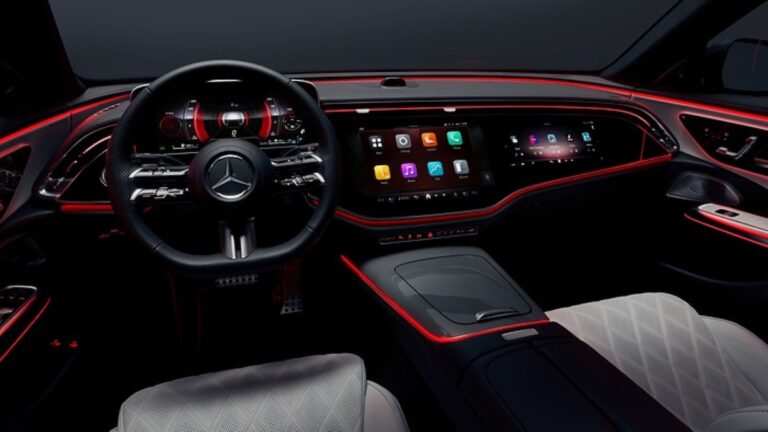
GERMANY: Luxury car manufacturer Mercedes has given a first look at the interior of its next-generation E-Class, which features a screen-heavy dashboard and an array of innovative technology features.

The car, codenamed W214, features a dashboard with slimmer, curvy outer air vents, which gives the car a sleeker, more minimalist look and eliminates the turbine-styled lateral air vents of the EQE sedan.

The car has a range of technological features, including a selfie/video camera, available at an additional cost as part of the MBUX Superscreen, which also features an extra screen on the passenger side of the dashboard. 

The camera works only when the car is stationary, and passengers can take photos and videos. Additionally, the passengers can use the camera for video conferences through Zoom and Webex.

In addition, the 2024 E-Class detects the driver’s eye movements to check whether they are looking at the dashboard’s display on the right side. 

The third screen uses dual light control technology to prevent videos from being visible peripherally to the driver, which can be turned on or off. 

A camera also records the driver’s eye movements to detect if they are looking at the passenger screen.

When this happens, the system reduces its brightness to make it less visible to the driver and reduce distraction.

The car features an infotainment system with other apps beyond Zoom and Webex, such as the TikTok social app, Angry Birds, and the Vivaldi web browser. 

An optional ZYNC entertainment portal enables video streaming, games, news, and additional on-demand content on the central and passenger screens.

The 2024 E-Class also has an Active Ambient Lighting option that works in sync with the car’s audio system to automatically change the lighting based on the rhythm of the music playing. 

The car has a Burmester surround sound system as a standard feature, with 17 speakers and four sound transducers in the front seats.

Mercedes plans to launch the new E-Class at dealerships in the United States later this year, following a world premiere likely to occur in the spring.

The new technology-laden interior of the E-Class is expected to set the standard for luxury car interiors in the years to come. 

With its sleek and minimalist look, advanced technology features, and impressive sound system, the 2024 E-Class promises to provide an unrivalled driving experience.

Also Read: Audi Acquires Minority Stake in Sauber as Preparation for F1 Debut in 2026

Ferrari’s SF-23 under Scrutiny over Use of S-Duct Design in Sidepods

0

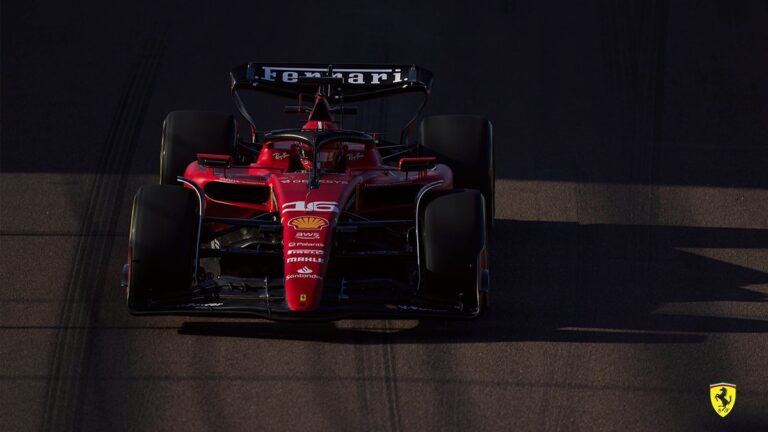
BAHRAIN: Ferrari’s latest Formula 1 car, the SF-23, has come under scrutiny from rival teams over using an S-Duct design in the sidepods. 

Teams have used the S-Duct for over a decade to minimise the impact of turbulent air from cars in front, but Ferrari’s new solution slightly modifies the concept by channelling airflow towards the rear wing and beam wing. 

Teams have asked the FIA to clarify whether this design is legal, but Ferrari remains confident that the car complies with technical regulations.

Ferrari pushed ahead with the design of the SF-23 last summer when it became clear that Red Bull and Max Verstappen were building an unassailable lead in the championship standings. 

The team is confident that the car will feature two or three “very interesting solutions,” including “a couple more hidden” innovations that will roll out as the car is tested in pre-season.

However, the team is focused on improving the power unit’s reliability, with team principal Fred Vasseur admitting that this has been a critical area for improvement.

The SF-23’s use of the S-Duct in the sidepods has been a topic of discussion among rival teams since it was unveiled, with many questioning whether the design is legal under current technical regulations. 

The S-Duct has been used in various forms by teams since its introduction in 2008, but Ferrari’s concept modification has caused some controversy.

The opening at the rear of the sidepods is positioned close to the car’s centre, allowing airflow to move towards the rear wing and beam wing. 

This modification could theoretically improve the car’s aerodynamic performance, but its legality is being questioned. 

Ferrari is confident that the SF-23 complies with technical regulations, and the team is focused on ensuring that the car runs reliably during pre-season testing.

Ferrari is among many teams looking to innovate with new designs in the 2023 season. 

All teams will be looking for ways to gain a competitive edge, and the SF-23’s S-Duct modification could be just one of many innovations to be unveiled in the coming months. 

The next three days of testing in Bahrain will be crucial for Ferrari as the team looks to improve the SF-23’s reliability and demonstrate that the car complies with technical regulations.

Also Read: Formula 1 Announces 6 Venues for F1 Sprint Races across the 2023 Season

Dolly the Sheep: 26 Years Later, a Groundbreaking Scientific Achievement

0

SCOTLAND: On February 22, 1997, scientists introduced the world to Dolly the Sheep, a scientific breakthrough that would change the way we think about cloning forever.

Dolly was born in a laboratory in Edinburgh, Scotland, and was the first mammal cloned from an adult cell.

Her birth was the result of the hard work and dedication of a team of scientists led by Professor Ian Wilmut.

Photo Credit: Twitter/NtlMuseumsScot

The news of Dolly’s birth spread like wildfire across the globe. The breakthrough was seen as a significant milestone in science, as scientists believed that cloning could be used to create organs for transplant and help cure diseases such as cancer and Alzheimer’s

However, the scientific community was also concerned about the ethics of cloning and the potential dangers of the technology.

The birth of Dolly the Sheep was a significant achievement because it showed that scientists could manipulate adult cells to become any cell in the body, including those that create new life.

Her cloning involved taking a mammary gland cell from an adult sheep and fusing it with an egg cell with its own nucleus removed. 

The resulting embryo was then implanted into a surrogate mother, and Dolly was born via a normal sheep birth. This process showed scientists could clone mammals from adult cells, previously thought impossible.

However, cloning was also surrounded by controversy. The scientific community was concerned about the ethical implications of cloning and the potential risks of cloning animals and humans. 

Some believed that cloning could create a world where traffickers cloned people to provide organs or serve as replacements for lost loved ones. 

The public was also concerned about the potential health risks of cloning, including genetic defects, organ failure, and other health problems.

Despite these concerns, the birth of Dolly the sheep was a significant scientific achievement. 

It showed that adult cells could be used to create new life, and it opened up new possibilities for organ transplantation, disease research, and other medical applications. 

Dolly lived a relatively normal life until she was put down in 2003 at age six due to a lung disease.

In the years since Dolly’s birth, cloning has continued to evolve. Scientists have cloned other animals, such as cats, dogs, and horses, and there have been significant breakthroughs in stem cell research. 

However, the ethical concerns around cloning have also continued to be debated.

The birth of Dolly the Sheep 23 years ago was a groundbreaking achievement for science, and it will continue to inspire and challenge scientists for years to come. 

Despite the challenges and ethical considerations surrounding cloning, Dolly remains a symbol of what is possible when scientists push the boundaries of what we think is possible. 

Her legacy lives on, and her birth continues to be a source of inspiration for scientific innovation and progress.

Also Read: NASA’s Perseverance Rover Celebrates Two Years of Exploration on Mars

Kenny Racing’s Affordable Titanium Knee Brace Perfect for Casual Off-roaders

FRANCE: As the upcoming spring riding season approaches, French manufacturer Kenny Racing has introduced a new titanium knee brace perfect for casual off-roaders. 

While off-road riding gear has come a long way regarding safety and styling, injuries and accidents are still more likely in an off-road scenario. 

Kenny Racing’s knee brace is designed to provide adequate protection and support to the knees and shins without restricting the range of motion.

The titanium knee guards are aimed at the entry-level market and feature a pre-formed construction and an asymmetrical design optimised to facilitate the movement of each leg. 

Kenny Racing’s latest offering comes with a double-joint pivot system to make bending the knee much more natural, without the knee brace shifting every time you move. The knee braces also prevent hyperextension of the joint in the event of a drop or crash.

The knee brace is secured by three adjustable Velcro straps for the perfect fit and has a hypoallergenic lining.

Its slim profile means the rider can wear the knee brace underneath their riding pants for a more discreet look. 

Regarding safety, the knee brace is CE-certified in compliance with the EN162-1:2012 safety standard.

For those who like exploring backcountry roads and light trails aboard their dual-sport machines, Kenny Racing’s titanium knee brace is an affordable option. 

Retailing for 79.95 euros or approximately USD 85, this new product from the 40-year-old French brand offers adequate protection for your knees and shins while ensuring that you can still move your limbs freely.

So, gear up for the upcoming spring riding season with Kenny Racing’s affordable titanium knee brace and confidently explore the off-road trails.

Also Read: Formula 1 Announces 6 Venues for F1 Sprint Races across the 2023 Season

OpenAI’s ChatGPT Rival, Fudan University’s MOSS Platform Crashes after Launch

CHINA: Fudan University in Shanghai, China, launched its new AI language model platform MOSS, aimed at providing a user experience similar to OpenAI’s ChatGPT. 

However, the platform encountered issues just hours after launch, leaving users unable to access its features. The MOSS platform team has apologized for the inconvenience caused and pledged to fix the issues.

MOSS crashes following its launch

Designed by a team of researchers at Fudan University over several months, MOSS aims to provide a conversational AI experience that can understand and respond to natural language queries.

Unfortunately, users began reporting issues with the platform shortly after its launch, with some unable to access it and others reporting that the system was slow and unresponsive. 

As more users tried to access the platform, the system became overloaded, resulting in a complete crash. The team at Fudan University admits that the system was not stress-tested adequately before launch, and the team had underestimated the demand for the platform.

The team explained that MOSS is still a very immature AI model. They added that it has a long way to go before reaching the capabilities of ChatGPT. The team added, “An academic research lab like us cannot produce a model whose ability nears ChatGPT.”

MOSS’ crash underscores the challenges of developing and launching new AI platforms. AI models that rely heavily on natural language processing are more prone to crashes due to over-loading. 

While AI systems have the potential to revolutionize the way we interact with technology and machines, they also require ample data, testing, and improvement before they can be deployed.

The MOSS platform was designed to provide a user-friendly and intuitive system to converse with its users. However, as the team at Fudan University discovered, creating such a platform requires a significant investment of time and resources. 

The incident serves as a reminder that AI models must be adequately tested and refined before deployment. It highlights the importance of having the necessary computing resources and engineering expertise to handle the demands of significant traffic.

The MOSS incident may be an unfortunate setback for Fudan University, but it also provides a valuable lesson for other developers and organizations looking to create conversational AI platforms. 

With a suitable investment in data, testing, and engineering expertise, these platforms can provide a valuable service to their users. Still, the developers should be aware of the challenges of developing and launching them.

Also Read: ChatGPT: OpenAI’s Chatbot Releases Al-written E-books on Amazon  

First Official F1 Exhibition to Feature Romain Grosjean’s Fiery Bahrain GP Crash 

0

SPAIN: Motorsport enthusiasts will be in for a treat with the first-ever official F1 exhibition set to open in Madrid on March 24. The seven-room exhibition will feature never-before-seen films, iconic Grand Prix cars, and historical relics.

Romain Grosjean’s torched F1 car is now a museum exhibit

However, one particular exhibit in the “Survival” room will undoubtedly stand out among the rest. The room will display Romain Grosjean’s Haas in one of the scariest and most violent crashes in recent memory at the 2020 Bahrain GP.

During the opening lap of the Bahrain Grand Prix, Grosjean lost control of his car, crashing into the barriers at an astounding 120 mph (193 kph). The impact split the Haas in half, with the cockpit still containing Grosjean bursting into flames after breaking through the safety fencing. 

Despite being trapped inside the burning car for nearly 30 seconds, Grosjean miraculously managed to free himself, climb out of the inferno, and escape with burns on his hands. 

The horrific crash ended Grosjean’s F1 career, but he has turned to compete in IndyCar. The “Survival” room in the exhibition will feature a film where Grosjean recalls the moment of the crash.

He explains how he was unaware of the accident’s severity until he saw a replay the next day. His wife and children watched the race with his father when the crash occurred, and the memory of the terrifying incident will stay with them forever. 

In the film, Grosjean recounts the moment he had to break the headrest to escape the car and the efforts of Dr. Ian Roberts, Alan van der Merwe, and a fireman who helped him escape the burning wreckage.

The exhibit also includes newly-released footage from a different angle of the accident, allowing visitors to witness the full impact of the crash.

Grosjean’s wreck will be displayed in two halves, accompanied by a replica of the car’s safety cell. The French driver thinks the safety cell saved his life, even though the shell was damaged and burned.

The exhibition, held at the IFEMA Madrid in the northeastern part of the Spanish capital, has already sold out of many ticket options.

The event is expected to attract motorsport enthusiasts worldwide as they witness the history, evolution, and impact of F1 over the years. Overall, the first official F1 exhibition is set to be an incredible showcase of the sport’s rich history, featuring some of the most iconic cars and moments in F1. 

But the crash of Grosjean will definitely be the most powerful and emotional part of the exhibit.

Also Read: Lance Stroll Out of F1 2023 Pre-Season Test after Biking Accident

The Red Streaks of Europa: Scientists Solve Mystery of Jupiter’s Moon

0

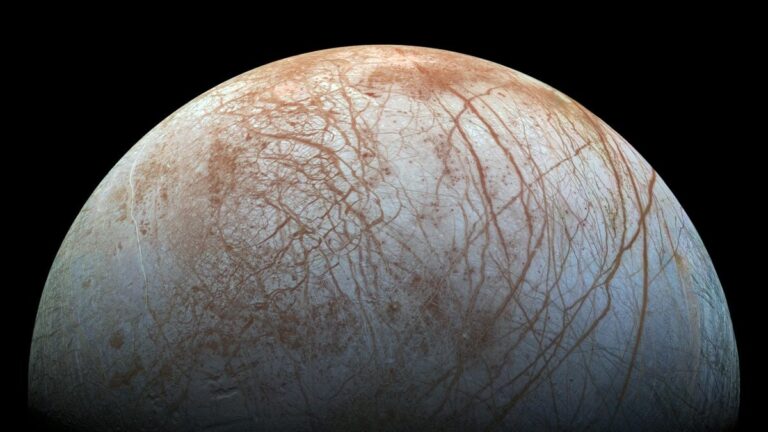
UNITED STATES: A team led by the University of Washington may have unlocked the mystery behind the striking red streaks on Jupiter’s moon, Europa

The February 20th edition of the journal, “Proceedings of the National Academy of Sciences,” published the results of the team’s experiment.

The team has long suspected that a frozen mixture of water and salts forms Europa’s red streaks. However, their chemical composition did not match any known earthly substance. 

The team believes this most likely grows at the top and bottom of Europa’s deep oceans. They concluded their findings by lab-growing a novel solid crystal by combining table salt and water under extremely low pressure and temperature.

A hydrate is a rigid, salted, icy lattice that forms at extremely low temperatures and is held together due to hydrogen bonding between the atoms. 

The only sodium chloride hydrate known previously had a simple composition: one salt molecule for every two water molecules. 

However, the new experiment, which involved squeezing a small amount of salty water between two diamonds, produced two hydrates that were remarkably different from the previously known ones. 

One had two sodium atoms for every 17 water molecules, and the other had one sodium chloride molecule for every 13 water molecules. This arrangement accounts for why the signals from the moons of Jupiter are “waterier” than anticipated.

In a press release, Baptiste Journaux, one of the leading authors, said, “It’s rare nowadays to have fundamental scientific discoveries.” 

He felt that scientists have limited knowledge about the properties of salt and water beyond what is known about Earth’s conditions.

This discovery could benefit the upcoming missions to explore Jupiter and its icy moons. 

The new varieties of salty ice could have implications beyond planetary science. 

Journaux asserted that the new substances are also crucial for physical chemistry and energy research, which uses hydrates as energy storage.

The cold, high-pressure conditions achieved artificially in the lab would be a standard feature on Jupiter’s moons, where 5 to 10 kilometres of ice seas span several hundred kilometres.

This discovery could change the fundamental mineralogical research done in the 1800s but at high pressure and low temperature. 

The team’s experiment could mark a significant breakthrough in scientific research and help unravel the mysteries of Jupiter’s moon, Europa.

Also Read: NASA Releases New Image of Jupiter’s Moon Io