Home Blog Page 83

New Catalyst Can Transform Hydrocarbons into Higher Value Chemicals

0

UNITED STATES: A team of researchers has developed a new catalyst that can transform hydrocarbons into higher-value, more easily recyclable, and biodegradable chemicals and materials.

New Catalyst can convert hydrocarbons into recyclable materials

According to the research published in the Journal of the American Chemical Society, the catalyst can convert hydrocarbons such as motor oil, single-use plastic bags, water bottles, and even natural gas.

The breakthrough is expected to impact the physical properties of various plastics, making them stronger and more accessible to colour. The catalyst introduces functional groups into aliphatic hydrocarbons, which are organic compounds which consist of only hydrogen and carbon, to make them recyclable. 

Aliphatic hydrocarbons are typically used in petroleum and refined petroleum products such as plastics and motor oils, and they do not contain functional groups that make them easy to biodegrade.

The catalyst has been developed by a team of scientists led by Aaron Sadow, a scientist at Ames National Laboratory, director of the Institute for Cooperative Upcycling of Plastic (iCOUP), and professor of chemistry at Iowa State University

The team found a way to avoid the energy-intensive process of cracking petroleum with heat and pressure into small building blocks to add atoms to hydrocarbon chains. The new catalyst avoids cracking by directly converting existing aliphatic hydrocarbons at a low temperature. 

The team previously used a catalyst to break the carbon-carbon (CC) bonds in hydrocarbon chains and attach aluminium to the ends of the smaller chains, inserting oxygen or other atoms to introduce functional groups. The new process finds a way to avoid the CC bond-breaking step.

The catalyst is synthesized by attaching a commercially available zirconium compound onto commercially available silica-alumina, which are all earth-abundant and inexpensive, making it beneficial for future commercial applications. 

The aluminium reactant is synthesized without creating waste by-products, and the zirconium alkoxide-based catalyst precursor is readily available and activated in the reactor. The iCOUP team expects to develop the catalysis more to incorporate more functional groups to affect the physical properties of the polymers. 

The project’s success is credited to the collaborative nature of iCOUP, where groups from different universities and laboratories contributed their expertise to the project.

The new catalyst could provide a sustainable solution to the problem of waste plastics, making them easier to recycle and biodegrade. The breakthrough could also have significant environmental benefits, reducing the quantity of waste plastics in landfills and the ocean. 

The researchers hope the technology can be scaled up for commercial applications, contributing to a more sustainable and circular economy.

Also Read: US Supports Moderna and Believes Government Should Face COVID-19 Vaccine Lawsuit

The Pomodoro Technique: The Secret Weapon for Students Preparing for Exams

0

INDIA: With exams approaching, students often feel the pressure of studying, memorizing, and staying focused for long periods. 

But what if there was a simple technique that could improve focus, productivity, and retention? Enter the Pomodoro Technique.

The Pomodoro Technique is a time management method developed by Francesco Cirillo in the late 1980s. 

The technique involves breaking work down into 25-minute intervals, separated by five-minute breaks. 

After four intervals, take a longer break of 15 to 30 minutes. The name “Pomodoro” comes from the Italian word for tomato, as Cirillo used a tomato-shaped kitchen timer to keep track of his intervals.

The Pomodoro Technique is based on the idea that frequent breaks can help the brain stay fresh and focused.

Research has shown that taking breaks can improve productivity, creativity, and motivation. Using the Pomodoro Technique, students can use these benefits to enhance their studying.

To implement the Pomodoro Technique for studying, students should follow these steps:

1. Set a goal: Before starting each Pomodoro interval, students should set a specific goal for what they want to accomplish. For example, “I will read ten pages of my textbook in the next 25 minutes.”

2. Set a timer: Use a timer to keep track of the 25-minute intervals. Many Pomodoro apps are available on smartphones and computers, or students can use a traditional kitchen timer.

3. Work for 25 minutes: During each Pomodoro interval, focus on the goal. Avoid distractions such as social media, texting, or email.

4. Take a 5-minute break: After each interval, take a short break to rest and recharge. Stand up, stretch, or take a quick walk around the room.

5. Repeat: After the 5-minute break, start another Pomodoro interval. Repeat this cycle until four intervals have been completed, then take a longer break of 15 to 30 minutes.

Using the Pomodoro Technique, students can stay focused and motivated while studying. It’s an effective way to avoid burnout and stay productive during long study sessions. 

With exams approaching, the Pomodoro Technique could be students’ secret weapon to success.

In addition to the standard Pomodoro Technique, students might find a few variations helpful. 

For example, some students prefer shorter intervals of 15 or 20 minutes, especially if they have difficulty staying focused for longer periods. 

Other students prefer longer intervals of 30 or 45 minutes, especially when working on more complex or challenging tasks.

Experimenting with variations is essential to find what works best for each student. 

Some students might also find it helpful to combine the Pomodoro Technique with other study strategies, such as taking notes, creating flashcards, or using mnemonic devices.

The Pomodoro Technique is an effective and simple way for students to improve their focus, productivity, and retention while studying for exams. 

Students can avoid burnout and stay motivated by breaking work into 25-minute intervals and taking frequent breaks. 

With exams just around the corner, the Pomodoro Technique could be the key to success for many students.

Also Read: David Carrick Received a Life Sentence for a String of Rapes and Sexual Assaults

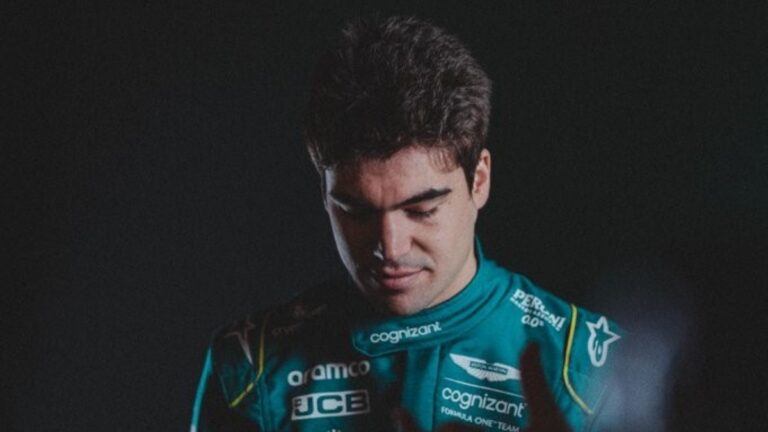
Lance Stroll Out of F1 2023 Pre-Season Test after Biking Accident

0

SPAIN: Aston Martin driver Lance Stroll will miss the upcoming F1 2023 pre-season test in Bahrain after sustaining injuries in a biking accident while training. 

The incident, which occurred in Spain, is expected to be a minor setback, but the recovery time is longer than the three days until the test, leaving Stroll on the back foot as the season opener approaches.

Lance Stroll will now face a formidable challenge when he goes up against his new teammate, Fernando Alonso, a two-time F1 world champion. 

The accident is a significant blow for the young driver, as the pre-season test is the only chance for teams to get their cars race-ready and for drivers to get accustomed to their vehicles.

Lance Stroll has expressed his disappointment at not being able to participate in the pre-season test but remains optimistic about his recovery and is determined to bounce back from this setback as quickly as possible.

The accident also brings to mind Alonso’s previous cycling accident that occurred before the 2021 Formula 1 season. 

In that incident, the driver broke his jaw and needed surgery, leaving him out of action for several weeks. It was only in 2022 that Alonso could have a “normal” preseason preparation.

The incident has raised concerns about the safety of athletes training in their free time. 

Lance Stroll is not the first F1 driver to have had an accident while training, and with the high speeds and risks involved in motorsports, staying fit and healthy is a crucial part of a driver’s preparation. 

The incident also highlights the importance of team preparations and the need for backup plans.

With the F1 2023 season opener set to take place in Bahrain in March, Lance Stroll will have to work hard to regain his form and recover to full fitness to compete at the highest level. 

The accident reminds all athletes that safety should always come first and that they must take all necessary precautions to prevent injuries while training.

Also Read: AlphaTauri Dives into 2023 F1 Season with Stylish Livery Launch in New York

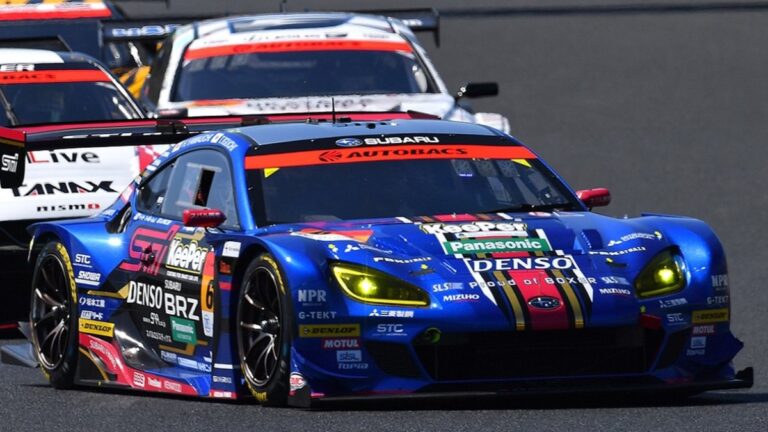
2023 Super GT: Exciting Season Begins with 42-Car Entry List Release

0

JAPAN: The 2023 Super GT championship will feature 42 cars, one fewer than last year’s single round at Fuji 450km. 

Toyota, Honda, and Nissan will continue their dominance in the GT500 class, with Toyota having the most cars entered. 

Meanwhile, Bridgestone will supply tyres for ten of the fifteen cars in the top category, followed by Michelin, Yokohama, and Dunlop.

Nissan’s Team Impul will return with the #1 plate in place of its usual #12 after Bertrand Baguette and Kazuki Hiramine’s Super GT title triumph last year. 

The GT500 will feature only three non-Japanese drivers this season, with Giuliano Alesi, Bertrand Baguette, and Ronnie Quintarelli rounding out the trio.

In the GT300 class, 27 cars from nine manufacturers are confirmed, including Toyota, Lexus, Honda, Nissan, Subaru, BMW, Audi, Mercedes, and Lamborghini. 

However, Pacific Racing is the only team without a confirmed car after the end of its partnership with CarGuy Racing. 

Ferrari, the only non-Japanese manufacturer in last year’s championship, seems unlikely to be represented in 2023. 

Yokohama will continue to supply tyres for 16 cars, while Dunlop will have six, Bridgestone four, and Michelin just one.

Team LeMans, JLOC, and R’Qs Motor Sports are all confirmed for the 2023 Super GT campaigns, despite having yet to make any official announcements. 

Team LeMans will field its Audi R8 LMS GT3 Evo II for Roberto Merhi and Yoshiaki Katayama. 

The two-car Lamborghini squad, JLOC, and Mercedes outfit R’Qs maintain unchanged line-ups from 2022.

In addition, Inging, Shade Racing (both Toyota GR86 GT), and Max Racing (Toyota GR Supra GT) are among the teams that have confirmed their plans for the upcoming season. 

GT300 stalwart Hiroki Katoh has stepped down as a full-time Super GT driver at Inging in favour of Toyota-backed youngster Hibiki Taira while still serving as a third driver and team principal for the coming campaign.

The 2023 Super GT season is set to be another exciting chapter in the history of Japanese motorsport. 

With Toyota, Honda, and Nissan continuing their GT500 dominance and the GT300 field featuring a diverse range of manufacturers, fans can expect a thrilling racing season.

Also Read: Mercedes Reveals Their 2023 F1 Car with Eagerly Anticipated Black Livery

Ubisoft Introduces ‘Mousetrap’ to Catch Rainbow Six Siege Cheaters

0

UNITED STATES: Rainbow Six Siege players can finally sigh in relief as Ubisoft, the game’s publisher, has found a new way to combat cheaters. 

Ubisoft adds Mousetrap as anti-cheat software

https://twitter.com/Rainbow6Game/status/1627037105808637953

Tom Clancy’s game provides new anti-cheat software, Mousetrap. The software identifies players using spoofing tools and introduces real-time input lag into their game. 

The input lag makes it more difficult for Rainbow Six Siege cheaters to aim and shoot with precision, forcing them to face the same frustration they have been inflicting on other players for so long.

Spoofing, which is the act of using a mouse and keyboard setup on console servers where everyone else uses a controller, has been a persistent problem in Rainbow Six Siege. 

Cheaters often use another tool to change their IP address, making it almost impossible for game developers to identify them. Ubisoft has struggled to combat spoofers for a long time, and the company has finally found a solution. Mousetrap starts slowly, with barely noticeable input lag, but it ramps up with every match. 

Eventually, spoofers will face a significant disadvantage, and they won’t be able to keep up with other players. The new tool is a creative way to deal with cheaters, and it has already put a smile on many players’ faces.

Ubisoft is confident that this new anti-cheat software will significantly reduce instances of spoofing, but only time will tell if cheaters can get around it. However, the company’s approach is more creative than the traditional ban wave. 

Instead of getting banned, cheaters will have to suffer the consequences of their actions in the form of input lag, which can be incredibly frustrating. The fact that spoofers won’t realize that they’re experiencing input lag until they’re a few games in is a delicious irony.

The Mousetrap will be deployed along with the start of Year 8 on March 7. The Year 8 update will also come with a new Operator Brava and Operation Commanding Force. 

The introduction of Mousetrap is excellent news for Rainbow Six Siege players who have been frustrated with the game’s cheating problem.

Ubisoft has shown that it is unwilling to let cheaters ruin the game for everyone else, and this new anti-cheat software is proof of that.

Also Read: Call of Duty: Warzone 2 S2 Brings Exciting Changes to DMZ Missions

Indian Railways Orders Safety Drive after Faulty Braking System Causes Train Collision

INDIA: Indian Railways has issued a month-long safety drive after a preliminary report revealed that a faulty German-made braking system was likely to have caused a recent train collision in the Sultanpur district. 

The railway zones have been instructed to monitor loco pilots’ braking techniques and ensure that trains fitted with the bogie-mounted brake system (BMBS) follow the prescribed speed limit.

The BMBS has been involved in a series of complaints and accidents. The Indian Railways has placed restrictions on loaded trains, with over 50% of their wagons fitted with the system.

Photo Credit: Twitter/SHUBHAM36978815

Such trains are limited to speeds of 50 kmph on downward gradients, 65 kmph on level tracks, and 80 kmph on DFC. The Sultanpur collision involved two goods trains, one running at 65 kmph on a downward gradient when its brakes proved ineffective. 

In response, the Railways told inspectors to do “ambush checks” on loco pilots to make sure they follow the rules and keep an eye on the crew’s control of the train when there are yellow signals or slopes.

The safety drive will also focus on preventing SPAD (signal passed at danger) cases, which can result from loco pilots working beyond their stipulated duty hours and becoming fatigued. The Railway Board order stressed that loco pilots and assistant loco pilots need to get enough rest.

The BMBS was flagged by the Research Design and Standards Organization in July 2022 due to deficiencies in its braking power. All wagons with BMBS are equipped with a twin-pipe system and are to be run in “twin-pipe mode” for safer operations on long, steep gradients.

Indian Railways has a network of over 67,000 km and is one of the largest employers in the world, with around 1.3 million employees. The safety drive is part of ongoing efforts to make the rail network safer and stop accidents caused by broken equipment and human error.

The railway network is vital to India’s infrastructure, transporting goods and people across the country. The safety of passengers and workers is the most important thing, so the Railways are taking steps to fix the problems that the Sultanpur crash and the BMBS braking system have brought up.

Also Read: Railway Budget 2023: Funds Passed for New Hydrogen Trains and Vande Metro

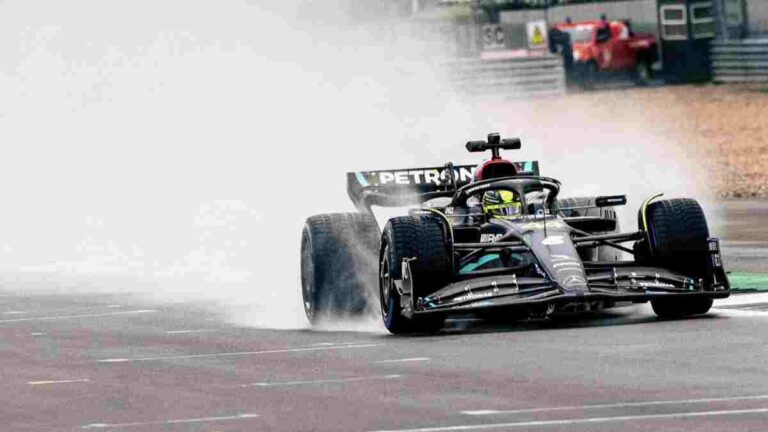
Coanda Effect: The Real-Life “Air-Bending” Phenomenon

0

INDIA: The Coanda effect, named after Romanian aerodynamicist Henri Coanda, is a phenomenon in fluid dynamics that has significant implications in various areas of daily life, including motorsports. The effect occurs when a fluid or gas flows over a curved surface and adheres to it, creating a zone of low pressure that pulls the flow towards the surface.

The Coanda effect can be used in many ways, from making everyday household appliances work better to changing the way racing cars are made.

From aeroplanes to hair dryers, the Coanda effect is a key part of how many everyday things are made and work.

The design of air conditioning units is one example of the Coanda effect in action. The Coanda effect pulls air down and across the room in the air conditioner, resulting in more evenly distributed cool air distribution.

This airflow manipulation is achieved with the help of a curved surface in the shape of a backwards-facing step. The design ensures a more comfortable environment and saves energy, as the unit does not have to work as hard to cool the room’s temperature.

The Coanda effect may seem like a small detail, but it has enormous implications for the performance of many different types of machinery. 

For example, in aeroplanes, the Coanda effect keeps air flowing smoothly over the wings and fuselage, which helps to increase lift and decrease drag.

The increased lift makes it possible for planes to fly at higher speeds and altitudes, while decreased drag helps them use less fuel.

Another application of the Coanda effect is in motorsports, where it has been used to great effect to improve the performance of racing cars.

In Formula One, the design of the car’s wings and underbody is critical to achieving maximum downforce and speed.

Using the Coanda effect, designers can make better airflows and reduce a car’s drag. This makes the car easier to handle and speeds up lap times.

The Coanda effect is particularly significant in developing the diffuser, the curved section of the underbody that helps generate downforce. 

By curving the diffuser’s walls and using the Coanda effect, designers can create a low-pressure zone that pulls the airflow downward and creates a vacuum behind the car. 

This low-pressure zone helps the car create significant downforce, improving the car’s grip and stability in high-speed corners.

The use of the Coanda effect in motorsports has been revolutionary, and it continues to be a critical factor in the design of race cars. 

In recent years, Computational Fluid Dynamics (CFD) has enabled designers to simulate the effect of different designs on airflow, allowing them to optimize their designs to achieve the best possible performance.

However, it’s not just motorsports that the Coanda effect significantly impacts. The effect has also been used in aircraft design, wind turbines, and vacuum cleaners. For example, the Dyson Air Multiplier fan uses the effect to pull air in from the bottom of the fan and speed it up as it goes over the curved surface. This makes a strong stream of air without the need for blades.

From improving the efficiency of household appliances to revolutionizing the design of racing cars, the Coanda effect is proving to be a valuable tool in developing new technologies. 

As our understanding of fluid dynamics continues to advance, the effect will likely become even more critical in shaping the future of our world.

Also Read: Colossal Biosciences Tries to Bring Back Dodo and Woolly Mammoth 

NASA’s Perseverance Rover Celebrates Two Years of Exploration on Mars

UNITED STATES: NASA’s Perseverance rover has reached its second year on the surface of Mars. The rover landed on Mars on February 18, 2021, in the Jezero Crater with its partner, the Ingenuity helicopter.

Perseverance has since made several achievements and collected 15 rock cores and an atmospheric sample.

The primary mission objective is to collect Mars’ regolith material and rock cores, which are essential for scientists’ past research on Mars’ habitable environment.

The rover has filled 18 of its 38 titanium sample tubes, and the samples will be returned to Earth in 2033.

The rover has also established a sample depot called Three Forks to ensure that the samples can be collected if the rover fails to last until 2033.

In order to achieve this, two Ingenuity-like helicopters will collect the depot tubes, one by one, and bring them back to the lander for launch.

Perseverance and ingenuity are not the only robots exploring the Martian surface.

The Curiosity rover, which arrived on Mars in 2012, is exploring the Gale crater, which is about 96 miles wide.

Perseverance has travelled over nine miles since landing and is now exploring the top of the ancient delta.

Ingenuity, the four-pound helicopter, was sent to Mars as a technology demonstrator, tasked with showing that aerial exploration is possible despite the planet’s thin atmosphere.

The helicopter, nicknamed “Mars helicopter,” has completed 43 flights, covering almost 5.5 miles of the Martian surface.

Perseverance’s scientific payload has been used extensively since it arrived on Mars. The rover has taken over 166,000 images, fired SuperCam’s rock-zapping laser 230,554 times, and the ground-penetrating radar instrument has performed 676,828 subsurface soundings.

NASA plans to send a Sample Retrieval Lander (SRL) to Mars to retrieve the samples collected by Perseverance.

ESA will launch an Earth Return Orbiter (ERO) in 2027 to return the Mars samples to Earth.

The rover’s ultimate goal is to search for signs of ancient Mars life, which the samples will confirm once they reach Earth and are analysed by scientists in well-equipped labs worldwide.

Perseverance’s work is complex and involves searching for life on Mars. This objective is complex, and the confirmation of life on Mars may be beyond the rover’s capability.

Perseverance’s team members have stated that the high priority of the mission is to retrieve the samples and get them back to Earth as soon as possible.

The Perseverance project’s lead scientist, Ken Farley, said that the team reflected on and celebrated the rover’s achievements over the past two years.

He added that Perseverance is expected to add more scientific data soon as it begins its next science campaign known as “Upper Fan.”

Also Read: NASA James Webb Space Telescope Unveils Fresh Details in Pandora’s Cluster

The Great Northern War: The Battle of Napue between Sweden and Russia

0

SWEDEN/RUSSIA: Isokyrö, a small town located in Ostrobothnia, Finland, was the site of a fierce battle that took place on February 19, 1714.

The battle of Napue, as it is commonly known, was a decisive moment in the Great Northern War. The struggle pitted Sweden against an alliance of Russia, Denmark-Norway, and Saxony-Poland-Lithuania.

The battle lasted for several hours, resulting in a crushing defeat for the Swedish forces and a turning point in the war.

The Great Northern War had been raging since 1700, and by 1714, Sweden was in a precarious position. 

The country’s once-great army had suffered a string of defeats, and its king, Charles XII, was facing increasing pressure from his enemies.

The Russians, in particular, had been gaining ground and were determined to bring Sweden to its knees.

In the winter of 1714, Charles XII ordered a daring raid on the Russian city of St. Petersburg, hoping to deal a decisive blow to the Russian war effort. 

However, the raid failed, and the Swedish forces were forced to retreat. During this retreat, the Russian army ambushed them near the town of Napue.

The battle that followed was brutal and bloody. The Swedish forces, which numbered around 6,000 men, were caught off guard and quickly overwhelmed by the Russian army, which had approximately 10,000 soldiers. 

The fighting was fierce, with both sides suffering heavy casualties. The Swedish army was eventually forced to retreat, leaving behind around 2,000 dead or wounded soldiers.

The Battle of Napue was a significant turning point in the Great Northern War. It marked the end of Sweden’s regional dominance and signalled Russia’s rise as a significant European power. 

The defeat severely damaged the morale of the Swedish forces and made it clear that Russia was a force to be reckoned with.

The impact of the battle was felt not just in Sweden but across Europe. It marked a shift in the balance of power, with Russia emerging as a significant player on the international stage. 

The war continued for several years, with Russia emerging as the victor.

Today, the Battle of Napue is remembered as a pivotal moment in Finnish history. The town of Isokyrö, where the battle took place, has become a symbol of Finnish resistance to foreign aggression. 

On the battle’s anniversary, a ceremony is held every year to honour the soldiers who fought and died on that fateful day.

The Great Northern War, and the Battle of Napue in particular, remain essential reminders of the consequences of war and the price of conflict.

Also Read: Boris Johnson Warns Rishi Sunak over Bid to End Post-Brexit Deadlock

Jadeja-Ashwin Shred Aussie Batting as India Wins 2nd Test Match by 6 Wickets

0

INDIA: The third morning of the second Test in the Border-Gavaskar Test series between India and Australia saw a dramatic collapse of the Australian team. 

India vs Australia

After starting the day at 61/1 in their second innings, Australia crumbled to 113 all out in just 19.1 overs. Ravindra Jadeja returned with a career-best 7 for 42, and Ravichandran Ashwin picked up the other three wickets.

India
Photo Credit: Twitter/BCCI

Australia had started their innings with attacking intent. Their aggressive approach backfired as they lost wickets in quick succession, with most of the batters falling to premeditated sweep and reverse sweep shots. 

Even Steve Smith, who had targeted the straight boundary against Jadeja, attempted a sweep shot off Ashwin and was caught plumb in front of the stumps.

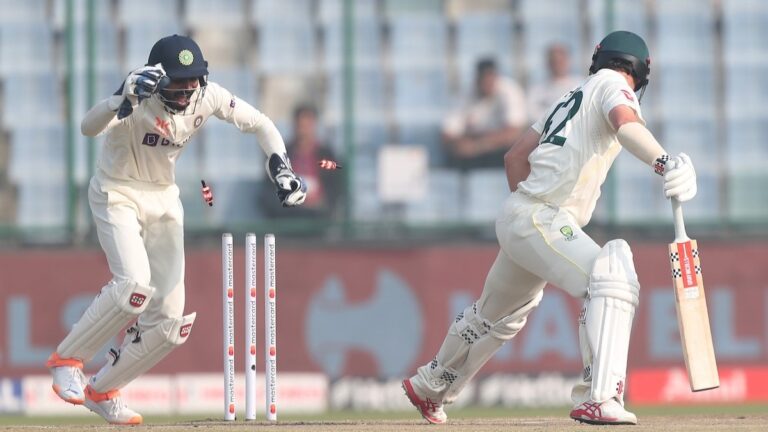
Marnus Labuschagne, who had looked assured until then, was dismissed by Jadeja after a delivery bounced low and managed to sneak below his bat and hit the stumps.

Australia went from 95/4 to 95/7 in just ten deliveries, with Matt Renshaw, Peter Handscomb, and Pat Cummins falling to attempted sweeps. Alex Carey also fell while attempting a sweep shot, becoming Jadeja’s fifth wicket of the innings.

Nathan Lyon managed to stop the continuous fall of wickets for a while. However, Jadeja castled the Aussie spinner with a beautiful delivery. 

Matthew Kuhnemann became Jadeja’s sixth victim after attempting a reverse sweep, making Jadeja the second spinner after Anil Kumble to take five bowled dismissals in an inning.

In the second session, India chased down the lowly target of 115, with KL Rahul falling to an unlucky dismissal before lunch. Rohit Sharma, Virat Kohli, and Shreyas Iyer fell after lunch, raising the heartbeats in the Indian camp.

However, Australia couldn’t make further inroads, with Pujara and KS Bharat polishing off the remaining runs to take India to an unassailable 2-0 lead in the series.

Also Read: IND vs AUS 2nd Test: Australia Takes Upper Hand after Indian Rear-guard Action