Home Blog Page 46

Liberty Media CEO Sees Potential for American Manufacturer in Formula 1

0

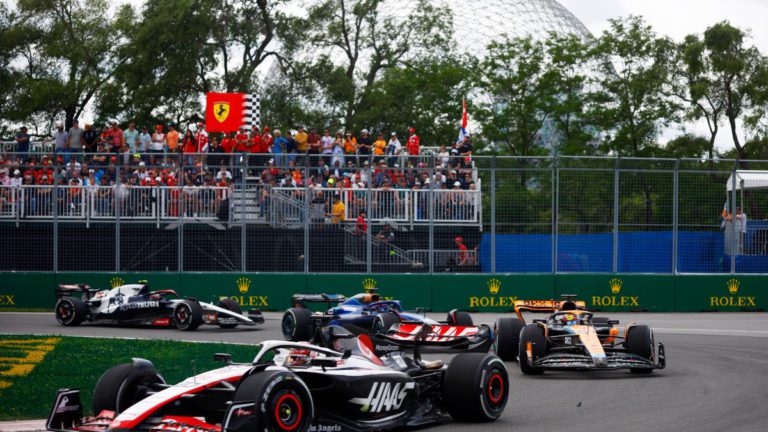
UNITED KINGDOM: Liberty Media’s CEO, Greg Maffei, expressed his optimism about the possibility of an American manufacturer joining Formula 1. With discussions underway regarding the potential entry of an 11th Formula 1 team, Maffei’s comments have ignited hope for the Andretti Global prospect.

The sport’s governing body, the FIA, and commercial rights holder, Liberty Media, are currently evaluating the 11th team present. The FIA has set a soft deadline of June 30th to inform prospective entrants about the continuation of the entry process.

Andretti Global, run by the well-known Michael Andretti, is one of the prominent candidates in contention. The team already boasts an impressive portfolio in various racing series, including IndyCar, IMSA, and Formula E. 

However, they have faced resistance from F1 CEO Stefano Domenicali and the existing teams. To strengthen their application, Andretti has secured the support of American original equipment manufacturer (OEM) General Motors, a significant achievement for the team. 

This move aligns with Red Bull’s recent partnership with Ford for engines starting in 2026.

Andretti’s collaboration with General Motors goes beyond mere badges.

While targeting a 2025 entry, the team has secured an initial supply deal with Renault until GM Cadillac can become a full-fledged engine manufacturer. 

Eric Warren, GM’s motorsport executive director, emphasized their active involvement in the car’s design and the entire process, highlighting their commitment to more than just engine labelling.

During an interview on the Walker Webcast, Greg Maffei discussed the ongoing efforts to introduce an American entry into Formula 1. 

Maffei hinted at the possibility of General Motors supporting the Andretti bid for the 11th team, along with the potential involvement of other interesting original equipment manufacturers. 

He expressed the desire to welcome more OEMs, particularly American ones, to the sport, seeing it as a positive development.

However, the existing teams are less enthusiastic about adding another outfit to the grid due to the current terms of the Concorde Agreement. The Agreement requires new entrants to pay a $200 million “anti-dilution” entry fee. 

Although this fee provides a short-term financial boost to the current teams, as it is divided equally among them, an 11th team dilutes the prize money fund, affecting each team’s share based on their finishing position in the championship.

The Concorde Agreement continues until 2025, coinciding with Andretti’s desired entry year. 

If Andretti’s application is unsuccessful, the entry fee will likely surge to $600 million, bringing it in line with valuations of prominent franchises in other sports like the NHL. 

Additionally, fitting an 11th team into existing pitlanes poses logistical challenges for the FIA and Liberty Media.

Maffei acknowledged the difficulties in accommodating an additional team in certain pitlane areas. 

However, new circuit builds, such as the one in Las Vegas, will not face this problem, indicating Liberty Media’s direction for future developments.

The prospect of an 11th team in Formula 1 is not without controversy, as current groups are concerned about profit sharing and dilution. 

Maffei acknowledged the teams’ apprehension and discussed the franchise fee, which the FIA had introduced to create value for the teams. While Maffei believes the teams can reach an agreement under the right circumstances, it will require extensive negotiations.

The anticipation surrounding an American manufacturer’s potential entry into Formula 1 brings excitement and intrigue to the sport. Fans and stakeholders eagerly await further developments, hoping for a positive outcome to enrich the racing series both on and off the track.

Also Read: Fernando Alonso’s Overtaking Skills Questioned: F1 Pundit Favours Max Verstappen in Potential Showdown

Facebook’s Meta and Google’s Alphabet Among the Highest-Paying Firms in 2022

0

UNITED STATES: According to a report by the Wall Street Journal, Meta, the parent company of Facebook, and Alphabet, Google’s parent corporation, ranked among the top three highest-paying firms in 2022.

The study examined data on median salaries at 278 S&P 500 companies compiled by public company researchers at MyLogIQ. Surprisingly, these companies maintained high employee wages despite significant layoffs.

Here are the top five highest-paying public firms in 2022:

Vici Properties: Topping the list is Vici Properties, a commercial property investment trust. With only 22 employees, the company offers a median salary of $415,000 (over Rs 3 crore and 40 lakhs). 

Based in New York City, Vici Properties focuses on developing casinos and operates numerous entertainment establishments throughout the United States, including golf courses, restaurants, bars, and racecourses.

Meta (formerly Facebook): The second-ranked company is Meta, the parent company of Facebook. Its employees received a median income of nearly $296,320 (over Rs 2 crore and 42 lakhs). Notably, Meta’s CEO, Mark Zuckerberg, earned $28 million (Rs 229 crore), which is 91 times the average income at the firm. 

Meta owns popular social networking platforms like Facebook, Instagram, and WhatsApp. Forbes estimates that Meta generated $117.3 billion in revenue in 2022–2023.

Alphabet (Google’s parent company): Alphabet secured the third position on the list in 2022. The company’s employees earned a median income of $279,802 (approximately Rs 2 crore and Rs 29 lakh). Along with Microsoft, Amazon, Apple, and Meta, Alphabet is considered one of the Big Five American technology corporations.

According to the article, Sundar Pichai, CEO of Alphabet, received a total compensation of $226 million (around Rs. 185 lakh crore) in 2022, approximately 808 times higher than the firm’s median income. It is worth noting that Google announced the layoff of 12,000 employees in January 2023.

Etsy: Taking the fourth spot is Etsy, an online marketplace known for unique handmade and vintage items. Employees at Etsy enjoyed a median pay of $248,232 (over Rs 2 crore and three lakhs). According to Forbes, the company was founded in 2005 and currently employs 1,414 people.

Incyte: In the top five is pharmaceutical giant Incyte, with a median pay of $47,678 (about Rs 40 lakh). Incyte specializes in the development and manufacturing of biological drugs. Forbes estimates that the company currently employs approximately 3,000 individuals.

Also Read: WhatsApp to Integrate Meta Quest Compatibility, Enabling Native VR Messaging Experience

India Plans to Introduce New Vehicles Running Entirely on Ethanol, Says Transport Minister

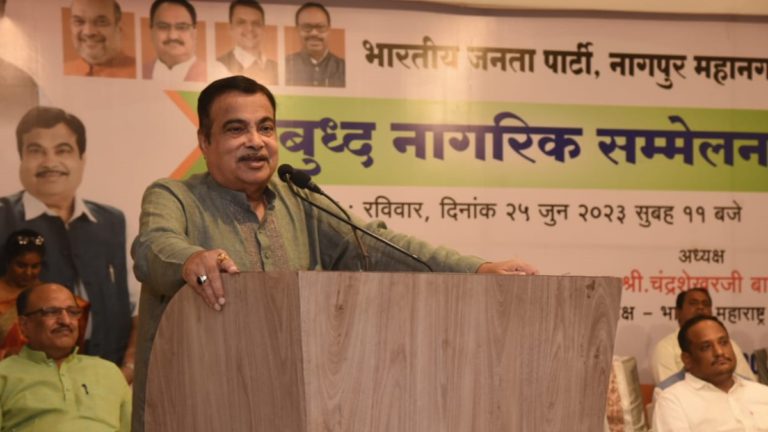
INDIA: Union Road Transport and Highways Minister Nitin Gadkari announced that India would introduce new vehicles that run entirely on ethanol.

Speaking at an event in Nagpur, the minister highlighted the country’s efforts to promote eco-friendly transportation and reduce dependence on traditional fossil fuels.

Nitin Gadkari shared his recent conversation with the chairman of Mercedes Benz, who expressed the company’s commitment to manufacturing electric vehicles exclusively in the future. 

The Indian government is collaborating with leading automobile manufacturers to develop ethanol-powered vehicles. Bajaj, TVS, and Hero scooters are among the first to embrace this shift, promising 100 percent reliance on ethanol as their fuel source.

Moreover, Gadkari revealed plans to launch Toyota’s Camry car in August, which will operate entirely on ethanol and even generate 40 percent electricity. 

The minister emphasized the economic advantages of ethanol-based vehicles, stating that the cost per litre of ethanol is around Rs 60, while petrol stands at Rs 120. 

With ethanol being significantly cheaper, the estimated fuel cost for ethanol vehicles would be as low as Rs 15 per litre. India has actively promoted ethanol as a biofuel to reduce carbon emissions and enhance energy security. 

In February of this year, Prime Minister Narendra Modi introduced 20 percent ethanol-blended petrol in select petrol pumps across 11 states and Union Territories. This initiative aims to gradually increase the use of biofuels in the country.

PM Modi highlighted the significant progress made in incorporating ethanol into petrol, with the blend ratio increasing from 1.5 percent in 2014 to 10 percent and now advancing to 20 percent. 

The first implementation phase covers 15 cities, while the government plans to expand the availability of 20 percent ethanol-blended petrol pumps nationwide within the next two years.

Ethanol, a renewable fuel, is derived from various plants, vegetables, and biological sources. In India, teams have extensively researched using Jatropha oil as a biofuel source. 

Additionally, rice, corn, and other oils can produce ethanol with the desired calorific value. This diverse range of feedstocks offers flexibility in ethanol production, contributing to the country’s efforts to reduce carbon emissions and promote sustainable energy alternatives.

The Indian government’s commitment to introducing vehicles running entirely on ethanol signifies a significant step forward in the country’s sustainable transportation sector. 

By embracing ethanol as a clean and affordable fuel option, India can reduce its carbon footprint and pave the way for a greener future in the automotive industry.

Also Read: Kangana Ranaut’s ‘Emergency’ Bags a Gripping Teaser

Tsiolkovsky’s Rocket Equation Paradox: The Balancing Act of Space Exploration

INDIA: Space exploration has captivated the human imagination for centuries, but it was Konstantin Tsiolkovsky, a Russian scientist and father of astronautics, who laid the foundation for understanding the challenges of space travel.

Tsiolkovsky’s Rocket Equation, formulated over a century ago, remains a fundamental principle. However, this equation also presents a paradox that poses a significant hurdle for space missions.

The Rocket Equation, often expressed as Δv = ve * ln(m0 / mf), relates the change in velocity (Δv) of a rocket to the effective exhaust velocity (ve) and the ratio of the initial mass (m0) to the final mass (mf). 

The equation elegantly captures the concept that a rocket must expel propellant in the opposite direction for it to gain speed or change its trajectory. 

While this equation helps us calculate the necessary fuel for a given mission, it also uncovers the inherent challenge of balancing payload capacity and fuel requirements.

The paradox arises from the fact that carrying more fuel to achieve higher velocities increases the overall mass of the rocket, making it more challenging to escape Earth’s gravitational pull. 

On the other hand, reducing the fuel load to enhance payload capacity compromises the rocket’s ability to reach desired velocities. This delicate balance between fuel and payload has puzzled engineers and space scientists for decades.

In practical terms, the paradox means that achieving significant increases in spacecraft speed requires exponentially larger amounts of propellant. 

For example, consider a hypothetical mission to reach a nearby star system. The spacecraft would need an astronomical amount of fuel to achieve a reasonable fraction of the speed of light, making such a mission with our current technology impractical, if not impossible.

Over the years, engineers have sought innovative solutions to overcome the limitations of Tsiolkovsky’s Rocket Equation. 

One approach is to utilize propulsion systems that do not rely solely on onboard fuels, such as solar sails or ion propulsion. Although these technologies have the benefit of continuous acceleration, their efficiency and power source need to improve.

Another strategy involves in-space refuelling, where rockets can dock with fuelling stations or utilize resources found in space, such as mining water ice on the Moon or asteroids. 

This approach reduces the initial fuel load required for long-duration missions, allowing for greater payload capacity without sacrificing velocity. 

However, the logistics and infrastructure for in-space refuelling are complex and require significant advancements in space exploration capabilities.

In recent years, private space companies like SpaceX have been working on reusable rocket technology to address this paradox. 

By landing and reusing boosters, the overall cost of space travel decreases, making it more economically viable to carry larger fuel loads.

While this does not directly solve the fuel-payload trade-off, it helps reduce the financial burden associated with single-use rockets.

Tsiolkovsky’s Rocket Equation Paradox is a constant reminder that space exploration is a delicate dance between the limitations of physics and the ingenuity of human innovation. 

As we push the boundaries of our cosmic aspirations, finding ways to optimize fuel efficiency, develop alternative propulsion systems, and establish sustainable space infrastructure will be crucial steps towards unlocking the universe’s secrets.

While the paradox presents a formidable challenge, it inspires scientists, engineers, and dreamers alike to imagine a future where humanity overcomes these barriers and explores the vast expanses of space with greater ease and efficiency. 

Only time will tell if we can untangle the complexities of Tsiolkovsky’s Rocket Equation and embark on interstellar journeys that once seemed impossible.

Also Read: Decoding Newcomb’s Paradox: A Mind-Bending Conundrum of Rationality

Breakthrough Discovery Links Synucleins to the Release of Endocannabinoids in the Brain

0

UNITED STATES: In a groundbreaking study published in Nature Neuroscience, researchers from Stanford University have made a significant discovery linking synucleins, proteins associated with Parkinson’s disease, to the release of endocannabinoids in the brain. Endocannabinoids are neurotransmitters crucial to various physiological processes, including sleep, mood, and appetite.

The team, led by Eddy Albarran and Yue Sun, explored the mechanisms behind endocannabinoid release from postsynaptic compartments. 

The team found that α-synuclein, β-synuclein, and γ-synuclein, which previous studies have implicated in synaptic plasticity, are critical contributors to the release of these neurotransmitters.

Brain
Representational Image. Photo Credit: Pixabay/geralt

By conducting experiments on mice using genetic and imaging techniques, the researchers discovered that synuclein deletion blocked endocannabinoid-dependent synaptic plasticity. 

Furthermore, they observed that they could reverse the blockage by expressing wild-type α-synuclein but not mutant α-synuclein. 

The findings suggest that synucleins regulate the release of endocannabinoids through a synaptobrevin SNARE-dependent mechanism.

The unexpected nature of these findings challenges previous studies that did not establish a link between SNARE proteins and the release of endocannabinoids. This discovery sheds new light on understanding endocannabinoid signalling in the brain and its potential connection to Parkinson’s disease and other neurodegenerative disorders. 

Previous studies have associated mutations in α-synuclein with the development of early-onset Parkinson’s disease, and abnormal accumulation of the protein is observed in patients with Parkinson’s and Alzheimer’s.

This research opens new avenues for further investigating the relationship between endocannabinoids, synucleins, and neurodegenerative diseases. 

Understanding this connection could have significant implications for developing targeted drugs and therapeutic interventions to alleviate the debilitating symptoms of Parkinson’s disease and other related conditions.

This groundbreaking study provides valuable insights into the fundamental processes of neurotransmitter release in the brain and highlights the potential role of synucleins in the pathogenesis of neurodegenerative disorders. 

Further research offers hope for future breakthroughs that could lead to improved treatments and a better understanding of these debilitating diseases.

Also Read: Space Travel’s Impact on Astronauts’ Brains Unveiled in Recent Study

Security Warning for Indian iPhone Users: Hackers Can Gain Full Control of Devices

INDIA: In a concerning security warning, the Indian Computer Emergency Response Team (CERT-In) has alerted iPhone and iPad users in India about vulnerabilities that could give hackers complete control over their devices.

The warning applies not only to the latest iPhone models but also to older devices such as the iPhone 6s, iPhone 7 series, iPhone 8 series, and iPhone SE first-gen. iPad users, including those with the iPad Air, Pro, and Mini, are also advised to update their devices to the latest version of iPadOS.

The CERT-In has attributed the identified vulnerabilities to “improper input validation” in the Kernel and “improper state management” in issues related to WebKit, the core technology behind Apple’s Safari browser. 

The agency highlights that attackers can execute arbitrary code on the target system if these vulnerabilities are exploited, potentially granting them complete control over the compromised device.

Given the severity of the situation, CERT-In has classified the warning with a “high” rating.

https://twitter.com/IndianCERT/status/1671904136223408130

The agency has strongly urged iPhone and iPad users to update their devices immediately to address these vulnerabilities. The update process can be initiated by navigating to Settings > General > Software Update on iPhones and iPads. 

By following these simple steps, users can protect their devices against potential security breaches.

Apple has already responded to these vulnerabilities by rolling out new iOS updates. Users can update iPhone models such as all iPhone 6s and iPhone 7 models, the 1st generation iPhone SE, iPad Air 2, the 4th generation iPad mini, and the iPod touch (7th generation) to iOS 15.7.7 and iPadOS 15.7.7. 

For iPhone 8 and later models, all iPad Pro models, iPad Air 3rd generation and later, iPad 5th generation and later, and iPad mini 5th generation and later, iOS 16.5.1 and iPadOS 16.5.1 updates are available.

Apple’s support page credits the discovery of these vulnerabilities to researchers at the renowned security firm Kaspersky.

Regarding the iOS kernel issue, Apple’s support page warns, “An app may be able to execute arbitrary code with kernel privileges. Apple is aware of a report that miscreants may have actively exploited this issue against versions of iOS released before iOS 15.7.” 

https://twitter.com/IndianCERT/status/1672261504438263808

Given the potential risks associated with these vulnerabilities, iPhone and iPad users in India must take immediate action and update their devices to the latest software versions. By doing so, they can protect their personal information, maintain device integrity, and safeguard against unauthorized access.

Also Read: Apple to Unveil Mixed Reality Headset at WWDC; Will Not Replace iPhone

FIA Targets Red Bull, Mercedes, Ferrari, and Aston Martin in Non-F1 Projects Crackdown 

0

UNITED KINGDOM: The FIA (Fédération Internationale de l’Automobile) recently issued a new technical directive, TD45, to curb the influence of outside sporting interests on F1 teams. The directive has caught the attention of four major teams: Red Bull, Mercedes, Ferrari, and Aston Martin.

The FIA seeks further clarification on their satellite operations, particularly regarding the potential loophole that allows teams to transfer personnel to non-F1 projects. While this move could exempt these projects from the F1 budget cap, concerns have arisen about the transfer of knowledge and its impact on F1 design.

TD45 primarily targets the ‘Non-F1 Activities,’ which encompass the design of boats, bicycles, and road cars. Alpine team boss Otmar Szafnauer has been vocal about his concerns over these projects, making the directive a welcome development for him. 

Mercedes and Red Bull are involved in the America’s Cup and bicycle design, respectively, while Ferrari demonstrated their supremacy at the recent 24 Hours of Le Mans. These projects fall outside the F1 budget cap, prompting the FIA to scrutinize them and seek further clarification from the teams involved.

The FIA has added Aston Martin to the list of teams under assessment, given their awareness of the budget cap’s consequences following a procedural breach in 2022. 

Red Bull, on the other hand, experienced the cost cap’s severity last season when they received a $7 million fine and a reduction in wind tunnel time for overspending.

The significance of this latest round of scrutiny cannot be understated, as Red Bull, Mercedes, Aston Martin, and Ferrari currently dominate the top four positions in the Constructors’ Championship. 

The FIA’s new technical directive explicitly states that the teams must account for any intellectual property generated by these satellite organizations but used in F1 under the cost cap.

The FIA’s suspicions that these teams might exploit their non-F1 projects for crucial F1 research have raised eyebrows in the motorsport community. 

F1 fans eagerly anticipate the implications of this crackdown as industry insiders await the outcome of the FIA’s investigation into these teams’ activities outside the sport. As the governing body looks closer at the satellite operations of Red Bull, Mercedes, Ferrari, and Aston Martin, the future implications for the teams’ involvement in non-F1 projects remain uncertain. 

The FIA aims to ensure a level playing field in F1 and prevent teams from gaining an unfair advantage through off-track ventures. Until the FIA concludes its assessment, the motorsport world holds its breath, eagerly awaiting the resolution of this latest controversy.

Also Read: Daniel Ricciardo Eyes Fairytale Return to Red Bull Seat in F1 Career Finale

Decoding Newcomb’s Paradox: A Mind-Bending Conundrum of Rationality

INDIA: Newcomb’s Paradox, a thought experiment first proposed by physicist William Newcomb in the 1960s, continues to perplex and challenge our understanding of rational decision-making.

This Paradox raises profound questions about human behaviour, free will, and the nature of prediction. Let’s explore the enigma of Newcomb’s Paradox and its implications.

At the heart of Newcomb’s Paradox is a scenario involving a superintelligent being, the Predictor. The Predictor possesses an uncanny ability to predict an individual’s choices with astonishing accuracy.

In the setup, a presenter presents you with two opaque boxes: Box A and Box B. Box A always contains a visible $1,000, while Box B may either be empty or hold a significant sum of money, say $1 million.

Here’s the twist: Based on its prediction of your decision, the Predictor fills Box B accordingly before you make your choice. If the Predictor predicts that you will choose both boxes A and B (a “two-boxer”), it leaves Box B empty. If the Predictor predicts that you will select only Box B (a “one-boxer”), it places $1 million inside.

Now, you face a crucial decision: Do you choose both Box A and Box B, maximizing your immediate gain of $1,000, or do you opt for Box B alone, gambling on the possibility of receiving the more considerable sum of $1 million?

The Paradox lies in the conflicting arguments for each approach. Advocates of one-boxing argue that since the Predictor’s track record of accurate predictions is well-established, choosing only Box B is the optimal strategy. 

By doing so, you secure the $1 million. On the other hand, proponents of two-boxing argue that since Box A always contains $1,000, choosing both boxes guarantees a total of $1,001,000, regardless of the Predictor’s foresight.

Newcomb’s Paradox challenges traditional notions of rationality. It seems paradoxical because, irrespective of whether you are a one-boxer or a two-boxer, your choice influences events already occurring. The Paradox taps into the intricacies of causal relationships and determinism, questioning the limits of free will.

Several philosophers have proposed explanations and resolutions over the years. The concept of dominance reasoning forms the basis for one perspective. According to this view, one-boxing dominates two-boxing in terms of expected gain. 

By choosing only Box B, the potential gain of $1 million outweighs the specific gain of $1,000 from Box A, leading to a higher expected value.

Others argue that they can resolve the Paradox by considering the causal flow of events. From this perspective, the Predictor’s ability to accurately predict your choice does not imply causation. 

Instead, your decision to one-box or two-box reflects your inherent predisposition, which the Predictor uses to make its prediction.

While Newcomb’s Paradox may not have a definitive resolution, it is a powerful intellectual exercise that forces us to examine our assumptions and thought processes. 

It invites us to question the fundamental principles that guide our decision-making and prompts us to ponder the intricacies of our own cognitive biases.

As we grapple with the complexities of Newcomb’s Paradox, it reminds us of the vast mysteries that still await unravelling in human consciousness and rationality. 

In our pursuit of understanding, we may come closer to unlocking the secrets of our minds and the enigmatic paradoxes that confront us.

Also Read: The Paradox of Infinite Energy: Exploring the Boundaries of Power Generation

Mercedes-Benz Unleashes the Power-Packed SL55 AMG Roadster in India at Rs 2.35 Crore

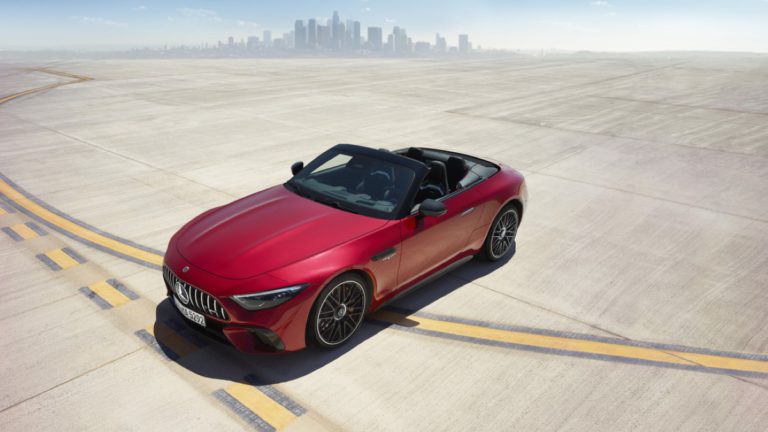
INDIA: Mercedes-Benz India has set pulses racing with the launch of the highly-anticipated SL55 AMG Roadster in the country. This performance powerhouse starts at Rs 2.35 crore (ex-showroom) and is ready to take the Indian automotive market by storm. 

The seventh generation of the SL model, which made its global debut in 2021, arrives in India through the Completely Built-Up (CBU) route.

Car enthusiasts can choose from two trim levels and eight stunning exterior paint options. The SL55 AMG Roadster replaces the iconic S-Class Cabriolet and the AMG GT Roadster.

The Mercedes-AMG SL55 Roadster boasts a striking exterior design, featuring sweptback LED headlamps, a Panamericana grille, gloss black ORVMs, blacked-out 20-inch alloy wheels (with the option for 21-inch wheels), vibrant red or yellow brake callipers, quad-tip exhausts, an adjustable spoiler, and wraparound LED tail lights. 

The soft top of the model can be effortlessly opened or closed in just 15 seconds, even while cruising at speeds of up to 60 mph. The soft top is available in Black, Grey, and Red colours, allowing drivers to personalize their driving experience.

Step inside the Mercedes-AMG SL55 Roadster and be greeted by a luxurious and sporty interior. The AMG performance seats, adorned with carbon fibre and Alcantara inserts, exude sophistication and comfort. AMG-specific elements are present throughout the interior, accentuating the car’s performance pedigree. 

Drivers will appreciate the fully digital instrument console, the 11.9-inch vertically aligned tilt-able MBUX touchscreen infotainment system, ambient lighting, and the Head-Up Display (HUD)

Safety is a top priority with features such as eight airbags, the Pre Safe system, pedestrian protection, and active lane-keeping assist.

Under the hood, the Mercedes-Benz SL55 AMG Roadster houses a formidable 4.0-litre, twin-turbocharged V8 engine, producing an impressive 473 bhp and 700 Nm of torque. 

This soft-top convertible, mated to a nine-speed automatic transmission, can sprint from 0 to 100 mph in just 3.9 seconds, reaching an electronically limited top speed of 295 mph.

In the Indian market, the Mercedes-AMG SL55 Roadster will face competition from rivals such as the Porsche 911 Carrera S Cabriolet, priced at Rs 2.18 crore, and the Lexus LC 500h, priced at Rs 2.39 crore. 

With its unrivalled power, stunning design, and cutting-edge technology, the SL55 AMG Roadster will captivate luxury car enthusiasts in India.

Mercedes-Benz continues to push boundaries and redefine the driving experience with the launch of the SL55 AMG Roadster. 

Its breathtaking performance, luxurious comfort, and state-of-the-art features solidify its position as a true automotive masterpiece. Car enthusiasts and speed fans can now get behind the wheel of this dynamic convertible and embark on thrilling adventures on Indian roads.

Also Read: Mercedes-Benz Explores Integration of ChatGPT Voice Assistant in Cars

Russian Cosmonauts Conduct Spacewalk to Clean Up International Space Station’s Exterior

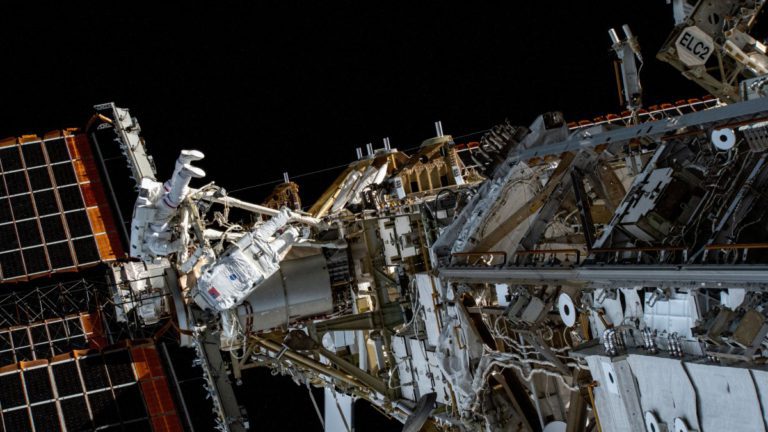
UNITED STATES: In a remarkable display of extravehicular activity (EVA), two Russian cosmonauts, Sergey Prokopyev and Dmitry Petelin, embarked on a six-hour spacewalk outside the International Space Station (ISS) on Thursday, June 22.

Their mission involved tidying up the exterior of the orbiting laboratory by removing and discarding three obsolete devices, including a spent science experiment.

The spacewalk, part of Expedition 69, commenced at 10:24 a.m. EDT (1424 GMT) as Prokopyev and Petelin exited the ISS through the Poisk module. 

Their tasks included the installation of a new stanchion for high-speed telemetry equipment and retrieving a micrometeoroid impact experiment mounted outside the space station for several years.

With precision and efficiency, the cosmonauts rerouted cables and disconnected a data relay unit, a telemetry transmitter, and the hardware for a completed seismic activity experiment. Each item was discarded into space, ensuring their eventual disposal as they burned in Earth’s atmosphere.

The discarded experiment, known as the Seismoprognoz, had been installed on the Zvezda service module during a spacewalk in December 2013, nearly a decade ago. 

The cosmonauts bid farewell to the equipment, following the guidance of Mission Control Moscow, as it floated away from the space station, never to return.

The jettisoning of the hardware and stanchions enabled new components, including a monoblock for a high-speed data unit. Prokopyev and Petelin successfully mounted this equipment on the Zvezda module, expanding the capabilities of the ISS.

During the spacewalk, the cosmonauts also inspected the plume deflectors at the aft end of the Zvezda service module, capturing detailed photographs for analysis by Russian engineers on the ground. 

These deflectors serve to protect the space station from the engine plume. Prokopyev humorously described their appearance as resembling a dirty frying pan, eliciting a witty response from Petelin.

Before concluding their tasks, Prokopyev and Petelin cleaned one of the module’s windows using towels, which they discarded. They also retrieved a biological sample exposure package near the hatch of the Poisk airlock, marking the completion of their objectives for the spacewalk.

At 4:48 p.m. EDT (2048 GMT), Prokopyev and Petelin reentered the Poisk module, wrapping up their 6-hour and 24-minute journey in the vacuum of space. 

With this successful EVA, Prokopyev has now accumulated an impressive total of 48 hours and 40 minutes across seven spacewalks, while Petelin has conducted five spacewalks, all in collaboration with Prokopyev, amounting to a cumulative time of 33 hours and 9 minutes.

The recent spacewalk was the ninth of the year and the 266th dedicated to the assembly and maintenance of the International Space Station since its inception in 1998. 

The efforts of these cosmonauts exemplify the ongoing commitment to scientific exploration and the maintenance of humanity’s home in space.

Also Read: Planet X: The Enigmatic Planet beyond Our Reach, Hiding Secrets of the Cosmos